

2026 Hiring Outlook for Performance Marketers: Reading Between the Job-Portal Numbers
 Hardik Gupta24 Sept, 2026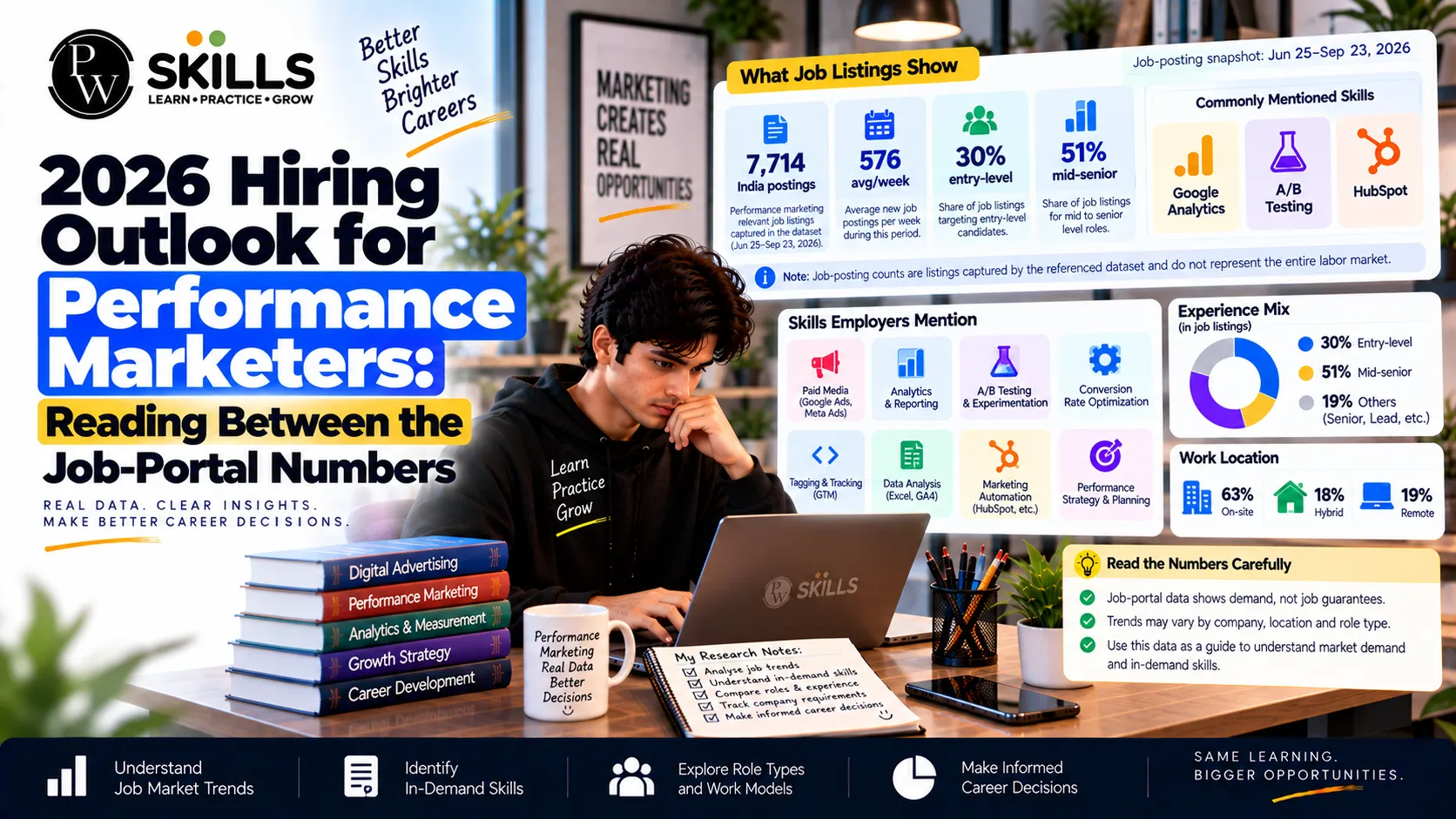
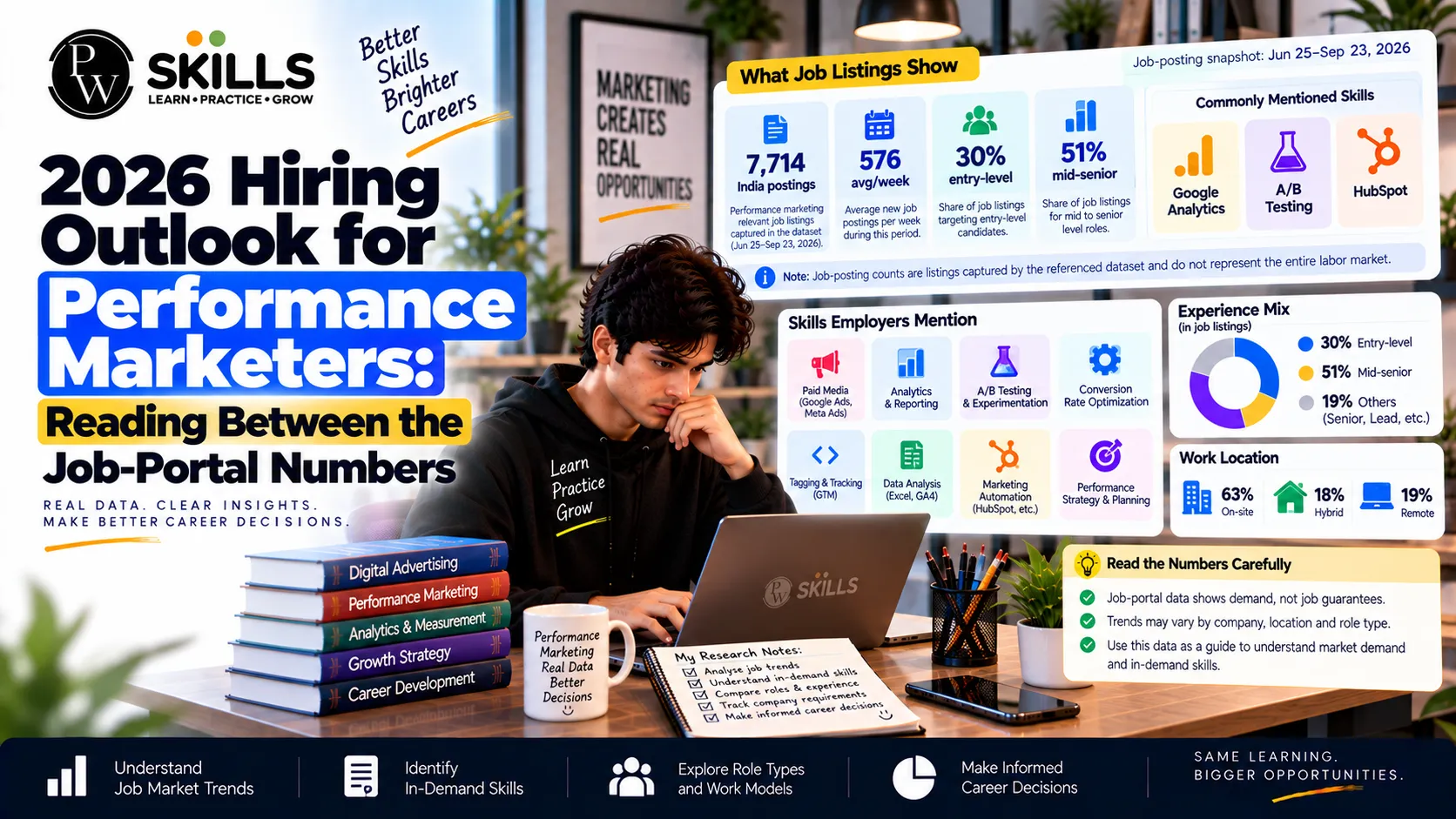
While general marketing vacancy lists fluctuate, companies are actively searching for specialists who can manage paid budgets efficiently and show clear returns on investment. This structural shift means traditional campaign execution is no longer enough to secure high-paying positions.
To bridge this skill gap and future-proof your career, mastering predictive analytics, rapid creative iteration, and algorithmic bidding is critical. Enrolling in a structured Digital Marketing with AI Course equips you with the technical capability to lead high-performing ad campaigns, balance performance budgets, and adapt to modern recruiting demands.
How Does a Digital Marketing with AI Course Match Digital Marketing Trends?
The IAMAI-Kantar ICUBE Report provides essential baseline data on internet adoption, user engagement, and digital spend patterns. Examining these research figures closely helps performance marketers understand where consumer attention is moving and where brands are allocating their media budgets.
IAMAI-Kantar ICUBE Market Shift Drivers
|
Market Shift Driver |
Impact on Marketing |
|
Rural & Tier-2+ Internet Expansion |
Broader regional targeting needed |
|
Rapid Adoption of Vernacular Content |
Dynamic, multi-language ad variants |
|
Rise of Short-Form Video & Commerce |
Instant, direct-response ad formats |
|
Privacy-First Data Tracking |
Stronger reliance on AI modeling |
Digital Expansion Beyond Tier-1 Cities
Internet access is expanding rapidly outside major metropolitan hubs. Marketing strategies built exclusively for urban English-speaking audiences face diminishing returns. Performance campaigns must now account for regional audience nuances, local languages, and varying purchasing power across regional markets.
The Shift Toward Intent-Based Consumer Media
Consumers no longer rely on single visual ads to make buying decisions. The IAMAI-Kantar ICUBE Report highlights that users move across short-form videos, localized messaging apps, and social marketplaces before converting. Consequently, performance marketers must build cohesive cross-channel conversion funnels rather than relying on isolated channel strategies.
Modern Requirements for Digital Marketers
-
Data-Driven Dynamic Creatives: Generating personalized image and text variations at scale for different user groups.
-
First-Party Data Strategy: Setting up server-side tracking to capture clean conversion data in cookieless environments.
-
Regional Campaign Optimization: Allocating ad spend efficiently across regional target segments.
-
Automated Funnel Testing: Running dynamic A/B tests across landing pages and ad copy to maximize conversions.
How Does a Digital Marketing with AI Course Prepare You for Marketing Jobs?
Job descriptions on recruitment portals show a clear trend: companies want performance marketers who understand automated bid strategies, predictive audience modeling, and scaled content creation. Completing the AI Digital Marketing course helps marketers transition from manual execution to strategic campaign orchestration.
|
Task |
Traditional Marketer |
AI-Integrated Specialist |
|
Creative Production |
2-3 ad variations/week |
20+ personalized assets/day |
|
Audience Targeting |
Broad demographic lists |
Predictive intent segmenting |
|
Budget Allocation |
Manual weekly edits |
Real-time algorithmic shifts |
|
Performance Reporting |
Monthly static slides |
Automated dashboard insights |
Automation in Bidding and Media Buying
Modern ad networks rely heavily on machine learning algorithms to optimize bid placements. Marketers who understand how to feed clean conversion signals to these automated platforms achieve lower acquisition costs. A specialized AI Digital Marketing course teaches professionals how to set up, evaluate, and scale algorithmic campaigns correctly.
Scaled Creative Testing and Optimization
Static ad creatives quickly suffer from ad fatigue. AI-driven content engines allow performance specialists to generate, test, and iterate dozens of ad variations within hours. This approach ensures campaigns maintain high click-through rates and stable cost-per-acquisition metrics over time.
How Does a Digital Marketing with AI Course Build Performance Analytics Skills?
Recruiters are looking beyond basic platform familiarity. The current hiring-outlook-hook focuses heavily on a candidate's ability to interpret unit economics, manage customer acquisition costs, and maximize lifetime customer value.
Core Metrics Employers Value
|
Metric |
Focus |
|
Customer Acquisition Cost (CAC) |
CAC Optimization |
|
Customer Lifetime Value (LTV) |
LTV Retention Focus |
|
Return on Ad Spend (ROAS) |
Higher Return on Ad Spend |
Moving from Vanity Metrics to Revenue Returns
Likes, impressions, and reach no longer impress hiring managers. Modern marketing teams prioritize direct bottom-line metrics:
-
Cost Per Acquisition (CPA): Keeping acquisition costs lower than gross margins.
-
Return on Ad Spend (ROAS): Driving measurable revenue from every channel budget.
-
Click-to-Conversion Rate: Optimizing post-click landing page user experiences.
-
Customer Lifetime Value (LTV): Structuring retargeting sequences that encourage repeat purchases.
Combining Technical Analytics with Strategic Vision
Leading performance roles demand both creative intuition and technical data analysis. Marketers who can audit campaign structures, set up attribution models, and optimize tracking code stand out during recruitment processes. Completing an AI Digital Marketing course ensures candidates can validate campaign performance with clear data analysis.
How Does a Digital Marketing with AI Course Prepare You for Content and Performance Jobs?
Recent Content Marketing Associate Jobs News shows a growing integration between organic content development and paid performance media. Organizations are abandoning isolated marketing silos in favor of unified growth teams.
Content & Performance Integration Funnel
|
Funnel Stage |
Content & Performance Strategy |
|
Top of Funnel (TOFU) |
Organic Content & Viral Creative Assets |
|
Middle of Funnel (MOFU) |
Retargeting Ads & Value-Driven Email Sequences |
|
Bottom of Funnel (BOFU) |
Conversion Ads & High-Intent Landing Pages |
The Blending of Creative Content and Paid Media
Content creators and paid media managers now work side-by-side. High-performing organic posts are regularly converted into paid ad assets, while paid campaign data informs content production decisions.
Key Hybrid Responsibilities in Modern Growth Teams
|
No. |
Responsibility |
|
1 |
Transforming successful organic assets into targeted performance ad creatives |
|
2 |
Using AI writing tools to draft tailored ad copy variants for distinct target segments |
|
3 |
Analyzing user engagement metrics to refine search engine optimization and ad targeting |
|
4 |
Structuring clear messaging strategies across landing pages, ad text, and email sequences |
By completing an AI Digital Marketing course, marketers learn to align visual storytelling with paid acquisition frameworks, creating cohesive user journeys that drive conversions.
How Does a Digital Marketing with AI Course Help You Get Better Marketing Jobs?
Job listings often contain subtle details that reveal an organization's true technical requirements. Understanding these industry signals helps candidates tailor their applications and stand out during interviews.
Decoding Job Portal Terminology
|
Phrases in Job Listings |
What the Hiring Manager Actually Wants |
|
"Hands-on budget management" |
Direct experience controlling campaign spend |
|
"Cross-functional alignment" |
Ability to work with content and dev teams |
|
"Full-funnel campaign ownership" |
End-to-end management from impression to sale |
|
"Data-driven iteration" |
Skill in running systematic A/B experiments |
Identifying True High-Growth Job Roles
-
Look for Tool Requirements: High-growth roles consistently list platforms like Google Tag Manager, GA4, Meta Ads Manager, and predictive AI analytics tools.
-
Check Budget Scale: Positions mentioning specific ad budget management experience usually offer higher compensation packages.
-
Evaluate Portfolio Requirements: Top employers prioritize candidates who bring verified campaign case studies, spend reports, and conversion improvements.





FAQ
1. What core skills are taught in a Digital Marketing with AI Course?
2. How does the IAMAI-Kantar ICUBE Report impact hiring strategies?
3. Why is the hiring-outlook-hook focused on AI skills?
4. What trends do Content Marketing Associate Jobs News highlight?
5. Can beginners enroll in a Digital Marketing with AI Course?






Get Free Counselling Today
and Clear up all your Doubts
 Live & recorded classes available at easeDashboard for progress trackingLakhs of practice questions

