

10 Marketing Hiring Stats From 2026 That Justify Learning Digital Marketing with AI Course Now
 Hardik Gupta17 Sept, 2026
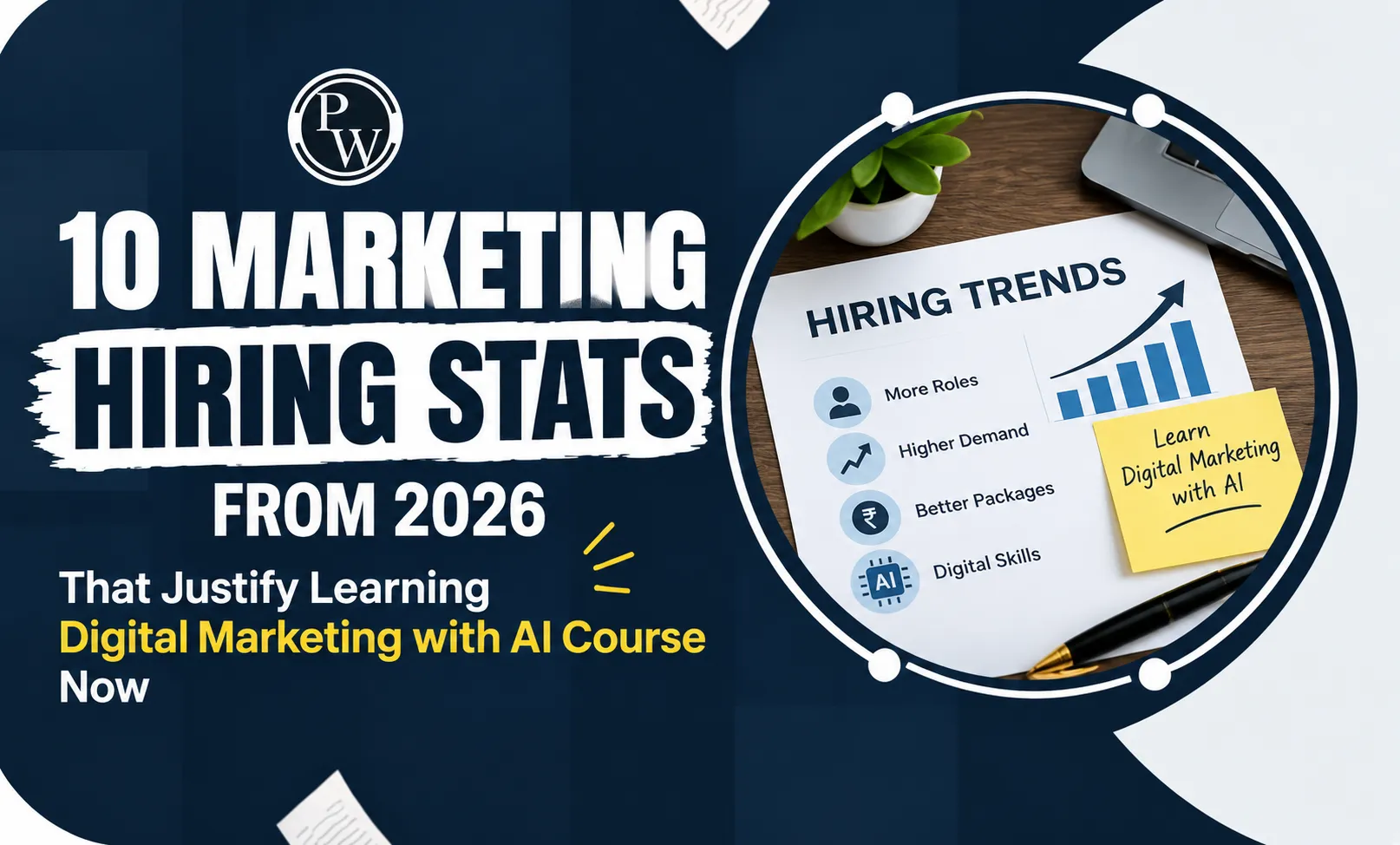
Students and early-career job seekers face an evolving job market where static skills become obsolete quickly. Upskilling through targeted online programs provides the fastest route to career advancement. Enrolling in a Digital Marketing with AI Course offers the essential technical foundation required to succeed in competitive hiring environments.
Why Is a Digital Marketing with AI Course Important?
A Digital Marketing with AI Course is important because businesses are using AI to improve marketing, content creation, customer targeting, and campaign performance. The course helps learners build skills in SEO, social media, paid advertising, data analysis, marketing automation, and AI tools.
These skills can help professionals save time, understand customer behavior, create better campaigns, and improve marketing results. It also helps students and working professionals prepare for modern digital marketing roles where AI and automation skills are becoming more valuable.
What are the 10 Most Important Hiring Statistics for a Digital Marketing with AI Course
A Digital Marketing with AI course can prepare you for emerging roles by combining core marketing expertise with AI-driven tools, automation, analytics, and strategy.
1. 958 Million Active Internet Base Demands Scalable Campaigns
Data from the IAMAI-Kantar ICUBE Report highlights that India’s active internet user base has reached 958 million. With digital adoption spreading rapidly across both urban and rural markets, traditional campaign management methods cannot handle the volume required.
-
Rural adoption is growing nearly four times faster than urban internet usage.
-
Businesses need automated tools to manage content distribution across multiple demographics.
Executing marketing strategies at this scale requires automated systems. Enrolling in a Digital Marketing with AI Course teaches professionals how to build scalable strategies powered by smart workflows.
2. 44% User Engagement with AI Features Drives Recruiter Demand
According to recent IAMAI-Kantar ICUBE Report findings, approximately 44% of active internet users regularly interact with AI-driven features like voice search, image search, and conversational chatbots.
Marketing teams must deploy intelligent assets that respond to these specific user behaviors. Recruiter focus has shifted toward hiring candidate profiles capable of implementing machine learning tools into consumer touchpoints.
3. Digital Marketing Executive Jobs News Highlights AI Skill Gaps
Industry insights from Digital Marketing with AI Course + Digital Marketing Executive Jobs News report a notable shortage of skilled professionals who can operate generative AI software and predictive analytics platforms effectively.
-
Core Skill Gap: Standard graduates lack hands-on experience with predictive modelling and automated content platforms.
-
Hiring Friction: Employers spend up to 40% more time filling senior digital roles due to applicant skill mismatches.
This data acts as a clear Stat-roundup-hook for job seekers looking to gain a competitive advantage. Mastering prompt engineering, dynamic segmentation, and workflow automation directly solves this enterprise talent deficit.
4. Over 61% Short-Video Consumption Requires Automated Content Workflows
Video media currently accounts for the largest share of daily user engagement. The latest IAMAI-Kantar ICUBE Report notes that over 61% of active internet users regularly consume short-video content.
Manual video production and scripting workflows cannot keep pace with content demands. Marketers using AI production tools generate video briefs, scripts, and initial edits in a fraction of the standard time. Learning these tools ensures sustained creative output across video-first platforms.
5. Multi-Device Usage Spurt Demands Cross-Platform Optimization
Multi-device usage has risen to 20% across overall user demographics, peaking at 31% in urban areas. Consumers jump between smart TVs, mobile phones, and desktop browsers throughout a single buying journey.
-
Attribution modeling requires algorithmic tracking across disparate touchpoints.
-
Ad spending efficiency depends on cross-channel performance analytics.
Understanding cross-device tracking requires structured data handling. A Digital Marketing with AI Course gives candidates direct exposure to multi-channel data integration and programmatic campaign management.
6. Quick Commerce and E-Commerce Expansion Boosts E-Commerce Hiring
Over 230 million urban users actively shop online due to the rapid growth of quick commerce and social commerce platforms. E-commerce brands are aggressively expanding their digital teams to capture market share.
Retail platforms use automated pricing models, personalized product recommendations, and behavioral retargeting. Marketing professionals equipped with algorithmic knowledge directly drive revenue growth for these expanding commercial entities.
7. Youth Demographic Dominance Requires AI-Driven Personalization
Engagement metrics show that 57% of internet users aged 15–24 and 52% of those aged 25–44 utilize advanced digital features daily. This tech-savvy demographic demands tailored brand messaging over generic advertising.
|
Demographic Segment |
AI Feature Usage Rate |
|
15 – 24 Years |
57% |
|
25 – 44 Years |
52% |
Generic marketing campaigns fail to convert younger audiences. AI personalization engines analyze user intent signals in real time to deliver relevant content recommendations instantly.
8. Agency Recruitment Priorities Favor Automation Expertise
Hiring surveys indicate that 7 out of 10 digital marketing agencies prioritize candidates with functional automation capabilities over traditional marketing skill sets alone.
-
Agencies need team members who reduce operational campaign setup time.
-
Automation fluency reduces client management expenses.
Candidates who demonstrate proficiency in setup automation, automated reporting, and dynamic ad insertion secure job offers faster and negotiate higher entry salaries.
9. High Demand for Data-Driven Performance Marketers
Traditional creative roles are increasingly merging with technical analytical positions. Companies require marketers who can interpret complex datasets and optimize campaign performance systematically.
Key Capabilities Required by Modern Employers:
1. Algorithmic Bidding Optimization
2. Predictive Customer Churn Analytics
3. Generative Asset Creation at Scale
Formal technical education bridges the gap between basic creative concepts and advanced statistical analysis. Completing a Digital Marketing with AI Course helps build a balanced skill set for modern roles.
10. Rising Digital Ad Spend Accelerates Specialized Hiring
Digital advertising investments across sectors continue to grow exponentially. As companies allocate larger budgets toward digital performance channels, accountability for return on ad spend (ROAS) becomes critical.
Brands cannot afford inefficient media investments. Applying machine learning models to budget allocations ensures continuous campaign optimization, driving enterprise demand for skilled digital managers.





FAQ
1. What does a Digital Marketing with AI Course cover?
2. How does learning AI improve career prospects in digital marketing?
3. Are these digital marketing industry statistics based on reliable market reports?
4. Do I need a technical coding background to learn digital marketing with AI?
5. Why is a Stat-roundup-hook useful for understanding market demand?






Get Free Counselling Today
and Clear up all your Doubts
 Live & recorded classes available at easeDashboard for progress trackingLakhs of practice questions

