

What Is a Common Misconception About Agile and DevOps in 2026? Facts, Myths and Key Differences

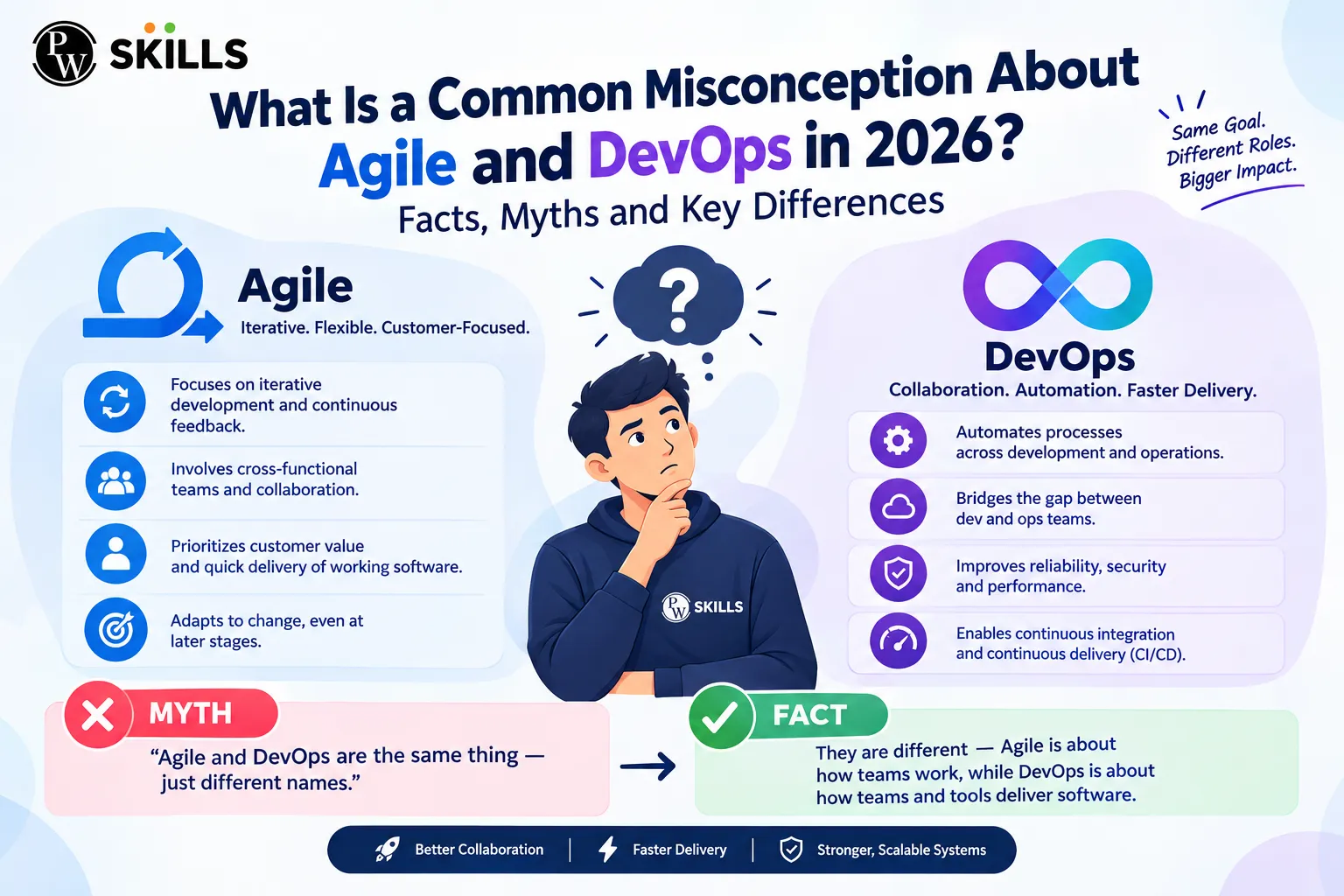
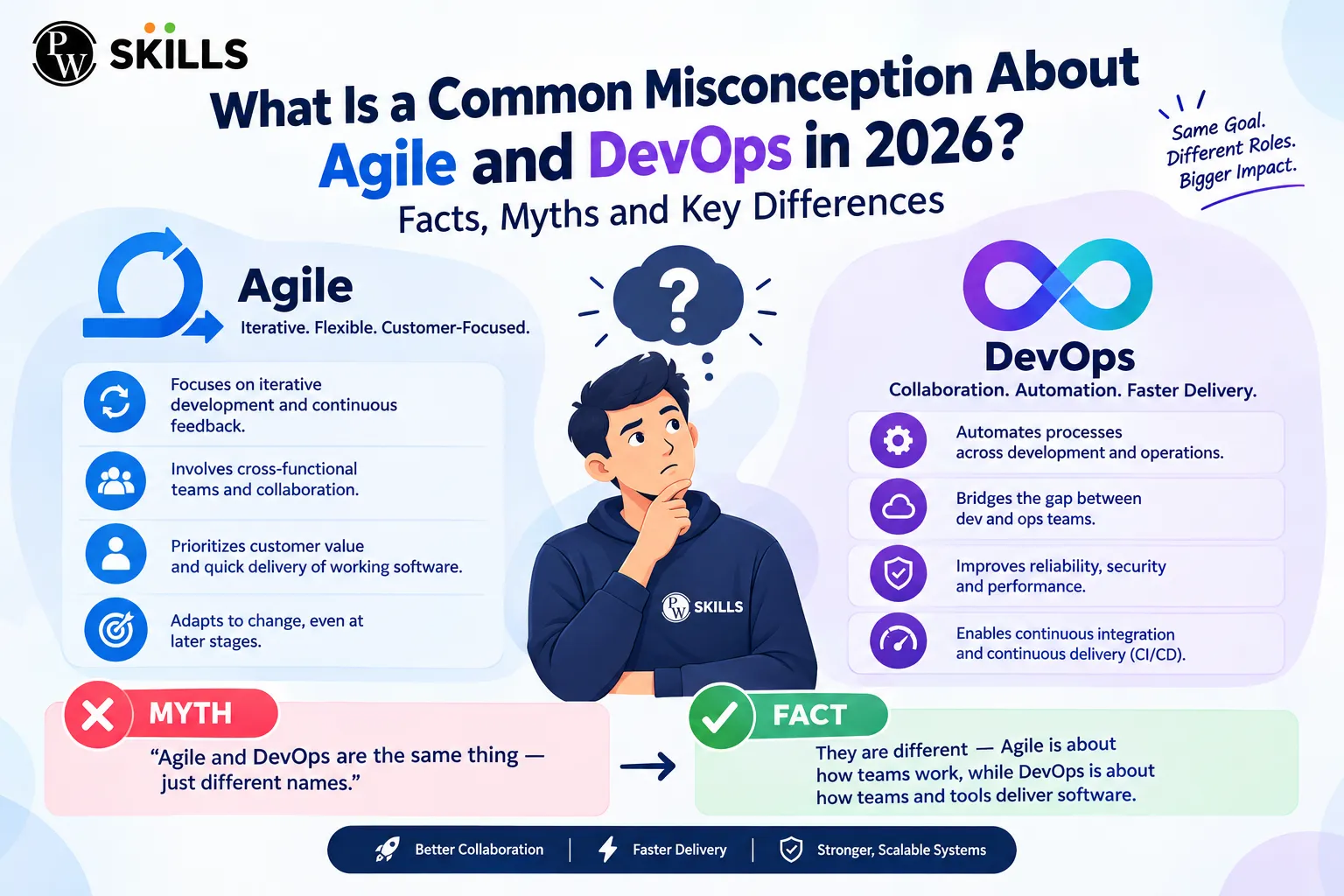
Agile and DevOps are widely used in modern software development, but they address different parts of how teams build and deliver software. Their concepts can sometimes overlap in practice, making it important to understand the role each approach plays. what is a common misconception about agile and devops provides a useful starting point for separating the terminology and understanding how these practices relate to one another.
The distinction is especially relevant as development teams adopt iterative workflows, automation and continuous delivery. Separating these concepts makes it easier to get a clearer understanding of modern software development practices and how the different teams contribute to the software lifecycle.
Overview of Common Misconceptions About Agile and DevOps
Adopting new workflows requires absolute clarity. When organisations misunderstand their tools and frameworks, they waste time and resources. The biggest trap is treating these concepts as buzzwords rather than practical systems.
You might hear colleagues argue that implementing one framework automatically negates the need for the other. This specific misunderstanding derails projects quickly. To optimise a development lifecycle, you must separate the facts from the widespread fiction surrounding these practices. Understanding exactly what is a common misconception about agile and devops allows your team to leverage the strengths of both systems.
The early detection of these myths prevents structural failure. Teams that deal with these misconceptions tend to have smoother project lifecycles, better communication and a huge jump in deployment rates.
The Foundations of Agile Methodology
Agile methodology focuses entirely on how a team builds software. It breaks large, overwhelming projects into small, manageable chunks called sprints. These sprints typically last two to four weeks.
The primary goal is to maintain flexibility. If a client changes their mind about a feature, the team can pivot quickly without scrapping months of work. This iterative process relies heavily on constant feedback, daily stand-up meetings, and close collaboration between developers and stakeholders.
It is a mindset built on adaptability. Developers prioritise working software and customer collaboration over rigid planning and extensive documentation.
The Pillars of DevOps Methodology
DevOps methodology tackles a completely different stage of the software lifecycle. While developers build the product, operations teams handle the deployment and maintenance. Historically, these two groups worked in silos, leading to severe bottlenecks.
This framework bridges that exact gap. It focuses on communication, automation, and continuous integration between developers and IT operations. The goal is to release software reliably and quickly.
By automating testing and deployment pipelines, teams remove the manual errors that often delay product launches. It ensures that the code written today functions perfectly in the live environment tomorrow.
Why Is It Important to Understand Agile and DevOps Misconceptions?
When you stop treating these concepts as rivals, incredible things happen. Recognising what is a common misconception about agile and devops is the first step toward building a highly functional, modern technology department.
Teams that successfully integrate both frameworks experience fewer deployment failures. Because the code is tested continuously, bugs are caught early in the development cycle rather than right before a major launch.
This integration also drastically reduces the time it takes to get a new feature into the hands of the user. Developers write the code, the automated pipeline tests it, and it goes live with minimal human intervention.
Quick Tips for Seamless Integration
Implementing both methodologies requires strategic planning. Keep these actionable points in mind before restructuring your teams:
- Align Goals: Ensure both developers and operations staff share the exact same key performance indicators.
- Automate Slowly: Do not try to automate every process on day one. Start with simple testing pipelines.
- Encourage Cross-Training: Have developers shadow operations staff for a day, and vice versa.
- Prioritise Communication: Tools will fail if your teams do not talk to each other openly about systemic issues.
- Celebrate Joint Wins: When a deployment goes smoothly, reward both the creators and the deployers equally.
The Role of Continuous Feedback
Feedback is the lifeblood of this integrated approach. Developers need immediate feedback from the automated pipelines to know if their recent code broke anything.
Operations teams need immediate feedback from developers regarding upcoming architectural changes. This continuous loop of information prevents nasty surprises on deployment day.
By actively debunking these myths, companies can foster a culture where speed and stability coexist peacefully. The result is better software, happier teams, and deeply satisfied customers.
What Are the Most Common Agile and DevOps Misconceptions You Should Know?
People often rely on incomplete information when discussing software frameworks. This leads to a variety of agile and DevOps misconceptions that can stunt a team's growth.
Here are the most prevalent myths circulating in the industry today, alongside the actual facts.
Myth 1: They Are Exactly the Same Thing
Because both frameworks aim to speed up the delivery of software, many assume they are interchangeable terms. This is factually incorrect.
Agile dictates how developers organise their tasks and build the product iteratively. DevOps dictates how that finished code gets tested, deployed, and maintained in the real world. They share a goal of efficiency but operate in entirely different domains.
Myth 2: You Must Choose Only One
Another widespread myth is that these frameworks are mutually exclusive. Some teams believe that if they use sprints, they cannot use automated deployment pipelines.
In reality, they complement each other perfectly. Sprints ensure the product is built quickly, while automated pipelines ensure the fast-paced builds are delivered to users without breaking the system.
Myth 3: Buying Tools Fixes Everything
Many companies purchase expensive automation software and instantly declare they have achieved a modern workflow.
Simply installing tools like automation servers or container platforms does not change the company culture. Both frameworks require a massive shift in how humans communicate and collaborate. Tools only support the culture; they do not create it.
Myth 4: Quality Assurance Becomes Obsolete
A dangerous assumption is that automated testing eliminates the need for human testers.
While automation handles repetitive checks, human Quality Assurance professionals remain vital. They design the complex test cases, validate the user experience, and ensure security compliance. Automation simply makes their job more strategic.
Myth 5: They Create Chaos and Lack Structure
Some traditional managers fear that abandoning rigid, long-term plans leads to absolute chaos.
Conversely, both methodologies rely on intense discipline. Daily meetings, continuous feedback loops, and automated deployment logs create a highly structured environment that is far more transparent than older project management styles.
What Is the Difference Between Agile and DevOps?
To truly understand how these frameworks interact, we must look at the agile vs. DevOps dynamic in a practical setting.
Imagine a car manufacturing plant. The design team constantly tweaks the car's features based on driver feedback, working in short, creative bursts. This represents the iterative development process.
The assembly line, however, focuses on taking those designs and building the physical car safely, quickly, and consistently using automated machinery. This represents the operations and deployment phase.
If the design team works fast but the assembly line uses outdated manual tools, the cars will never reach the dealership on time. Conversely, a lightning-fast assembly line is useless if the design team takes years to finalise a blueprint.
Software development operates on the exact same logic. You need the creative, flexible bursts of development paired with the rigorous, automated delivery pipeline to achieve true success.
Understanding the specific Agile and DevOps differences helps clarify their unique roles. The table below outlines the primary distinctions between the two frameworks to help clear up any lingering confusion.
|
Feature |
Agile |
DevOps |
|
Primary Focus |
Software development and team flexibility |
Software deployment and operational stability |
|
Developers, product managers, customers |
Developers, IT operations, system administrators |
|
|
Key Metrics |
Sprint velocity, burndown charts |
Deployment frequency, mean time to recovery |
|
Feedback Loop |
Customer and stakeholder feedback |
Automated system and monitoring feedback |
|
Pace |
Sprints lasting 2 to 4 weeks |
Continuous, daily or hourly deployments |
|
Core Values |
Adaptability and iterative progress |
Automation and seamless integration |
Difference in Skill Sets
The required skills differ drastically. Development teams need strong coding abilities, problem-solving skills, and the capacity to adapt to changing client requests.
Operations teams require deep knowledge of server architecture, cloud infrastructure, and automation scripting. While cross-training is beneficial, the core competencies remain distinct.
Difference in Tooling
The daily tools used by these teams reflect their differing goals. Developers spend their time in issue trackers and collaborative boards to manage their daily tasks.
Operations teams spend their time configuring continuous integration pipelines, monitoring live server health, and managing infrastructure as code.




FAQs
What is a common misconception about agile and DevOps regarding team size?
Does using Agile mean we can ignore documentation completely?
Can a company use DevOps methodology without using Agile?
Why is the agile vs DevOps debate so prevalent online?
Do these frameworks eliminate the need for project managers?





Get Free Counselling Today
and Clear up all your Doubts
 Live & recorded classes available at easeDashboard for progress trackingLakhs of practice questions


