

DevSecOps Interview Questions 2026: Top Questions and Answers for Freshers
 Hardik Gupta3 Oct, 2026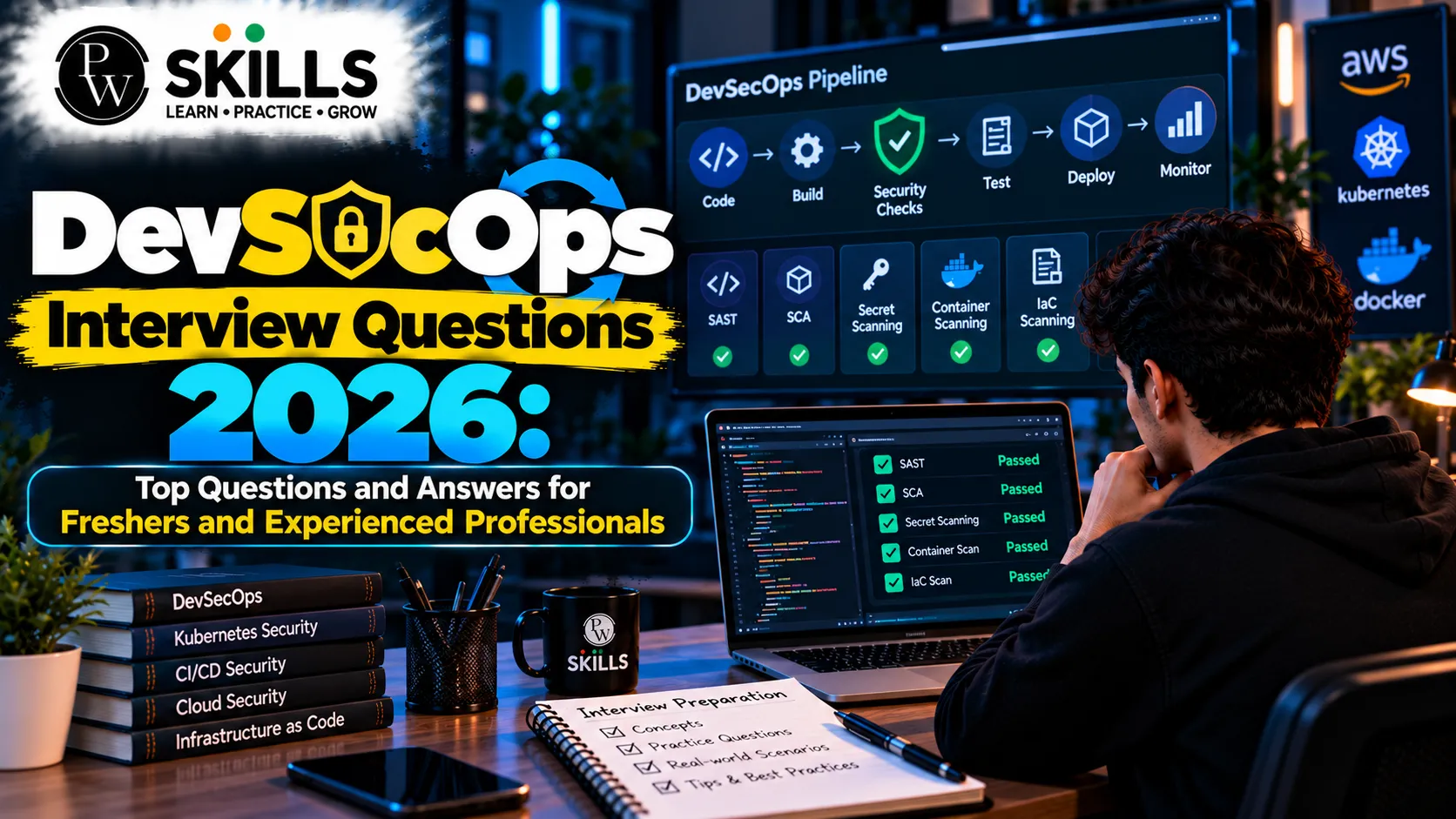
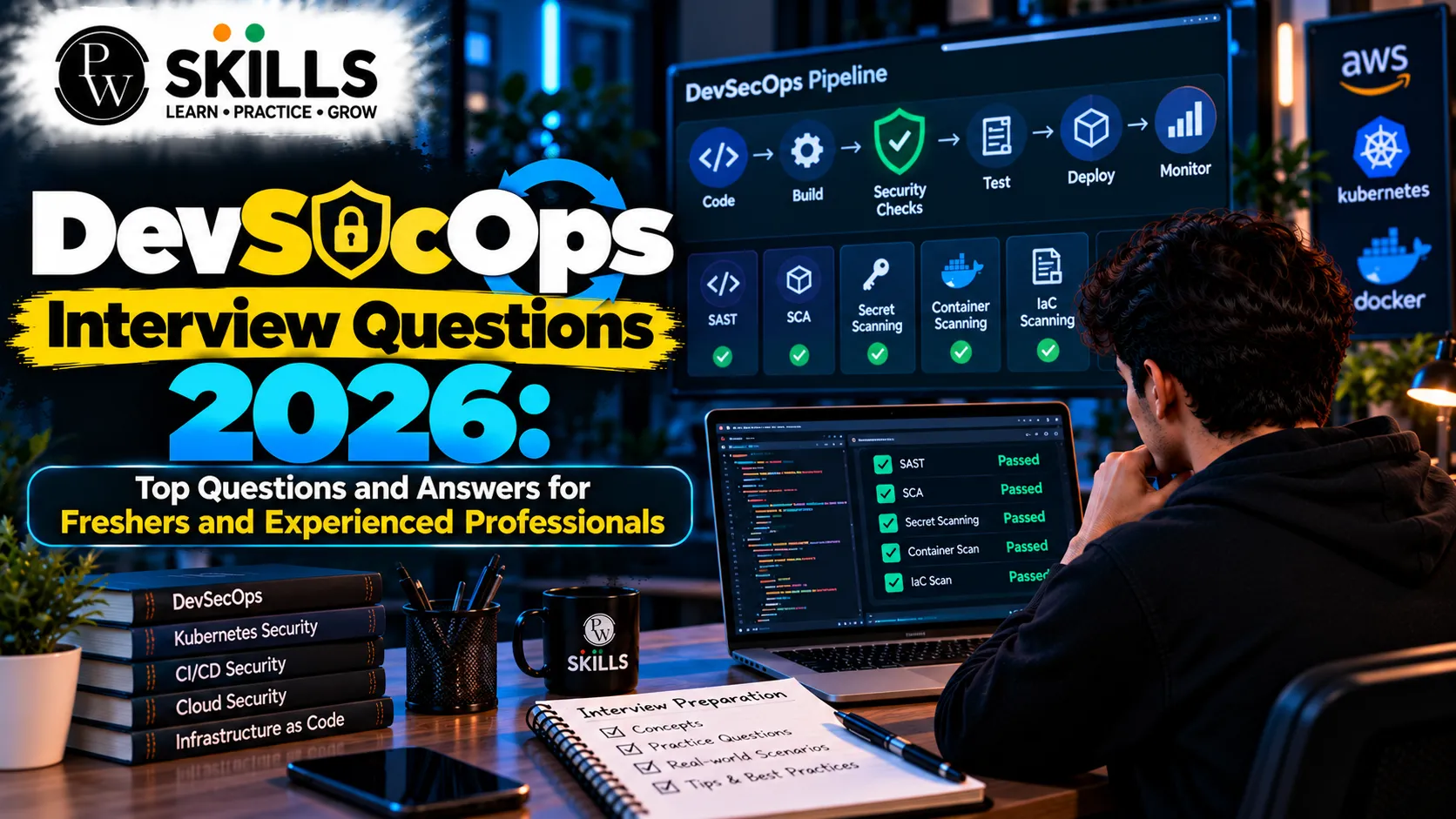
Preparing for DevSecOps interview questions requires a clear understanding of how security fits into software development and delivery. Freshers can focus on basic DevSecOps concepts, Git, Linux, CI/CD, authentication, and vulnerability scanning. Experienced professionals may need deeper knowledge of containers, cloud security, Kubernetes, Infrastructure as Code, secrets management, and automated security checks.
Overview of DevSecOps Interview Questions
Many interviews begin with basic questions about the principles behind DevSecOps. Candidates should understand why security needs to be included throughout the software development lifecycle.
The main principles include:
-
Shift Left Philosophy: Security checks are introduced early during planning, coding, and testing.
-
Automated Security: Tools can automatically check code, dependencies, containers, and infrastructure.
-
Shared Responsibility: Developers, operations teams, and security professionals all contribute to application security.
-
Continuous Monitoring: Applications and infrastructure can be monitored after deployment to identify security-related problems.
-
Fast Remediation: Security issues can be investigated and fixed as part of the development workflow.
For example, when a developer pushes new code to a Git repository, a CI pipeline can automatically run security checks. A static analysis tool may check the source code, while a dependency scanner can look for known vulnerabilities in third-party packages.
The goal is not to add security checks without control. Teams need to decide which checks are useful at each stage and how serious findings should affect the pipeline.
How to Handle DevSecOps Interview Questions for Freshers?
Questions for DevSecOps interviews for freshers usually focus on basic concepts rather than complex security architecture. Candidates should be comfortable explaining how development, operations, and security work together.
Some common areas include:
-
Version Control Security: Explain why API keys, passwords, and private credentials should not be stored directly in source-code repositories.
-
CI/CD Basics: Understand how automated pipelines build, test, and deploy applications.
-
Basic Vulnerability Scanning: Know that dependency scanners can identify known vulnerabilities in third-party libraries.
-
Linux Security: Understand users, groups, permissions, processes, and basic system hardening.
-
Authentication and Authorization: Know the difference between proving who a user is and deciding what that user can access.
A fresher may be asked, “How would you prevent a secret from being pushed to Git?” A good answer could mention secret-management systems, environment-specific configuration, repository scanning, and pre-commit or pipeline checks.
Candidates should also learn basic Git workflows, branch protection, pull requests, and code review because these practices are commonly connected with secure development.
What Are Advanced DevSecOps Interview Questions on CI/CD Pipelines?
Experienced candidates may face DevSecOps questions and answers that require practical knowledge of securing complete CI/CD pipelines.
Interviewers may ask how security checks should be placed across different stages and how teams can prevent a vulnerable artifact from reaching production.
Important areas include:
-
Container Security: Scan Docker images for known vulnerabilities before deployment.
-
Secret Management: Store passwords, API keys, and tokens in dedicated secret-management systems instead of source code.
-
Infrastructure as Code Scanning: Check Terraform, Kubernetes manifests, or other infrastructure files for insecure configurations.
-
Artifact Security: Verify that software packages and container images come from trusted sources and have not been changed unexpectedly.
-
Runtime Protection: Monitor deployed applications and containers for unusual behavior or security events.
For example, a CI/CD pipeline can first run unit tests and code-quality checks. Security scanning can then check source code and dependencies. Container images can be scanned before they are pushed to a registry or deployed to a Kubernetes environment.
Experienced candidates should also understand that security tools can produce false positives. A strong DevSecOps process includes ways to review findings, set appropriate policies, and avoid blocking every build for a low-risk issue.
How Do DevSecOps Tools Help Answer DevSecOps Interview Questions?
DevSecOps tools help teams automate security checks that would otherwise take considerable manual effort. Different tools perform different types of testing, so organizations normally use a combination based on their technology stack and security requirements.
Common categories include:
-
Static Application Security Testing (SAST): Examines source code or compiled code to identify certain security weaknesses.
-
Dynamic Application Security Testing (DAST): Tests a running application to identify certain vulnerabilities from an external perspective.
-
Software Composition Analysis (SCA): Checks third-party libraries and dependencies for known vulnerabilities and licensing information.
-
Infrastructure Scanning: Checks infrastructure configurations and templates for possible security or compliance problems.
-
Container Scanning: Examines container images for known vulnerabilities and insecure components.
-
Secret Scanning: Looks for accidentally exposed credentials, tokens, or other sensitive values.
The right tool depends on what the team wants to check. SAST can be used earlier during development, while DAST generally requires a running application. SCA can check dependencies, and infrastructure scanners can review configuration files before deployment.
Automation makes these checks repeatable, but human review remains important for understanding findings and deciding how they should be handled.
Also Explore our Course : DevOps and Cloud Computing Course
How Does DevOps Security Relate to DevSecOps Interview Questions?
A common interview topic is the difference between DevOps security and older security approaches.
Traditional security processes may place many security reviews toward the end of a development cycle. DevOps security aims to integrate appropriate security activities throughout development and operations.
Some key differences include:
-
Automation: Security checks can run automatically as part of CI/CD workflows.
-
Early Testing: Security problems can be identified while code and configurations are still being developed.
-
Continuous Feedback: Teams can receive security findings during regular development instead of waiting for a final audit.
-
Shared Responsibility: Security becomes part of the work performed by development, operations, and security teams.
-
Cloud Scalability: Automated controls can be applied across large numbers of cloud resources and deployments.
-
Continuous Monitoring: Security does not stop after an application is deployed.
This does not mean traditional security controls are no longer useful. Access management, security policies, audits, incident response, network controls, and compliance activities can still be important. DevSecOps mainly changes how security is integrated into fast software delivery processes.




FAQs
What are the most common questions for a DevSecOps interview?
How should freshers prepare for DevSecOps interview questions for freshers?
What role do DevSecOps tools play in continuous delivery?
How do DevSecOps questions and answers address container security?
Why is DevOps security critical for modern cloud environments?





Get Free Counselling Today
and Clear up all your Doubts
 Live & recorded classes available at easeDashboard for progress trackingLakhs of practice questions

