

How CI/CD pipelines From DevOps and Cloud Computing Course Applies on the Job
 Hardik Gupta17 Jul, 2026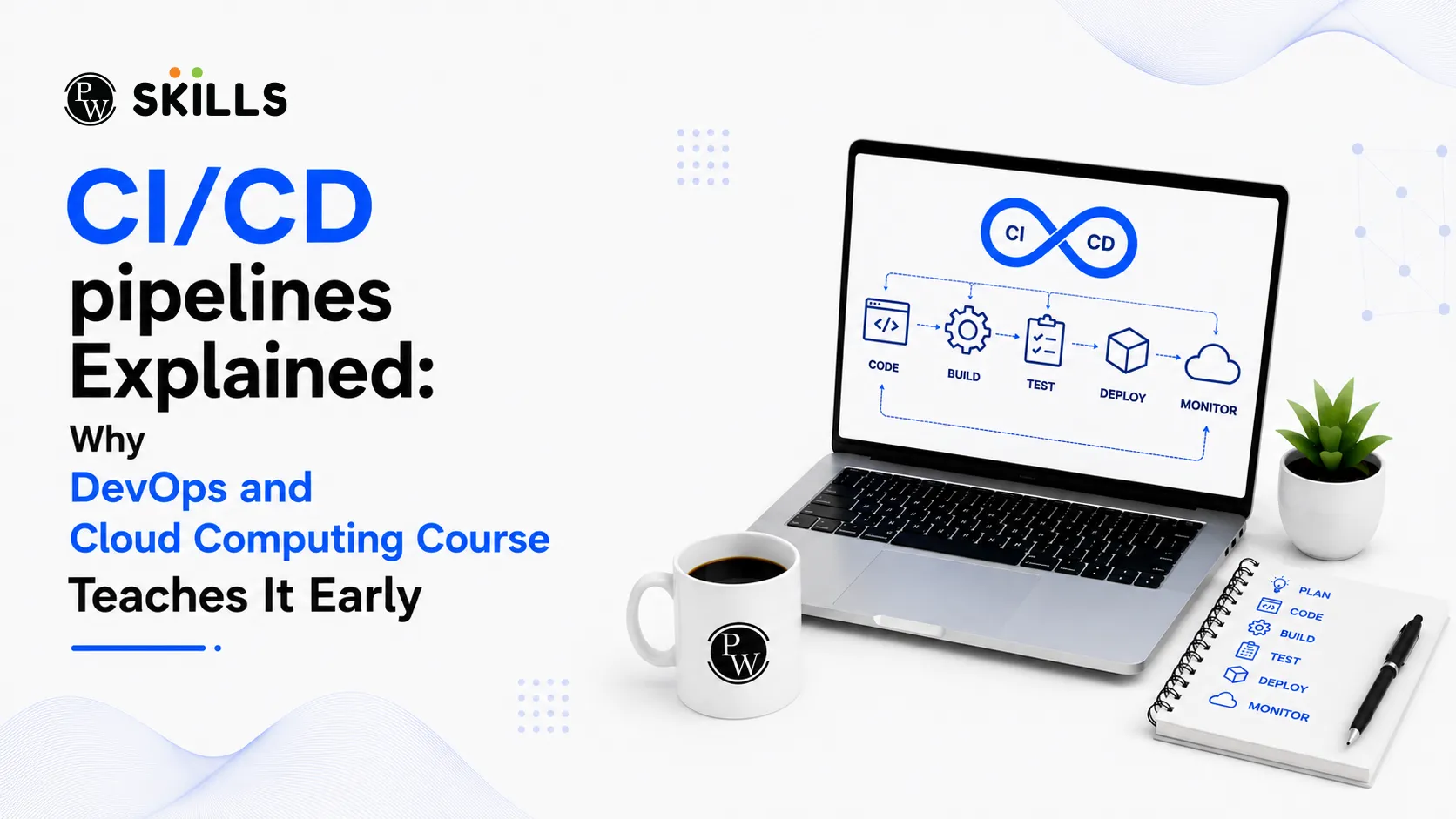
Landing your first cloud role can feel overwhelming when transitioning from theory to real-world infrastructure. Many graduates understand cloud services conceptually but struggle to deploy code safely at scale.
A high-quality DevOps and Cloud Computing Course solves this problem by teaching you how to automate software delivery. Understanding how continuous integration and continuous deployment (CI/CD) pipelines operate in practice is the key to moving from a junior learner to a confident professional.
Overview of DevOps and Cloud Computing Course
A DevOps and Cloud Computing Course is a modern training program designed to help learners build, automate, deploy, and manage applications in cloud environments. Unlike traditional IT education that focuses mainly on server maintenance and manual operations, this course teaches practical skills such as cloud infrastructure management, CI/CD pipelines, containerization, infrastructure as code, and automated monitoring. Students gain hands-on experience with real-world tools and workflows used by modern engineering teams, preparing them for roles in cloud engineering, DevOps, site reliability, and infrastructure automation across industries.
How Does a DevOps and Cloud Computing Course Prepare You for CI/CD Pipelines?
In production environments, developers update code multiple times a day. Teams cannot afford manual deployments, which are slow and prone to human error
A foundational DevOps and Cloud Computing Course bridges this gap by introducing automated workflows. On the job, these workflows ensure that every code change is automatically built, tested, and prepped for release.
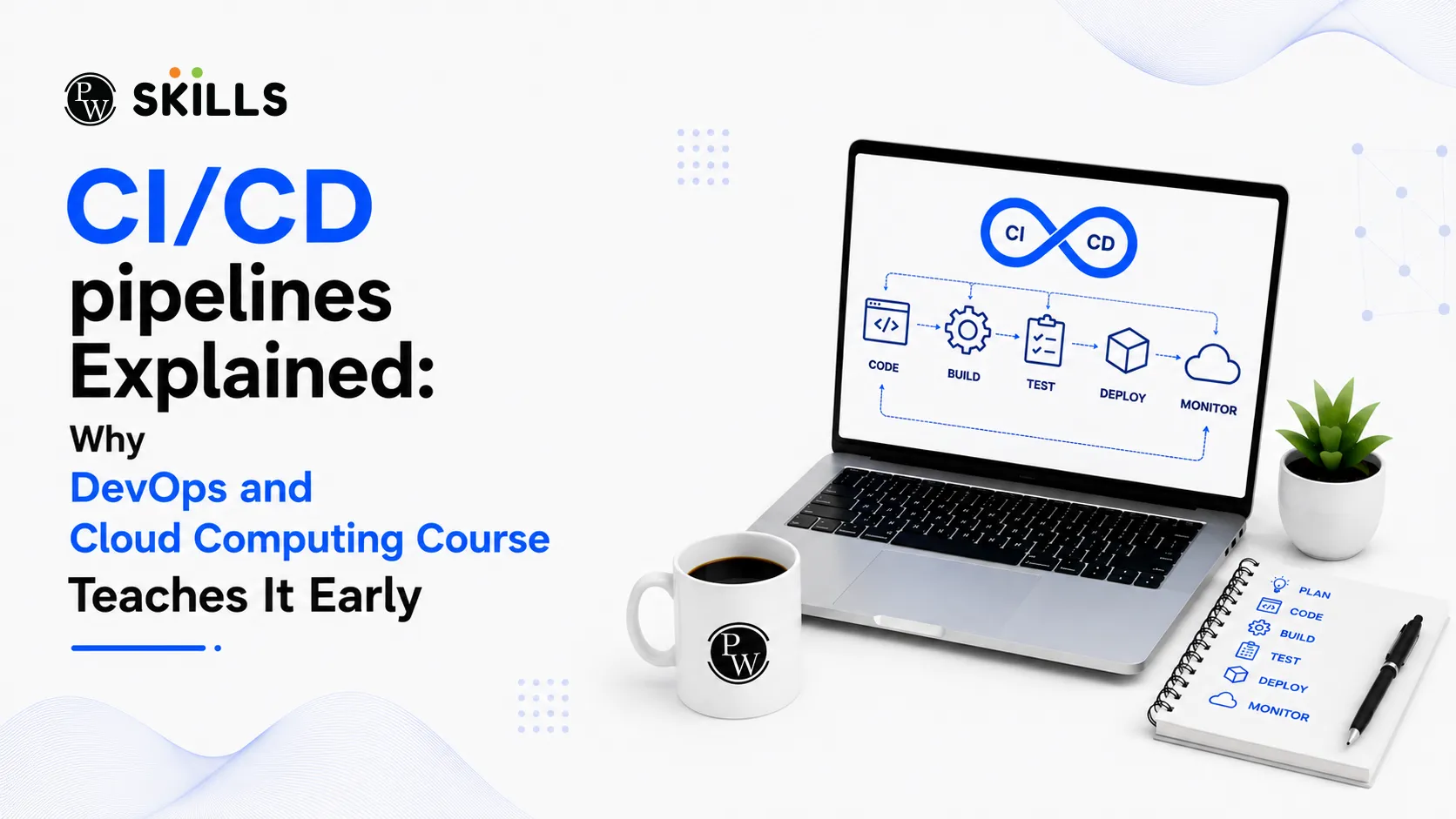
[Developer Code Commit] ──> [Automated Build & Test] ──> [Staging Deployment] ──> [Production Release]
Continuous Integration on the Job
Continuous Integration (CI) is the practice of merging all developer code copies into a shared mainline several times a day. On the job, this looks like an automated system triggering a build the moment you push code to a repository.
The CI stage focuses heavily on early bug detection. The pipeline automatically runs unit tests to ensure the new code does not break existing features. This saves hours of manual debugging later in the cycle.
Continuous Delivery and Deployment
Continuous Delivery ensures that the validated code is automatically zipped and ready to be deployed to production. Continuous Deployment takes it a step further by automatically pushing those changes to live servers without human intervention.
For a cloud engineer, this means managing tools that orchestrate container releases. You configure the rules that dictate how and when code moves from a testing environment to the live public cloud.
Why Does a DevOps and Cloud Computing Course Teach CI/CD Tools?
Modern cloud infrastructure is too massive to manage by hand. Cloud engineers rely heavily on code to spin up servers, manage networks, and allocate storage dynamically.
Enrolling in a DevOps and Cloud Computing Course + Why it focuses on automation becomes clear when you face large-scale deployments. You learn to treat infrastructure the exact same way developers treat application code.
The following list highlights the primary benefits of using pipelines for infrastructure management:
-
Consistency: Eliminates configuration drift across different testing and production environments.
-
Speed: Minimises the time required to provision new cloud resources globally.
-
Traceability: Keeps a clear version history of infrastructure changes in a central repository.
How Does a DevOps and Cloud Computing Course Apply to Infrastructure Automation?
On a typical workday, a cloud engineer spends significant time writing scripts to define server setups. This practice is known as Infrastructure as Code (IaC).
Instead of clicking through a cloud console to launch ten virtual machines, you write a configuration file. The CI/CD pipeline reads this file and automatically provisions the exact resources needed.
A comprehensive DevOps and Cloud Computing Course + Infrastructure automation module teaches you how to embed these configuration scripts into active deployment pipelines. If a server goes down, the pipeline simply rebuilds it from the code template automatically.
How Does a DevOps and Cloud Computing Course Prepare You for Site Reliability Engineer Jobs?
As you gain experience with automated pipelines, your career path naturally expands. Many cloud engineers transition into specialised operational roles that focus entirely on system uptime and resilience.
Choosing a DevOps and Cloud Computing Course + Site Reliability Engineer Jobs preparation pathway equips you with advanced monitoring skills. You shift from just deploying applications to ensuring they remain highly available under heavy user traffic.
The Role of Automation in Reliability
Site Reliability Engineers (SREs) use CI/CD pipelines to deploy automated fixes. If a live system exhibits high latency, a pre-configured pipeline can automatically scale up cloud resources to handle the load.
Rollbacks via Pipelines
When a new software release causes unexpected live errors, speed is critical. Pipelines allow engineers to execute an automated rollback, reverting the live environment to the previous stable version within minutes.
What Are the CI/CD Best Practices Taught in a DevOps and Cloud Computing Course
Successfully managing cloud systems requires strict adherence to deployment best practices. Pipelines must be secure, fast, and transparent to the entire engineering team.
The table below outlines the essential pipeline stages that engineers manage daily:
|
Pipeline Stage |
Primary Purpose |
Key Focus Area |
|
Source Stage |
Tracks version control modifications |
Code commits and repository branching |
|
Build Stage |
Compiles the application code |
Creating containers or executable packages |
|
Test Stage |
Validates code quality and safety |
Running automated unit and integration tests |
|
Deploy Stage |
Pushes code to cloud environments |
Staging validation and live production releases |
Quick Tip: Always keep your build times under ten minutes. If a pipeline takes too long to run, developers will look for ways to bypass it, which introduces security risks.
What Skills from a DevOps and Cloud Computing Course Are Used Daily?
The daily routine of a cloud engineer revolves around maintaining pipeline health. You are the mechanic responsible for the automated assembly line of software delivery.
Every day, you will monitor logs, update deployment scripts, and ensure that cloud permissions are tightly controlled. The practical exercises in a DevOps and Cloud Computing Course mirror these exact troubleshooting scenarios.
-
Debugging Failed Builds: Analysing pipeline logs to determine why an application failed to compile.
-
Managing Secrets: Securing API keys and cloud credentials within the pipeline settings.
-
Optimising Resource Usage: Configuring pipelines to shut down temporary testing environments to save cloud costs.




FAQs
What is the main difference between continuous delivery and continuous deployment?
How does a DevOps and Cloud Computing Course help me get a job?
How does a DevOps and Cloud Computing Course + CI/CD pipelines prepare students for real cloud engineering roles?
Why are DevOps Engineer Jobs increasingly demanding experience with a DevOps and Cloud Computing Course + CI/CD pipelines background?
How does the Cloud Engineer Career Path benefit from learning DevOps and Cloud Computing Course + CI/CD pipelines concepts?





Get Free Counselling Today
and Clear up all your Doubts
 Live & recorded classes available at easeDashboard for progress trackingLakhs of practice questions

