

Agiling Capabilities in DevOps in 2026: How Agile Capabilities Improve DevOps Delivery

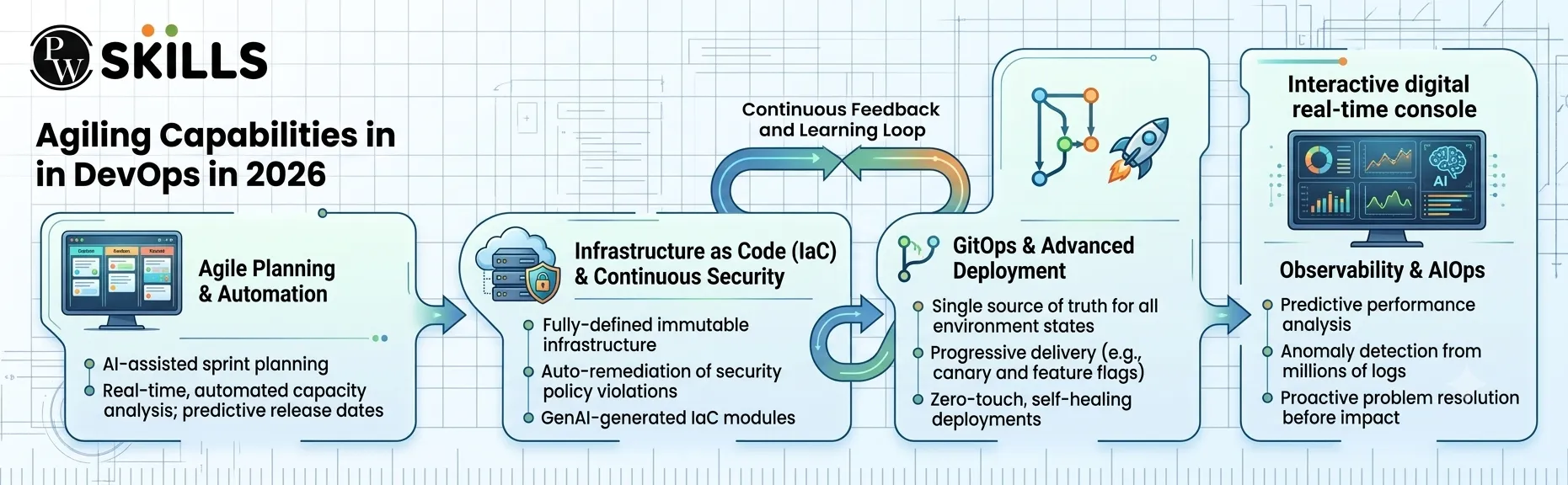
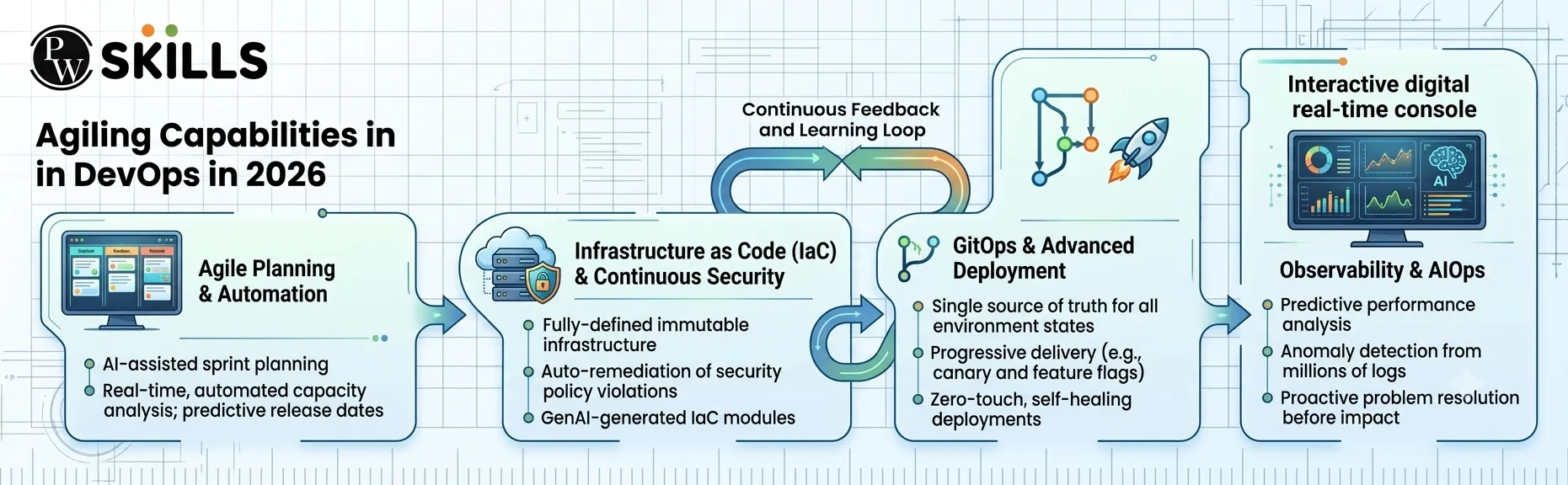
Modern software teams need to balance development speed with reliability, collaboration, and continuous improvement. Agiling capabilities in DevOps bring these priorities together by applying Agile ways of working to DevOps processes. This approach can help teams respond to changing requirements while maintaining consistent development, testing, and delivery practices.
Agile principles such as iterative development, frequent feedback, and collaboration can complement DevOps practices such as automation, continuous integration, continuous delivery, and monitoring. Together, these practices can support a more flexible and feedback-driven software delivery process.
What Are Agiling Capabilities in DevOps?
Agiling capabilities in DevOps refer to the use of Agile principles and practices within DevOps workflows. These capabilities can help teams organise work into smaller increments, respond to feedback, and collaborate across development, operations, testing, and other functions.
In traditional software development environments, long release cycles and separate team responsibilities can make it harder to respond quickly to changing requirements. Agile and DevOps practices address these challenges by encouraging iterative development, automation, shared responsibility, and continuous feedback.
Common agiling capabilities in DevOps include:
- Iterative planning: Teams divide larger objectives into smaller, manageable increments.
- Continuous feedback: Teams use feedback from testing, monitoring, stakeholders, and users to guide improvements.
- Cross-functional collaboration: Development, operations, quality, and other teams work together throughout the software lifecycle.
- Automation: Repetitive tasks such as testing, building, and deployment can be automated.
- Continuous improvement: Teams regularly review processes and use the results to improve future work.
These capabilities connect Agile ways of working with DevOps practices and can help organisations create more adaptable software delivery workflows.
Why Are Agiling Capabilities in DevOps Important?
The importance of agiling capabilities in DevOps comes from the need to adapt software development and delivery processes as requirements change. Agile practices provide an iterative approach to planning and development, while DevOps extends collaboration and automation across development and operations.
These combined practices can support:
- Faster feedback during development and testing
- Better collaboration between development and operations teams
- More frequent and manageable software releases
- Reduced reliance on repetitive manual processes
- Earlier identification of software defects
- Greater visibility into development and operational workflows
For example, instead of waiting until the end of a large development cycle to test an application, teams can integrate testing into the development process. This allows potential issues to be identified earlier and addressed before they become more difficult to resolve.
Agiling capabilities in DevOps therefore support an incremental approach in which teams can continuously learn from feedback and improve their software and processes.
How Do Agiling Capabilities in DevOps Improve Software Delivery?
Agiling capabilities in DevOps can improve software delivery by combining iterative development with automated build, test, and deployment processes.
Teams can break larger development objectives into smaller changes and use continuous integration to regularly integrate those changes into a shared codebase. Automated testing can then help verify whether the changes meet defined requirements before they move further through the delivery pipeline.
A typical workflow may include:
- Developers make small, incremental code changes.
- Changes are integrated into a shared repository.
- Automated tests check the code for potential problems.
- Build and deployment processes are automated where appropriate.
- Monitoring provides feedback about application and infrastructure performance.
- Teams use this feedback to plan further improvements.
This approach can reduce the amount of repetitive manual work involved in software delivery while giving teams more frequent opportunities to identify and address problems.
What Challenges Affect Agiling Capabilities in DevOps?
Although agiling capabilities in DevOps can provide several benefits, organisations may face technical, cultural, and organisational challenges when adopting them.
One common challenge is resistance to changes in established workflows. Teams accustomed to sequential development processes may need time and training to adapt to iterative planning, shared responsibility, and continuous feedback.
Legacy systems can create additional difficulties. Older applications may lack automated tests, modern deployment pipelines, or infrastructure that supports frequent releases. Technical debt can therefore make it more difficult to introduce DevOps automation and Agile practices.
Other challenges can include:
- Fragmented development and deployment tools
- Limited automation
- Lack of cross-functional collaboration
- Inconsistent processes between teams
- Insufficient monitoring and observability
- Difficulty selecting meaningful performance metrics
Organisations can address these challenges through gradual implementation, appropriate training, improved collaboration, and targeted automation rather than attempting to change every process simultaneously.
How Can You Implement Agiling Capabilities in DevOps Workflows?
Implementing agiling capabilities in DevOps starts with understanding the organisation's existing development and delivery processes. Teams can identify bottlenecks, repetitive manual tasks, communication gaps, and areas where feedback is delayed.
A phased approach can help teams introduce changes gradually.
1. Assess Existing Workflows
Map the current development, testing, deployment, and operational processes. Identify areas where manual work or communication gaps are slowing delivery.
2. Introduce Iterative Planning
Break larger projects into smaller deliverables that can be planned, developed, tested, and reviewed incrementally.
3. Automate Repetitive Tasks
Introduce automation for suitable activities such as builds, testing, deployment, infrastructure provisioning, and monitoring.
4. Strengthen Cross-Functional Collaboration
Encourage development, operations, quality assurance, security, and other relevant teams to collaborate throughout the software lifecycle.
5. Establish Feedback Loops
Use testing results, monitoring data, user feedback, and team reviews to identify areas for improvement.
6. Measure and Improve
Track relevant delivery and operational metrics and use the results to refine processes over time.
This gradual approach allows organisations to introduce agiling capabilities in DevOps while adapting the implementation to their existing technology, team structure, and business requirements.
What Tools Support Agiling Capabilities in DevOps?
The right tools can support agiling capabilities in DevOps by providing visibility, automation, collaboration, and feedback throughout the software lifecycle.
Different categories of tools serve different purposes:
- Project management tools: Help teams manage backlogs, plan iterations, assign tasks, and track progress.
- Code repositories: Allow teams to store, review, and manage source code collaboratively.
- CI/CD tools: Automate processes such as building, testing, and deploying applications.
- Infrastructure as Code tools: Allow infrastructure configurations to be defined and managed through version-controlled files.
- Testing tools: Automate different types of software testing throughout the development process.
- Monitoring and observability tools: Provide information about application performance, infrastructure health, and system behaviour.
- Communication and collaboration tools: Help distributed teams coordinate development and operational activities.
Tools alone do not create Agile or DevOps practices. Their effectiveness depends on how well they support the organisation's workflows, team structure, automation strategy, and delivery objectives.
How Can You Measure Agiling Capabilities in DevOps Success?
Measuring agiling capabilities in DevOps can help organisations understand whether changes to development and delivery processes are producing the intended results.
Teams can track a combination of delivery, quality, and operational metrics rather than relying on a single measurement.
Important metrics include:
- Deployment frequency: How often an organisation successfully deploys changes to production.
- Lead time for changes: The time taken for a change to move from development or code commit to deployment.
- Change failure rate: The proportion of deployments that result in a failure requiring remediation, rollback, or another corrective action.
- Mean time to recovery: How long it takes to restore a service after an incident.
- Defect rates: The number or frequency of defects identified during development, testing, or after release.
These metrics can provide insight into delivery speed, reliability, and the effectiveness of improvement efforts. They should be considered together and interpreted according to the organisation's specific application, architecture, and delivery model.




FAQs
What are agiling capabilities in DevOps?
How do agiling capabilities in DevOps improve collaboration?
Do agiling capabilities in DevOps require automation?
How do agiling capabilities in DevOps affect software quality?
What role does leadership play in implementing agiling capabilities in DevOps?






Get Free Counselling Today
and Clear up all your Doubts
 Live & recorded classes available at easeDashboard for progress trackingLakhs of practice questions

