

Begin Your Gen AI Journey! Microsoft-Backed FREE Series for 2026 Beginners | PW Skills Batch Launch
 Varun Saharawat18 Jun, 2026
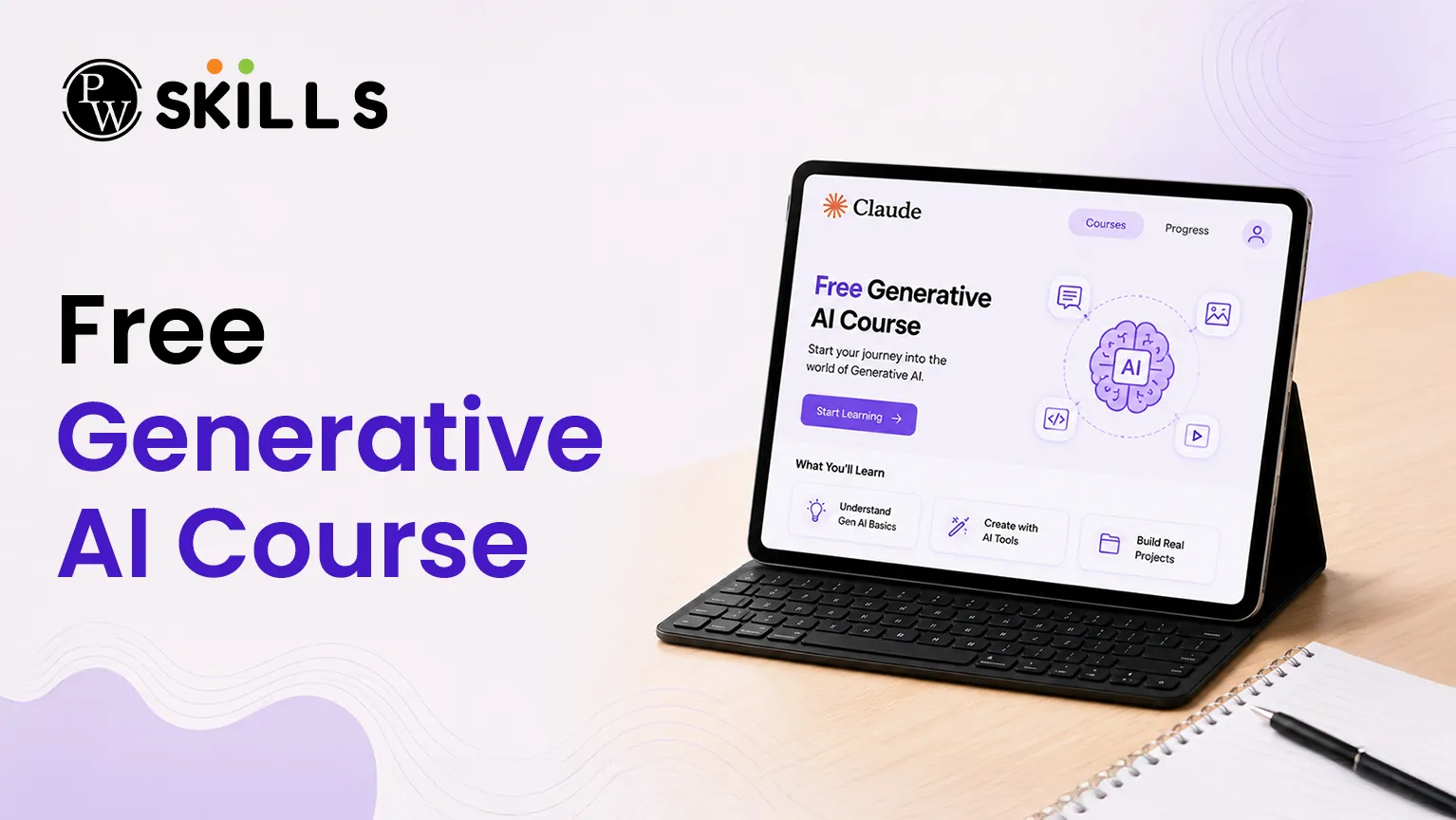
The rapidly evolving technology ecosystem leaves many students and working professionals wondering how to keep up with automation. If you are struggling to find high-quality, practical learning resources that do not cost a fortune, you are not alone. The barrier to entering the artificial intelligence domain can feel incredibly high. To solve this exact problem for tech aspirants, the newly launched free generative AI course ecosystem offers a comprehensive, zero-cost pathway.
Why Choose a Free Generative AI Course?
Starting your journey with a structured free generative AI course is the most effective way to enter the modern software and technology landscape. Instead of spending thousands on unverified bootcamps, beginners can now access enterprise-grade curricula designed by market leaders. This comprehensive approach ensures you learn production-ready skills that companies actually look for in tech applicants.
The primary advantage of these open-access pathways is the blend of theoretical computer science and actual software development. Learners do not just read about models; they actively write code, test prompts, and deploy intelligent applications. This practical experience builds a robust portfolio that makes your CV stand out to global recruiters.
Choosing this learning route eliminates the financial risk often associated with career transitions. It allows university students, self-taught programmers, and non-tech professionals to experiment with cutting-edge tools at their own pace. By focusing on real-world application building, you gain immediate confidence in handling advanced systems.
What You Will Learn in a Free Generative AI Course
The core architecture of this learning ecosystem draws heavily from the globally acclaimed Microsoft AI course framework. Developed by Microsoft Cloud Advocates, this curriculum provides a highly structured, step-by-step pathway containing 18 comprehensive lessons. It transitions smoothly from introductory definitions to production-level systems integration.
Core Architecture of the 18-Lesson Structure
-
Foundational Frameworks: Understand the inner workings of Large Language Models (LLMs) and the current technology landscape.
-
Model Selection: Learn how to test, iterate, and compare different foundation models to select the perfect fit for your specific use case.
-
Responsible AI Implementation: Prioritise safety by understanding the limitations and core ethical principles of modern neural networks.
-
Prompt Engineering Best Practices: Learn prompt structures, variations, and advanced techniques to efficiently control model outputs.
Application Development and Coding Labs
-
Application Building: Write functional code for automated text generation and real-time chat applications using Azure OpenAI Service.
-
Vector Databases: Explore semantic search techniques, text embeddings indices, and Retrieval-Augmented Generation (RAG).
-
Low-Code Integration: Build a student assignment tracker app and invoice processing flows inside Power Platform using smart copilots.
-
Advanced Autonomy: Design custom User Experiences (UX), implement function calling via external APIs, and build multi-agent frameworks.
+------------------------------------------------------------------------+
| MICROSOFT AI COURSE ROADMAP |
+------------------------------------------------------------------------+
| Lesson 01-05: Fundamentals, LLM Mechanics, & Prompt Engineering |
| Lesson 06-10: Text, Chat, & Low-Code Applications (Power Platform) |
| Lesson 11-14: Function Calling, Advanced UX, & Secure App Lifecycle |
| Lesson 15-18: RAG Systems, Open Source (Hugging Face), & AI Agents |
+------------------------------------------------------------------------+
Free Generative AI Course Learning Path
A structured PW Skills Gen AI course helps learners move from basic concepts to real-world AI development through a clear and organized learning path. Instead of learning from random resources, students follow step-by-step lessons that make complex AI topics easier to understand and apply.
The learning framework is divided into manageable milestones, allowing learners to build their skills gradually. Through community discussions and collaborative learning, students can solve coding problems, share project ideas, and learn from others working on similar AI applications. This supportive environment helps learners stay motivated and complete their training successfully.
In addition, the course provides guidance on setting up development environments, running AI projects locally, and working with cloud-based coding platforms. By completing hands-on assignments and portfolio projects, learners gain practical experience with AI tools, API integrations, deployment workflows, and real-world development practices that are valuable in today's job market..
|
Learning Phase |
Core Technical Topic |
Practical Portfolio Project |
|
Phase 1 |
Prompt Engineering & LLM Basics |
Automated Text Content Generator |
|
Phase 2 |
Low-Code & Copilot Systems |
Student Assignment Tracker Application |
|
Phase 3 |
Semantic Search & Embeddings |
Vector-Based Smart Search Index |
|
Phase 4 |
Advanced Frameworks & RAG |
Enterprise Document Query Bot |
|
Phase 5 |
Autonomous Architectures |
Multi-Agent Task Orchestrator |
How to Complete a Free Generative AI Course
Stepping into Gen AI for beginners requires a systematic approach to avoid cognitive overload. To get the most out of your educational journey, follow this operational checklist designed to set up your coding workspace seamlessly.
Step 1: Set Up Your Development Environment
-
Fork the official open-source curriculum repository to your personal GitHub account.
-
Launch a GitHub Codespace or set up a local development environment running Python or TypeScript.
-
Secure your required system endpoints and store your environment API keys safely.
Step 2: Progress Through the Learning Material
-
Watch the bite-sized introductory video lesson for each technical concept.
-
Read through the detailed technical documentation provided in the repository guides.
-
Open the interactive Jupyter Notebooks to run and modify the existing code examples.
Step 3: Complete Practical Coding Challenges
-
Take the specialized challenge or assignment provided at the conclusion of each lesson.
-
Build out your application variations by tweaking hyperparameters like temperature and token limits.
-
Commit your working application code back to your personal GitHub repository to build a public portfolio.
Step 4: Participate in Developer Communities
-
Join the official developer Discord servers to network with fellow engineers.
-
Share your active product feedback, raise issues, or submit pull requests for code errors.
-
Collaborate with peers to design unique UI elements for your custom intelligent applications.
Free Generative AI Course Career Benefits
It can help you build valuable skills that are in high demand across many industries. Today, companies need professionals who can work with AI tools, automate tasks, and create smart applications. Learning these skills can help you stand out from other candidates and improve your career opportunities.
As AI technology continues to grow, the demand for professionals with knowledge of AI models, vector databases, intelligent agents, and prompt engineering is increasing rapidly. Industries such as healthcare, finance, education, retail, and technology are actively looking for people who can build and manage AI-powered solutions. This course helps you learn these in-demand skills without spending any money.
By completing a Generative AI Course, you can prepare yourself for future job roles and stay relevant in a changing technology landscape. Instead of worrying about automation replacing jobs, you can become the professional who builds, improves, and manages AI systems. These skills can open new career paths and help you stay competitive in the job market for years to come.



FAQs
What are the prerequisites for joining a Free Generative AI Course?
Does a Generative AI Course include hands-on projects?
How does a Generative AI Course support learners?
Can beginners join a Generative AI Course?
Are there any hidden costs in a Generative AI Course?





Get Free Counselling Today
and Clear up all your Doubts
 Live & recorded classes available at easeDashboard for progress trackingLakhs of practice questions

