

Future Banker in 2026: Skills You Need to Build a Successful Banking Career
 Hardik Gupta22 Sept, 2026
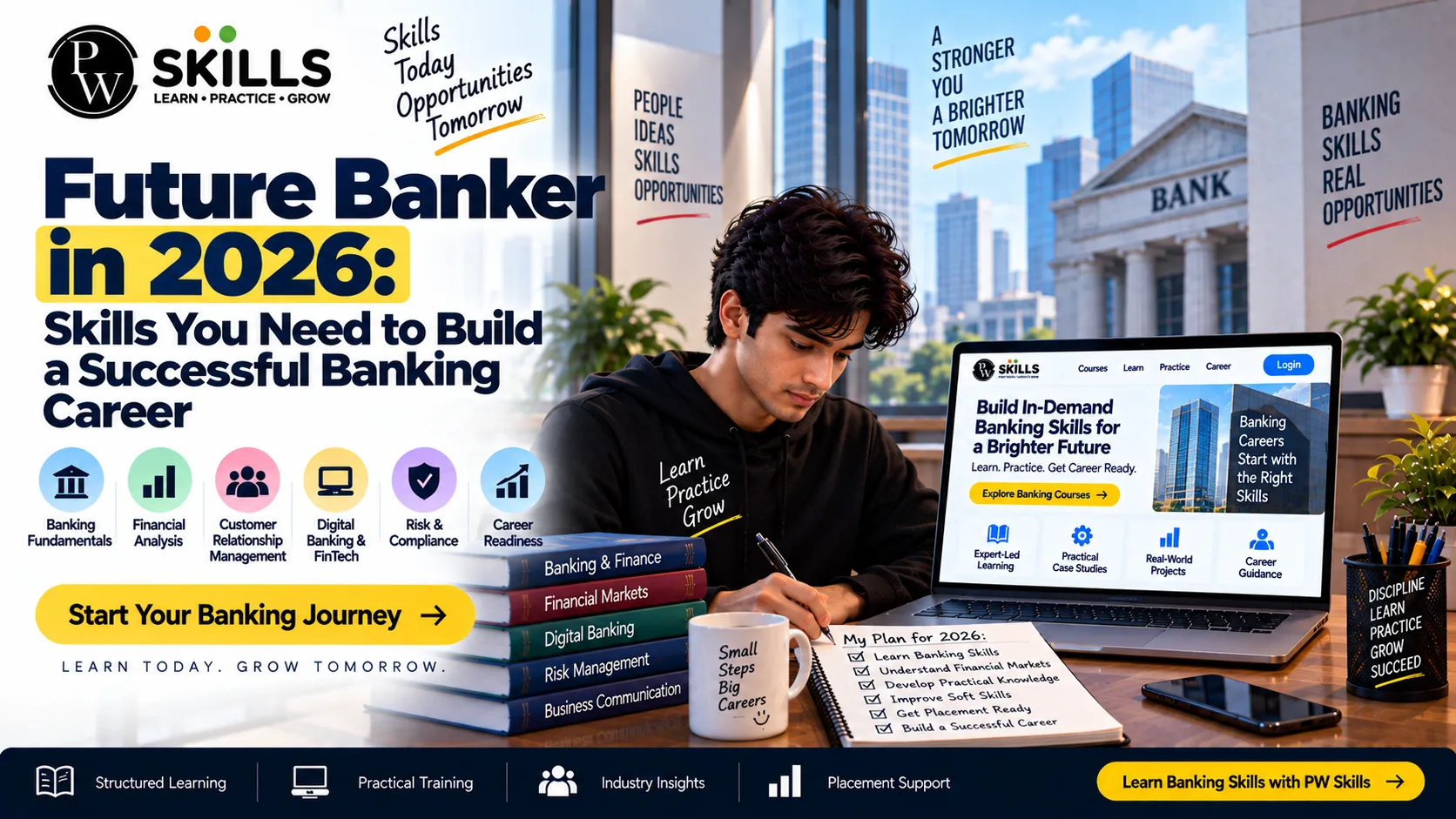
To emerge as a competent future banker, you must learn a blend of traditional financial analysis and modern technological proficiency. Navigating this competitive landscape demands a structured training approach and a deep understanding of what employers look for when hiring talent for future banking careers. Targeted upskilling programs help aspirants transition smoothly from university classrooms into corporate boardrooms without unnecessary friction.
Future Banker Skills for Building a Strong Banking Career
The sustainable solution is all about learning the fundamentals of finance. Financial institutions are bound by a tight regulatory regime, risk management controls and asset-liability rules. They need to comprehend the movement of capital through retail and corporate channels, the mechanics of credit evaluation, and the effects of monetary policy on their everyday operations.
-
Financial literacy: comprehensive knowledge of retail banking products, deposit plans, mutual funds and insurance life-cycles.
-
Credit Appraisal: scrutiny of corporate and individual loan proposals, analysis of the risk profile of the borrower and document verification.
-
Risk Management: developing preventative mitigation plans, assessing market volatility and identifying institutional risk.
-
Regulatory Adherence: Full compliance with requirements of the central bank, anti-money laundering as well as Know Your Customer regulations.
Traditional banking foundations remain non-negotiable. Even as automation takes over routine back-office tasks, professionals must possess the analytical depth to interpret financial statements and balance sheets accurately. Developing these core competencies ensures long-term career stability across diverse financial environments.
They also need to grasp how different operations of banking work together. Knowledge of deposits, lending, payments, customer service, investments and compliance can assist professionals comprehend the banking ecosystem at large, rather than just one activity or department.
Practical exposure can further strengthen these foundational skills. Working with sample financial statements, understanding loan documentation, practising basic credit assessment, and learning common banking terminology can help fresh graduates connect classroom concepts with workplace responsibilities.
Also Explore our Course : BFSI Course
Future Banker Digital Skills for Modern BFSI Jobs
Technology fundamentally alters how financial institutions interact with consumers, making technical literacy vital for all these jobs. Traditional branch-level operations now integrate seamlessly with mobile applications, cloud-based databases, and automated ledger systems. A contemporary future banker needs complete fluency in digital tools to manage remote customer portfolios and process high-volume transactions securely.
-
Core Banking Systems: Operating enterprise software that handles daily branch transactions, account openings, and customer ledgers.
-
Fintech Awareness: Understanding blockchain mechanics, digital currencies, electronic payment gateways, and open banking APIs.
-
Data Navigation: Utilizing customer relationship management dashboards to track user activity, transaction history, and service preferences.
-
Omnichannel Support: Managing customer queries effectively across internet banking portals, mobile applications, and physical branches.
The modern workplace relies heavily on software integration. Professionals who adapt quickly to emerging financial technologies stand out during recruitment drives. Upskilling through specialized platforms ensures candidates remain competitive and ready for tech-driven work environments.
Digital skills are increasingly important in both customer-facing and operational banking functions. The professional may be required to work with dashboards, digital payment systems, customer databases, online service platforms and automated workflows. Basic data interpretation can also help employees learn about client activity and operational success.
Another useful field for banking workers is cybersecurity knowledge. Understanding secure authentication, safeguarding client data, phishing dangers and responsible financial information management can aid staff in embracing safer digital practices while serving customers through online channels.
Future Banker Communication and Client Relationship Skills
Technical expertise alone is not enough without the interpersonal skills needed for client-facing jobs. Building long-term institutional loyalty is based on straightforward communication, active listening and clever cross-selling. Professionals joining the field have to balance technical rigor with emotional intelligence to handle all types of client segments.
-
Relationship Management: Identifying high-net-worth clients, understanding their long-term investment goals, and offering tailored solutions.
-
Cross-Selling Strategy: Recommending complementary insurance policies, credit cards, or investment products based on precise client profiles.
-
Corporate Communication: Apply professional email etiquette, spoken English and impactful presentation delivery while pitching to clients.
-
Conflict Resolution : Quickly, empathetically and competently handling complicated consumer concerns in an effort to retain valuable accounts.
Keeping customers happy is the key to profitability of branches. Banks are looking for somebody who know about finance and can also persuade and negotiate really well. Gaining these soft skills early will speed up your promotion to senior advising and portfolio management positions.
Future Banker Career Roadmap for Banking Growth
To transition into financial services, one must engage in systematic planning, receive professional mentorship, and undergo structured upskilling. A complete journey typically starts with industry-standard qualifications ranging from fundamental accountancy to sophisticated portfolio management. Specialized BFSI courses are aimed at providing fresh graduates with practical exposure, resume engineering and mock interview sessions to clear strict corporate screening filters.
|
Career Stage |
Primary Focus Area |
Key Professional Objectives |
|
Entry-Level |
Foundations & Operations |
Learn core banking software, KYC protocols, and front desk operations. |
|
Mid-Level |
Client Acquisition & Sales |
Build retail portfolios, drive cross-selling, and manage key accounts. |
|
Growth-Level |
Strategy & Risk Analysis |
Handle corporate credit appraisal, risk mitigation, and team leadership. |
Following a structured roadmap eliminates career ambiguity. Professionals who track their milestone achievements find it easier to transition from operational roles to strategic leadership positions within top-tier financial institutions.
A career roadmap can also help candidates identify the skills they need at different stages. Fresh graduates may initially focus on banking operations and customer service, while professionals with experience can gradually develop expertise in credit, risk, relationship management, compliance, or financial analysis.
Candidates can strengthen their progress by combining formal learning with practical preparation. Building a relevant resume, practising banking interview questions, completing practical projects, and staying updated on financial-sector developments can help them prepare for different stages of the recruitment process.





FAQ
What are the primary skills needed to become a future banker?
How do digital banking skills impact BFSI jobs?
What career paths are available through structured banking courses?
Why is a structured banker career roadmap important?
What qualifications are required to enter the BFSI sector?





Get Free Counselling Today
and Clear up all your Doubts
 Live & recorded classes available at easeDashboard for progress trackingLakhs of practice questions

