

Axis Young Bankers Program 2026: Eligibility, Skills and Banking Career Opportunities
 Hardik Gupta22 Sept, 2026
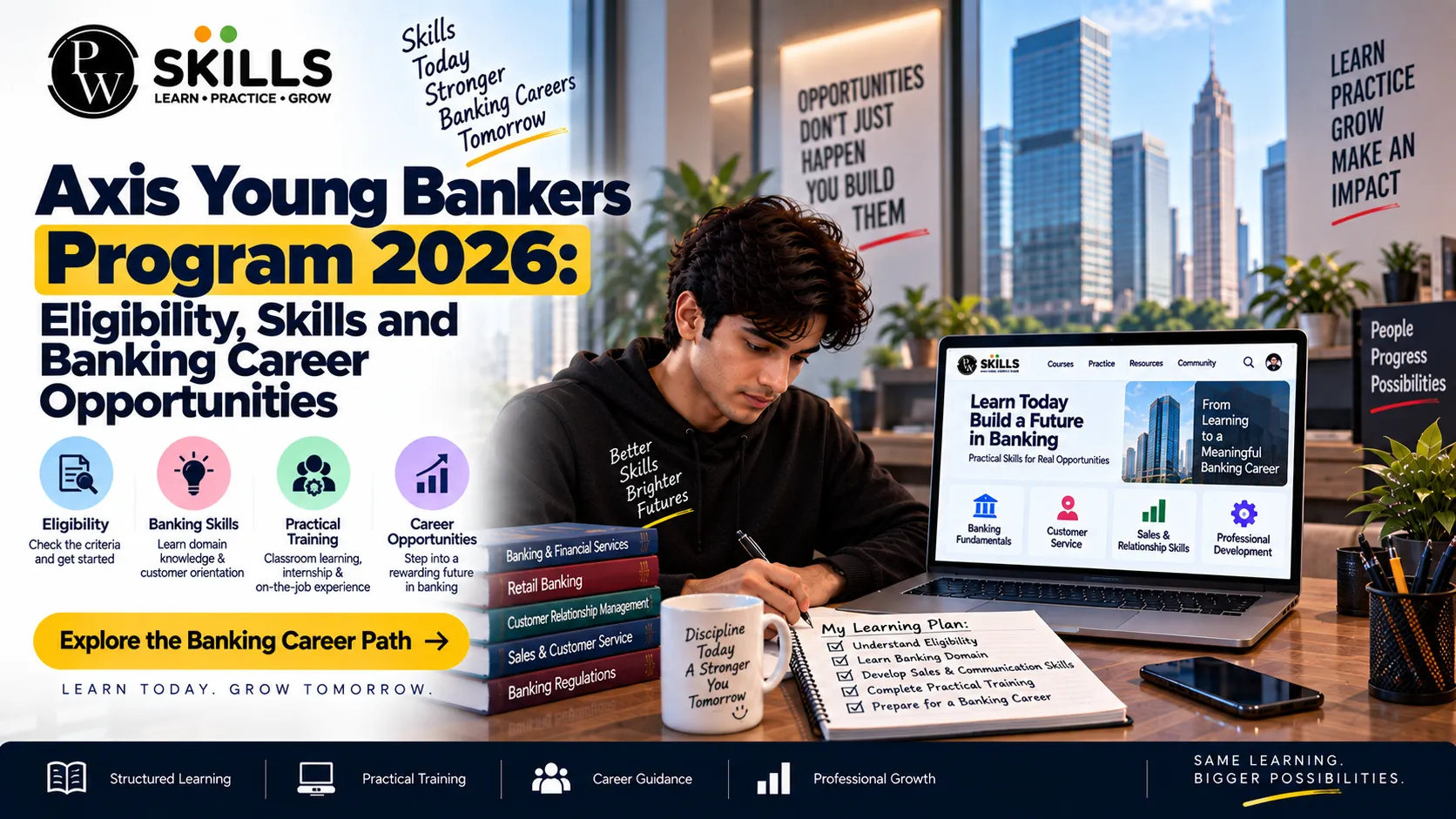
Banking roles are difficult to enter for graduating students due to limited practical exposure and training in the industry. Candidates study through classroom training and practical experience in the Axis Young Bankers Program, which is designed to develop applicable skills. The article describes who may apply, how people are selected, what is taught, how much it costs and available jobs after completing the course, so people can understand the program before they apply.
Axis Young Bankers Program Structure
The curriculum is structured on an entire twelve month timeline, broken into varying experiential phases to promote absolute job readiness. The journey starts with an in-depth look at key retail banking solutions, digital banking systems and regulatory compliance in the on-campus training. Following classroom teaching, the participants move into structured internships and on-the-job training extensions in the operational branches.
During these practical phases, learners gain important banking skills by shadowing customers, doing relationship management exercises and evaluating real-life case studies. They pay stipends in different phases so that you earn as you study until you are finally absorbed as a full time employee.
Each step has a specific goal in preparing individuals for the banking role. The classroom helps to establish theoretical knowledge initially and then the branch based exposure provides the learners an opportunity to comprehend the practical working of the banking operations. The on-the-job phase next allows participants to apply these concepts and become familiar with day-to-day working demands.
Candidates are advised to check the official program information carefully before applying since specific structure, timing, stipend information and terms of employment are subject to change depending on the current intake requirements of the program.
Also Explore our Course : BFSI Course
Axis Young Bankers Program Eligibility Criteria
Applicants must fulfill specific academic, age, and background parameters to secure admission into the curriculum.
-
Educational Qualification: Candidates must hold a recognized graduation degree in any discipline with a minimum aggregate score of fifty percent.
-
Age Limits: Eligible applicants generally fall within the specified age brackets designated for fresh graduates or early professionals.
-
Financial Background: A satisfactory credit history, represented by a healthy CIBIL score or clean credit report, is typically mandatory for selection.
-
Communication Proficiency: Strong verbal and written communication capabilities in English are prioritized for customer-facing responsibilities.
|
Program Phase |
Duration |
Financial Stipend / Support |
Core Focus Area |
|
Campus Training |
4 Months |
Monthly Stipend Provided |
Classroom Lectures & Core Concepts |
|
Branch Internship |
3 Months |
Enhanced Monthly Stipend |
Shadowing & Branch Operations |
|
On-the-Job Training |
5 Months |
Advanced Monthly Support |
Target Alignment & Role Execution |
|
Final Absorption |
Full-Time |
Competitive Annual CTC |
Assistant Manager / Banking Officer |
Meeting the basic eligibility requirements does not necessarily mean automatic selection. Applicants may also need to complete the prescribed application, screening, assessment, interview, or other selection stages. Candidates should check the latest official notification for the applicable requirements before submitting an application.
During the application procedure, you need to prepare academic documents, identity proof, graduation records and other essential information. It helps to know them in advance and tick them off as you go, to minimize delays or mistakes when registering.
Axis Young Bankers Program Selection Process and Preparation
If you are a candidate who is willing to apply for the Axis Young Bankers Program, you must understand the selection procedure and prepare each stage thoroughly. This may include applicant screening, aptitude/assessment rounds, personal interviews and other evaluations as per the current program criteria. Candidates are advised to refer the official notification for the phases appropriate for their admission.
To start your preparation, revise basic banking principles, current financial awareness, numerical abilities and communication skills. Candidates can also practice general interview questions on customer service, banking goods, career aspirations and their knowledge on BFSI sector. Having your academic documents and other relevant paperwork ready will help the application process go more smoothly.
A clear understanding of personal strengths, career goals, and reasons for choosing banking can also help candidates communicate confidently during interviews. Regular practice through mock assessments and interviews can help applicants become familiar with the type of questions and situations they may encounter during the selection process.
Banking Skills You Build During the Program
To succeed in the financial services industry, you need a fine balance of technical and people skills. The curriculum consists of core modules that train learners to manage customer portfolios, cross-sell financial products, and process transaction requests with ease. Trade finance, foreign exchange basics and wealth management practical skills let individuals confidently manage high-value client accounts. Also, the training sessions focus significantly on building emotional intelligence, active listening, and persuasive negotiation skills, all critical elements for long-term professional advancement in any competitive Axis Bank career program.
Along with product and customer-handling knowledge, learners can benefit from developing basic financial awareness, digital banking knowledge, documentation skills, and an understanding of compliance procedures. These capabilities are useful when working with customers and following standard banking processes.
Communication is particularly important in customer-facing banking roles. Participants may need to explain financial products clearly, understand customer requirements, respond to queries, and maintain accurate records. Regular practical exposure can help learners become more comfortable with these responsibilities.
Career Opportunities After the Axis Young Bankers Program
Securing a position through a certified professional pipeline opens doors to lucrative career trajectories within the modern BFSI career landscape. Graduates who successfully clear evaluations are typically designated as Assistant Managers or specialized branch officers, enjoying structured increments, medical benefits, and performance-based incentives. Because digital transformation is reshaping financial institutions worldwide, skilled practitioners who understand both traditional branch operations and modern digital platforms experience accelerated promotions. This initial professional stepping stone provides candidates with the leadership foundation required to advance into senior regional management roles.
Career progression can depend on individual performance, available roles, organisational requirements, and the responsibilities assigned after programme completion. Participants can gradually build experience in areas such as branch operations, customer relationship management, sales, and other banking functions as they progress in their careers.
For candidates planning a long-term banking career, the programme can also provide a starting point for developing transferable skills such as customer service, financial product knowledge, communication, sales management, and team coordination. Continued learning and relevant work experience remain important as professionals move towards more specialised responsibilities.




FAQ
What is the primary objective of the this Program?
Who is eligible to apply for the Axis Young Bankers Program 2026?
Are participants paid a stipend during the training duration?
What designation do candidates receive upon successful completion?
How does this curriculum enhance long-term professional prospects?





Get Free Counselling Today
and Clear up all your Doubts
 Live & recorded classes available at easeDashboard for progress trackingLakhs of practice questions

