

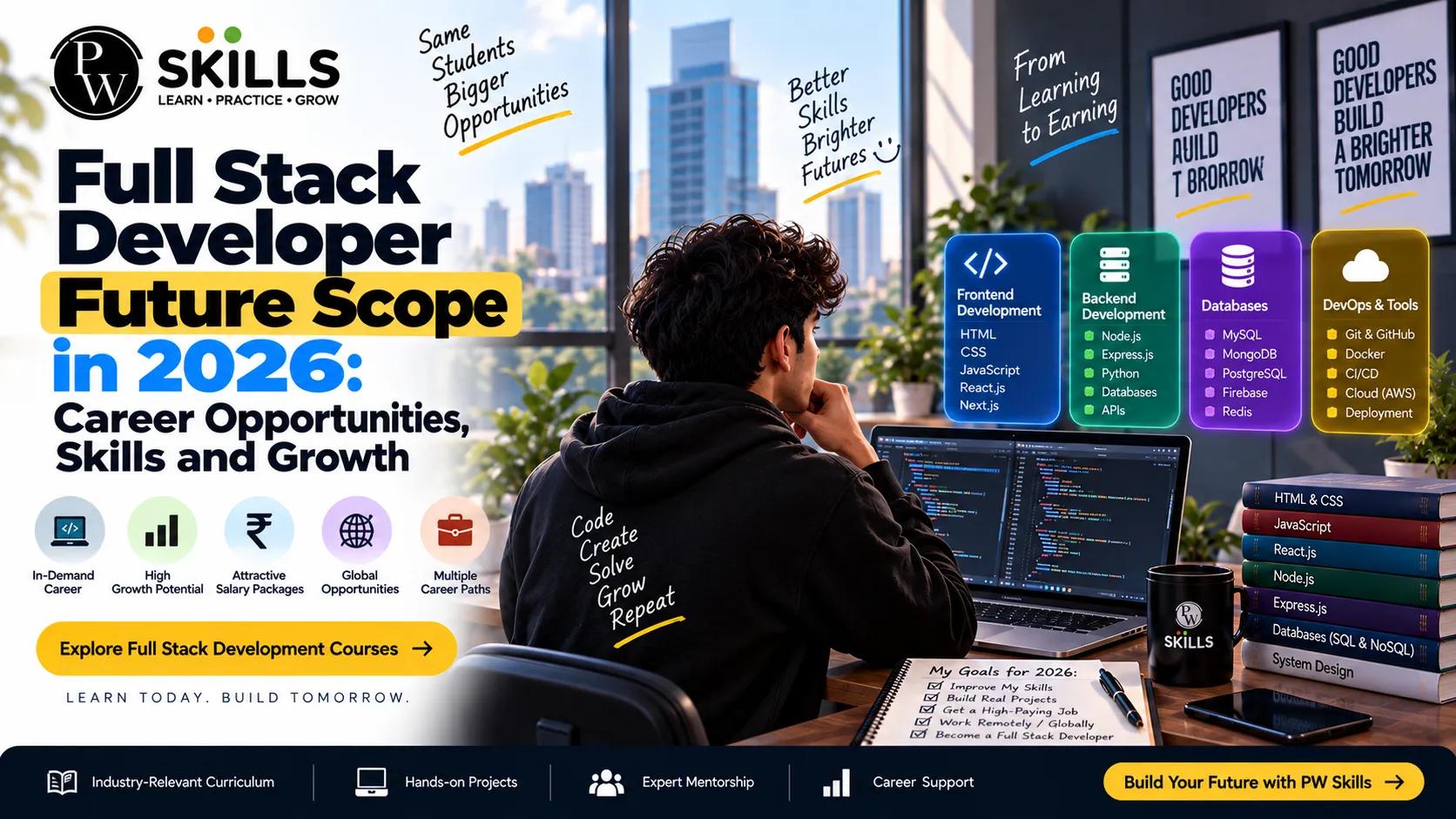
Full Stack Developer Future Scope in 2026: Career Opportunities, Skills and Growth
 Hardik Gupta22 Sept, 2026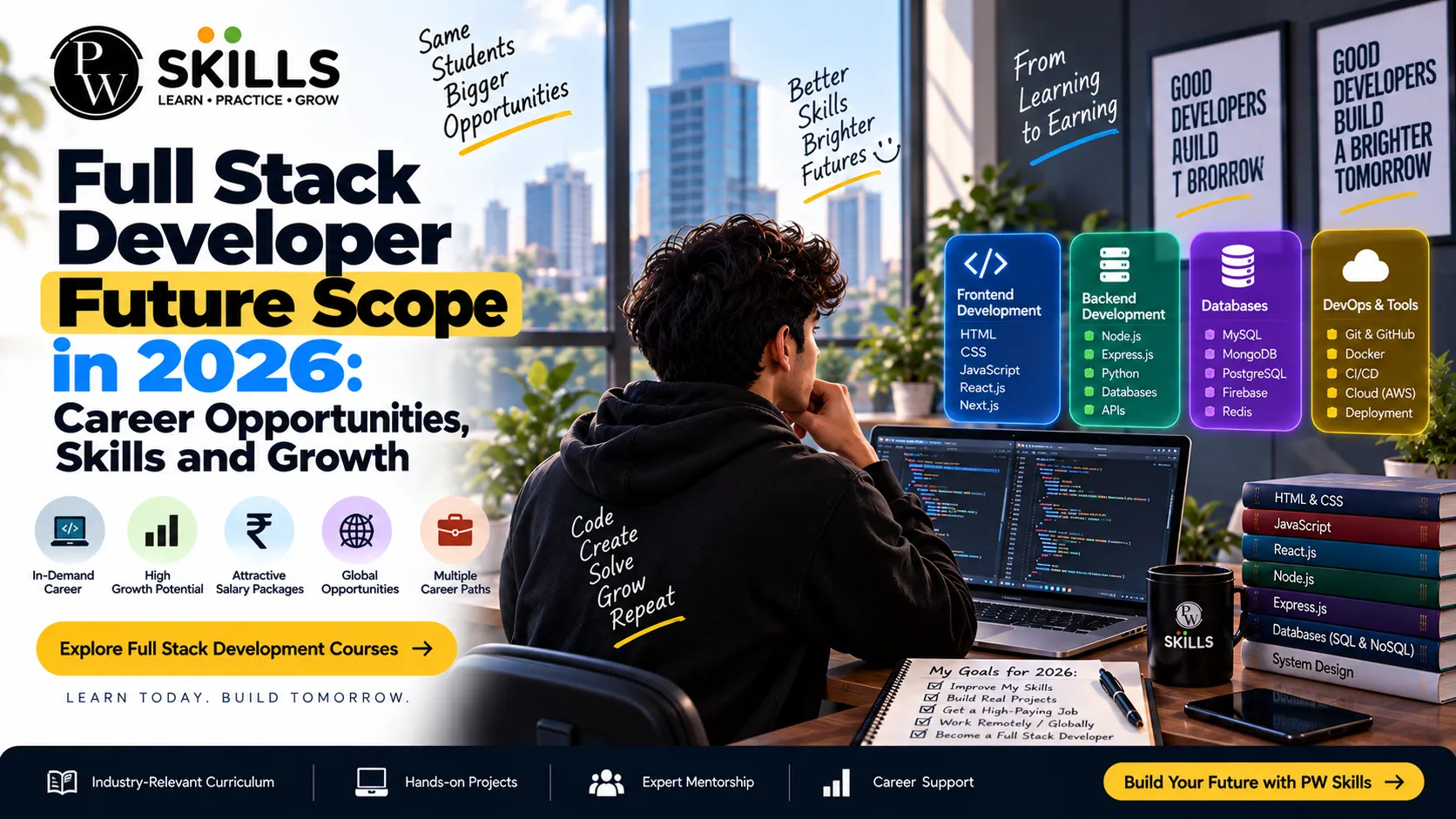
Choosing a technology specialization can feel overwhelming when industries evolve rapidly. Many students worry about whether traditional coding skills will stay relevant or if automation might replace entry-level technical roles.
The full stack developer future scope addresses these exact concerns by offering a complete career framework that spans frontend design, backend systems, database management, and deployment. Instead of limiting your expertise to a single layer of an application, working across the entire development cycle ensures long-term professional adaptability.
Understanding the trajectory of this path helps tech aspirants make smart decisions about their learning goals and industry readiness.
What Is Full Stack Developer Future Scope
The full stack developer future scope centers on the growing need for multi-skilled professionals who can build, deploy, and maintain end-to-end web applications. Modern businesses need developers who handle everything from initial user interfaces to server-side logic, database storage, and cloud integration.
The future of full stack development relies heavily on adaptability. Developers are no longer just writing manual scripts; they manage complete application architecture. Because businesses value streamlined team structures, hiring professionals who understand both client-side and server-side needs saves time and reduces communication bottlenecks.
Which Skills Will Shape Full Stack Developer Future Scope in 2026
Staying ahead in this industry requires mastering both foundation concepts and newer technical extensions. Employers prioritize developers who build production-ready applications with strong performance standards.
-
Software Development Fundamentals: Understanding basic programming, problem-solving, algorithms, pseudocode, and Software Development Life Cycle (SDLC) models.
-
Typed Programming: Utilizing TypeScript concepts such as variables, interfaces, control flows, generics, and object-oriented programming to write clean code.
-
Modern Frontend Frameworks: Using React and Next.js for App Router setups, Server-Side Rendering (SSR), and Static Site Generation (SSG).
-
API Development & Security: Building RESTful APIs with Express.js, implementing JWT authentication, OAuth, CORS, and postman testing protocols.
-
AI-Assisted Workflow Tools: Integrating generative coding setups, GitHub Copilot, and agentic workflows to increase daily development speed.
By building these specific full stack developer skills, you position yourself to manage high-traffic digital products effortlessly.
What Career Opportunities Come Under Full Stack Developer Future Scope
A solid grasp of web architecture opens pathways across various technical tracks. Because web applications serve every sector, skilled professionals can explore diverse practical roles.
-
Full Stack Engineer: Building full-fledged enterprise products from scratch, handling database modeling to front-end interactive UI.
-
Frontend Web Developer: Focusing on responsive designs, web accessibility, dynamic components, and browser optimizations using modern client frameworks.
-
Backend Developer: Designing scalable database connections, managing API middleware, ensuring security compliance, and setting up server architectures.
-
Product-Focused Technical Lead: Translating business requirement documents (BRD) and product requirement documents (PRD) into active user stories and code pipelines.
The diversity in full stack developer jobs ensures that developers can transition between specializing in specific stacks or remaining generalized, maintaining a high level of job stability within a flexible web development career.
How AI and New Technologies Are Changing Full Stack Developer Future Scope
Artificial Intelligence is drastically altering how web solutions are written and updated. However, rather than replacing developers, AI tools enhance productivity and automate repetitive boilerplates.
-
Automated Code Generation: AI tools generate base layouts, standard middleware scripts, and database schema configurations quickly.
-
Enhanced Debugging Workflows: Developers use smart tools to spot runtime errors, memory leaks, and performance bottlenecks instantly.
-
Focus on Architecture: Because AI handles simple tasks, developers devote more effort to application security, server optimizations, and system usability.
Understanding these technological shifts ensures you build a sustainable full stack developer career that uses AI as an operational advantage.
Also Check : Full Stack Development with AI
What Salary Growth Can You Expect with Full Stack Developer Future Scope
As businesses transition to cloud platforms, command over end-to-end web technologies directly impacts earning potential. Organizations willingly reward developers who eliminate the cost of hiring separate specialized teams.
Factors Driving Earnings
-
Multi-Domain Knowledge: Mastery over frontend, backend, and database technologies makes developers vital assets.
-
Production Readiness: Ability to design secure REST APIs with JWT, build scalable server components, and manage cloud hosting boosts market worth.
-
AI Tool Fluency: Developers who leverage modern coding assistants deliver projects significantly faster, directly increasing their business value.
Continuous skill enhancement directly accelerates professional progression across tech firms.
How to Build Skills for Full Stack Developer Future Scope
Transitioning into web development requires a structured learning roadmap. Approaching topics in a clear, step-by-step manner helps prevent confusion and burnout.
Step-by-Step Preparation Roadmap
-
Software Fundamentals & Git: Begin with algorithms, basic internet concepts, HTML5 foundations, and version control using Git commits and GitHub branches.
-
Responsive Styling: Practice Flexbox, Grid, media queries, CSS positioning, and Chrome DevTools to build clean user interfaces.
-
Core Programming & TypeScript: Transition into variables, loops, DOM manipulation, asynchronous logic, error handling, and interfaces.
-
Backend & Databases: Build HTTP servers with Node.js and Express.js, integrating MongoDB CRUD operations and Mongoose schema validations.
-
Advanced Frameworks: Add React components, hooks, routing, dynamic server actions, Next.js server components, and caching mechanisms.
-
AI Tools & Projects: Apply AI coding assistants to automate testing, build production-ready capstone apps, and showcase your achievements in a public developer portfolio.
Mistakes to Avoid When Planning for Full Stack Developer Future Scope
Learning full stack development without clear direction often leads to inefficient study habits. Avoid these common traps to ensure steady progress:
Critical Mistakes to Guard Against
-
Rushing Into Frameworks Early: Skipping core JavaScript or internet fundamentals causes major issues when learning React or Next.js.
-
Ignoring Database Schema Design: Building backends without understanding NoSQL schemas, indexing, and data modeling leads to slow database queries.
-
Avoiding Real-World Capstones: Tutorial-only learning does not prepare you for production bug-fixing, deployment pipelines, or professional portfolio reviews.
Focusing on complete, end-to-end development practices ensures you remain competitive throughout your web development journey.




FAQ
What is a full stack developer's future scope?
Is full stack development a good career path in 2026?
Which skills are essential for the future of full stack development?
Will AI reduce full stack developer jobs?
How do I start a web development career with no technical experience?





Get Free Counselling Today
and Clear up all your Doubts
 Live & recorded classes available at easeDashboard for progress trackingLakhs of practice questions

