

2026 Salary Trend Watch: Frontend Developer Pay Movement and What It Signals

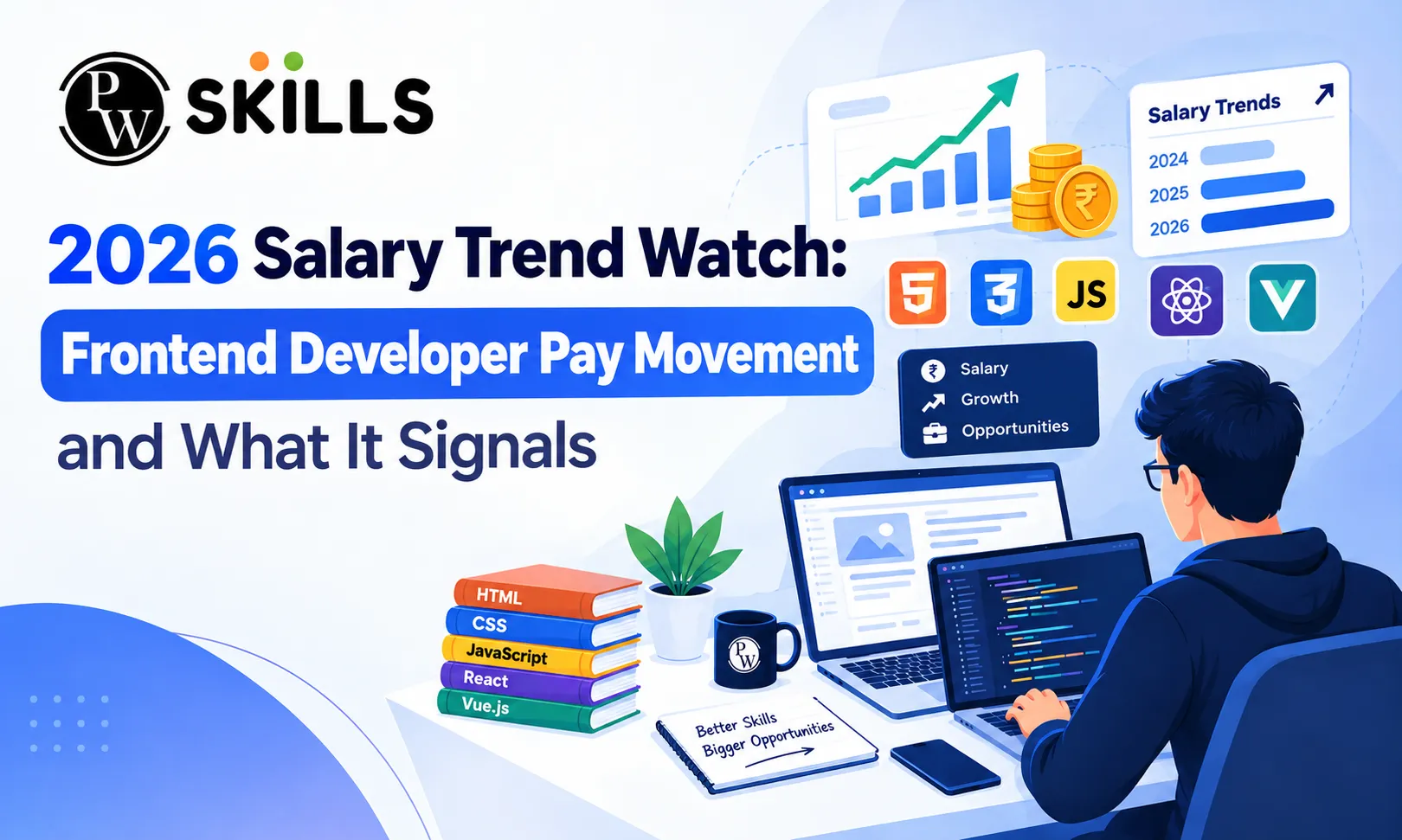
Modern web engineering is undergoing a structural transformation. Frontend developers face a shifting employment landscape where isolated user-interface construction no longer commands the premium salaries it once did. Rapid advancements in artificial intelligence, combined with changing technical requirements across engineering teams, have altered traditional hiring expectations.
Developers accustomed to building client-side components now find themselves at a critical career crossroad. Enrolling in a Full Stack Development with AI Course helps engineers transition from specialized UI design to end-to-end system architecture.
Overview of Full Stack Development with AI Course
AI Full Stack Development Course teaches learners how to build complete web applications using frontend, backend, databases, cloud tools, and AI. It covers technologies such as JavaScript, React, APIs, databases, deployment, and AI integration. The course helps beginners and working developers build practical skills and prepare for modern full-stack and AI-enabled software development roles.
How Does Full Stack Development with AI Course Improve Salary Growth?
For nearly a decade, client-side specialists enjoyed rapid compensation growth driven by the expansion of mobile-first applications and single-page frameworks. Recent compensation figures indicate a clear market adjustment. Base salaries for traditional, isolated frontend roles have plateaued across major technology markets.
Companies are consolidating engineering teams to maximize delivery speed and reduce operational overhead. Rather than hiring separate UI, API, and database engineers, businesses prioritize professionals capable of managing the entire application lifecycle.
This financial adjustment does not signal a decrease in software demand. Instead, it reflects a movement in how value is assessed:
- Basic UI Construction is Commoditised: Standard component design and routine styling tasks are increasingly handled by automated design-to-code pipelines.
- Complex System Integration Commands Premiums: Engineers who combine frontend visual design with scalable cloud backends earn significantly higher compensation.
- Higher Technical Expectations: Employers expect developers to understand state management, server-side rendering, and performance optimization across the full application stack.
How Does a Full Stack Development with AI Course Match Backend Developer Jobs News?
To understand where engineering compensation is headed, tech professionals must look beyond traditional job boards and analyze real-world usage patterns across open-source communities. Recent data from the GitHub Octoverse Report highlights key industry shifts:
Data from the GitHub Octoverse Report confirms that typed, scalable languages like TypeScript have overtaken unstructured alternatives to become top tools across public repositories. This transition occurred because teams need stronger type-safety contracts when building complex, multi-layered applications.
Simultaneously, Full Stack Development with AI Course + Backend Developer Jobs News reveals a steady rise in recruitment for engineers who understand database architecture, microservices, and serverless infrastructure. Companies are actively reducing organizational silos. An engineer who pairs user interface skills with secure server-side logic occupies a far stronger position during annual appraisal cycles.
By studying these industry patterns, developers can transition from visual component builders to versatile system architects capable of driving full-stack delivery.
Why a Full Stack Development with AI Course Maximizes Salary Growth
Addressing the shift in frontend compensation requires upgrading technical capabilities. A Full Stack Development with AI Course provides the practical framework needed to bridge client-side expertise with server-side architecture and intelligent automation.
Global Developer & Ecosystem Shifts
|
GitHub Octoverse Metric |
Industry Trend / Market Signal |
|
180M+ Total Developers |
Rapid growth in global technical talent |
|
TypeScript as Top Language |
Demand for strict typing & safe code |
|
178% YoY Growth in LLM SDK Projects |
Rapid adoption of AI/ML API integration |
|
80% New Devs Using AI Assistants |
Automation of basic coding tasks |
1. Unified End-to-End Development
Modern full-stack engineers manage both the client application and the server-side environment. Learning to design relational databases, set up REST and GraphQL APIs, and deploy cloud infrastructure eliminates reliance on separate backend teams.
2. Practical Artificial Intelligence Integration
Contemporary enterprise applications rely on automated workflows, predictive features, and intelligent search capabilities. Integrating machine learning SDKs, custom agent workflows, and vector databases allows developers to build high-value software features.
3. Accelerated Production Workflows
Using AI-assisted development tools enables engineers to prototype, test, and ship complete applications quickly. This efficiency allows developers to take ownership of complex projects, proving clear business impact during salary negotiations.
What Salary Can You Get After a Full Stack Development with AI Course?
Understanding the compensation landscape across different development tiers highlights the financial benefits of upskilling:
|
Development Role |
Core Responsibilities |
Average Salary Growth Potential |
|
Traditional Frontend Developer |
Building UI layouts, managing client state, styling web interfaces |
Moderate (Plateauing across entry/mid tiers) |
|
Backend Specialist |
Managing database models, building APIs, handling server infrastructure |
High (Driven by cloud expansion) |
|
Full Stack Engineer |
Managing client UI, server logic, databases, and deployment pipelines |
Very High (Consistent enterprise demand) |
|
AI-Enabled Full Stack Developer |
Building end-to-end applications with integrated AI models & agent workflows |
Peak (Top compensation tier in current tech market) |
How Does a Full Stack Development with AI Course Help You Get High-Paying Jobs?
Upgrading your developer portfolio requires a deliberate, step-by-step strategy:
- Master Full-Stack Core Fundamentals: Strengthen your core understanding of server environments, relational and non-relational databases, and API architecture alongside modern JavaScript frameworks.
- Incorporate AI Capabilities into Projects: Extend standard CRUD applications by adding vector search, automated content generation, or intelligent recommendation workflows.
- Focus on Type Safety and Code Reliability: Adopt TypeScript across your frontend and backend codebases to match industry standards highlighted in modern developer reports.
- Build End-to-End Enterprise Demonstrations: Construct complete, production-ready applications that demonstrate real business value rather than basic interface components.
- Enroll in Structured Upskilling Programs: Completing a structured AI Full Stack Development Course helps you gain hands-on practice, expert mentorship, and career transition support.




FAQs
Why are frontend developer salaries experiencing a correction?
How does a Full Stack Development with AI Course improve career prospects?
What key market shifts are reported in the GitHub Octoverse Report?
How do updates from Backend Developer Jobs News affect frontend engineers?
Is learning AI integration necessary for full-stack developers?





Get Free Counselling Today
and Clear up all your Doubts
 Live & recorded classes available at easeDashboard for progress trackingLakhs of practice questions

