
Finance, Tax and Accounting Course (with PwC India): 2026 Career Switch Success Stories
 Hardik Gupta24 Aug, 2026
Many professionals and recent graduates find themselves stuck in roles that offer little growth, struggling to bridge the gap between theoretical knowledge and real-world execution. Employers demand immediate operational capabilities, such as managing GST filings, navigating modern financial software, and applying current tax laws.
The Finance, Tax and Accounting Course (with PwC India) addresses this exact obstacle by providing a direct, skill-based pathway into the industry. Designed to convert academic background or adjacent work experience into practical expertise, this program empowers career switchers to step confidently into structured financial roles.
Overview of Finance, Tax and Accounting Course (with PwC India)
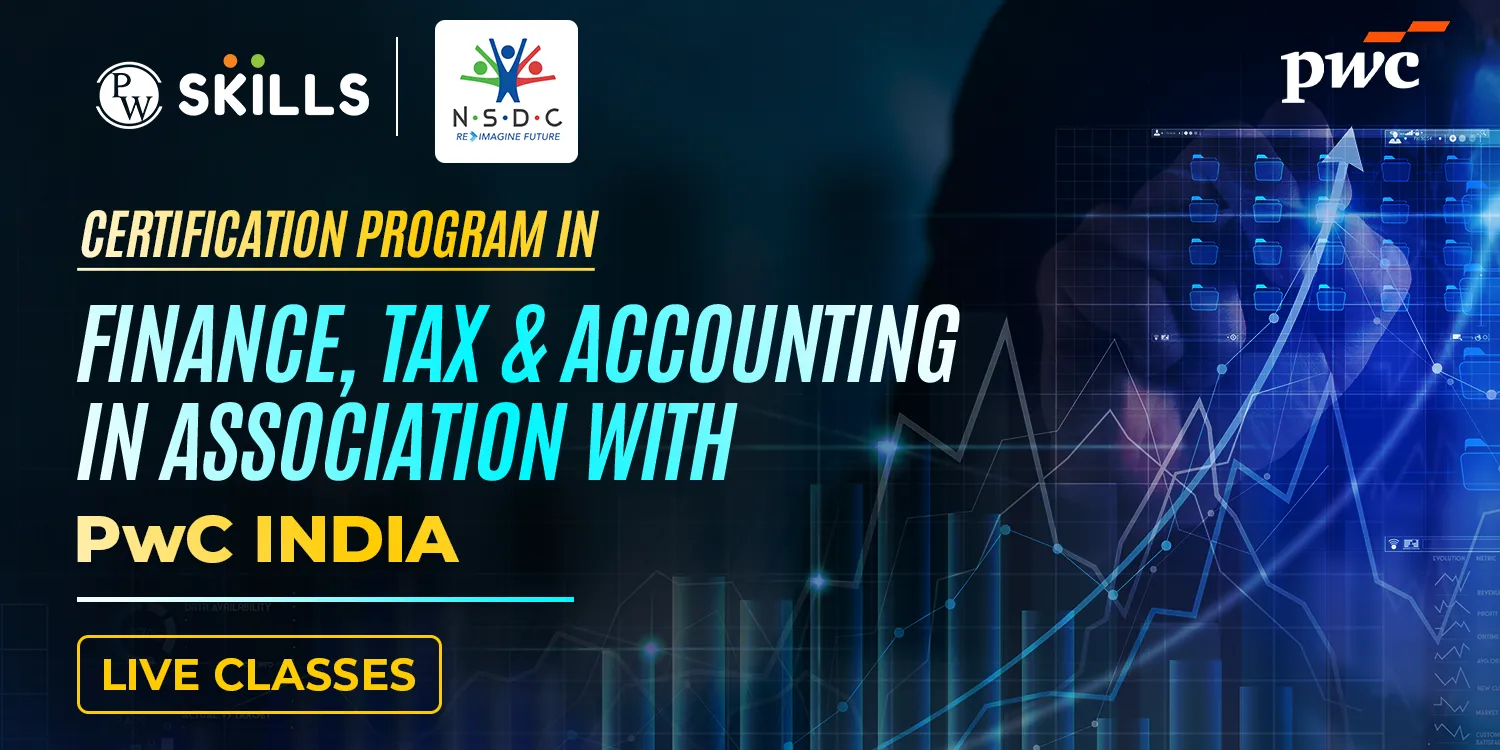
The Finance, Tax and Accounting Course (with PwC India) is a comprehensive 4-month live online program structured to deliver job-ready expertise in accounting, taxation, corporate finance, and compliance. Created in association with PwC India, the curriculum aligns directly with current market requirements across the corporate finance ecosystem.
-
Duration: 4-Month Live Online Program (Classes held Monday to Friday)
-
Certification: Joint Certification from NSDC and PwC India
-
Access Period: 1-Year Content Access with dedicated doubt support sessions
-
Learning Paths: Available in Premium and Pro variants to suit distinct professional goals
Feature Comparison: Premium vs Pro Variant
|
Feature |
Premium Variant |
Pro Variant |
|
Live Classes & Doubt Support |
Included |
Included |
|
PwC India Case Studies |
Included |
Included |
|
Core Software Training (Excel, Tally, Zoho Books) |
Included |
Included |
|
AI in Finance & Accounting Module |
Included |
Included |
|
Financial Modeling & Valuation |
Not Included |
Included |
|
Power BI Dashboards & Visualization |
Not Included |
Included |
|
Capstone Projects & Mentor Guidance |
Not Included |
Included |
How Finance, Tax and Accounting Course (with PwC India) Supports a Career Switch
Transitioning into a new industry requires more than reading textbooks; it demands verifiable skills that employers trust. The Finance, Tax and Accounting Course (with PwC India) acts as a practical bridge for career switchers by focusing heavily on execution.
Instead of spending years retraining, learners spend four months working through practical case studies, mastering accounting software, and understanding corporate tax frameworks. This hands-on experience allows professionals moving from non-finance roles or general commerce backgrounds to demonstrate immediate value to hiring managers.
Furthermore, the integration of artificial intelligence tools in taxation, reporting, and financial analysis prepares switchers for modern workflows, placing them ahead of candidates trained only in traditional methods.
Skills You Can Learn Through Finance, Tax and Accounting Course (with PwC India)
The program's curriculum builds technical competence across financial planning, compliance, and automated reporting.
Core Modules (Both Premium & Pro)
-
Basics of Finance & Accounting: Fundamentals of bookkeeping, financial statement analysis, and corporate finance concepts.
-
Taxation & Compliance: GST compliance and returns, Income Tax computation, TDS, TCS, and Advance Tax regulations.
-
Financial Reporting & Standards: Application of standard accounting rules and statutory financial reporting procedures.
-
Industry Software: Hands-on training in Excel, Tally, and Zoho Books for daily operational management.
-
AI in Accounting & Finance: Using artificial intelligence for tax research, automated report generation, financial analysis, and accounting automation.
Advanced Modules (Pro Variant Exclusive)
-
Financial Modeling: Building three-statement financial models, revenue forecasting, cash flow analysis, scenario building, and business valuation basics.
-
Power BI for Finance: Creating interactive financial dashboards, tracking KPI metrics, automating reports, and visualising complex data sets.
Benefit of Finance, Tax and Accounting Course (with PwC India)
Choosing the Finance, Tax and Accounting Course (with PwC India) + What/Why (Core) setup gives professionals a clear edge in a competitive market. The primary advantage rests in its direct association with industry leaders, ensuring that every module reflects active corporate practices.
-
Industry-Aligned Learning: Case studies curated alongside PwC India reflect actual business scenarios rather than abstract theories.
-
Modern Tool Mastery: Learners gain hands-on practice with essential financial tools, including Excel, Tally, Zoho Books, and modern AI applications.
-
Dual Track Flexibility: Learners choose between foundational expertise with the Premium plan or advanced analytical skills via the Pro plan.
-
Credential Value: Participants receive recognized credentials, including certification backed by NSDC and PwC India, strengthening their professional profile.
-
Comprehensive Career Support: Dedicated preparation sessions ensure candidates are ready to present their skills effectively to prospective employers.
Career Opportunities After Finance, Tax and Accounting Course (with PwC India)
Completing the Finance, Tax and Accounting Course (with PwC India) opens varied career pathways across corporate finance teams, advisory firms, and accounting departments.
-
Financial Analyst: Evaluates financial performance, tracks metrics, and assists in business planning.
-
Tax Consultant / Income Tax Consultant: Manages tax filings, ensures regulatory compliance, and advises on tax strategies.
-
GST Executive: Handles day-to-day GST returns, reconciliations, and statutory compliance.
-
Corporate Finance Executive: Supports capital management, budgeting, and financial decision-making.
-
FP&A Analyst: Focuses on forecasting, budgeting, and variance analysis (ideal for Pro variant graduates).
-
Revenue Analyst: Tracks top-line revenue, pricing structures, and financial data flows.
-
Finance Associate: Assists with statutory reporting, general ledger maintenance, and Financial accounting tasks.
-
Audit & Compliance Support: Prepares working papers, verifies accounts, and supports teams hiring for Audit Associate Jobs.
When to Start a New Career with Finance, Tax and Accounting Course (with PwC India)
The optimal time to enroll in the Finance, Tax and Accounting Course (with PwC India) is when your current career trajectory no longer aligns with your long-term growth goals, or when entry-level opportunities require specific software skills you currently lack.
Whether you are a recent commerce graduate seeking practical exposure, a working professional wanting to pivot into corporate finance, or a switcher looking to update your technical toolkit with modern AI and analytics tools, initiating this 4-month commitment provides a structured, time-efficient transition path.



FAQs
What is the duration of the Finance, Tax and Accounting Course (with PwC India)?
Does the course include hands-on training with software tools?
How does the Pro variant differ from the Premium variant?
Can non-finance professionals join this program to make a career switch?
What certification do learners receive upon completion?





Get Free Counselling Today
and Clear up all your Doubts
 Live & recorded classes available at easeDashboard for progress trackingLakhs of practice questions

