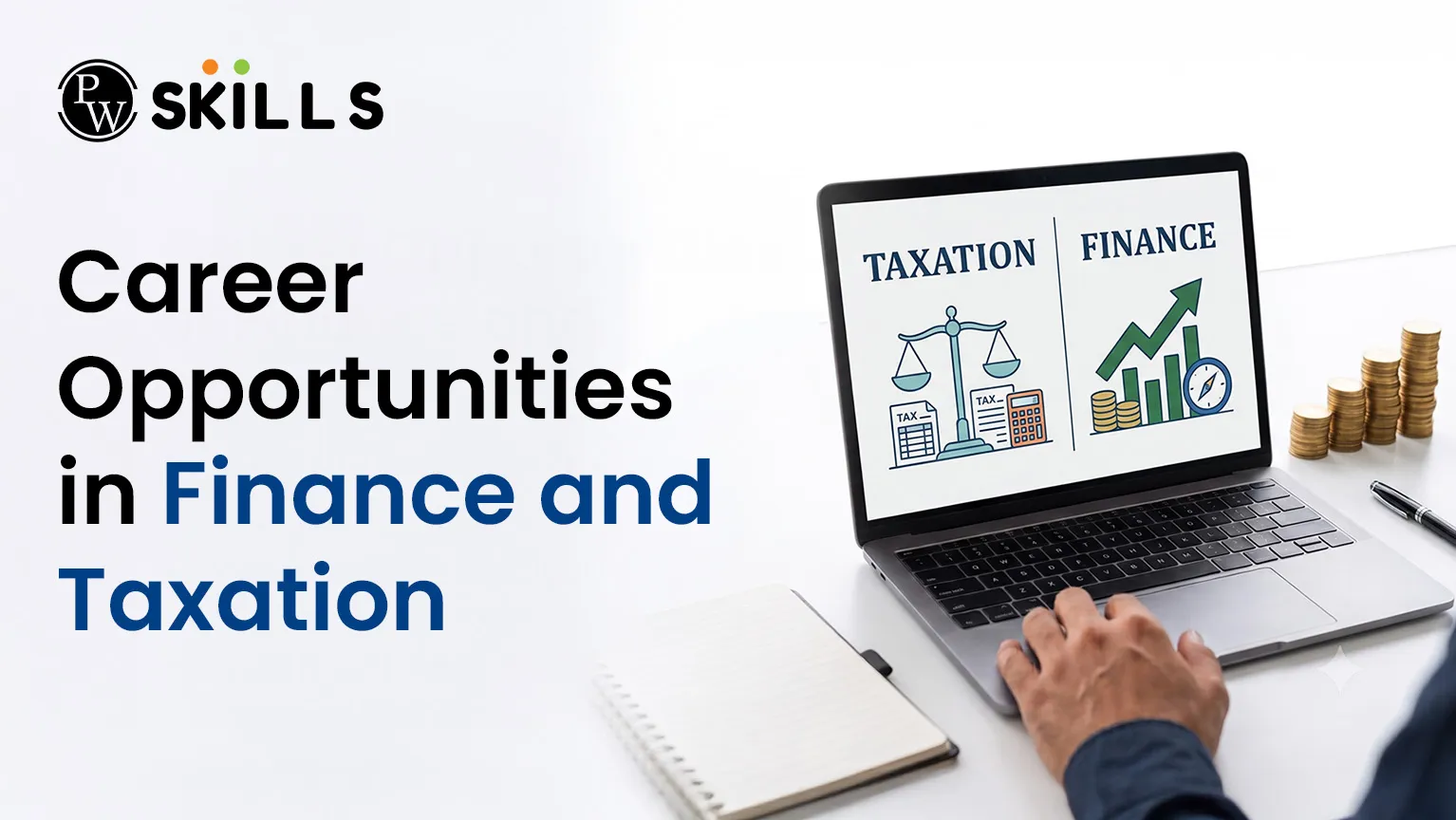
Career Opportunities in Finance and Taxation
 Hardik Gupta15 Jul, 2026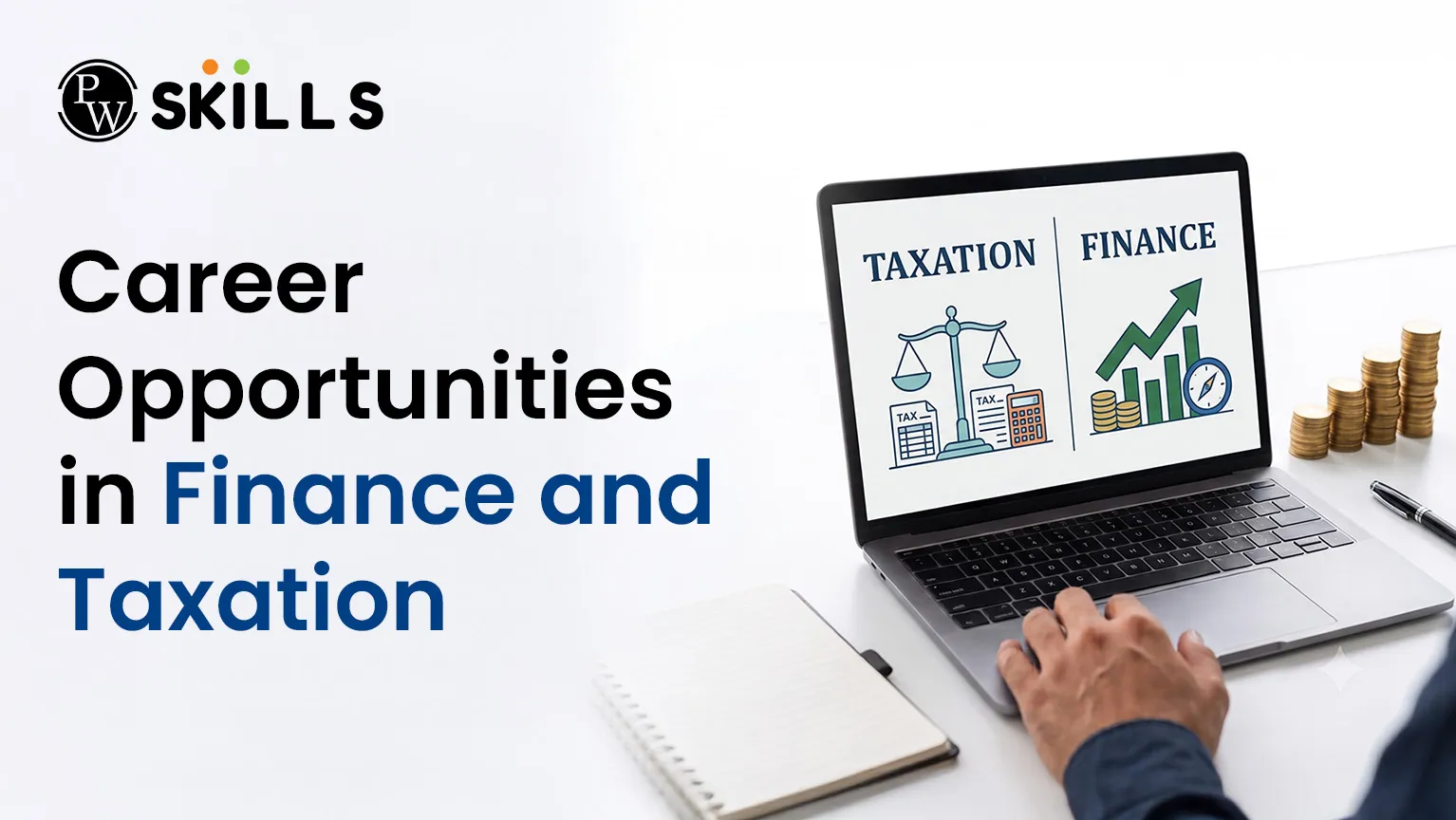
For many students, it can be intimidating to find a steady corporate path that offers consistent growth. Picking a dependable sector with evolving market landscapes is critical. A stable finance and taxation career with unparalleled job security, high earning potential, and diverse roles across global industries clears this uncertainty.
Importance of a Finance and Taxation Career
The modern corporate world relies heavily on financial transparency and legal compliance to survive. Choosing a finance and taxation career ensures that your skills remain in demand during any economic phase. Every business entity requires professionals to manage financial resource deployment and statutory compliance effectively.
The professional area provides fast-track upward movement and long-term stability for dedicated students. The industry offers several functional tracks that enable individuals to align their career paths with their personal analytical preferences.
Corporate organizations are always seeking specialists who can manage portfolios, interpret fiscal regulations, and make strategic investment decisions. This structural dependence translates into continuous career growth, competitive packages, and continuous professional exposure on a global basis.
How Can You Build a Successful Finance and Taxation Career?
The transition from academic environments to the commercial space requires intentional planning and ongoing skill development. Combining formal education at a university with practical industry experience is the key to building a successful finance and taxation career.
By following a logical path, you avoid entry-level bottlenecks. Here is the sequence of steps to professional success:
-
Complete a Commerce Degree: Earn a bachelor's degree in commerce or financial management to master elementary accounting concepts.
-
Select a Specialisation: Choose between investment planning, traditional accounting professions, or dedicated corporate tax advisory tracks.
-
Pursue Advanced Credentials: Enrol in professional certification programs to build specialized authority in your chosen niche.
-
Acquire Software Proficiency: Master standard accounting tools, automated spreadsheet functions, and enterprise resource planning software systems.
-
Gain Practical Experience: Secure internships or training roles at established advisory firms to gain insight into real-world business operations.
What are the Top Job Roles in a Finance and Taxation Career?
Business financial monitoring is based on structured data oversight and reporting. In traditional accounting professions, people can manage critical financial functions that keep businesses functioning and compliant.
These are roles with a high operational responsibility in a corporate environment. The following list points out the main career tracks within this subcategory:
-
Corporate Accountant: Manages daily ledgers, maintains financial statements, and tracks business expenses accurately.
-
Statutory Auditor: Conducts independent reviews of financial books to verify compliance with national regulations.
-
Management Accountant: Analyzes internal cost structures and prepares operational budgets for corporate leadership.
-
Tax Analyst: Handles corporate tax computations and ensures smooth filing operations.
What Are the Best Finance and Taxation Career Opportunities in 2026?
There are many ways in the corporate world for individuals dedicated to strategic economic growth. Professionals can direct high-level business decisions, investment portfolios, and capital allocations by researching contemporary finance career opportunities.
These functions depend on a good command of market trends and economic variables. The following table provides a glimpse of the main operational areas in the financial services industry:
|
Finance Domain |
Primary Focus Area |
Typical Entry Role |
|
Corporate Finance |
Capital structure management and funding |
Junior Financial Analyst |
|
Investment Banking |
Capital raising and advisory services |
Investment Banking Analyst |
|
Wealth Management |
Portfolio planning for individuals |
Wealth Trainee |
|
Risk Management |
Identifying and mitigating fiscal threats |
Risk Associate |
Explore Our Course: Finance, Tax and Accounting Course
What Skills Do You Need to Build a Successful Finance and Taxation Career?
Fiscal law is a specialised field requiring a unique combination of regulatory knowledge and precise mathematical analysis. To land premium tax consultant jobs, you need to have a thorough knowledge of changing legal statutes and filing frameworks.
Developing certain capabilities keeps you at the forefront in today’s recruitment market. To be successful in a tax advisory role, you need the following core skills:
-
Direct Tax Application: Thorough knowledge of income tax codes, corporate tax computations, and legal deduction mechanisms.
-
Indirect Tax Systems: Practical command over goods and services tax frameworks, customs duties, and structural compliance.
-
Filing Literacy: Hands-on experience with official portals, electronic filing documentation, and assessment procedures.
-
Corporate Advisory: Ability to interpret complex judicial decisions to optimize organizational tax liabilities legally.
Which Certifications Can Help You Advance Your Finance and Taxation Career?
If you want to climb the corporate ladder in this area, you need to show that you have the technical skills to do the job. Recognition of professional credentials increases your chances of getting hired in the major global markets.
The structured programs provide practical insights relevant to senior positions. The following list contains the most respected credentials in the current sector:
-
Chartered Accountant (CA): The premier standard for advanced auditing, financial accounting, and core taxation advice.
-
Certified Management Accountant (CMA): A globally recognized program focused heavily on corporate strategy and cost management.
-
Chartered Financial Analyst (CFA): The gold standard credential for investment analysis and portfolio management tracks.
-
Specialized Tax Diplomas: Short-term institutional programs focused specifically on corporate law and digital filing systems.
What Is the Career Growth Path in a Finance and Taxation Career?
Navigating the financial sector requires a clear understanding of long-term growth opportunities. Professional advancement within a finance and taxation career depends heavily on your chosen specialization, consistent upskilling, and practical experience. Both the compliance side and the advisory side offer structured growth pathways that lead to leadership positions.
Choosing between traditional accounting professions and strategic corporate finance career opportunities changes your daily responsibilities and long-term trajectory. While one track focuses heavily on precision and legal frameworks, the other focuses on market growth and resource allocation.
Below is a table with an estimated roadmap of how your career can progress across different specialisations over a 10-year period:
|
Career Stage |
Accounting & Taxation Track |
Corporate Finance Track |
Estimated Experience Needed |
|
Entry Level |
Tax Associate / Junior Accountant |
Financial Analyst Trainee |
0 to 2 Years |
|
Mid Level |
Senior Tax Consultant / Assistant Auditor |
Senior Financial Analyst |
3 to 6 Years |
|
Senior Level |
Tax Director / Chief Auditor |
Corporate Finance Manager |
7 to 10 Years |
|
Executive Level |
Partner at Advisory Firm / Chief Financial Officer (CFO) |
Vice President of Finance / Chief Financial Officer (CFO) |
10+ Years |
Securing high-tier tax consultant jobs requires a commitment to continuous professional development. As you move from operational execution to strategic advisory roles, your focus shifts from processing data to driving board-level decisions. Understanding these distinct pathways early helps you select the right academic credentials and corporate internships from day one.