
Audit Associate Career Path: How Audit Fundamentals Apply on the Job
 Hardik Gupta30 Jul, 2026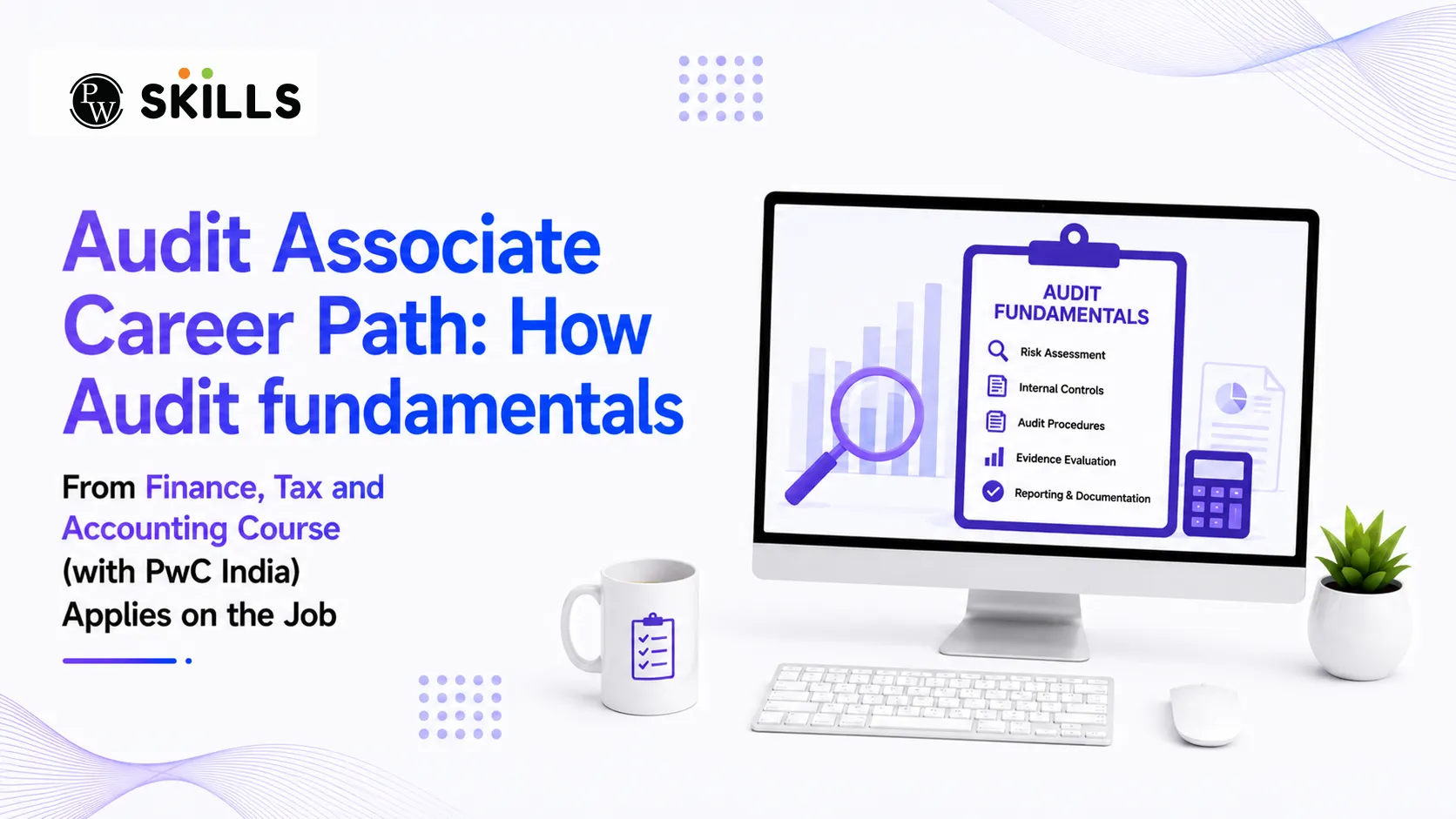
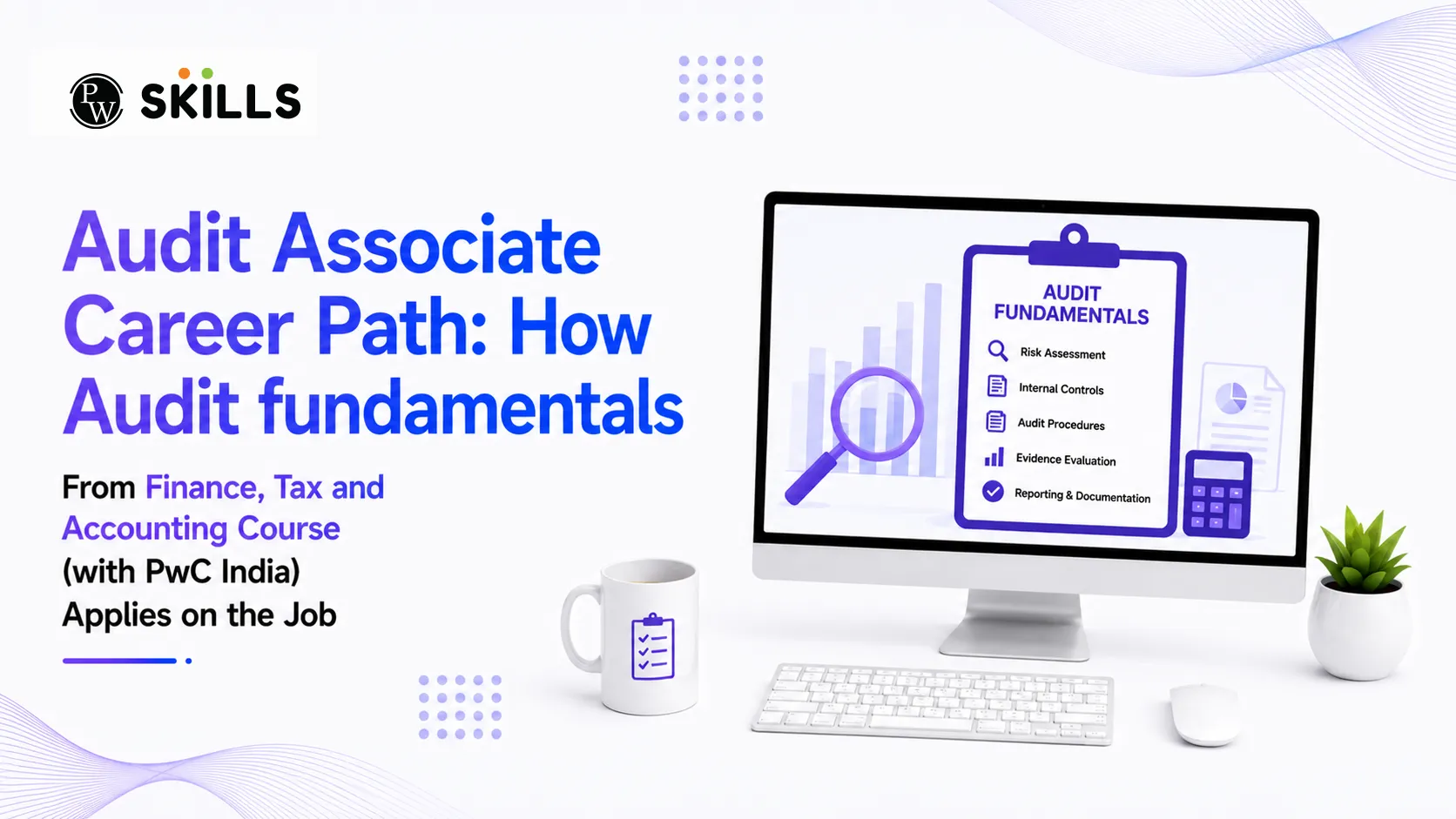
Starting a career as an audit associate often feels overwhelming when textbook theory meets real-world workplace expectations. Many fresh graduates struggle to apply classroom knowledge to actual client books, compliance checks, and corporate financial statements. Enrolling in a comprehensive Finance, Tax and Accounting Course (with PwC India) solves this gap by training you in practical auditing tools, ledger analysis, and tax frameworks. This article breaks down how core concepts translate directly into daily audit responsibilities.
What Does an Audit Associate Do After Finance, Tax and Accounting Course (with PwC India)
An audit associate reviews financial records to ensure accuracy, regulatory compliance, and proper internal controls. They act as independent evaluators who verify that a company’s financial statements present a true and fair view of its operations.
In entry-level roles, professionals work closely with senior auditors to examine ledgers, verify transactions, and assess risk areas. Daily responsibilities include:
-
Examining general ledgers, trial balances, and bank statements for discrepancies.
-
Verifying supporting documents like invoices, receipts, and purchase orders.
-
Evaluating internal controls to prevent fraud or accounting errors.
-
Checking tax calculations and statutory compliance against current laws.
-
Preparing detailed working papers and documentation for audit files.
How Does Finance, Tax and Accounting Course (with PwC India) Teach Audit Fundamentals
Transitioning from study modules to client engagement requires understanding how specific subjects function in practice. A structured course shows learners how core finance, taxation, and accounting concepts are applied in real-world business scenarios. Finance, Tax and Accounting Course (with PwC India) + how professionals use financial reporting, tax compliance, accounting principles, and business finance in client engagements becomes much easier to understand through practical case studies and hands-on training.
Here is how core training modules directly map to day-to-day audit associate tasks:
|
Course Focus Area |
Daily Audit Associate Application |
Key Workplace Deliverable |
|
Financial Reporting |
Reviewing balance sheets, profit and loss statements, and cash flows |
Drafted financial analysis schedules |
|
Statutory Audit |
Testing internal controls and verifying sample transactions |
Audit working papers and query sheets |
|
Direct & Indirect Tax |
Checking tax deductions at source (TDS) and GST reconciliations |
Tax compliance verification reports |
|
Accounting Software |
Extracting transaction logs and running trial balance checks |
Reconciled ledger statements |
What Skills Do You Learn in Finance, Tax and Accounting Course (with PwC India)
Succeeding in auditing requires a balance of analytical precision, technical competency, and clear communication. Employer expectations extend beyond basic book-keeping to include critical thinking during risk assessments.
Key competencies to develop include:
-
Attention to Detail: Detecting minor misstatements or missing documentation across thousands of transactions.
-
Analytical Thinking: Spotting unusual trends or variance patterns across comparative financial years.
-
Regulatory Knowledge: Understanding current accounting standards and local statutory tax frameworks.
-
Data Handling: Manipulating large datasets using spreadsheet formulas and audit software tools.
-
Professional Skepticism: Questioning irregular entries and seeking sufficient audit evidence.
How Does Finance, Tax and Accounting Course (with PwC India) Help You Get Audit Associate Jobs
Completing industry-aligned training opens up diverse opportunities across corporate finance and professional service firms. Securing Finance, Tax and Accounting Course (with PwC India) + Audit Associate Jobs provides a solid foundation for rapid career progression.
Typical progression within the auditing domain follows a structured hierarchy:
-
Junior Audit Associate / Intern: Focuses on vouching, basic reconciliations, and documentation.
-
Senior Audit Associate: Leads field audits, drafts reports, and reviews junior staff work.
-
Audit Manager: Oversees multiple client portfolios, manages budgets, and handles client relations.
-
Senior Manager / Director: Drives practice growth, ensures technical quality, and leads risk strategy.
-
Partner: Takes ultimate accountability for audit opinions and overall firm governance.
How Does Finance, Tax and Accounting Course with PwC India Teach Financial Accounting
Financial accounting forms the backbone of every audit assignment. Without a strong grasp of reporting rules, an auditor cannot evaluate whether financial statements reflect reality.
Through a Finance, Tax and Accounting Course (with PwC India) + Financial accounting module, learners learn how businesses record assets, liabilities, revenue, and expenses. On the job, associates use these principles to verify accruals, evaluate inventory valuation methods, and confirm proper revenue recognition timing. Understanding accounting standards ensures you catch misclassification errors quickly during field testing.
What Challenges Do New Audit Associates Face
The transition to a full-time auditing role often presents steep learning curves. Recognizing these hurdles early helps you prepare effectively:
-
Managing Tight Deadlines: Audit busy seasons demand strict time management across multiple client deliverables.
-
Handling Complex Client Data: Clients often provide unstructured or incomplete financial records.
-
Adapting to Evolving Regulations: Tax rates, disclosure rules, and reporting standards update frequently.
-
Communicating Audit Queries: Articulating document requests clearly to client finance teams without creating friction.
Quick Tips to Excel in Your First Audit Role
Building early momentum as an audit associate sets the tone for fast promotions. Focus on foundational habits during your initial months:
-
Learn Working Papers: Keep your audit documentation clean, well-indexed, and self-explanatory.
-
Understand the Client's Business: Learn how the client makes money before reviewing their books.
-
Ask Clarifying Questions: Clarify doubts with senior auditors early rather than guessing procedures.
-
Leverage Excel Shortcuts: Speed up reconciliation tasks by understanding advanced spreadsheet functions.
-
Stay Updated on Tax Laws: Track ongoing changes in direct tax and GST compliance frameworks.



Taxation FAQs
What is the main role of an audit associate?
How does a Finance, Tax and Accounting Course help freshers?
What technical software do audit associates use daily?
Is financial accounting knowledge essential for auditing?
What career options exist after working as an audit associate?





Get Free Counselling Today
and Clear up all your Doubts
 Live & recorded classes available at easeDashboard for progress trackingLakhs of practice questions

