
College Wallah Roadmaps: Best Tech Career Paths for College Students
 Hardik Gupta24 Sept, 2026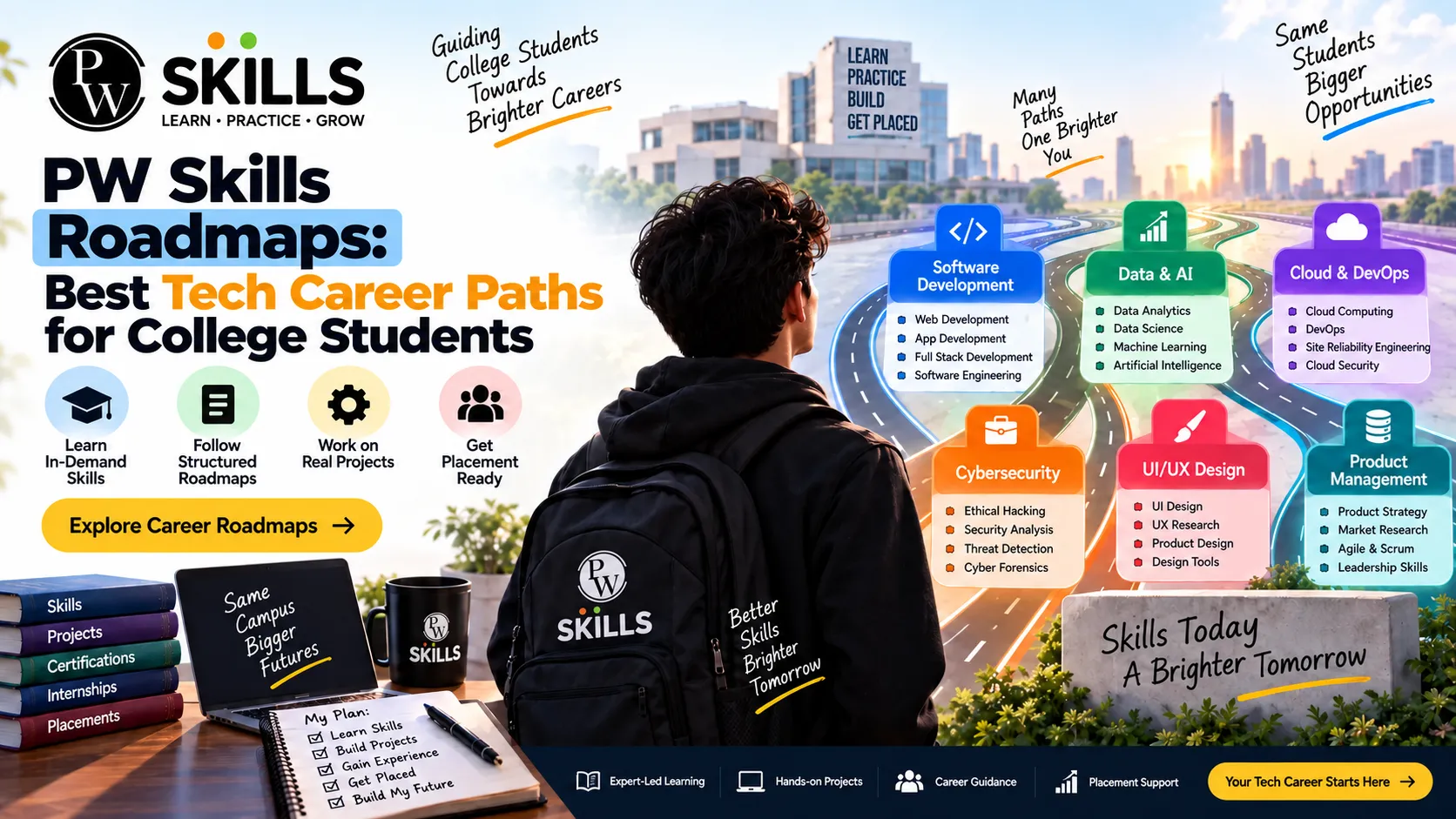
Navigating the massive ocean of technical domains during university can leave anyone feeling overwhelmed. Many students spend their early campus years jumping between programming languages without a clear plan, leading to wasted effort and confusion.
Choosing a structured path transforms this journey from stressful guesswork into a predictable ladder of achievements. With dedicated guidance tailored to current industry expectations, finding clear College Wallah career options helps undergraduates channel their energy into high-impact skills. This guide breaks down structured pathways, practical project ideas, and study strategies that simplify your transition from a campus learner to a job-ready tech professional.
What Are College Wallah Career Options
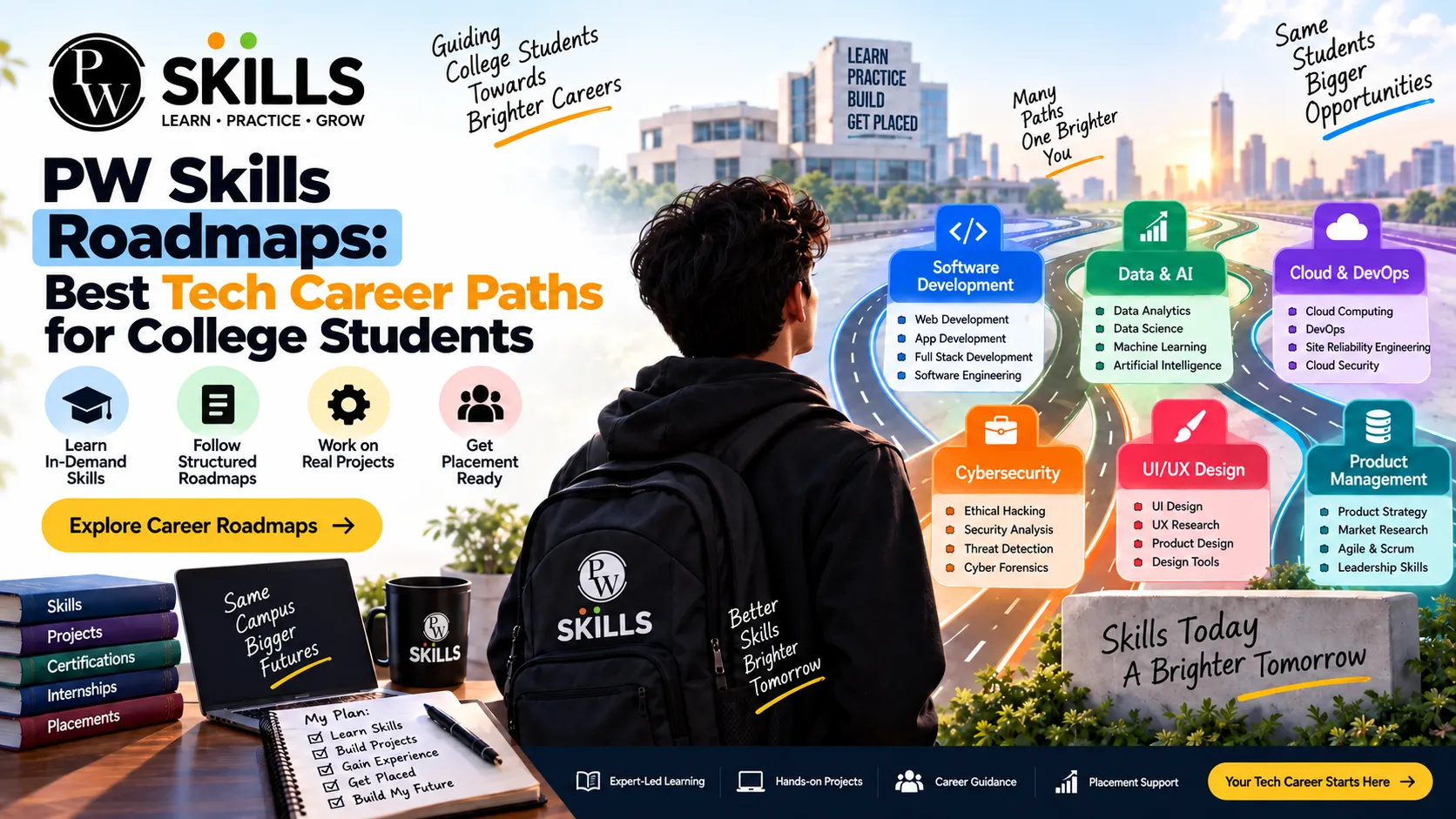
Understanding the available choices in the modern tech ecosystem is the first step toward long-term professional growth. College Wallah career options represent specialized domain pathways designed to take learners from foundational concepts to advanced application standards.
These tracks focus on building practical competencies rather than just memorising theoretical textbook definitions.
-
Full-Stack Web Development: Covers front-end tools like HTML, CSS, JavaScript, and React alongside back-end frameworks such as Node.js or Express. It prepares learners to build complete, functional web applications from scratch.
-
Data Structures and Algorithms (DSA): Focuses heavily on problem-solving techniques, logic building, and optimization. Mastering DSA remains the primary requirement for clearing coding rounds at major tech firms.
-
Data Science and Machine Learning: Blends statistical analysis, Python programming, and data visualization tools like Pandas and SQL to turn raw data into actionable insights.
-
Cloud Computing and DevOps: Teaches modern deployment workflows, containerization using Docker, and automated infrastructure management across major cloud platforms.
-
Mobile App Development: Focuses on native or cross-platform framework development using Flutter, React Native, or Kotlin to build scalable mobile solutions.
Which Tech Skills Match Different College Wallah Career Options
Every technical field demands a unique toolkit. Aligning your personal strengths with the right technical focus prevents burnout and ensures steady progress throughout your academic years.
Software Engineering and Backend Development
If you enjoy logical puzzles, system design, and algorithmic thinking, software engineering fits your profile. Key skills to focus on include:
-
Object-Oriented Programming (OOP) in Java, C++, or Python.
-
Relational databases such as MySQL or PostgreSQL.
-
System architecture basics and RESTful API creation.
Front-End and User Experience Roles
For students who enjoy visual design, layout structuring, and instant visual feedback, front-end development is ideal. Essential competencies include:
-
Modern JavaScript (ES6+) and TypeScript principles.
-
Responsive web design frameworks like Tailwind CSS or Bootstrap.
-
State management tools within frameworks like React.
Data Analytics and Artificial Intelligence
If working with numbers, statistics, and predictive models excites you, data roles offer a rewarding path. Skills needed for this domain include:
-
Advanced SQL query building and database management.
-
Python libraries including NumPy, Pandas, and Matplotlib.
-
Fundamental machine learning concepts like regression and classification.
How to Choose the Right College Wallah Career Options for Your Goals
Selecting a suitable domain requires self-reflection, market awareness, and personal interest. Taking time to evaluate your preferences prevents frequent domain switching midway through your degree.
-
Assess Your Problem-Solving Style: Determine whether you prefer visual output (UI/UX), backend architecture, or analytical data crunching.
-
Review University Timelines: Ensure your chosen path matches the time you have available before placement season starts.
-
Analyze Industry Demand: Research current hiring trends to ensure your chosen path offers robust entry-level opportunities.
-
Test the Waters: Spend 2 to 3 weeks trying basic tutorials in a domain before committing fully to a multi-month roadmap.
Which Projects Can Help You Prepare for College Wallah Career Options
Building real-world projects is the single best way to prove your technical abilities to potential recruiters. Generic tutorial clones rarely make a resume stand out, so focus on custom features and personal enhancements.
|
Career Track |
Recommended Project Concept |
Essential Technologies Used |
Key Learning Outcome |
|
Web Development |
E-Commerce Platform with Payment Gateway |
React, Node.js, MongoDB, Stripe API |
Full-stack integration, authentication, state management |
|
DSA & Algorithms |
Pathfinding Visualizer Application |
HTML5 Canvas, JavaScript, Graph Algorithms |
Algorithm design, dynamic UI rendering, time complexity |
|
Real-Time Financial Dashboard |
Python, Pandas, Streamlit, SQL |
Data extraction, cleaning, interactive chart generation |
|
|
DevOps / Cloud |
Automated CI/CD Deployment Pipeline |
GitHub Actions, Docker, AWS EC2 |
Infrastructure automation, container management, hosting |
Study Strategy Plan for Exploring and Building Skills for College Wallah Career Options
Consistency matters far more than short bursts of intense effort. Following a structured schedule helps you balance university exams with independent technical preparation.
-
Phase 1: Fundamental Mastery (Months 1–2)
-
Choose one primary programming language (Java, C++, or Python).
-
Build a strong foundation in variables, loops, recursion, and basic data structures.
-
Practice 1 to 2 coding problems daily on standard platforms.
-
Phase 2: Domain Deep-Dive (Months 3–4)
-
Pick a core track among the available tech careers for freshers.
-
Work through structured technology career options and learn framework fundamentals.
-
Understand how databases connect to application backends.
-
Phase 3: Real-World Building (Months 5–6)
-
Construct two comprehensive, deployment-ready projects.
-
Publish source code on GitHub with clear documentation and live demo links.
-
Create a clean resume tailored to your specific domain focus.
Tips to Choose the Right College Wallah Career Options
Finding success requires smart planning and practical execution. Here are essential strategies to keep your preparation on track:
-
Focus on Quality Over Quantity: It is better to master one tech career roadmap completely than to know a tiny bit of five different domains.
-
Build in Public: Share your project progress, learning notes, and code snippets on LinkedIn or GitHub to gain visibility among potential employers.
-
Prioritize Problem Solving: Regardless of your domain, basic algorithmic knowledge and logical thinking remain essential during technical interviews.
-
Seek Peer Feedback: Review code written by classmates or open-source contributors to learn alternative, cleaner solutions.
Mistakes to Avoid When Choosing College Wallah Career Options
Many undergraduate students fall into predictable traps during their preparation. Recognizing these errors early will save you months of frustration.
-
Tutorial Hell: Watching endless video lectures without writing code independently creates a false sense of mastery.
-
Frequency Switching: Changing domains every few weeks whenever a new technology trends prevents deep skill accumulation.
-
Ignoring Core Computer Science Fundamentals: Skipping database concepts, networking basics, or operating systems limits performance during technical interviews.
-
Neglecting Git and Version Control: Waiting until project completion to learn version control leads to lost code and poor collaboration practices.
-
Delaying Resume Building: Waiting until campus drives start to build projects leads to rushed, low-quality applications.



FAQs
1. How do I start exploring College Wallah career options as a first-year student?
2. Is a tech career roadmap useful for non-CS background students?
3. Which technology career options are best for high entry-level demand?
4. How long does it take to prepare for tech careers for freshers?
5. What are the best career paths after graduation for software enthusiasts?





Get Free Counselling Today
and Clear up all your Doubts
 Live & recorded classes available at easeDashboard for progress trackingLakhs of practice questions

