
College Wallah PW: Complete Guide to Courses, Learning & Career Opportunities
 Hardik Gupta24 Sept, 2026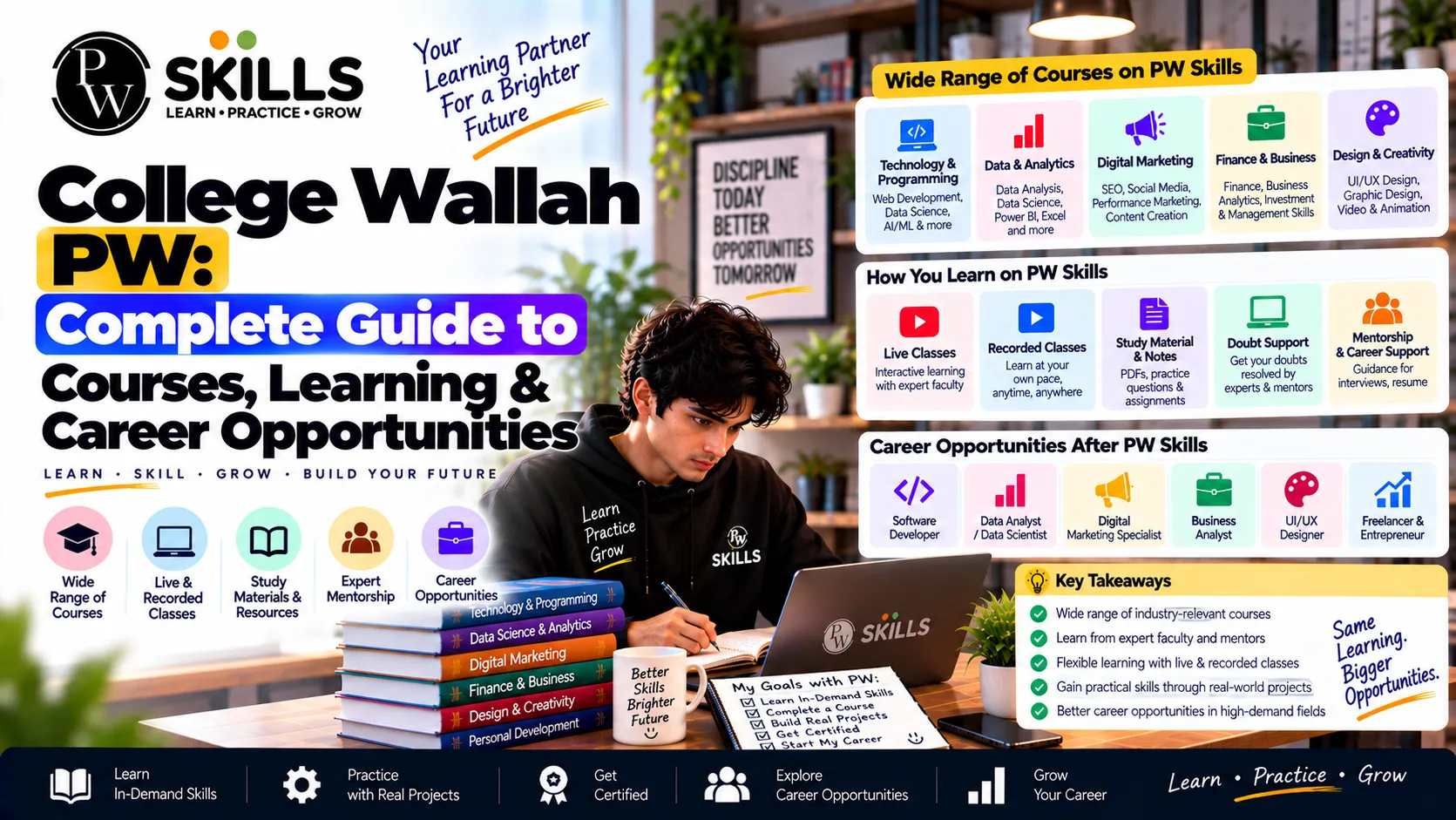
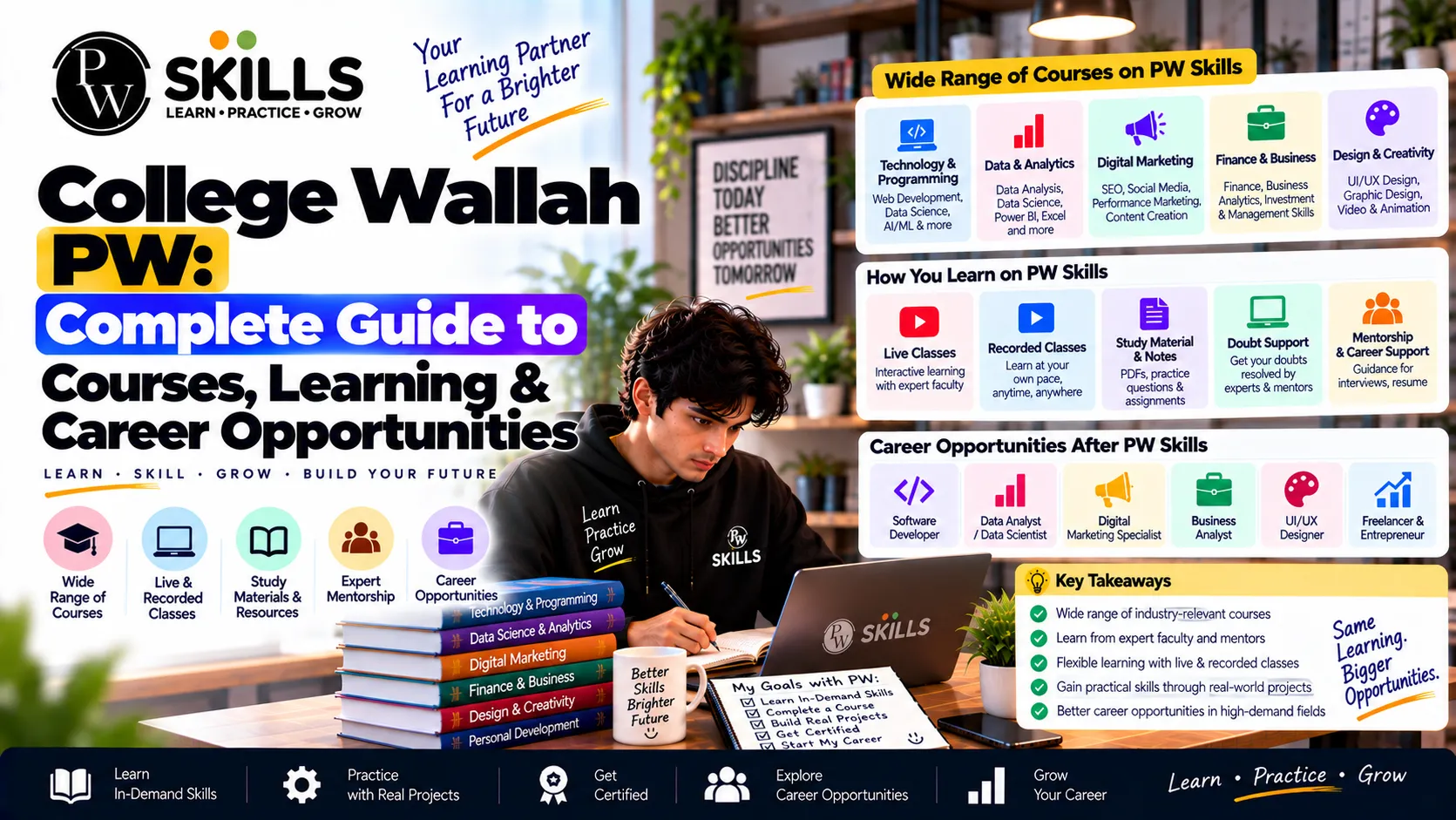
College Wallah PW is a specialized educational bridge that provides organized engineering modules, coding tracks, and targeted instruction. Technical interview rounds and the modern software development toolbox can frequently be overwhelming for undergraduates without supervision. Understanding this allows students to maximize their academic years and construct high-value career portfolios.
How College Wallah PW Learning Works
To understand modern programming or data science you need to practice actively, not just watch videos passively. Learning approaches are based on interactive sessions, organized roadmaps and ongoing doubt clearing systems.
-
Live and recorded lectures: Students can manage their academic semesters using modular content on demand.
-
Conceptual Roadblock Resolution Assistance: Dedicated technical mentors provide quick aid in overcoming conceptual barriers.
-
Chapter-Wise Practice: Regular assignments reinforce coding logic and algorithmic thinking for exams and interviews.
This multi-layered approach ensures that learners retain complex programming concepts and apply them accurately in practical scenarios.
College Wallah PW Courses and Programs
Technical domains vary widely, requiring tailored curricula to match distinct career objectives. College Wallah programs cover high-demand tech stacks designed to make students employable right out of college.
-
Full Stack Web Development: Trains students in frontend frameworks, backend architecture, and database management.
-
Data Science and Analytics: Focuses on Python programming, statistical analysis, and machine learning fundamentals.
-
Data Structures and Algorithms (DSA): Strengthens problem-solving skills necessary for product-based company interviews.
-
Aptitude and Campus Training: Prepares undergraduates for quantitative, logical, and verbal recruitment tests.
Selecting the right track allows learners to focus their energy on specialized skills rather than generalized studying.
Choosing College Wallah PW Courses for Career Goals
To help students choose the right learning path, evaluating core metrics across major tracks clarifies time commitments and career outcomes.
|
Program Domain |
Core Technologies |
Target Role |
Primary Benefit |
|
Full Stack Development |
HTML, CSS, JavaScript, React, Node.js |
Software Engineer / Web Developer |
Builds end-to-end application deployment capability |
|
Data Science |
Python, SQL, Machine Learning, Pandas |
Data Analyst / Junior Data Scientist |
High demand in data-driven corporate sectors |
|
DSA & Coding |
C++, Java, Algorithms, Complexity |
Core Developer / SDE |
Essential for clearing product-based company rounds |
Career Opportunities after College Wallah PW
To land a good job or internship you need more than technical skills. Students also need a clean resume, confidence in interviews and practice with hiring-related exams. The employment options section includes practical information on career preparation, including resume help, placement readiness, and job-oriented learning.
-
Project Portfolios: Build practical projects and capstone work that demonstrate how you apply technical concepts to real-world problems. Maintaining these projects on platforms such as GitHub can also give students useful work to discuss during interviews.
-
Resume Preparation: Learn how to present skills, projects, certifications, and academic experience clearly so that the resume reflects your strengths and remains relevant to entry-level roles.
-
Mock Assessments: Practise aptitude, technical, and other hiring-style assessments under timed conditions to become more comfortable with recruitment tests.
-
Interview Practice: Use mock interview sessions to improve communication, explain projects confidently, and prepare answers to common technical and HR questions.
-
Recruitment Support: Job-oriented programmes can help students understand hiring processes, prepare for interviews, and stay aware of relevant career opportunities.
-
Continuous Practice: Regularly updating projects, revising technical concepts, and practising interview questions helps students stay prepared throughout the job search.
This structured approach helps students connect their technical learning with practical career preparation. By combining projects, resume building, assessments, and interview practice, learners can become better prepared to handle different stages of the recruitment process.
How College Wallah Builds Practical Skills
Theoretical knowledge becomes more valuable when students know how to apply it to practical tasks. College Wallah learning focuses on practical learning through projects, coding practice, mentorship, and collaborative activities. This approach allows learners to move beyond textbook concepts and gain experience with solving problems similar to those they may encounter in academic or professional settings.
-
Project Based Learning: Students can work on practical projects that require them to apply concepts instead of only studying them theoretically.
-
Capstone Projects: Larger projects give learners an opportunity to combine multiple skills and demonstrate their understanding through a complete application or solution.
-
Portfolio Development: Documenting completed projects on platforms such as GitHub can help students showcase their practical skills when applying for internships or entry-level roles.
-
Expert Guidance: Mentorship and guidance can help learners identify mistakes, improve their approach, and understand better practices while working on technical tasks.
-
Technology Exposure: Regular project work and learning resources can help students stay familiar with tools, programming concepts, and technologies that are relevant to their area of study.
-
Peer Learning: Discussions with fellow learners can provide opportunities to share solutions, clarify doubts, and learn different approaches to the same problem.
-
Problem Solving Practice: Working on practical assignments helps students develop the habit of breaking complex problems into smaller and more manageable tasks.
By combining concepts with regular application, these learning can make technical education more practical and engaging. Building projects, receiving guidance, and learning through collaboration can help students develop skills that are easier to demonstrate during internships, assessments, and future job applications.
Student Learning Roadmap With College Wallah PW
Maximizing the benefits of technical upskilling requires a disciplined, chronological approach throughout university years.
-
Initial Assessment Phase: Evaluate current programming knowledge through introductory platform quizzes and diagnostic tests.
-
Domain Selection: Choose a single primary focus area, such as web development or data analytics, to avoid divided attention.
-
Consistent Execution: Dedicate fixed daily hours to watch lectures, write code, and complete chapter-wise practice sets.
-
Project Integration: Build and deploy at least two capstone projects to demonstrate independent problem-solving.
-
Placement Readiness: Participate in mock interviews, aptitude training, and resume-building reviews during final semesters.
College Wallah PW Placement and Career Support
Securing employment after university requires more than just technical proficiency. College wallah career opportunities focus heavily on interview preparation, resume building, and mock technical assessments.
The dedicated placement support programs guide the learners through off-campus application techniques, aptitude training, and HR interview rounds. Many students go on to successful careers as software developers, data analysts, core engineers, etc. Structured placement aid connects skilled individuals with recruiting partners, easing the job search challenge for new graduates.



FAQs
What is College Wallah?
Which subjects are covered under College Wallah learning?
How do College Wallah programs help with placements?
Are College Wallah career opportunities suitable for absolute beginners?
Can I manage college wallah courses alongside my regular university degree?





Get Free Counselling Today
and Clear up all your Doubts
 Live & recorded classes available at easeDashboard for progress trackingLakhs of practice questions

