

Types of Marketing in 2026: Traditional, Digital and Modern Marketing Explained
 Hardik Gupta23 Sept, 2026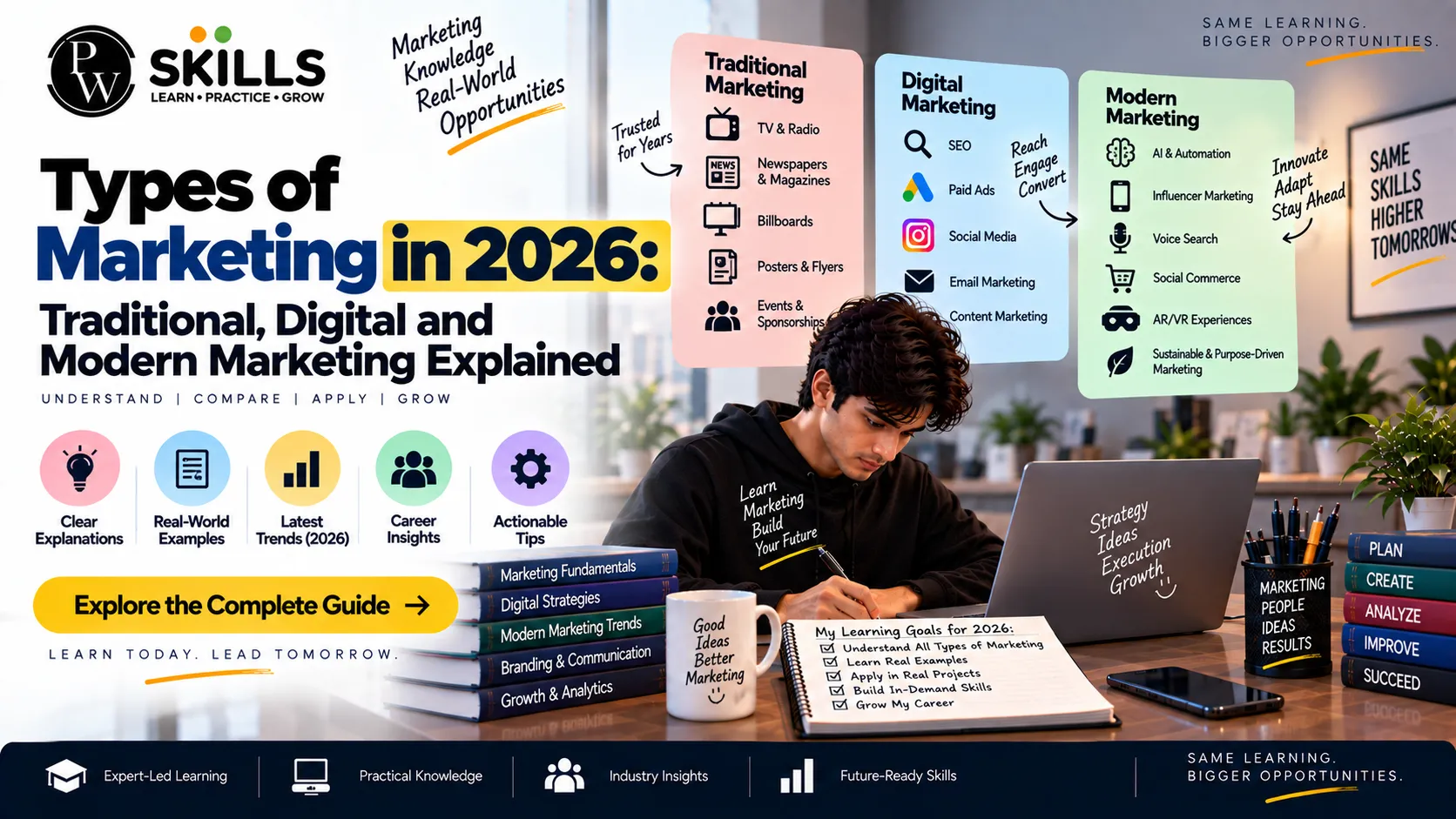
The present corporate environment is complex, and understanding the numerous promotional frameworks is crucial to maneuver it. Deciding which approach best serves their commercial objectives, especially in a shifting industry landscape, can be a challenge for students and potential entrepreneurs. Brands that know how to tackle it may do it efficiently and engage with target audiences. This extensive breakdown explores the types of marketing to explain how firms establish exposure, create qualified leads, and maximize conversion rates in offline and online ecosystems.
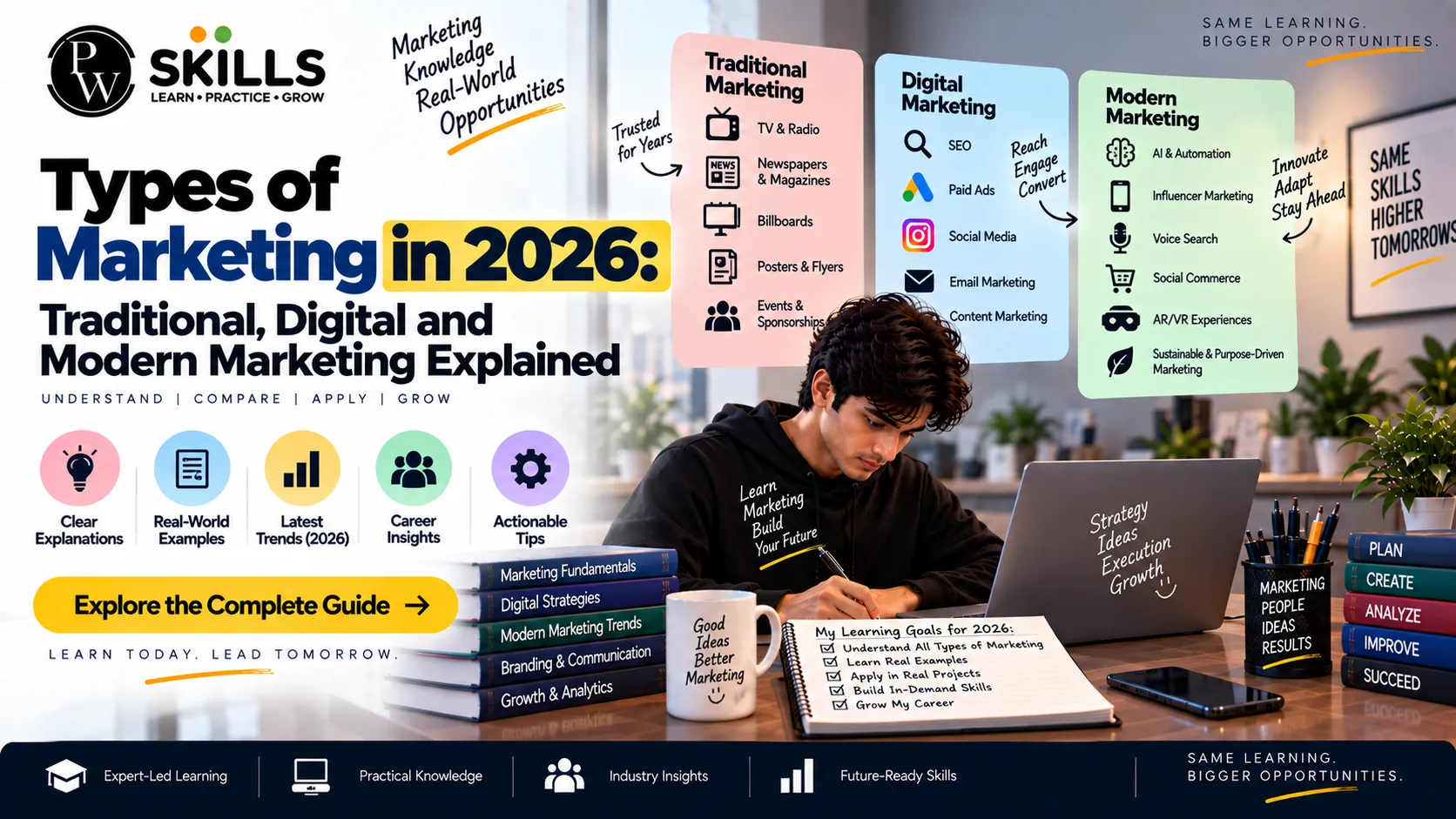
Traditional Marketing in Types of Marketing
Legacy promotional approaches still have value for localized audience targeting and tangible brand establishment. This approach depends largely on offline media outlets such as print ads, billboards, television commercials and direct mail fliers. These tangible mediums allow businesses to establish instant local exposure without the need of internet connectivity. Digital channels may be the engine of modern commerce but physical formats still have a particular tactile advantage for some demographic segments.
Print media and billboards leave unmistakable geographic traces. Offline strategies are typically used with wider initiatives to maximize reach. With an understanding of these basic dynamics, learners get the whole picture of how the evolution of promotion influenced the creation of contemporary advertising methods.
This can also be handy for firms who wish to target audiences within a specific geographical or demographic category. For example, the local newspapers, radio ads, posters and outdoor displays can allow firms to stay visible in a certain area. Usually the choice of channel is determined by the target audience, budget and geographic reach, as well as campaign purpose.
Traditional techniques do not provide as many choices for real-time tracking as many digital channels, but organizations can still measure their performance via responses, inquiries, sales data, consumer input, and campaign-specific offers. This makes it part of a broader marketing mix rather than a totally different approach.
Also Check : Digital Marketing with AI Course
How Digital Marketing Works in Modern Marketing
Shifting consumer habits toward online platforms transformed how organizations promote products and services globally. This encompasses all online promotional activities executed through search engines, email, websites, and mobile applications.
The performance analytics enables brands to properly measure the campaign performance in real-time. Online channels, compared to historical channels, provide the ability to precisely segment audiences based on user activity, search intent and geographic coordinates. Real-time conversion data enables brands to dynamically optimize spending. The data-driven world provides unlimited opportunity for startups and major organizations to quickly scale their digital footprints.
This also helps firms to test new messaging, audiences and formats for their campaigns before investing at a greater scale. Marketers can look at website traffic, engagement, leads, conversions and other measures of performance to see whether efforts are providing valuable outcomes.
Another advantage is the ability to connect multiple online channels. A business may use search engines to attract new visitors, social media to build engagement, email to nurture existing leads, and content to answer customer questions. These channels can work together as part of one connected marketing strategy.
|
Marketing Category |
Primary Channels |
Core Objective |
Tracking Capability |
|
Traditional Marketing |
Print, TV, Billboards, Radio |
Broad Local Awareness |
Limited / Estimated |
|
Digital Marketing |
Search Engines, Email, Apps |
Targeted Lead Generation |
High / Real-Time Data |
|
Content Marketing |
Blogs, Whitepapers, Ebooks |
Authority and Trust Building |
Moderate / Long-Term |
|
Social Media Marketing |
Instagram, LinkedIn, X, YouTube |
Community Engagement |
High / Platform Metrics |
Content Marketing for Long Term Growth
The creation of valuable assets is the foundation for developing sustainable brand authority and organic visibility. This emphasizes the creation and dissemination of meaningful and consistent content to attract and keep a clearly defined audience. Brands can answer consumer questions directly through educational articles, in-depth whitepapers and how-to videos. Organizations are not pushing sales pitches, they are offering real value, developing long-term trust. Search engines favor informational resources with more visibility and hence a constant incoming flow of inbound traffic. Building a strong editorial calendar will help you have consistent posting schedules that will keep your target audiences interested throughout the purchase journey.
It can be used to support different stages of the client experience. Informational material can assist in introducing a brand to new audiences, while extensive guides, case studies, comparison articles and product resources can help people who are closer to making a decision. That makes stuff helpful for awareness and consideration.
They can also take a single piece of content and reuse it in several places. A full-length article can be repurposed as social media pieces, email material, short films or downloaded assets. This method allows brands to extend the value of the material they already produce, while maintaining message consistency.
Social Media Marketing for Modern Brands
Building active brand communities is strongly dependent on the dynamic interaction of networking channels. This style of marketing uses channels like Instagram, LinkedIn and YouTube to create direct conversations with the intended consumer. Short-form video content, interactive polls and targeted community management humanize brands’ corporate identities. Regular interaction lets firms get instant feedback and track public mood in real time. Social channels also have sophisticated advertising technologies that may target specific user interests with amazing accuracy. Adding these social networks to a larger promotional mix multiplies the reach of brands tenfold.
Different social media platforms can serve different marketing objectives. Short-form videos may support brand awareness, professional content can help businesses communicate industry expertise, and interactive posts can encourage audience participation. Selecting the right platform depends on where the target audience spends time and how they prefer to consume content.
Social media analytics can further help marketers understand which posts, formats, and campaigns generate stronger engagement. Metrics such as views, shares, comments, clicks, and follower growth can provide useful feedback for improving future campaigns.
Email Marketing in Different Types of Marketing
Email marketing adds a direct communication channel to the broader marketing mix. Businesses can use newsletters, promotional emails, product updates, welcome messages, and personalised communication to stay connected with subscribers and existing customers.
Email campaigns can also be divided into different audience segments based on interests, previous interactions, purchase behaviour, or customer journey stage. This allows businesses to send more relevant messages instead of delivering the same communication to every subscriber.
Marketers can measure email performance through metrics such as open rates, click-through rates, conversions, and unsubscribes. When combined with content, social media, and other digital channels, email marketing can support ongoing customer communication and lead nurturing.
AI Marketing and Modern Strategies
Emerging technologies continue to redefine how professionals execute daily promotional tasks and optimize workflows. Integrating artificial intelligence allows marketing teams to analyze vast datasets, automate repetitive scheduling, and personalize customer communication at scale. Programmatic ad placement tools ensure optimal budget allocation across competitive channels. Content creators use intelligent algorithms to streamline asset generation while maintaining strict brand consistency guidelines. Learning these technological advancements is essential for modern professionals aiming to build high-performance campaigns in competitive markets.




FAQ
What are the main types of marketing every student should learn?
How does digital differ from traditional?
Why is content important for brand growth?
Can social media management improve customer retention rates?
How do modern AI tools influence different marketing types?





Get Free Counselling Today
and Clear up all your Doubts
 Live & recorded classes available at easeDashboard for progress trackingLakhs of practice questions

