
SEO Tools vs AI SEO Tools: What Should You Learn First in 2026?
 Hardik Gupta7 Jul, 2026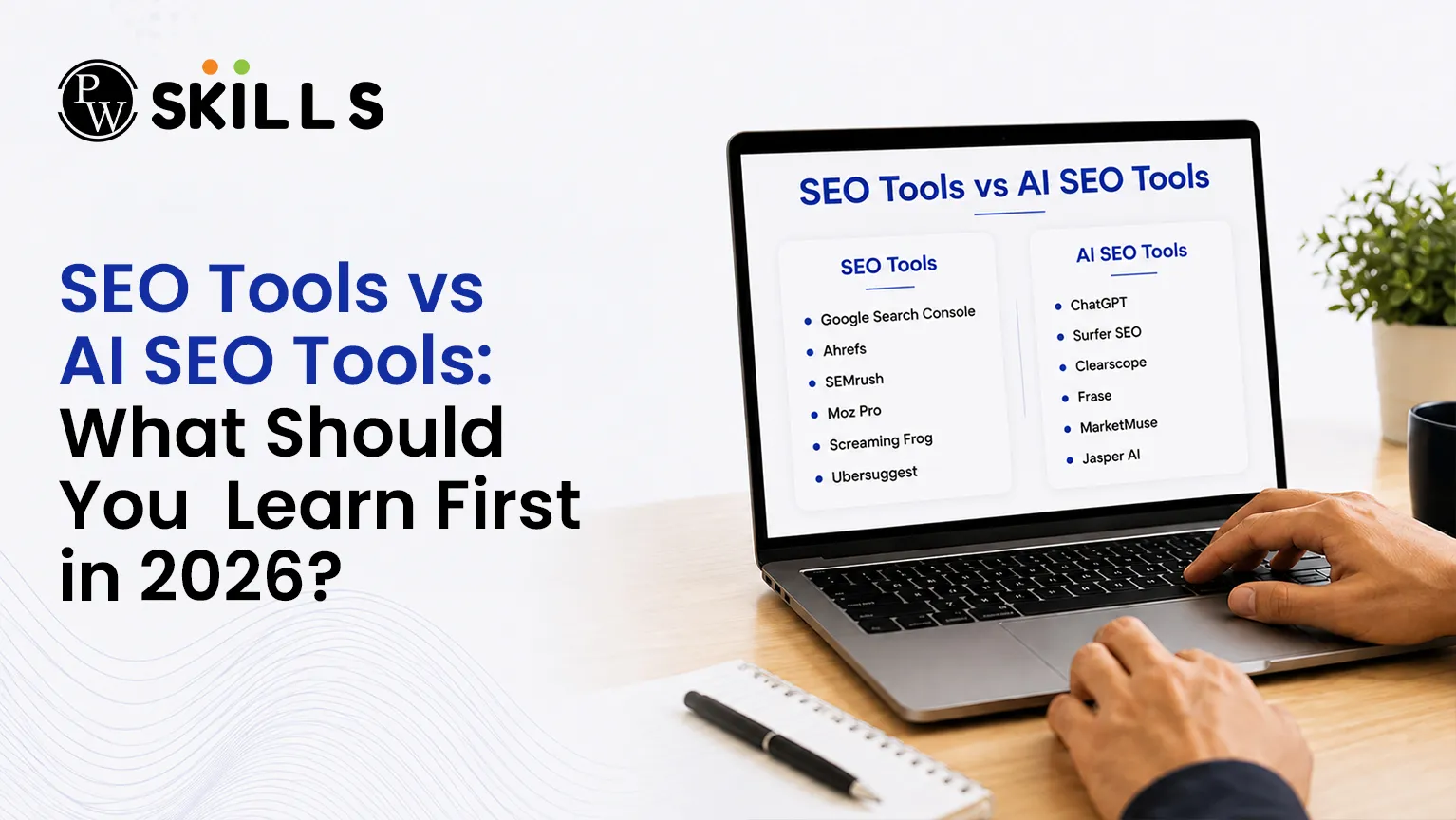
With the rise of AI SEO Tools, digital marketing has changed a lot and many students and freshers are confused about where to start. Do you want to start with standard SEO platforms or jump straight into AI-powered automation? It is important to know the difference as they play different roles. Having a solid foundation enables you to analyze, optimize and automate search campaigns effectively for long-term career success
Why You Should Learn Traditional SEO Tools First
Traditional marketing software acts as the diagnostic engine for any search campaign. These platforms do not make decisions for you; instead, they provide the raw, unfiltered data required to understand how search engines interact with websites.
Learning these platforms first is critical because they teach you the mechanics of search algorithms. Without this foundational knowledge, using AI SEO tools becomes a guessing game. You cannot write an effective prompt for an automation tool if you do not understand the underlying metrics you are trying to optimize.
Traditional software excel at providing precise, data-backed insights across several core areas:
-
Accurate Search Volumes: Tracking how many people search for specific phrases each month.
-
Backlink Profile Analysis: Auditing the exact URLs linking to a website to measure domain authority.
-
Technical Health Scores: Identifying broken links, server errors, and crawl budget issues.
-
Historical Performance Tracking: Measuring how keyword rankings fluctuate over months or years.
When you learn these systems, you develop an analytical mindset. You learn to look at data points—like keyword difficulty and click-through rates (CTR)—and deduce why a website is winning or losing traffic. This diagnostic ability is something artificial intelligence cannot replicate because it requires human context and business strategy.
Also Check: Traditional SEO vs AI SEO: Key Differences and How to Future-Proof Your Content
How AI SEO Tools Improve SEO Workflows
Once you understand how search data works, automated technologies can dramatically accelerate your daily execution. AI SEO tools do not replace the need for strategic knowledge; rather, they serve as a powerful efficiency multiplier for trained professionals.
In 2026, the primary advantage of incorporating artificial intelligence into your workflow is speed. Tasks that used to take junior marketers hours to complete can now be executed in seconds, allowing teams to scale their output without losing analytical depth.
[Traditional Workflow] -> Requires hours of manual data sorting & analysis
[AI-Enhanced Workflow] -> Multiplies execution speed via automated processing
Understanding how AI SEO tools change operational efficiency highlights their true value:
-
Automated Keyword Clustering: Grouping thousands of search terms into semantic themes instantly, eliminating hours of manual spreadsheet filtering.
-
Scalable Content Structuring: Generating comprehensive article outlines and briefs based on real-time search engine results page (SERP) analysis.
-
Programmatic Meta Tags: Drafting thousands of unique meta titles and descriptions for e-commerce sites in minutes rather than days.
-
Semantic Optimization: Scanning existing articles to suggest missing entities and related subtopics that search engines expect to see.
Using AI SEO platforms effectively requires strong human oversight. If you lack foundational search knowledge, you will not be able to spot when an automated tool generates inaccurate data, irrelevant keyword groupings, or low-quality content outlines.
AI SEO Tools vs Traditional SEO Tools
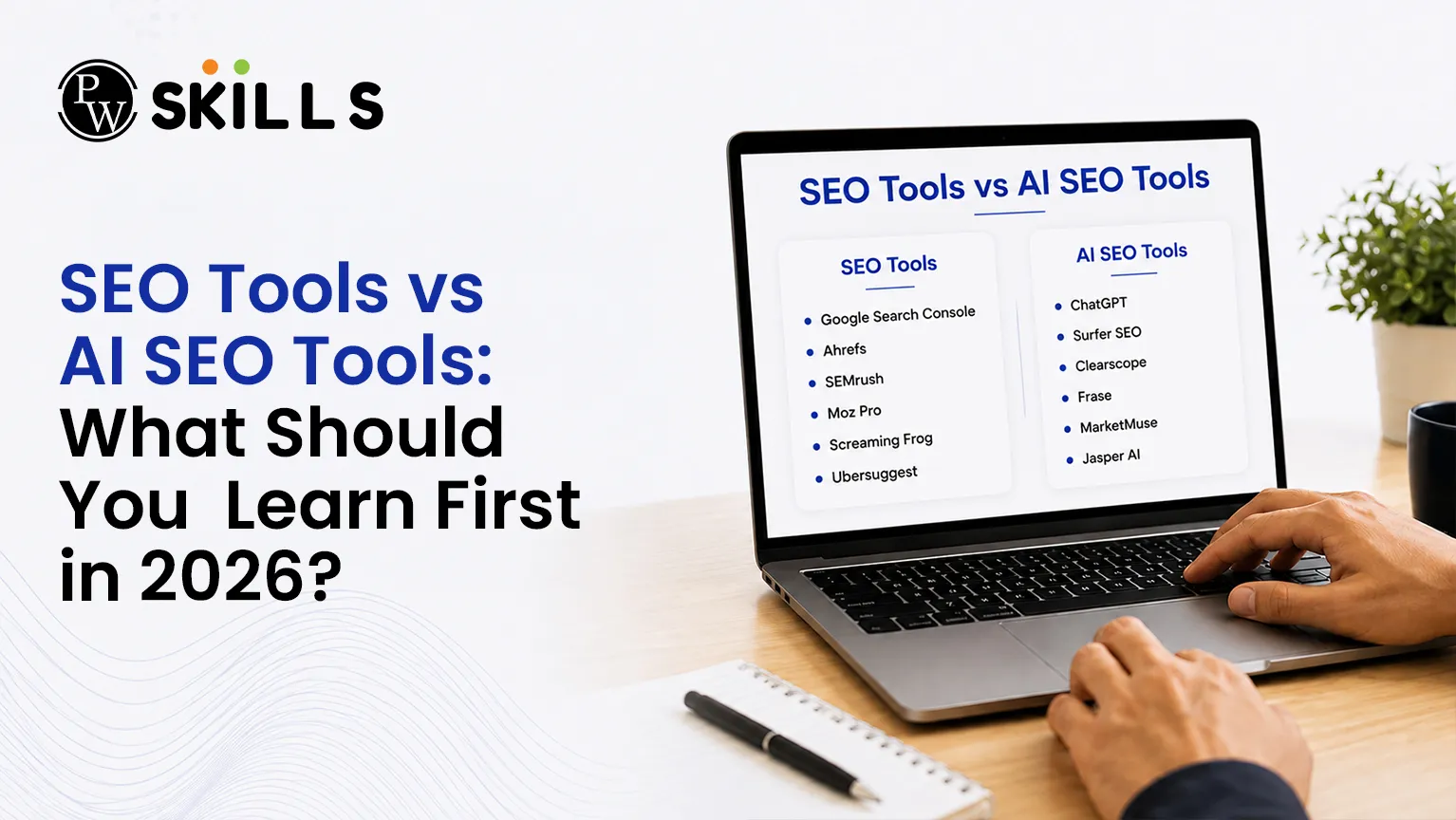
To make an informed learning choice, it's important to understand how traditional platforms differ from automated intelligence. This SEO software comparison highlights the strengths of both approaches. While traditional tools focus on data collection and precision, automated platforms prioritize execution, content creation, and speed.
The following comparison breaks down how these software types perform across key operational categories.
|
Operational Category |
Traditional Software |
AI SEO Software |
|
Primary Function |
Raw data extraction, competitive analytics, and technical health monitoring. |
Text generation, data automation, and semantic content optimization. |
|
Data Accuracy |
Exceptionally high; pulls live metrics directly from search engine indexes. |
Variable; relies on predictive patterns and requires human verification. |
|
Learning Curve |
Steep; requires understanding data analysis, technical architecture, and metrics. |
Low to moderate; operates primarily through natural language prompts. |
|
Best Used For |
Discovering keyword opportunities, technical audits, and backlink analysis. |
Speeding up content production, clustering keywords, and on-page optimization. |
Choosing to learn traditional platforms first gives you the ability to verify the outputs of your automated applications. A marketer who only knows how to use an automated text optimizer will struggle when a site's traffic drops due to a structural indexing issue that only standard diagnostics can uncover.
Can AI SEO Tools Replace Traditional SEO Tools?
Technical optimization is the backbone of search visibility, and it remains an area where automated applications lag behind standard diagnostic platforms. Technical optimization involves ensuring that search engine spiders can easily crawl, render, and index your website pages.
Traditional software communicates directly with website servers and codebases to provide exact, absolute diagnostics. These platforms show you precisely what is broken, where it is broken, and how it impacts your visibility.
Standard platforms are irreplaceable for technical diagnostics because they handle critical checks:
-
Crawl Error Identification: Finding specific 404 pages, 500 server errors, and redirect loops that stop search spiders.
-
Sitemap Validation: Checking if your XML sitemaps are correctly formatted and updated for search engines.
-
Core Web Vitals Assessment: Measuring exact page loading speeds, visual stability, and interactive delays across devices.
-
Robots.txt Audits: Verifying that your site's directives are not accidentally blocking valuable pages from being indexed.
AI-powered SEO tools can explain what a technical error means, but they cannot crawl a complex, enterprise-level website codebase to find the root cause of an indexing issue. You must learn how to use traditional diagnostic software to ensure a website is technically sound before you worry about optimizing content with artificial intelligenc
How to Use AI SEO Tools and Traditional SEO Tools Together
The ultimate goal for any modern digital marketer in 2026 is not to choose one system permanently over the other, but to learn them in the correct tactical order. True career success comes from blending the data precision of traditional platforms with the speed and efficiency of SEO automation tools, allowing you to execute campaigns faster while making informed, data-driven decisions.
The most effective learning path starts by learning data fundamentals before moving on to advanced automation workflows:
-
Learn the Data Fundamentals: Spend your initial months learning how to read search volumes, analyze keyword difficulty, and run technical site audits using standard software.
-
Learn the Mechanics of Search: Understand how search engines discover, crawl, and rank pages based on user intent and domain authority.
-
Introduce Strategic Automation: Once you can interpret search data manually, start using AI SEO platforms to speed up repetitive tasks like generating keyword lists or writing meta tags.
-
Develop Prompt Engineering Skills: Learn how to write highly specific instructions for automated tools to get high-quality outlines and structural optimizations that match your strategic goals.
-
Focus on Human Quality Control: Always act as the final editor, ensuring that every piece of automated output aligns with search guidelines and contains genuine human expertise.
By following this structured approach, you ensure that your skills are anchored in real search data, making you a highly adaptable professional who can manage any algorithm update.