

Digital Marketing Interview Questions and Answers for Freshers in 2026
 Hardik Gupta23 Sept, 2026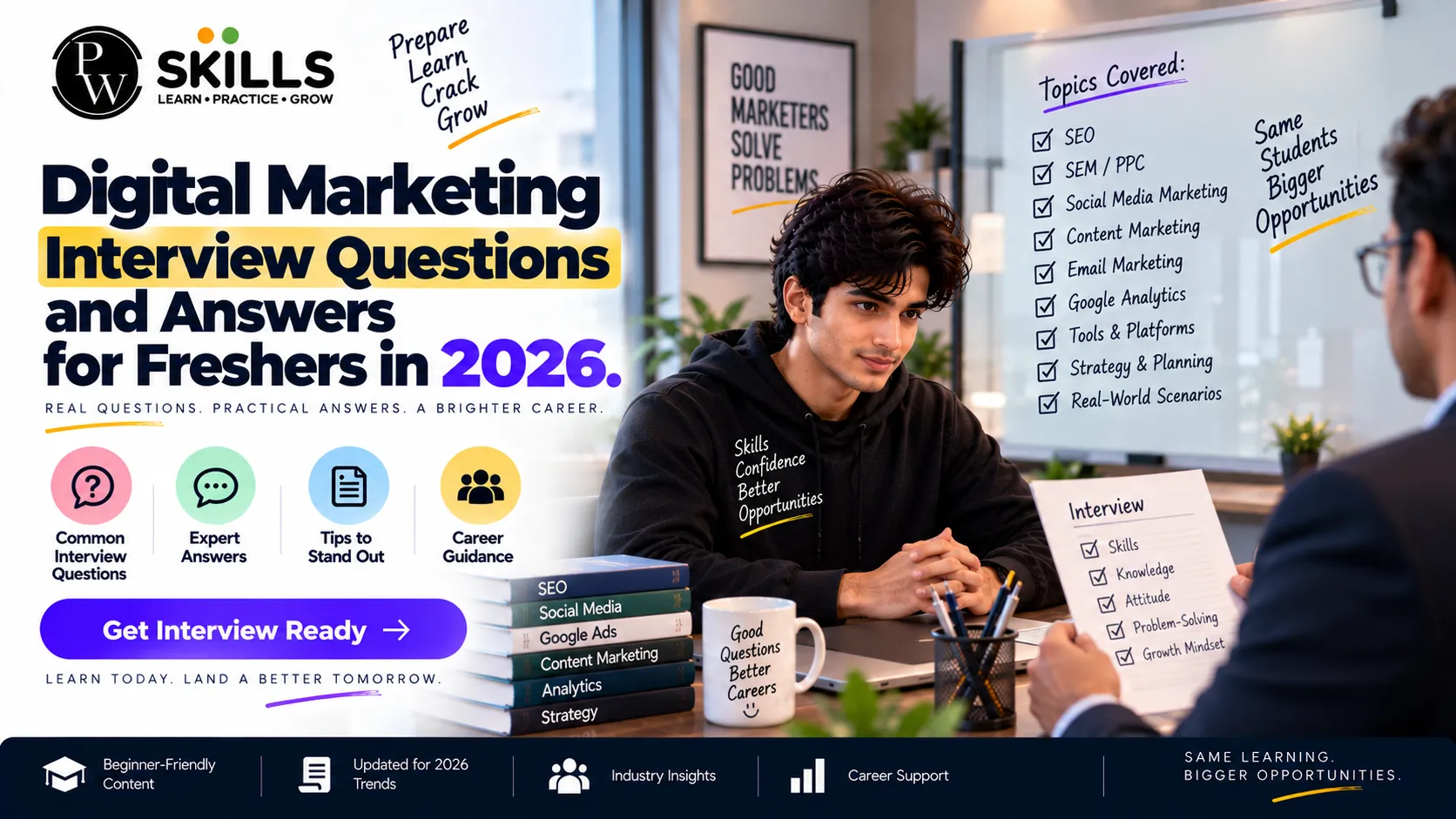
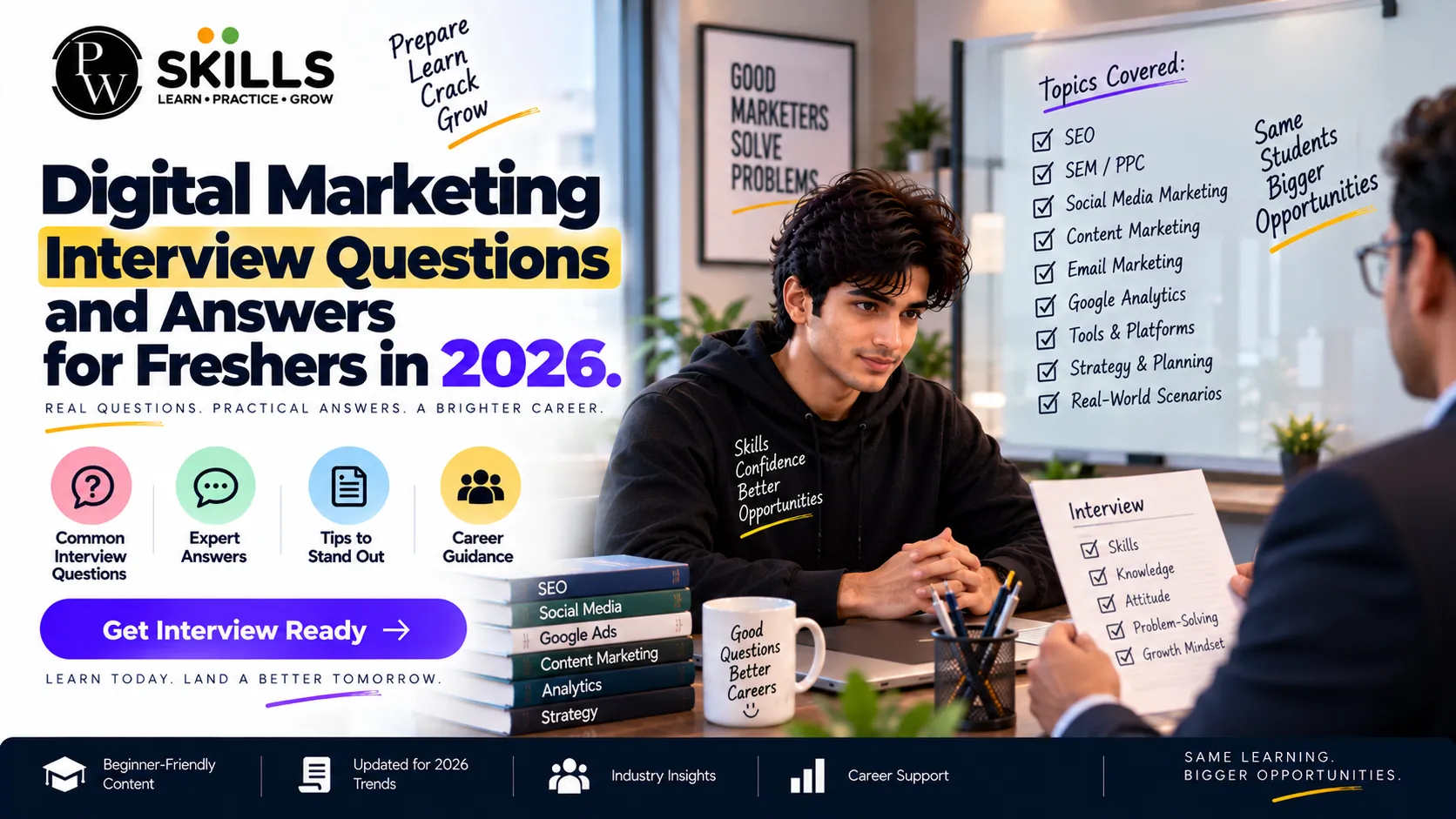
When you’re prepping for a digital marketing interview, book definitions won’t cut it. Freshers should be able to relate principles to real world SEO, paid advertising, content and AI based marketing workflows. Reviewing digital marketing interview questions can help candidates get a sense of what hiring managers are looking for and help them craft concise and relevant answers. In this article, we'll talk about crucial questions to improve your interview readiness and confidence.
What Are the Core Topics in Digital Marketing Interview Questions?
When you come before evaluation panels, interviewers seek to test your basic knowledge across different web channels. Get ready to be questioned on organic search visibility, sponsored ads, social media management and web analytics. Freshers are asked to describe how these individual pieces fit within a bigger customer journey framework. Understanding these ideas will make your answer to technical questions with confidence.
-
Search Engine Optimization: Optimizing website structures, metadata and keywords to rank higher on search engines organically.
-
Pay Per Click Advertising: This is where you pay for search ads, manage your bids and target specific audiences using platforms like Google Ads.
-
Social Media Marketing: Focuses on creating brand communities and sharing interesting content on platforms like LinkedIn, Instagram and Facebook.
-
Web Analytics: Tracking user behavior, assessing traffic sources and conversion rates using tools like Google Analytics.
Also Check : Digital Marketing with AI Course
How to Answer Technical Digital Marketing Interview Questions
Technical evaluations will generally ask you to describe certain tracking methods, metrics and ways of optimizing campaigns. Web Performance When talking about web performance, interviewers want to hear specific terms and see logical thinking. If you know your way around data sets, it sets you apart from other candidates who simply have surface-level information.
-
Conversion Rate Optimisation: Explains the systematic process of improving landing pages to turn website visitors into paying customers.
-
Bounce Rate Definition: Refers to the percentage of users who land on a webpage and leave without interacting further or visiting other pages.
-
Return on Ad Spend: Indicates the amount of income gained per currency unit invested on a certain ad campaign.
-
Pixel Tracking Implementation: Includes putting short code snippets on web pages to precisely measure user activities and attribute conversions.
AI in Digital Marketing Interview Questions
Today, interviewers are more likely to question you about your knowledge of AI tools and automated processes. Organizations are looking for applicants who are capable of using generative AI applications to expedite keyword research, content outline, audience analysis, and campaign scalability. Interviewers may also ask applicants how they check AI-generated outputs, maintain brand consistency, and avoid depending on automated technologies without human assessment. Demonstrating experience with these products shows you understand how AI aids ordinary marketing activities, but still needs human insight.
-
Workflow Automation: Utilising intelligent systems to handle multi-format content adaptation, email newsletters, and repetitive scheduling tasks.
-
Keyword Discovery: Leveraging AI platforms to mine search data, identify user intent, and group relevant terms for search engine optimization campaigns.
-
Personalized Messaging: Creating bespoke communication strategies at different phases of the funnel, leveraging data-driven insights about the audience.
-
Performance Dashboards: Leverage business intelligence technologies to design visual reports that monitor critical parameters like client acquisition cost and retention rates.
-
Content Support: Leverage AI to generate first drafts of content outlines, variations of ad copy, email drafts and social media content ideas. Candidates must also recognize the need of editing and fact checking content generated by AI prior to publication.
-
Campaign Analysis: Use of AI-powered analytics to detect trends in campaign performance and point up opportunities for improvement. If you can explain how you would marry those insights with human judgment in an interview, that can show practical understanding of modern marketing operations.
How to Prepare for Strategic Digital Marketing Interview Questions
Strategic questions evaluate your ability to think beyond basic execution and align marketing efforts with overall business goals. Interviewers want to see how you analyze market trends, define target audiences, and evaluate campaign profitability. Demonstrating structured problem-solving skills helps validate your potential as a valuable team member.
-
Audience Segmentation: Dividing a broad consumer base into specific subgroups based on behavior, demographics, and purchasing preferences.
-
Funnel Stage Mapping: Designing targeted messaging for awareness, consideration, and final decision stages of the customer journey.
-
Budget Allocation: Evaluating channel performance to distribute financial resources efficiently across organic, paid, and retention initiatives.
-
Competitive Analysis: Reviewing rival strategies to spot gaps in the market and uncover unique positioning opportunities for your own brand.
Important Metrics in Digital Marketing Interview Questions
Data literacy remains a core pillar of evaluation for hiring managers seeking fresh talent. Being able to define, track, and interpret key performance indicators shows that you take a results-oriented approach. Reviewing these metrics ensures you can answer quantitative questions with absolute precision.
-
Customer Acquisition Cost: Calculates the total average expense incurred by a business to acquire a single new paying customer.
-
Click Through Rate: Measures the proportion of users who click on a specific link compared to the total number of users who view a page or advertisement.
-
Cost Per Click: Determines the exact price paid for each individual click generated within a paid search or social advertising campaign.
-
Retention Rate: Tracks the percentage of existing customers who continue purchasing or engaging with a brand over a specific period.
Digital Marketing Interview Questions Skills Tools and Metrics
To help freshers structure their learning priorities before stepping into an interview, the table below outlines the core functional areas, primary tools used, and key evaluation metrics expected by modern employers.
|
Functional Area |
Core Focus & Objectives |
Essential Tools & Platforms |
Primary Evaluation Metrics |
|
Search Engine Optimisation |
Improving organic visibility and site architecture |
SEMrush, Google Search Console |
Organic Traffic, Keyword Rankings |
|
Pay Per Click Advertising |
Driving immediate targeted traffic through paid placements |
Google Ads, Meta Ads Manager |
ROAS, CPC, CTR |
|
Web Analytics & Data |
Monitoring user behavior and conversion tracking |
Google Analytics 4, Power BI |
Bounce Rate, Conversion Rate |
|
Social Media Marketing |
Building brand presence and community engagement |
LinkedIn, Instagram, Meta Suite |
Engagement Rate, Follower Growth |
Key Takeaways From Digital Marketing Interview Questions
Preparing with relevant interview questions helps freshers build confidence and communicate their knowledge clearly during interviews. Focus on SEO, paid advertising, analytics, social media, AI tools, and campaign metrics while practising practical examples. A strong understanding of these areas can help you present your skills effectively and approach entry-level digital marketing opportunities with greater confidence.



FAQ
1. What are the most common interview questions asked to freshers?
2. How can I structure my answers for interview questions?
3. What steps are involved in effective digital marketing interview preparation?
4. How do marketing interview questions test analytical skills?
5. What practical skills help freshers secure digital marketing jobs?





Get Free Counselling Today
and Clear up all your Doubts
 Live & recorded classes available at easeDashboard for progress trackingLakhs of practice questions

