

The Real Difference Between System Admins and DevOps Engineers
 Hardik Gupta10 Jul, 2026
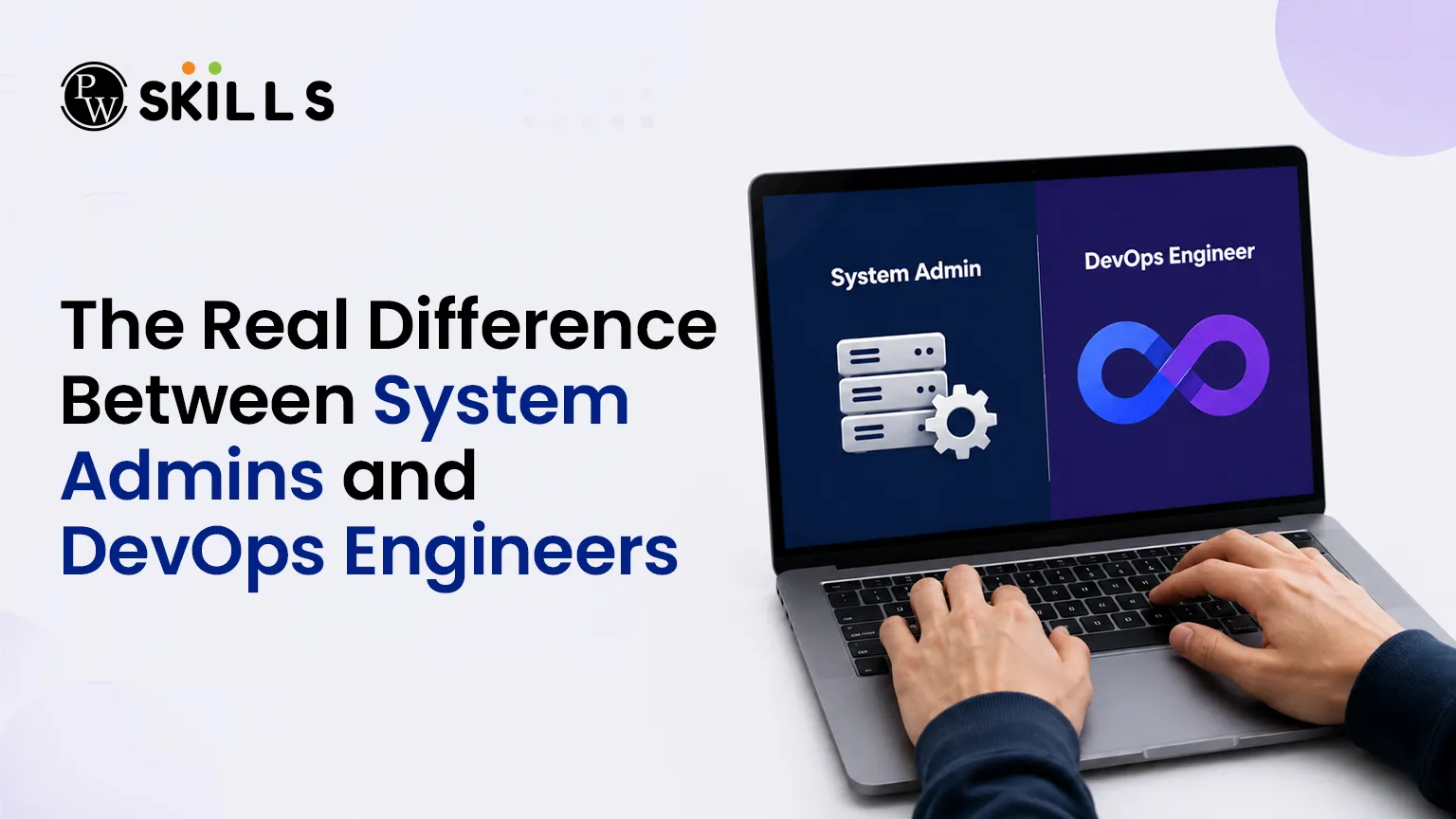
Choosing the right path in tech can feel overwhelming when job titles sound similar. If you are exploring IT infrastructure careers, you might find yourself stuck choosing between a System Admin vs DevOps Engineer path. While both roles keep systems running smoothly, their daily tasks and core mindsets are entirely different. Here is exactly how they compare.
Overview of a System Admin vs DevOps Engineer
To understand these career paths, you must first look at what these professionals do every day. The two roles operate on different sides of the technology spectrum, even though they share the same ultimate goal of keeping systems stable.
The following list outlines the primary tasks that a traditional system administrator handles to keep a business running:
-
Setting up, configuring, and maintaining physical or virtual servers.
-
Managing user accounts, access permissions, and system security credentials.
-
Performing regular data backups and setting up disaster recovery protocols.
-
Troubleshooting hardware errors, network outages, and software glitches.
-
Installing operating system updates, patches, and routine software upgrades.
In contrast, the DevOps engineer role focuses on creating automated systems that help software developers deploy code faster. They act as a bridge between the people who write code and the people who maintain the servers.
What Tools are Used by System Admins vs DevOps Engineers?
The software utilities and applications these professionals use are very diverse. System administrators will spend a lot of time with OS tools, while DevOps engineers will spend their time working on automation and cloud platforms.
Below is a side-by-side comparison of the main tools used by both professionals in today’s tech landscape:
|
Category |
System Administrator |
DevOps Engineer |
|
Operating Systems |
Windows Server, Red Hat Enterprise Linux, Ubuntu |
Linux variants, Alpine, CoreOS |
|
Automation |
Bash scripting, PowerShell, Task Scheduler |
Ansible, Terraform, Puppet, Chef |
|
Deployment |
Manual installation, Golden Images, SCCM |
Jenkins, GitHub Actions, GitLab CI/CD |
|
Containerisation |
VMware, Hyper-V |
Docker, Kubernetes |
|
Monitoring |
Nagios, SolarWinds, Wireshark |
Prometheus, Grafana, ELK Stack |
DevOps professionals rarely configure individual servers manually. Instead, they write scripts and configuration files that automatically set up hundreds of servers at once, ensuring consistency across environments.
What Skills are Required for System Admin and DevOps Engineers?
The skill sets required for these roles reflect their different operational focuses. While a system administrator needs deep knowledge of hardware and operating systems, a DevOps specialist requires a mix of coding and systems knowledge.
The list below details the essential skills a professional needs to cultivate for a successful career as a system administrator:
-
Expertise in managing Windows or Linux operating system internals.
-
Deep understanding of networking protocols, firewalls, and routing.
-
Knowledge of storage area networks and hardware virtualization.
-
Strong diagnostic and troubleshooting skills for immediate problem-solving.
DevOps engineers must think like developers. They do not just fix a broken server; they write code to ensure that the server can automatically heal itself if the issue happens again.
Also Check: Why Every Software Team Needs DevOps Engineers
How to Choose Between a System Admin and a DevOps Engineer Career?
Deciding which career path to follow depends heavily on your personal interests, work style, and long-term professional goals. Both options offer stable employment but suit completely different personality types.
The list below highlights the specific preferences that make a traditional system administration career path a great fit for you:
-
You enjoy diagnosing complex hardware and operating system issues.
-
You prefer a structured environment with clear operational boundaries.
-
You like working directly with physical tech infrastructure and networking gear.
-
You prefer maintaining stability over constantly changing codebases.
If you like knowing exactly how a server communicates with a switch or how to recover a corrupted database, system administration provides a fulfilling career path.
The points below outline the interests that indicate you would thrive more in a modern software deployment and automation role:
-
You enjoy writing code and building automated software systems.
-
You want to work closely with software development groups.
-
You prefer fast-paced environments where products change daily.
-
You are fascinated by scalable cloud systems and microservices.
DevOps is ideal for people who get bored doing the same task twice. If you see a manual task and immediately want to write a script to automate it, this pathway will suit your mindset perfectly.
What is the Difference Between Career Paths and Salaries of a System Admin vs a DevOps Engineer?
The financial rewards and long-term career growth differ between these two professions. Because the market currently places a high premium on automation and cloud technology, compensation trends tend to reflect this demand.
The following breakdown provides an overview of the typical career progression and estimated salary expectations for both fields:
-
System Administrator: Junior SysAdmin positions often lead to senior administrator roles, infrastructure manager positions, or IT director roles. The estimated average salary ranges from forty-five thousand to eighty thousand pounds annually, depending on experience.
-
DevOps Engineer: Professionals often start as software developers or system engineers before moving into this role. They can progress to DevOps Architect or Cloud Engineering Lead. The estimated average salary ranges from sixty-five thousand to over one hundred thousand pounds annually.
Many professionals choose to transition from a system administrator role into a DevOps position after a few years. This shift requires learning code repositories, deployment pipelines, and cloud architecture.




FAQs
Can a system administrator work as a DevOps engineer?
Is coding mandatory for system administrators?
Why do DevOps engineers generally earn higher salaries?
Which role is better for absolute beginners in tech?
Do DevOps engineers manage physical server hardware?





Get Free Counselling Today
and Clear up all your Doubts
 Live & recorded classes available at easeDashboard for progress trackingLakhs of practice questions

