

AWS in DevOps and Cloud Computing Course: What It Is & Why Employers Look for It
 Varun Saharawat16 Jul, 2026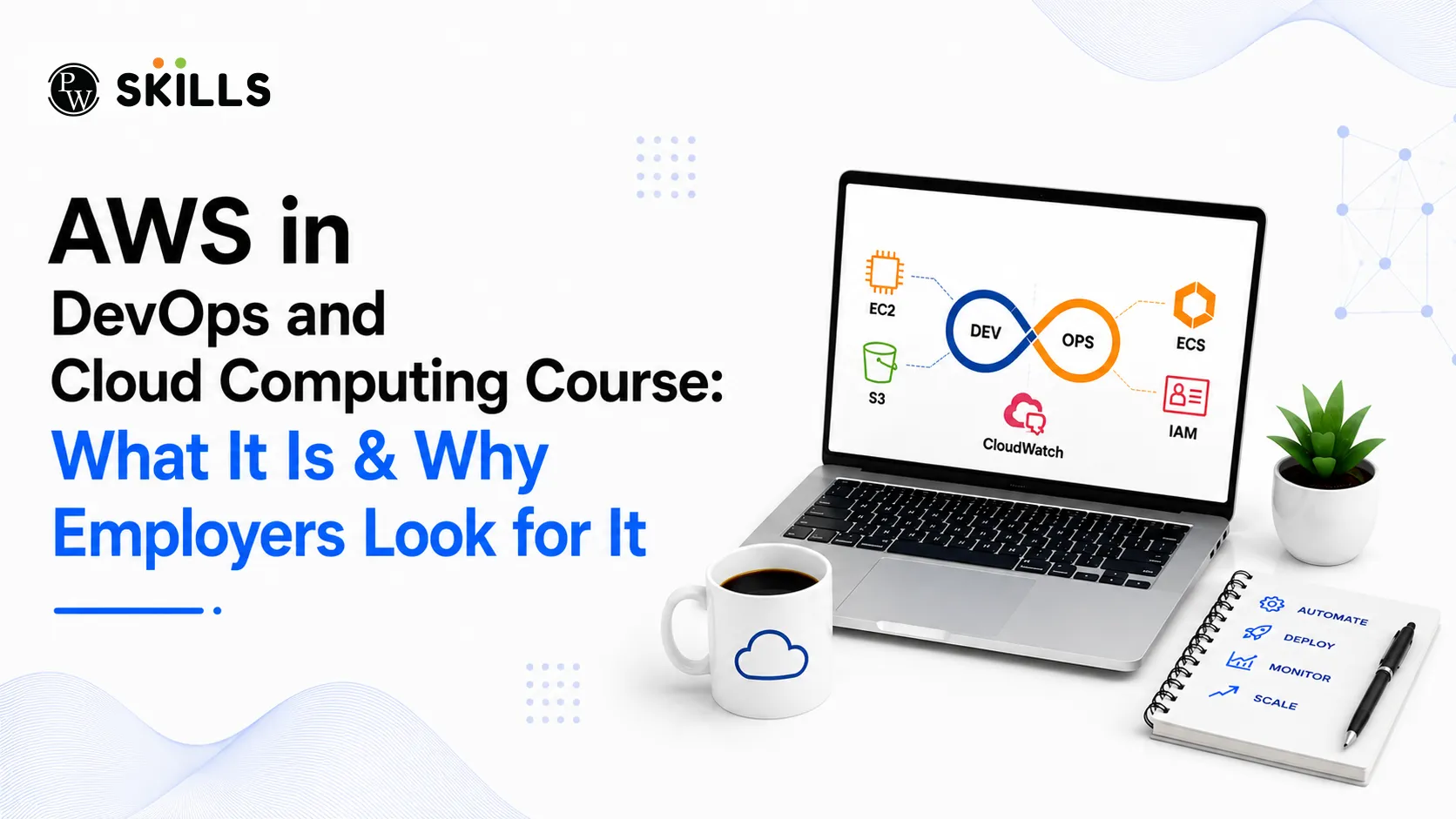
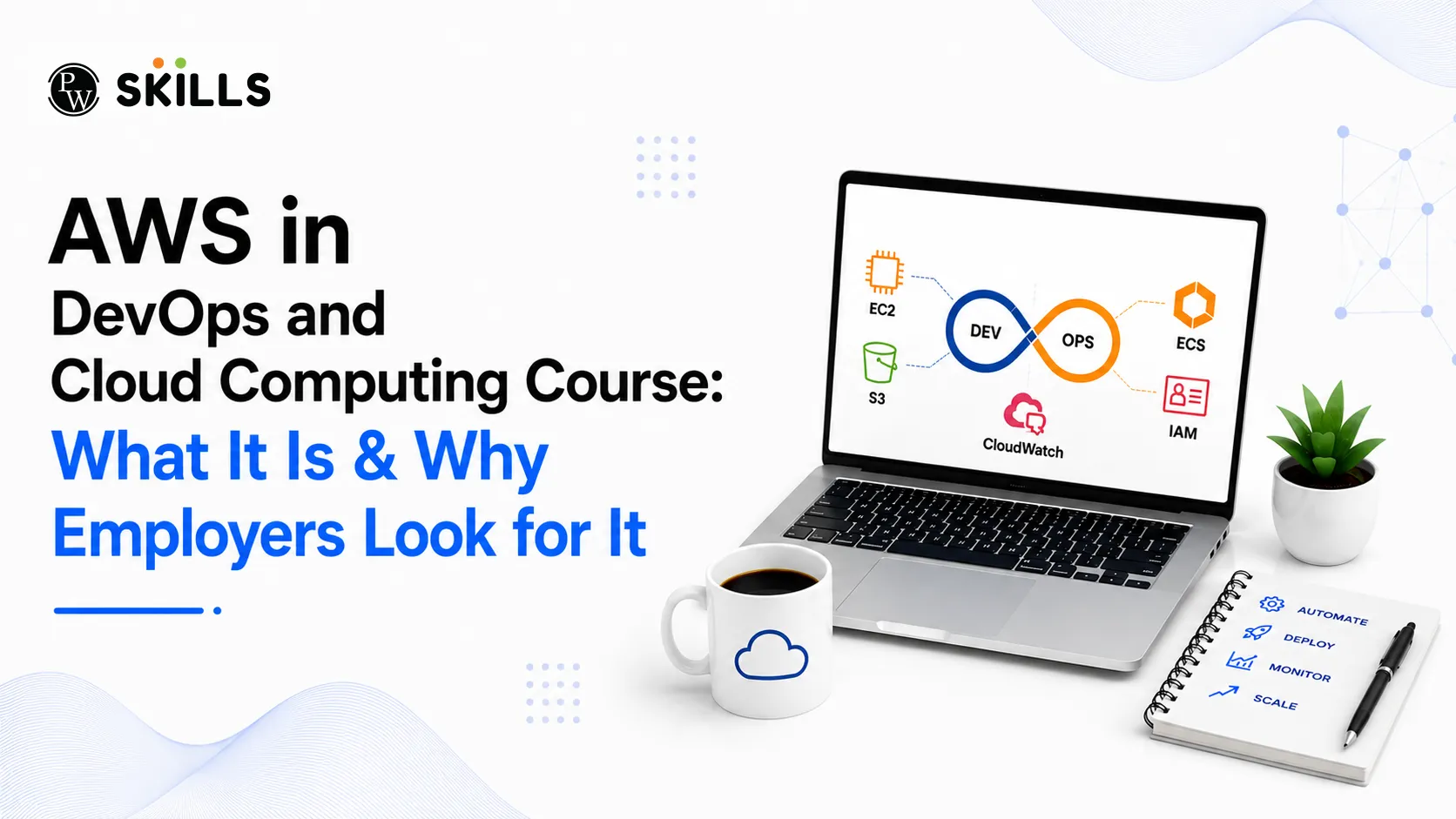
Millions of tech professionals struggle to transition from traditional software development into modern infrastructure management. A specialized DevOps and Cloud Computing Course offers the exact solution, equipping you with the practical skills needed to automate infrastructure and accelerate software deployment cycles effectively.
What is a DevOps and Cloud Computing Course?
A comprehensive cloud training program focuses on teaching the principles of continuous integration, automated infrastructure management, and scalable cloud systems. Students learn how to build agile workflows that allow development teams and operations teams to collaborate without friction.
+-------------------------------------------------------------+
| DevOps and Cloud Computing Course |
+-------------------------------------------------------------+
|
+------------------+------------------+
| |
v v
Development Skills Operations Skills
- Code Integration - Server Monitoring
- Automation Scripts - Cloud Security
These programs generally integrate Amazon Web Services (AWS) because it remains the leading cloud platform globally. Understanding how to manage virtual servers, configure cloud networks, and handle automated deployment within this framework gives professionals a distinct competitive advantage.
To help you understand the foundational pillars of these educational programs, here is a breakdown of what a standard curriculum includes:
-
Infrastructure as Code (IaC): Learning to manage and provision server infrastructure through machine-readable definition files rather than manual configuration tools.
-
Automated Security: Implementing continuous compliance safeguards across every single cloud layer to protect user data from external vulnerabilities.
-
Microservices Management: Designing application architectures as collections of loosely coupled services that are easy to maintain and scale independently.
Why Do Employers Prefer a DevOps and Cloud Computing Course?
Modern enterprises are moving away from legacy on-premise hardware to cut operational costs and improve deployment speeds. Consequently, companies actively seek professionals who have completed a Cloud Computing and DevOps Course to spearhead this digital transformation.
|
Benefit to Employer |
Impact on Technical Teams |
Expected Business Outcome |
|
Reduced Downtime |
Faster incident resolution through automated system monitoring. |
High platform reliability and improved customer retention rates. |
|
Cost Optimization |
Dynamic scaling of cloud resources based on real-time traffic. |
Lower monthly cloud bills and eliminated hardware wastage. |
|
Rapid Releases |
Shortened code deployment cycles across production environments. |
Faster delivery of new features to the global market. |
Organizations want engineers who can walk into a department and instantly optimize their infrastructure setup. Formal training ensures that an applicant understands how to eliminate manual bottlenecks, reducing the likelihood of human error during major software releases.
Beyond technical tools, engineering leaders want candidates who grasp the cultural shift toward collaborative work. A structured program teaches students how to break down departmental silos, allowing developers and system administrators to share responsibility for product stability.
How Does a DevOps and Cloud Computing Course Prepare You for Real Projects?
Transitioning from theoretical knowledge to handling thousands of concurrent users requires deep practical experience. A structured curriculum focuses heavily on simulated environments where students actively troubleshoot live architectural failures and server dropouts.
Live System Outages
Students regularly face scenarios where virtual servers fail under sudden load spikes. You learn how to configure auto-scaling groups that launch fresh instances automatically when web traffic crosses specific thresholds, keeping platforms online.
Distributed Data Storage
Modern systems handle massive amounts of unstructured data daily. Training programs teach you how to set up redundant storage buckets, establish lifecycle policies for automated data archiving, and configure strict access permissions to keep corporate assets secure.
How Does a DevOps and Cloud Computing Course Teach Automation?
Automation is the backbone of efficient infrastructure management, eliminating repetitive manual tasks for engineering teams. Understanding how to connect different automation frameworks allows businesses to deploy software updates multiple times per day safely.
Reliable CI/CD Pipelines
A central focus of any premium DevOps and Cloud Computing Course + CI/CD pipelines module is establishing automated integration setups. This ensures that every piece of new code undergoes rigorous testing before hitting live production servers.
-
Version Control Integration: Automatically triggering a build sequence the moment an engineer pushes new code changes to the central repository.
-
Automated Testing Modules: Running unit tests instantly to catch syntax errors, logical bugs, and security flaws before deployment occurs.
-
Staging Environment Deployment: Moving successful builds into a sandbox environment that mimics production for final quality assurance checks.
Containerization and Orchestration
Shipping applications inside lightweight containers guarantees they run identically across different environments. Cloud courses teach you to package application code, dependencies, and configurations into unified packages, eliminating the classic "it works on my machine" problem entirely.
What Skills Will You Learn in a DevOps and Cloud Computing Course?
Securing modern engineering roles requires a balanced mix of system administration, coding capabilities, and cloud architecture expertise. Completing a dedicated DevOps and Cloud Computing Course + DevOps Engineer Jobs preparation pathway helps candidates build a verifiable portfolio that satisfies strict hiring requirements.
-
Linux System Administration: Deep familiarity with command-line interfaces, shell scripting, and user permission management across virtual servers.
-
Cloud Network Configuration: Designing secure Virtual Private Clouds (VPC), managing subnets, and configuring internet gateways for controlled data flow.
-
Log Analysis and Monitoring: Utilizing centralized dashboards to track system performance metrics and catch operational anomalies early.
Hiring managers look for candidates who can write clean scripts in Python or Bash to automate daily maintenance tasks. Being able to program custom scripts ensures you can build bespoke internal tools when standard off-the-shelf software falls short.
How to Choose the Right DevOps and Cloud Computing Course?
Selecting the ideal educational path depends on your current technical background and long-term career goals. When looking into a DevOps and Cloud Computing Course + How to enroll, consider programs that offer extensive hands-on laboratory sessions over pure video lectures.
[Assess Background] ---> [Check Lab Content] ---> [Verify AWS Alignment] ---> [Enroll]
Verify that the course material aligns directly with current vendor certifications, such as the AWS Certified DevOps Engineer track. Gaining these credentials alongside practical portfolio projects provides clear validation of your technical skills to recruiters.
Learning complex infrastructure concepts can be incredibly challenging without guidance. Opt for platforms that give you direct access to active industry mentors and student communities where you can debug tricky configuration errors collaboratively.
How Can You Start a Career with a DevOps and Cloud Computing Course?
Breaking into the cloud engineering space requires a deliberate approach to learning and portfolio building. Following a structured roadmap ensures you master foundational concepts before jumping into complex automated workflows.
1. Master Linux Fundamentals: Weeks 1-3.
Learn to navigate the file system, manage processes, and edit configurations using the command-line interface exclusively.
2. Understand Core Networking: Weeks 4-6.
Study IP addressing, DNS routing, subnetting, and firewalls to manage how data moves across virtual networks securely.
3. Learn a Public Cloud Platform: Weeks 7-10.
Gain hands-on experience with core cloud services, focusing on compute instances, object storage, and basic identity management.
4. Implement Infrastructure Automation: Weeks 11-14.
Build automated deployment pipelines and use configuration tools to provision entire environments without manual intervention.
What Common Mistakes Should You Avoid in a DevOps and Cloud Computing Course?
Many aspiring professionals rush into advanced concepts without solidifying their foundational knowledge first. This section outlines key traps to look out for during your educational journey:
-
Ignoring Basic Networking: Attempting to build complex cloud architectures without knowing how routing, subnets, and ports function securely.
-
Memorizing Tool Syntax: Focusing solely on learning specific tool commands rather than understanding the underlying architecture principles.
-
Neglecting System Security: Treating security configurations as an afterthought instead of building identity access boundaries from day one.




FAQs
What is the core focus of a DevOps and Cloud Computing Course?
How does a Cloud Computing and DevOps Course help me get DevOps Engineer Jobs?
Can I learn a Cloud Computing and DevOps Course online effectively?
What role do CI/CD pipelines play in cloud operations training?
Is coding knowledge required before joining a cloud training program?





Get Free Counselling Today
and Clear up all your Doubts
 Live & recorded classes available at easeDashboard for progress trackingLakhs of practice questions

