

Lecture 6 : Deploying Agents and Responsible AI Practices | Free Gen AI Course For All
 Varun Saharawat20 Jun, 2026
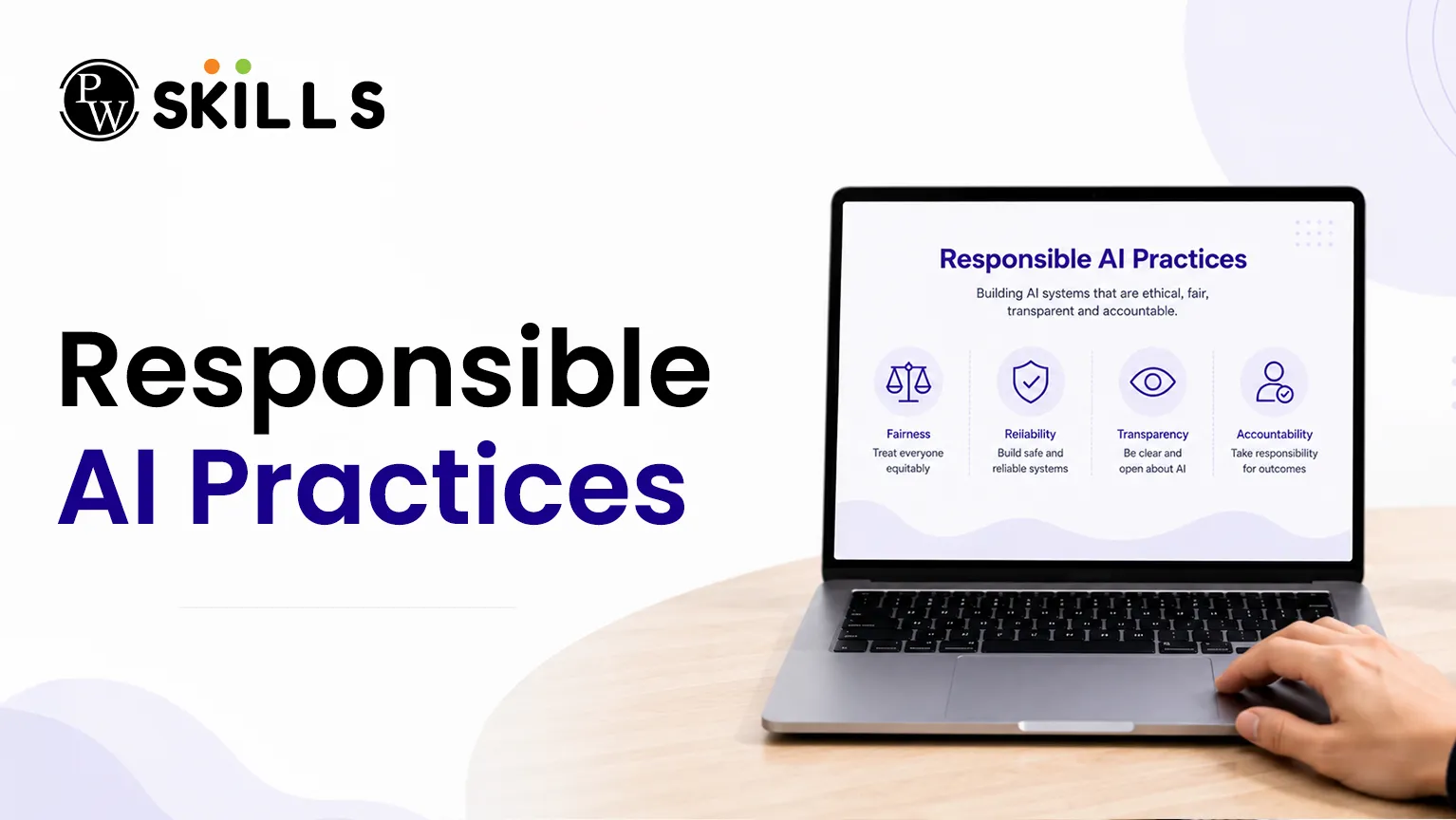
Responsible AI practices are important guidelines used to build and use AI systems in a safe, fair, and transparent way. These practices help ensure that AI works without bias, protects user data, and follows ethical rules throughout its development and use.
Importance of Responsible AI Practices
Moving an AI system from a controlled test environment to a real-world setup brings many challenges. When an intelligent agent starts working with real users, every action becomes more important. AI Practices help make sure these systems stay safe, useful, and aligned with human values at every stage.
Without proper rules and structure, AI systems can create problems like increasing hidden bias, exposing private data, or producing unexpected results in live situations.
Building trust with users is not only about making the AI accurate. Developers also need clear rules to manage how the system affects people, organizations, and society. By following Responsible AI Practices from the start, teams can reduce legal issues, financial losses, and reputation risks that often happen when AI systems are not properly controlled..
Key Pillars of Responsible AI Practices
Successful development of AI agent depends heavily on balancing technical optimization with social responsibility. Tech industry leaders like Microsoft, IBM, and AWS have formalised specific pillars to ensure automated platforms behave predictably in diverse contexts.
The Core Technical Pillars
-
Fairness and Inclusiveness: Autonomous agents must treat all stakeholder demographics equitably, avoiding disparate impacts based on age, gender, race, or socio-economic backgrounds.
-
Reliability and Safety: Live programs must function consistently under normal conditions, respond safely to unexpected or hostile inputs, and resist malicious manipulation.
-
Privacy and Security: Systems must protect sensitive enterprise and personal data through advanced encryption, access restrictions, and secure data-ingestion pathways.
-
Explainability and Transparency: Developers and users need a clear mechanism to comprehend, verify, and track the underlying logic behind specific automated decisions.
-
Accountability and AI Governance: Organizations must define clear lines of responsibility, logging comprehensive system lifecycles to audit exactly how, why, and when updates occur.
|
Pillar Name |
Primary Focus Area |
Implementation Method |
|
Fairness |
Eliminating algorithmic bias and unfair treatment |
Demographic parity checks and input feature balancing |
|
Safety |
Preventing harmful outputs or sudden system failure |
Input/output guardrails and automated anomaly alerts |
|
Privacy |
Safeguarding user records and proprietary training sets |
Differential privacy algorithms and network isolation |
|
Explainability |
Providing clear rationales for complex calculations |
Feature attribution reporting and local cohort views |
|
Governance |
Managing accountability across the enterprise lifecycle |
End-to-end version tracking and human-in-the-loop reviews |
Responsible AI Practices in Production Systems
Bringing Responsible AI Practices from planning into real production systems needs a clear step-by-step approach. This helps ensure AI systems stay safe, fair, and compliant during everyday use.
Step 1: Build Cross-Functional Governance Teams
Create a governance team that includes technical experts, legal advisors, and product managers. This team sets basic rules, reviews high-risk use cases, and defines how the AI system should be used inside the organization.
Step 2: Add Security Guardrails
Use automatic security filters to control what goes into and comes out of the AI system. These filters can block harmful content, remove toxic language, and protect private information like personal or sensitive data.
Step 3: Reduce Bias in AI Systems
Check training data carefully to find unfair patterns that may affect certain groups. Run fairness tests to see if the model treats all groups equally. If bias is found, retrain or adjust the model to improve fairness.
Step 4: Improve Model Explainability
Add tools that help explain how the AI makes decisions. These tools show which inputs had the most impact on the result, helping users understand why a decision was made.
Troubleshooting Deployment Hazards in Responsible AI Practices
Deploying live agents involves navigating complex trade-offs between performance, speed, and ethical constraints. Engineering teams often encounter distinct technical hurdles that require structured mitigation strategies.
-
Preventing Training Data Poisoning: Threat actors frequently target data ingestion pipelines to manipulate system performance. Secure your ingest infrastructure by enforcing strict network communication boundaries and auditing dataset origins continuously.
-
Managing Explainability Trade-offs: Highly complex deep learning networks often deliver superior accuracy but lack transparent logic. For critical security or medical domains, developers may choose more interpretable tabular configurations over opaque systems to ensure auditable decisions.
-
Detecting Real-World Data Drift: A model that excels in a development environment can rapidly degrade when faced with live user interactions. Use proactive monitoring tools to compare baseline training criteria with production inference data to spot performance anomalies early.




FAQs
What are Responsible AI Practices?
Why is AI agent deployment more complex than traditional software updates?
How does ethical AI help prevent bias in automated decisions?
What is the role of AI governance in enterprise systems?
How can developers improve AI model explainability?






Get Free Counselling Today
and Clear up all your Doubts
 Live & recorded classes available at easeDashboard for progress trackingLakhs of practice questions

