

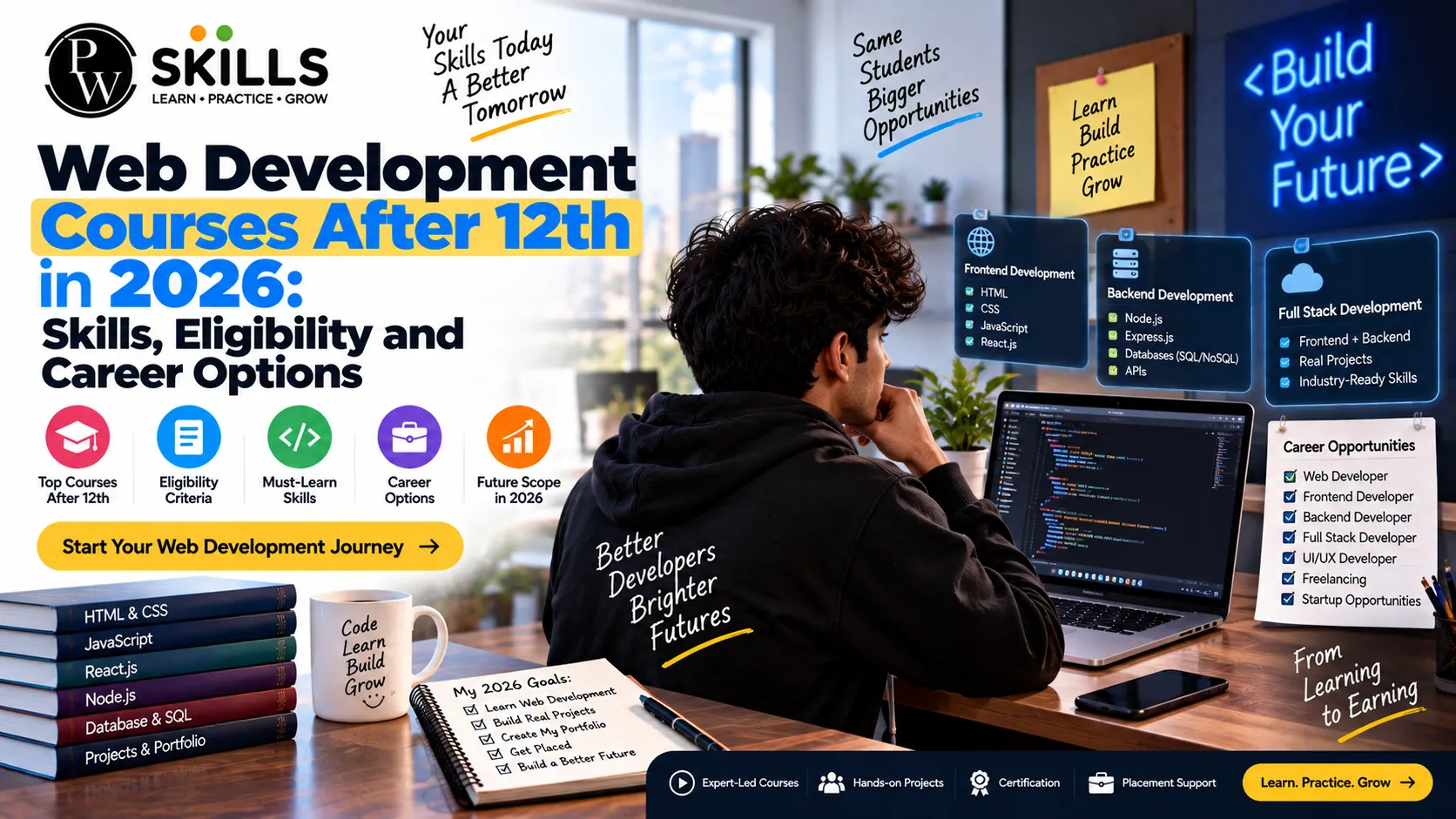
Web Development Courses After 12th in 2026: Skills, Eligibility and Career Options
 Hardik Gupta22 Sept, 2026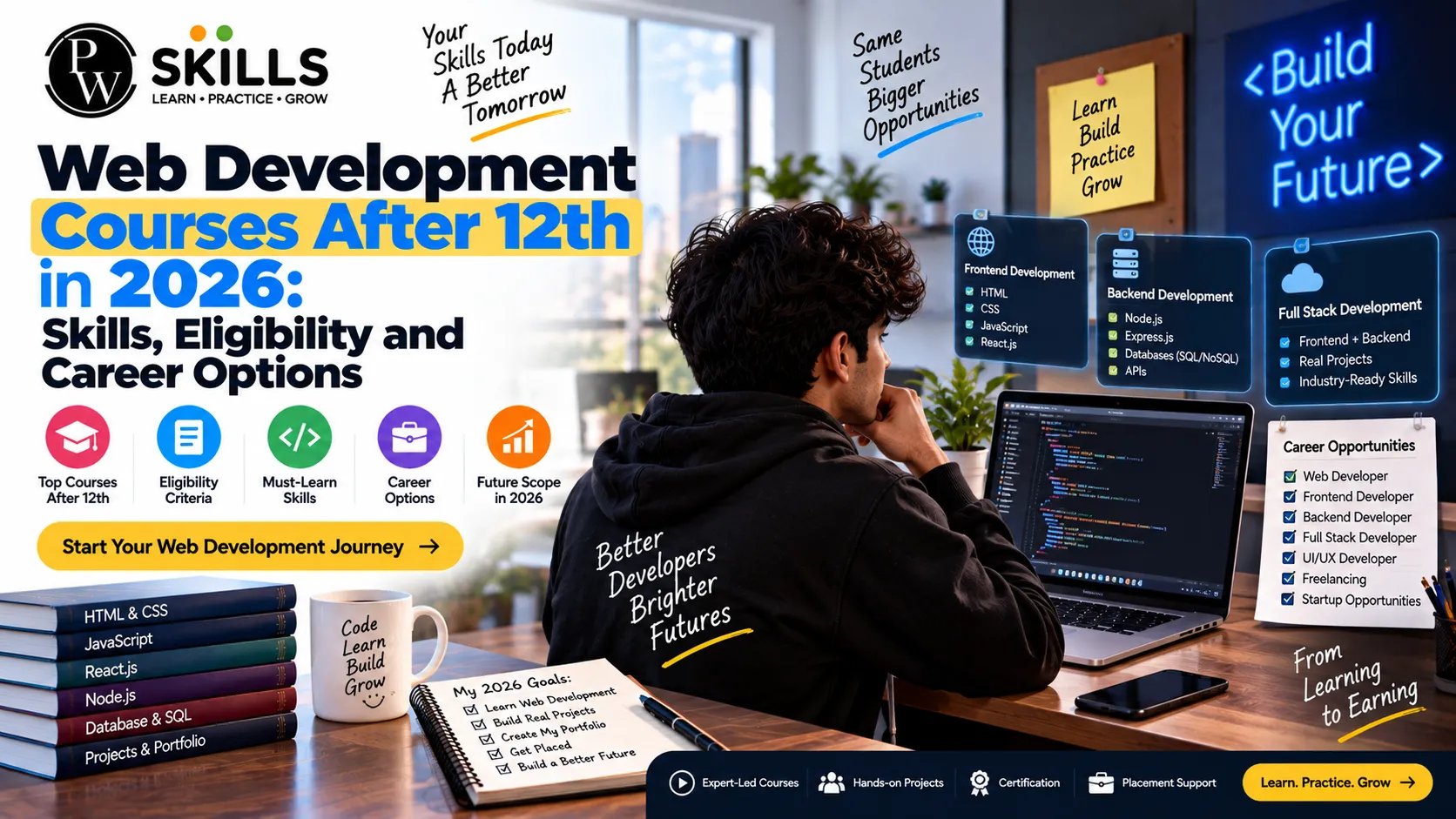
Many students feel overwhelmed by traditional paths that take years to yield job opportunities, leaving them searching for practical skills that offer quick career progression. Pursuing web development courses after 12th gives candidates an early start in building production-ready applications.
The software sector rapidly requires skilled creators who understand modern digital architecture. Through structured learning, students move past basic computer concepts to build interactive web solutions.
This article outlines available options, required eligibility, fundamental skills, and career possibilities for candidates embarking on this technical journey right after school.
Importance of Web Development Courses After 12th
Choosing to enrol in professional technical programs directly after school creates a distinct advantage in today's digital economy. Modern businesses require robust online platforms to maintain operations, leading to constant hiring for qualified developers.
-
Early Skill Acquisition: Enrolling early allows students to build technical confidence, mastering coding environments while others are still selecting academic majors.
-
Industry Alignment: Modern training programs focus on industry-relevant tools rather than theoretical models, helping learners stay up-to-date with practical coding standards.
-
Practical Portfolio Creation: Working on real-world projects during training creates a strong portfolio that demonstrates actual capability to prospective employers.
-
Diverse Application: Digital creation skills apply across every sector, including finance, healthcare, e-commerce, and entertainment.
-
Integration of Modern Tools: Modern curricula include AI-driven coding assistants and automated tools, ensuring learners build software using efficient current workflows.
What Skills Can You Learn Through Web Development Courses After 12th
A complete curriculum covers every layer of modern software creation, from user interfaces to server logic and deployment pipelines. Learners progress systematically from basic structures to complex full stack systems.
Front-End Engineering
Front-end training focuses on creating visually engaging and responsive user interfaces. Students learn to translate design requirements into functional code using foundational technologies:
-
HTML5 & CSS3: Building structured page foundations, styling components, using Flexbox and Grid layouts, and ensuring cross-device responsiveness.
-
JavaScript & TypeScript: Implementing dynamic interface behaviors, handling user events, managing asynchronous operations, and enforcing data typing.
-
Modern Frameworks: Utilizing React and Next.js for component-based design, single-page application structure, dynamic routing, and server-side rendering.
Back-End Development and Database Systems
Back-end modules teach learners how web applications handle background tasks, database queries, and secure communications.
-
Server Logic: Utilizing Node.js and Express.js to construct web servers, manage routes, write middleware, and implement HTTP protocols.
-
API Architecture: Designing RESTful APIs, securing endpoints using JWT authentication, handling sessions, and enabling CORS configurations.
-
Data Storage: Utilizing MongoDB to construct NoSQL collections, organize schemas via Mongoose, and perform complete CRUD data actions.
Tooling, Version Control, and AI Integration
Contemporary developers rely on modern tools to maintain code quality, collaborate with teams, and accelerate execution.
-
Version Control: Using Git and GitHub for tracking code revisions, managing project branches, resolving code conflicts, and participating in pull requests.
-
Automated Deployment: Configuring hosting environments like Vercel and Netlify while learning basic CI/CD practices.
-
AI-Assisted Workflow: Incorporating generative AI utilities for debugging assistance, code optimization, dynamic component creation, and automated test scripting.
Who Can Join Web Development Courses After 12th and What Is the Eligibility
A common concern among school graduates is whether specialized technical prerequisites are required before starting a coding program. Educational guidelines for these tracks prioritize logical thinking over extensive technical backgrounds.
Looking into web development course eligibility, candidate requirements typically include:
-
Academic Background: Candidates who have completed their 12th standard examination from any recognized board (Science, Commerce, or Arts) can enrol.
-
Prerequisite Knowledge: No prior programming experience is strictly necessary, as training begins with foundational software development concepts.
-
Technical Setup: Access to a functional computer system and a reliable internet connection for complete hands-on practice.
-
Key Soft Skills: Basic analytical reasoning, persistence in problem-solving, and a keen interest in practical computer applications.
Which Web Development Courses After 12th Match Different Career Goals
Different learners possess distinct professional goals. Selecting the right program depends on whether an individual prefers user interface design, server operations, or comprehensive application engineering.
-
Full Stack Development Program: The most comprehensive track, covering client-side programming, server architecture, database administration, and modern AI development utilities. Ideal for learners seeking versatile industry preparation.
-
Front-End Development Specialization: Tailored for individuals who enjoy visual styling, design implementations, user experience design, and client-side web application scripting.
-
Back-End Engineering Focus: Designed for students interested in logical server workflows, complex database architecture, system authentication, and secure data handling.
-
Short-Term Certification Tracks: Focused bootcamps aimed at practical skill acquisition in specific technologies like React, Node.js, or database systems.
What Career Options Can You Explore After Web Development Courses After 12th
Completing specialized technical training opens up numerous employment avenues across tech firms, creative agencies, enterprises, and freelance platforms. A solid understanding of modern application development leads to several primary roles within the digital sector.
Primary Job Roles
-
Full Stack Developer: Manages complete project structures by writing front-end interfaces, handling server routes, building databases, and managing deployment pipelines.
-
Front-End Developer: Specializes in building accessible, highly interactive, and responsive web pages using modern frameworks like React and Next.js.
-
Back-End Developer: Concentrates on server stability, business logic, API endpoints, microservices, and dynamic data storage operations.
-
Software Developer: Applies core programming concepts, algorithms, and web architectures to build custom business applications.
Professional Growth and Flexible Work
Beyond traditional office roles, developers often work in modern setups like remote positions, contract consulting, or freelance project execution. Building real-world web applications enables developers to launch independent products or provide tech services to global clients.
How to Choose the Right Web Development Courses After 12th in 2026
With numerous learning programs available online, selecting the right platform requires careful consideration of key features that directly impact job readiness.
-
Curriculum Scope: Ensure the program covers both fundamental concepts (HTML, CSS, JavaScript) and advanced modern tools (React, Next.js, TypeScript, Node.js, MongoDB).
-
Practical Project Exposure: Look for courses offering extensive practical exercises, capstone projects, and real-world case studies to ensure hands-on skill development.
-
Mentorship and Support: Check for access to structured doubt resolution, continuous code feedback, and guidance from experienced software industry mentors.
-
Career Assistance: Select options that provide resume construction support, portfolio optimization, interview preparation, and recognized completion certificates.
-
AI Tool Integration: Verify that the course includes practical instruction on using modern AI development tools for code generation, debugging, and workflow automation.
How to Prepare for a Web Development Career After Web Development Courses After 12th
Succeeding in a software engineering track requires more than just attending lectures; it demands consistent practice, building projects, and active involvement in technical communities.
Step 1: Master Foundational Concepts
Begin by establishing a strong foundation in computer basics, web mechanics, pseudocode, algorithms, and simple HTML/CSS page structures before moving to complex frameworks.
Step 2: Build Real-World Projects
Apply theoretical knowledge by building practical applications. Construct personal portfolio websites, interactive single-page applications, e-commerce interfaces, dynamic REST APIs, and full stack management tools.
Step 3: Establish Version Control Practices
Maintain every project within public GitHub repositories. Form standard habits around committing code, creating descriptive commit messages, managing branches, and deploying functional dynamic applications live on the web.
Step 4: Refine Technical Portfolios and Interview Skills
Synthesize completed applications into an organized personal portfolio website. Practice answering common technical interview questions, participating in coding assessments, and explaining system architecture clearly.



FAQ
Q1. Is standard science background compulsory to pursue web development after 12th?
Q2. What is the standard web development course eligibility for beginners?
Q3. Can I build a full stack development course portfolio while studying after 12th?





Get Free Counselling Today
and Clear up all your Doubts
 Live & recorded classes available at easeDashboard for progress trackingLakhs of practice questions

