

The Essential Skills Every Full Stack Developer Needs
 Kishor Kumar Bairagi30 Jun, 2026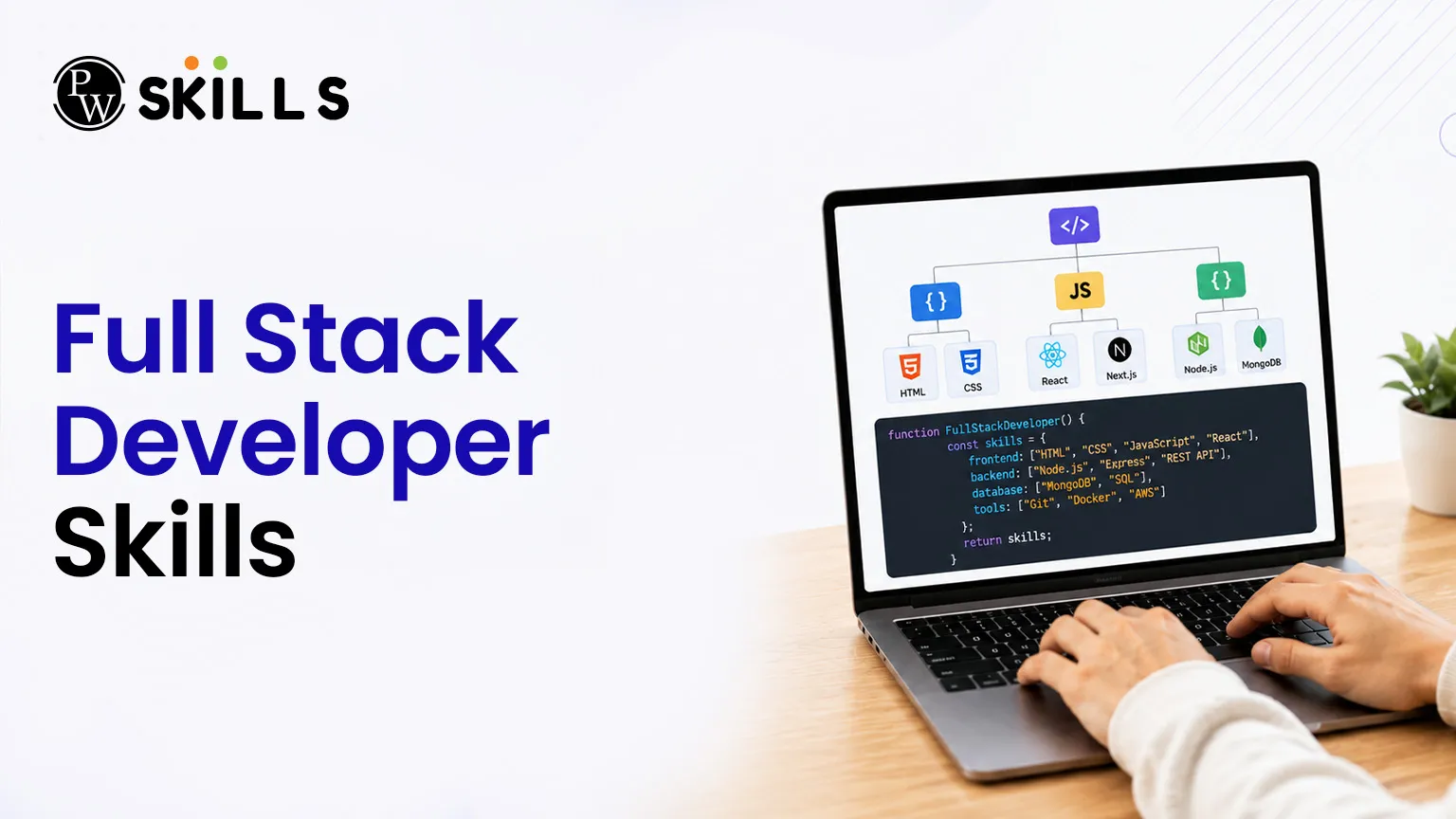
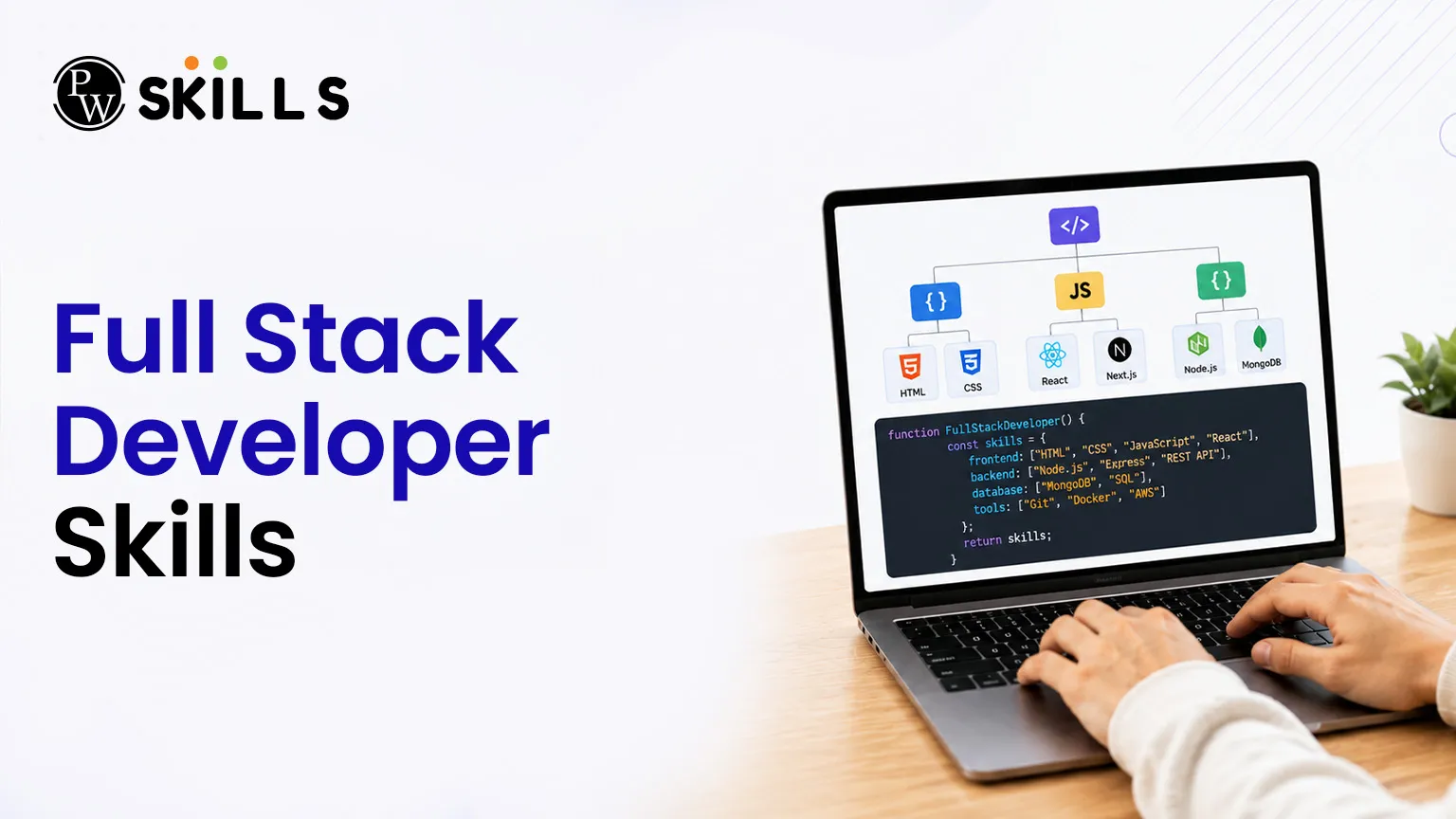
In today's fast-moving software industry, companies look for adaptive professionals who can manage entire web applications from scratch. This is where learning Full Stack Developer Skills becomes a career-defining advantage. If you want to transform from a simple coder into a versatile, high-earning tech specialist, understanding the core competencies of this domain is your first step.
Who is a Full Stack Developer
A full stack developer is a thorough tech specialist capable of handling both the backend and frontend skills required to build effective web applications. Instead of confining knowledge to just one layer of development, these individuals possess a thorough understanding of web architecture, databases, server routing, and user interface design.
In everyday operations, a complete stack developer manages the visual layout, structural integrity, data storage, application programming interfaces (APIs), and eventual cloud deployment of software products. This diverse technical footprint makes them highly valued assets in modern development sprints.
Importance of Full Stack Developer Skills in Modern Software Development
Modern software development involves speed, adaptability, and clear communication across teams. Navigating both user-facing code and complicated underlying servers allows a professional to supervise the complete lifecycle of a project.
Investing in Full Stack Developer Skills remains highly beneficial for several distinct reasons:
-
Efficient Problem Solving: When an issue arises in a system, a full stack professional can accurately trace the bug from the browser layout directly down to the database record.
-
Streamlined Team Collaboration: Acting as a bridge between specialized teams, these developers enhance workflow productivity by speaking the languages of both creative UI designers and database administrators.
-
Cost-Effective Project Execution: Startups and enterprise firms alike prefer versatile engineers who can wear multiple hats, reducing the overall headcount needed to launch a Minimum Viable Product (MVP).
-
Adaptability to Innovations: Because they work across multiple tech domains, full stack engineers can easily adopt and integrate emerging modern upgrades like cloud platforms and Artificial Intelligence tools.
Top Full Stack Developer Skills
To successfully navigate the standard full stack roadmap, you must develop a structured combination of technical expertise and practical tools. Here is a comprehensive breakdown of the essential competencies required.
1. Front-End Development Skills
The front end focuses heavily on everything users see, click, and interact with on their web browsers. To build stylised, intuitive, and responsive applications, you must master the fundamental skills, starting with the basics:
-
HTML (HyperText Markup Language): Provides the definitive structure and layout for web pages.
-
CSS (Cascading Style Sheets): Manages the styling, colors, layout structures, and responsive designs using advanced layouts like Flexbox and CSS Grid.
-
JavaScript: Adds dynamic interactivity, manages DOM manipulation, and handles user-triggered browser events.
-
Front-End Frameworks and Libraries: Popular tools like React.js, Angular, and Vue.js are essential for assembling modern, high-speed single-page applications (SPAs).
2. Back-End Development Skills
The back end handles the underlying application logic, user authentication procedures, calculations, and server configuration. Key technical elements include:
-
Programming Environments: Environments and languages such as Node.js, Python, Java, and PHP handle the server operations.
-
Core Concepts: Server management, role-based session authorization, business logic routing, and secure API architecture.
3. Database Management Systems
Applications depend heavily on storing, retrieving, and organizing data securely. Developers need to know how to interact with multiple structures:
-
SQL Databases: Relational systems like MySQL and PostgreSQL are used for organized, structured tabular data.
-
NoSQL Databases: Flexible systems like MongoDB are utilized for high-scalability requirements and un-structured data models.
-
Core Practices: Writing efficient queries, implementing proper data modeling, and handling routine database optimization.
+------------------------------------------------------------------------+
| FULL STACK DEVELOPMENT LAYER |
+------------------------------------------+-----------------------------+
| FRONTEND DEVELOPER LAYERS | BACKEND DEVELOPER LAYERS |
| (Client-Side Interactivity) | (Server Logic & Storage) |
+------------------------------------------+-----------------------------+
| * HTML5 / CSS3 / JavaScript | * Node.js / Python / Java |
| * React.js / Angular / Vue.js | * RESTful APIs / Express.js |
| * Responsive Layouts (Flexbox/Grid) | * MySQL / MongoDB Databases |
+------------------------------------------+-----------------------------+
4. Version Control Systems
Working efficiently with a software team requires a mechanism to track changes without overwriting code.
-
Git: The industry standard distributed system used to track local file edits, create branches, and roll back errors.
-
GitHub: A cloud platform utilized for hosting code repositories, managing peer pull requests, and conducting team code reviews.
5. API Development and Integration
APIs act as the communication highway connecting client-side browsers to server-side databases.
-
RESTful APIs: Building structured endpoints using standard HTTP/HTTPS methods to securely transfer data packages.
-
Integration & Testing: Connecting third-party services and executing thorough testing using tools like Postman.
6. DevOps and Cloud Deployment
Writing code on a local laptop is only half the battle; applications must live reliably on the internet.
-
Containerization: Using tools like Docker to bundle code with dependencies for uniform running across different servers.
-
CI/CD Pipelines: Setting up Continuous Integration and Continuous Deployment loops to test and push changes automatically.
-
Cloud Computing Platforms: Gaining foundational navigation knowledge of platforms like Amazon Web Services (AWS) or Microsoft Azure to manage production servers.
7. Core Foundations and Security Fundamentals
To excel in technical interviews and maintain safe user platforms, you should focus on structural integrity:
-
Data Structures and Algorithms (DSA): Mastering arrays, linked lists, sorting processes, and search logic helps in building highly efficient runtime scripts.
-
Web Architecture: Knowing the ins and outs of client-server behaviors, MVC patterns, and secure network protocols.
-
Cybersecurity Basics: Protecting applications from malicious attacks such as Cross-Site Scripting (XSS), data leaks, and SQL injection using encryption and modern Transport Layer Security (TLS).
8. Essential Power Soft Skills
Technical prowess must be balanced with human communication skills to successfully deliver software assets:
-
Problem-Solving Ability: Breaking abstract business requirements into structured technical tasks.
-
Team Collaboration & Communication: Conveying complex technical realities simply to non-technical stakeholders and clients.
-
Adaptability: Keeping track of rapidly evolving web development technologies and constantly learning new version releases.
Benefits of Full Stack Developer Skills
Investing your time into learning both frontend and backend skills opens up substantial long-term professional advantages.
The clear benefits of mastering this career path include:
-
High Job Market Demand: Companies across the globe actively search for developers who can take complete ownership of an application feature from start to finish.
-
Lucrative Compensation Packages: Because of the extensive training required to manage multiple operational layers, full stack professionals regularly command top-tier IT industry salaries.
-
Unmatched Professional Autonomy: Possessing the full skill set means you can independently launch your own SaaS products, freelance successfully, or lead tech teams as a project manager.
-
Future-Proof Career Growth: Gaining generalist-specialist technical knowledge makes it much easier to transition into specialized cutting-edge fields like AI-driven development or enterprise software architecture.



Essential Skills Every Full Stack Developer FAQs
What are the main components of Full Stack Developer Skills?
How long does it take to learn the full stack roadmap?
Which programming languages should I focus on first for web development technologies?
Do I need a computer science degree to get a job as a full stack developer?
Why are frontend and backend skills taught together in modern bootcamps?





Get Free Counselling Today
and Clear up all your Doubts
 Live & recorded classes available at easeDashboard for progress trackingLakhs of practice questions

