

Is Frontend Developer Still a Safe Career Bet in 2026? What Recent Layoff/Hiring Data Says
 Hardik Gupta16 Oct, 2026

AI tools can now help developers write code, create page layouts, and fix simple errors. At the same time, companies still need people who can build websites, improve user experience, connect applications to servers, and solve technical problems. People planning a Frontend Developer Career 2026 should understand that job needs can change between companies. Learning frontend development is still a useful starting point, but adding backend skills and learning how to use AI tools can open up more options.
What Skills Are Needed for a Frontend Developer Career 2026?
Frontend developers build the parts of websites and applications that people see and use. Their work includes page layouts, buttons, menus, forms, and other features that make a website easy to use.
Basic tools such as HTML, CSS, and JavaScript remain important. Developers may also use React and Next.js to build larger websites and applications.
AI tools can help with some simple tasks, such as writing basic code or suggesting fixes for errors. However, developers still need to check the results and make sure the website works properly on different devices.
Here are some skills that matter for frontend developers:
-
HTML and CSS: Build and style website pages.
-
JavaScript: Make pages interactive.
-
React: Build user interfaces using reusable parts.
-
Responsive Design: Make websites work well on mobiles, tablets, and computers.
-
Testing: Check that buttons, forms, and other features work correctly.
-
Accessibility: Make websites easier for different people to use.
-
AI Tools: Use AI to help write and check code.
Learning these skills gives beginners a strong starting point. As they gain experience, they can also learn backend development and database basics to improve their career options.
Why Learn Full Stack Development for a Frontend Developer Career 2026?
Learning only frontend development can be a good way to start, but understanding backend development can help learners build complete applications.
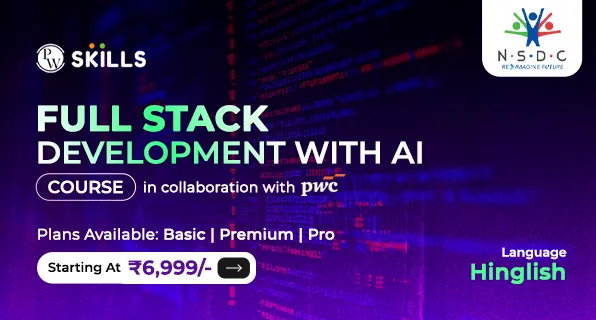
A Full Stack Development with AI Course can teach students how frontend pages connect to servers, how databases store information, and how AI tools can support development work. These additional skills may help learners explore more opportunities while building their Frontend Developer Career 2026.
A course may cover:
-
Frontend Development: Learn HTML, CSS, JavaScript, and React.
-
Backend Development: Understand how servers process requests.
-
API Integration: Learn how a website gets information from other services.
-
Database Management: Store and manage application data.
-
AI-Assisted Coding: Use AI tools to help write, explain, and check code.
-
Testing and Debugging: Find errors and check that features work properly.
-
Project Development: Build applications using different technologies.
These skills can help learners explore frontend, backend, and full stack roles. Before joining a course, check its syllabus, project work, teaching support, and duration.
A course does not guarantee a job. Learners also need to practise, build a portfolio, and prepare for interviews.
How Is AI Changing the Frontend Developer Career 2026?
AI tools are changing how developers complete some daily tasks. They can suggest code, explain errors, create basic page layouts, and help prepare tests.
This can save time, but AI-generated code may also contain errors or fail to meet a project’s needs. Developers must understand the code and test it before using it.
AI is changing web development in several ways:
-
Faster Coding: AI can suggest code for common website features.
-
Quick Error Checks: It can help developers understand possible causes of errors.
-
Page Design Support: Some tools can suggest layouts and basic interface code.
-
Testing Support: AI can help create test cases for website features.
-
More Focus on Quality: Developers still need to check performance, security, accessibility, and user experience.
Learning to use AI is useful, but students should not skip the basics. They need to know how HTML, CSS, JavaScript, and frontend frameworks work before they can properly check AI suggestions. Combining these fundamentals with AI skills can help developers adapt to changes in the Frontend Developer Career 2026 landscape.
How to Enhance Your Skills in a Frontend Developer Career 2026?
Frontend developers can expand their skills by learning how the backend of a website works. This does not mean they need to learn every technology at once. They can move step by step.
Here is a simple learning path:
-
Learn Frontend Basics: Practise HTML, CSS, and JavaScript.
-
Build Interactive Pages: Use React to create website features.
-
Learn Backend Basics: Start with Node.js and Express to understand server-side code.
-
Understand APIs: Learn how frontend pages send and receive data.
-
Learn a Database: Practice saving and finding data using a database such as MongoDB.
-
Use Git and GitHub: Track code changes and organize your projects.
-
Try AI Coding Tools: Use AI to understand errors and improve code, then test the changes.
-
Build Complete Projects: Create applications that connect the frontend, backend, and database.
Projects such as a task manager, online store, or admin dashboard can help learners practice these skills. They can also add the projects to a portfolio and explain how each part works during interviews.
A Full Stack Development with AI Course may provide a structured way to follow this path, especially for beginners who want guided lessons and practical assignments.
What Is the Future of Frontend Developer Career 2026?
Frontend development remains an important part of website and application building. Businesses need user-friendly digital products, and frontend developers help make those products easy to use.
However, the skills needed for a role may change. Some employers may look for developers who understand testing, performance, accessibility, APIs, and AI tools in addition to page design.
To prepare for future opportunities, learners should:
-
Keep practicing JavaScript and modern frontend frameworks.
-
Learn how to make websites fast and easy to use.
-
Understand how frontend pages connect to APIs.
-
Build projects that solve real problems.
-
Learn basic backend development when ready.
-
Use AI tools carefully and check the code they produce.
-
Follow Full Stack Development with AI Course + Frontend Developer Jobs News and review current job requirements to understand changing employer expectations.
There is no completely safe career, and no course can guarantee long-term job security. But building strong fundamentals, keeping skills up to date, and gaining practical experience can help developers adapt as the industry changes. Anyone considering a Frontend Developer Career 2026 should focus on continuous learning rather than relying on a single tool or technology.




FAQ
Is frontend development still relevant in 2026?
Can a Full Stack Development with AI Course help me become a frontend developer?
How has the software developer job market changed recently?
Can beginners learn full-stack development successfully?
What career support do technology training programs offer?





Get Free Counselling Today
and Clear up all your Doubts
 Live & recorded classes available at easeDashboard for progress trackingLakhs of practice questions

