

How Database design From Full Stack Development with AI Course Applies on the Job
 Hardik Gupta20 Jul, 2026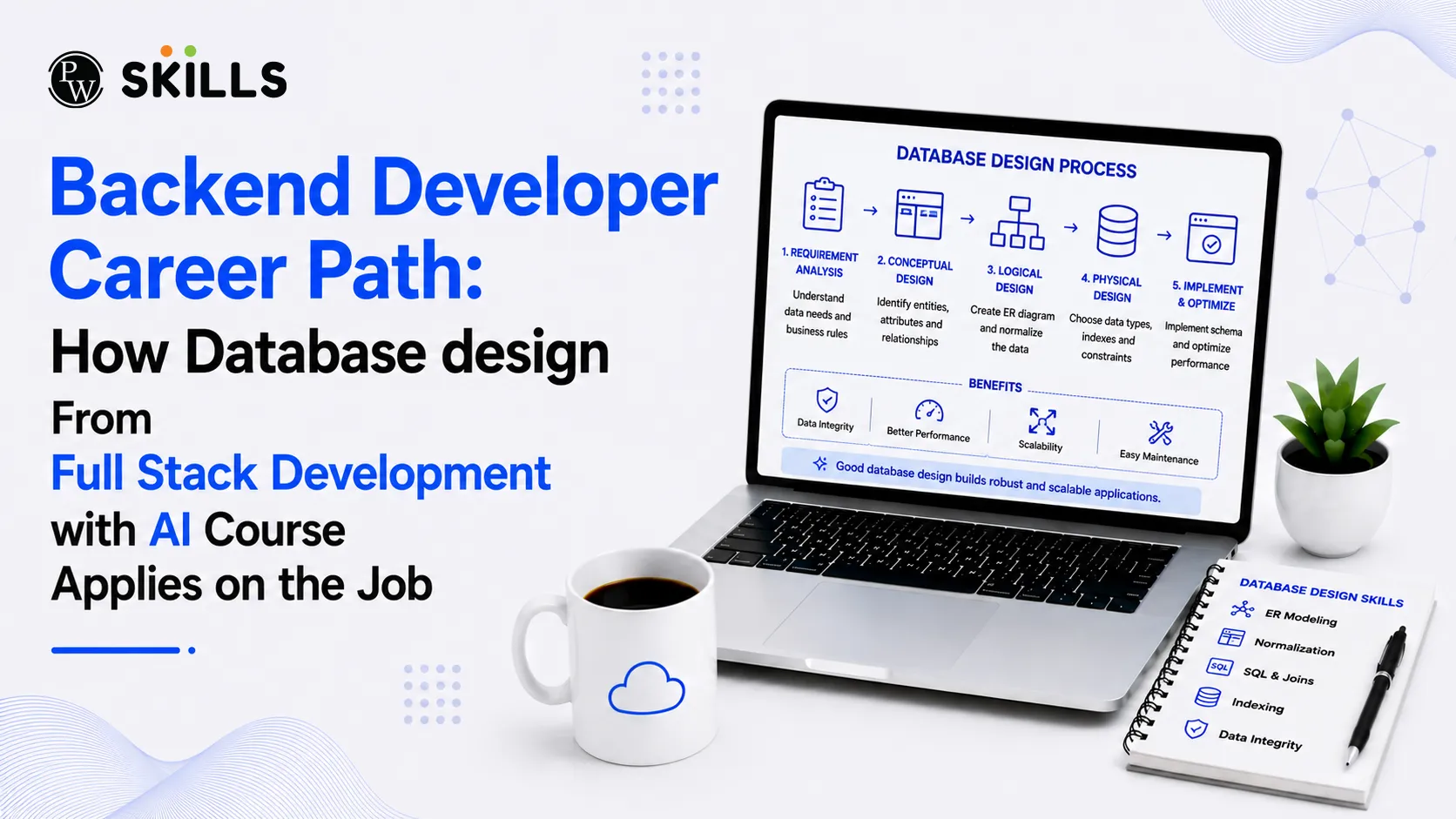
Aspiring backend developers often struggle to connect theoretical database concepts with real production systems. Writing basic code is easy, but designing databases that can handle heavy traffic efficiently is a major challenge. A Full Stack Development with AI Course bridges this gap by teaching practical database design, data flow, scaling, and real-world application architecture for backend developer roles.
Full Stack Development with AI Course Overview
AI full-stack development course is a professional training program that teaches learners how to build complete web applications using frontend, backend, database, and cloud technologies. The course combines traditional software development skills with AI-powered tools to help students write code faster, automate repetitive tasks, and improve productivity. It prepares learners for roles such as Full Stack Developer, Backend Developer, MERN Stack Developer, and Software Engineer in modern technology companies.
Why Learn Database Design in a Full Stack Development with AI Course?
In professional software development, application code is only as good as the database supporting it. Backend developers spend a significant portion of their time managing how applications interact with data stores. Poorly structured tables lead to slow response times, data corruption, and high server costs.
When transitioning into Full Stack Development with AI Course + Software Engineer Jobs, your ability to organize data efficiently becomes your primary asset. Employers look for engineers who understand how to structure relationships between different data points. A well-designed schema ensures that application features remain fast and reliable as the user base grows.
System Reliability and Performance
When databases are designed correctly, applications experience minimal downtime. Microservices and monolithic architectures alike depend on clean data contracts to function properly. If a database structure is chaotic, even the most optimized backend code will stall during peak traffic hours.
Data Integrity and Accuracy
Ensuring that data remains consistent across multiple systems is a critical requirement. Backend engineers use specific design patterns to prevent duplicate entries and conflicting records. This structural precision protects user information and maintains system trust.
How Full Stack Development with AI Course Prepares You for Database Desig
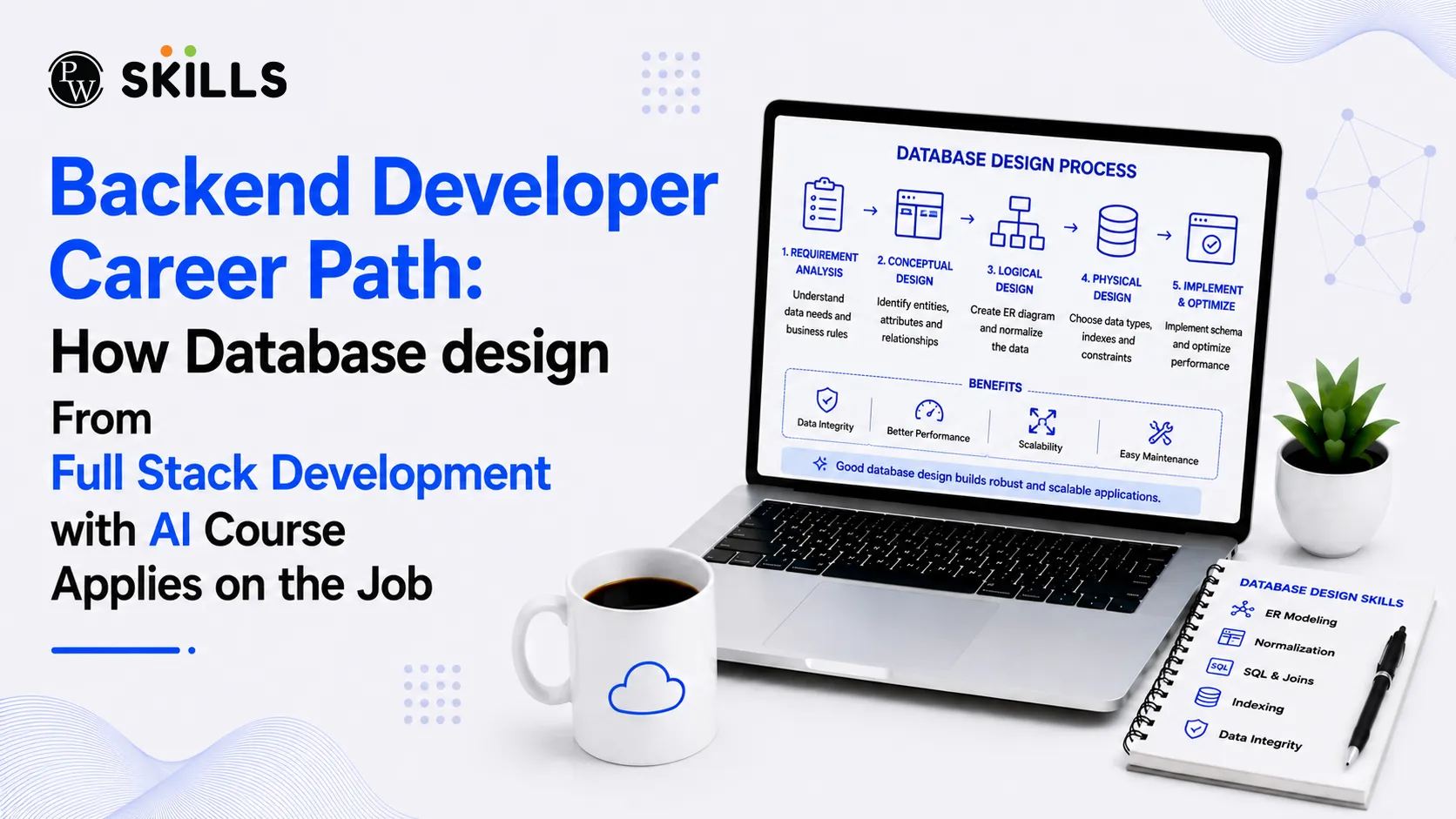
School projects often use simplified data structures, but production environments require highly dynamic architectures. A comprehensive training program teaches you how to map real-world business requirements into logical database tables.
Understanding Full Stack Development with AI Course + How data relations function allows you to build adaptable systems. For instance, an e-commerce platform needs to track users, orders, inventory, and payments simultaneously without missing a beat.
[Client Request] ──> [API Gateway / Backend Logic] ──> [Optimized Database Schema]
│
(Indexes & Constraints)
Relational vs Non Relational Approaches
Choosing between structured tables and flexible document stores is a daily decision for backend teams. Relational systems ensure strict data consistency through structured rules, making them ideal for financial transactions. Non-relational systems offer horizontal scaling, which helps handle large volumes of unstructured data like user chats or social media feeds.
Normalisation and Query Efficiency
Normalisation involves organizing database columns and tables to reduce data redundancy. By breaking complex data pools into smaller, related tables, you ensure that updates occur in one central place. This practice reduces errors and optimizes the speed of data retrieval operations.
Database Optimisation in an AI Full-Stack Development Course
As applications gain more users, the volume of database queries increases exponentially. A developer must know how to identify bottlenecks and speed up slow-running database operations.
Normal Operation: [Incoming Queries] ──> [Standard Index] ──> Fast Response
High Traffic Peak: [Massive Queries] ──> [No Index / Unoptimized] ──> Server Lag
Daily performance tuning typically involves the following core engineering practices:
-
Creating Strategic Indexes: Indexes allow the database engine to find specific rows quickly without scanning entire tables.
-
Writing Efficient Joins: Combining data from multiple tables requires careful planning to avoid excessive memory consumption.
-
Implementing Caching Layers: Storing frequently accessed data in temporary memory reduces the overall load on primary databases.
-
Database Sharding: Partitioning large databases into smaller, faster pieces helps distribute server load evenly.
How Full Stack Development with AI Course Covers Database Deployment and DevOps
Building a perfect database structure locally is only half the battle. A professional backend engineer must also know how to deploy, host, and maintain that database securely in live cloud environments.
Development Environment ──> Git Version Control ──> CI/CD Pipeline ──> Cloud Deployment
Integrating your database workflows with modern infrastructure requires a solid understanding of Full Stack Development with AI Course + Deployment & DevOps basics. Live systems require continuous integration pipelines to deploy database updates automatically without taking the application offline.
Schema Migrations and Version Control
As application features evolve, the database structure must change along with them. Schema migrations are structured scripts that alter database tables safely over time. Managing these scripts within version control tools ensures that every team member works with the identical database setup.
Backup Strategies and Data Security
Live databases face regular risks from hardware failures, software bugs, and security threats. Backend developers set up automated, periodic backups to ensure data can be restored instantly if errors occur. Restricting database access via secure connection strings and encryption protocols prevents unauthorized data exposure.
Types of Databases Covered in this Course
Different project requirements demand different database technologies. Modern engineering teams often mix multiple database types within a single application architecture to handle distinct tasks efficiently.
The table below highlights the operational differences between standard database systems utilized in professional development:
|
Database Category |
Core Strength |
Ideal Practical Use Case |
Scaling Approach |
|
Relational (SQL) |
Strict structural consistency |
Financial ledgers and user profiles |
Vertical upgrading |
|
Document (NoSQL) |
Highly flexible schema data |
Content management and user sessions |
Horizontal distribution |
|
Key-Value Store |
Ultra-fast data retrieval |
Temporary caching and real-time queues |
In-memory clustering |
|
Graph Database |
Complex relationship mapping |
Social networks and recommendation engines |
Network clustering |
How AI Full Stack Development Course Uses AI in Database Design
Artificial intelligence is changing the way backend engineers write, optimize, and maintain database code. Modern development tools can analyze application behavior and suggest the most efficient ways to structure data tables.
Enrolling in a modern AI full-stack development course teaches you how to leverage these automated tools safely. AI assistants help generate complex structural queries, spot hidden optimization flaws, and convert natural language requirements into clean database definitions.
Automated Query Optimisation
AI utilities can review slow database logs and automatically pinpoint exactly why a query is lagging. They suggest where to place missing indexes or how to rewrite inefficient structural logic. This automated assistance saves developers hours of manual troubleshooting during high-traffic events.
Intelligent Data Generation
Creating realistic mock data for testing purposes used to be a tedious task. Modern AI models generate thousands of unique, contextually accurate data points in seconds. This allows engineering teams to stress-test their database architectures before launching them to real users.




FAQs
Which database type is best for building scalable web applications?
How does learning database design speed up backend API responses?
Why do software engineer jobs require knowledge of DevOps alongside databases?
Can AI tools completely replace human backend database designers?
How often should database schemas be modified during a project?




 Live & recorded classes available at easeDashboard for progress trackingLakhs of practice questions

