

How AI Is Changing Full Stack Development
 Shivam Singh1 Jul, 2026
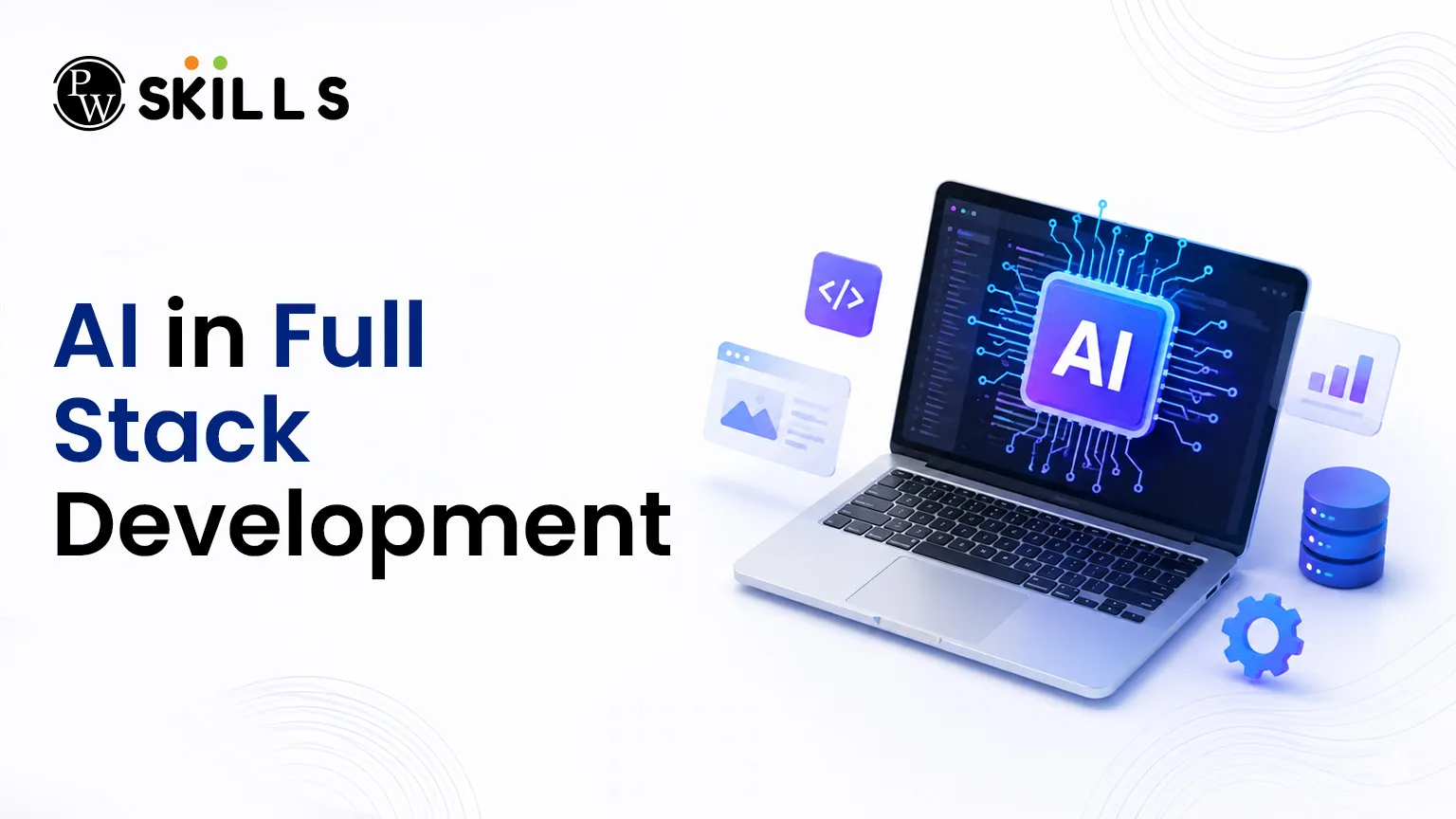
The software engineering landscapes are undergoing a massive evolution. Today, the core challenge for aspiring software developers is keeping pace with rapid product delivery schedules while managing intricate codebases. This is where AI in full stack development steps in as a revolutionary force. Transitioning into the future of software development requires moving beyond conventional frameworks and learning how to seamlessly merge artificial intelligence with software engineering principles to build smart, highly responsive web applications.
AI in Full Stack Development Overview
Artificial intelligence is completely redefining the traditional responsibilities of a software developer. Historically, engineers spent hours writing boilerplate code, creating database schemas, and manually fixing execution errors. Integrating AI in full stack development shifts the paradigm from manual labor to intelligent system architecture. Rather than executing every line of code by hand, developers now operate as strategic managers who supervise, validate, and guide automated systems.
When it comes to AI, the platforms are intelligent and context-aware, capable of anticipating requirements, managing big data and turning natural human instructions into clean, operational software. To design really resilient apps, we need a detailed understanding of how these automated systems handle data processing and user interaction, as modern software engineering is predicated on that.
How AI in Full Stack Development Improves Front-End and Back-End Workflows
Splitting engineering responsibilities into user-facing interfaces and engine-room systems provides a clear view of how automated workflows optimize modern applications. Let us break down how these two areas benefit from intelligent automation:
1. Front-End Workflow Enhancements
The user interface forms the critical first impression for any consumer application. AI web development practices optimize this space by converting abstract user experiences into precise visual modules.
-
Hyper-Personalised Interfaces: Automated engines track active user behaviors, custom preferences, and past platforms interactions to serve up dynamic layouts tailored to individual users.
-
Smart UI Layouts: Generative algorithms evaluate interface hierarchies, recommending optimal button placements, ideal color contracts, and component alignments to maximize visitor conversion rates.
-
Natural Language Navigation: Rather than relying entirely on multi-tier drop-down menus, applications now integrate natural language search panels, enabling users to find exact dashboard views using plain statements.
-
Automated Accessibility Compliance: Automated scripts continuously review active front-end code to make sure it satisfies accessibility guidelines, instantly fixing missing text labels and structural issues.
2. Back-End Workflow Enhancements
The backend serves as the primary data processing engine of any web platform, handling APIs, application rules, security permissions, and database pipelines. Implementing AI in full stack development gives back-end architectures major performance upgrades.
-
Intelligent API Response Routing: Back-end applications interact smoothly with modern language models to return dynamically processed summaries, contextual user data, and smart assistant replies.
-
Automated Document Parsing: Modern server setups process massive collections of documents, user resumes, support tickets, and uploaded files, extracting crucial details without needing manual intervention.
-
Smart Business Automation: Servers leverage predictive logic to filter, categorize, and prioritize incoming system records, routing business leads or critical bugs to the correct resolution channels.
-
Database Query Performance Tuning: Integrated engines inspect database workloads in real time, proposing index layouts and optimized structural queries to lower server processing overhead.
Tools and Technologies for AI in Full Stack Development
Constructing a reliable, modern application requires a solid stack of specialized AI coding tools. These engineering systems handle distinct stages of the software development lifecycle, ensuring clean code delivery, automated quality checks, and stable system infrastructure.
-
Coding Assistance: These systems focus heavily on smart code generation, automated autofills, and quick syntax corrections. They significantly accelerate boilerplate creation and quick functions assembly.
-
Design Platforms: These modern web systems serve as automated UI component generators. They excel at converting static user experience wireframes into production-ready front-end components.
-
Quality Testing: This category leverages automated edge-case scenarios to evaluate application stability. They excel at simulating heavy user load and uncovering hidden code execution bugs.
-
DevOps Pipelines: Focused entirely on infrastructure automation and system scaling, these platforms monitor real-time traffic spikes and automatically distribute server loads to prevent platform downtime.These smart code generators help developers to create stable features in a quarter of the time. Likewise, the use of automated layout builders helps design teams to create great front-end structures with little adjustments. Smart analysis tools imitate the live environment during the testing phases to expose significant security edge cases before deployment. Finally, automated cloud operations protect applications by scaling up server resources automatically in case of a sudden surge in traffic, preventing expensive system outages.
Using these intelligent code generators allows developers to write stable features in a fraction of the time. Similarly, leveraging automated layout builders helps design teams launch beautiful front-end structures with minimal revisions. During testing phases, smart analysis tools simulate live environments to surface critical security edge-cases before deployment. Finally, automated cloud operations protect applications by dynamically scaling server resources during unexpected traffic spikes, preventing costly system crashes.
Benefits and Challenges of Adopting AI in Full Stack Development
Incorporating artificial intelligence into software systems can give substantial competitive advantages, but engineering executives must consider these benefits with the associated operational dangers.
Major Benefits to Leverage
-
Accelerated Product Delivery: Projects that typically demanded months of development are regularly completed in short weeks, giving businesses a faster route to market.
-
Substantial Cost Savings: Automating repetitive coding patterns frees engineering teams to focus on complex features, drastically optimizing human resources.
-
Fewer Human Errors: Automated code diagnostics identify syntax bugs and logical errors early in the cycle, raising the bar for software reliability.
-
Dynamic Scalability: Automated monitoring solutions keep close track of production infrastructure, maintaining optimal uptime even during massive traffic spikes.
Critical Challenges to Mitigate
-
Over-Reliance on Code Generators: Developers who blindly accept automated code suggestions without thorough code reviews risk injecting hidden technical debt into their platforms.
-
Security & Vulnerability Risks: Code generated by automated tools can sometimes expose applications to security issues if not inspected against modern security practices.
-
Data Privacy Regulations: Training and executing models on sensitive consumer records requires rigid data compliance frameworks to prevent leaks.
-
Lack of True Creativity: Automated engines rely heavily on historic patterns, meaning they lack the true human innovation needed to design entirely unique software architectures.




FAQs
How is AI in Full Stack Development changing modern software engineering?
Can beginners use AI coding tools while learning web development?
Why is Python a preferred programming language for AI web development?
What are the main challenges of relying on Artificial intelligence in full stack development?
Will the future of software development replace human engineers with automated tools?





Get Free Counselling Today
and Clear up all your Doubts
 Live & recorded classes available at easeDashboard for progress trackingLakhs of practice questions

