
Finance Executive Career Path: How Payroll & Statutory Compliance Applies on the Job
 Hardik Gupta24 Aug, 2026
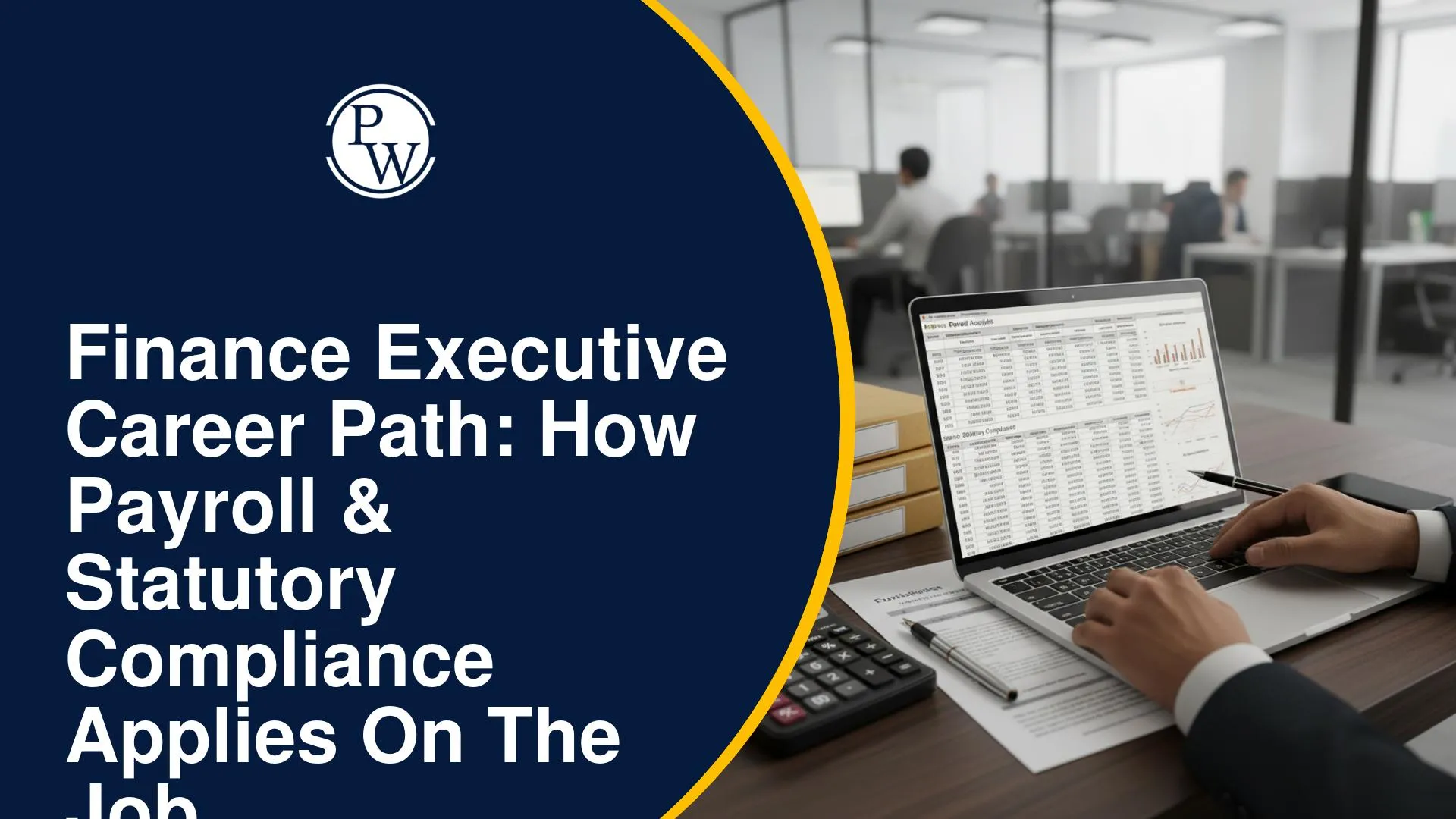
Entering a modern workplace demands immediate familiarity with real-world financial workflows, complex tax regulations, and operational software. Miscalculating payroll deductions or missing tax filing deadlines can cause significant compliance issues and administrative delays for an organisation.
Employers consistently seek entry-level professionals who can step into these roles without requiring months of foundational training. Understanding statutory rules and automated tools is vital for ensuring seamless business operations.
The Finance, Tax and Accounting Course (with PwC India) addresses this industry requirement by equipping learners with practical skills in taxation, payroll management, and corporate reporting.
Why Finance, Tax and Accounting Course (with PwC India) Is Useful for Finance Executives
Building a successful career as an accounts executive requires a clear grasp of day-to-day operational tasks alongside broader financial strategy. Early-career roles demand a solid understanding of how numerical calculations translate into official compliance filings and ledger entries.
Pursuing a structured learning path bridges the gap between academic textbooks and live corporate systems.
-
Real-World Case Studies: Practical training using real corporate scenarios helps learners understand how companies handle complex transactions.
-
Modern Tools: Gaining expertise in industry-standard software like Tally, Zoho Books, and advanced Excel makes daily accounting tasks far more efficient.
-
Structured Modules: Enrolling in the Finance, Tax and Accounting Course (with PwC India) + Accounts Executive Jobs track helps candidates gain job-ready skills needed across various accounting and corporate finance roles.
How is the Payroll and Statutory Compliance in Finance, Tax and Accounting Course (with PwC India)
Payroll management involves much more than calculating basic salaries. It requires strict adherence to government regulations, labor laws, and timely tax withholdings.
Finance executives must accurately calculate gross pay, net pay, and statutory withholdings while maintaining complete documentation.
-
Salary Structure Breakdown: Understanding how basic pay, house rent allowance, special allowances, and performance incentives are structured for optimal tax calculation.
-
Tax Deductions at Source: Learning how to calculate and deduct income tax based on individual employee tax regimes and declarations.
-
Statutory Deductions: Managing mandatory contributions like Provident Fund, Employee State Insurance, and professional tax accurately.
Daily Payroll Tasks Covered in Finance, Tax and Accounting Course (with PwC India)
Every month, finance teams follow a strict timeline to gather attendance data, process compensation, and issue payslips. A single oversight in data entry can lead to payroll discrepancies and employee dissatisfaction.
Key Daily and Monthly Workflows
-
Attendance and Leave Integration: Verifying working days, unpaid leaves, overtime hours, and shift allowances before running calculations.
-
Reconciliation and Verification: Cross-checking monthly payroll data with previous cycles to identify irregularities or unverified adjustments.
-
Payslip Generation and Records: Creating itemised payslips and keeping organized digital archives for audit trails.
-
Software Integration: Understanding how Finance, Tax and Accounting Course (with PwC India) + How modern enterprise platforms automate ledger updates and payroll runs helps streamline repetitive monthly tasks.
Mastering these routine operations ensures that salary processing stays accurate, transparent, and prompt.
How Finance, Tax and Accounting Course (with PwC India) Helps with Salary Processing
Salary processing is a core operational task that impacts workforce satisfaction and organizational compliance. Finance teams must strike a balance between accurate calculations and strict adherence to schedules.
|
Processing Phase |
Operational Focus |
Key Outcome |
|
Data Collection |
Gathering attendance, leaves, and bonus data |
Accurate gross salary inputs |
|
Computation |
Calculating tax withholdings and deductions |
Precise net payout figures |
|
Disbursement |
Coordinating bank transfers and ledger entries |
On-time salary distribution |
|
Post-Processing |
Issuing payslips and updating records |
Clean digital audit trails |
Understanding the systematic flow of salary processing prevents errors, reduces administrative burdens, and maintains consistent records across departments.
Compliance Skills Taught in Finance, Tax and Accounting Course (with PwC India)
Tax compliance is a crucial function for corporate finance teams. Executives must understand filing schedules, tax categories, and return forms to help businesses meet their legal obligations without incurring penalties.
Essential Compliance Competencies
-
Indirect Taxation: Learning Finance, Tax and Accounting Course (with PwC India) + GST compliance principles, including return filings, input tax credit claims, and tax liability calculations.
-
Direct Tax Operations: Computing income tax, filing quarterly statements, and managing advance tax calculations for businesses.
-
Automated Reporting: Utilizing modern business intelligence tools like Power BI and AI-driven utilities to compile tax reports cleanly.
Developing strong compliance capabilities allows finance professionals to manage organizational tax obligations with accuracy and confidence.
Practice Plan with Finance, Tax and Accounting Course (with PwC India)
Consolidating technical knowledge requires structured practice and hands-on application. Following an organized routine helps turn theoretical concepts into practical workplace skills.
Mid-Term Skill-Building Framework
-
Weeks 1–4: Focus on basic accounting principles, corporate finance fundamentals, and standard ledger entries.
-
Weeks 5–8: Practice payroll calculations, TDS computations, and practical exercises in Tally and Zoho Books.
-
Weeks 9–12: Work on GST returns, corporate tax calculations, and real-world case study evaluations.
-
Weeks 13–16: Focus on financial modeling, advanced Excel techniques, and integrated reporting scenarios.
A steady, progressive approach helps ensure that technical skills are well understood and easy to apply in practical work environments.
Career Path After Finance, Tax and Accounting Course (with PwC India)
Completing comprehensive training in taxation, accounting, and payroll opens up diverse career paths in corporate finance. Organisations value candidates who hold practical, job-ready skills and understand standard compliance processes.
Progression Across Finance Roles
-
Accounts Executive: Managing daily transactions, vendor invoices, basic balance sheet entries, and record reconciliation.
-
Tax Consultant: Assisting businesses with income tax filings, GST returns, and regulatory compliance schedules.
-
Payroll Specialist: Overseeing employee compensation systems, statutory deduction filings, and monthly salary distributions.
-
Corporate Finance Associate: Supporting financial planning, budget analysis, working capital assessment, and management reporting.
Gaining practical experience across these functional areas provides a strong foundation for long-term career growth in corporate accounting and financial management.
Common Mistakes to Avoid in Finance, Tax and Accounting Course (with PwC India)
When managing payroll and statutory filings, even small oversight can cause compliance issues or financial discrepancies. Identifying common pitfalls early helps finance professionals maintain high standards of accuracy.
Operational Errors to Watch For
-
Misclassifying Allowances: Incorrectly categorising taxable and tax-exempt allowances during payroll setup.
-
Ignoring Tax Updates: Missing updates to statutory rules, contribution limits, or filing deadlines set by regulatory bodies.
-
Overlooking Input Tax Credit Reconciliation: Failing to match purchasing invoices with tax portals prior to submitting GST returns.
-
Relying Exclusively on Manual Calculations: Neglecting to cross-check spreadsheets with accounting software reports like Tally or Zoho Books.



FAQs
What is the primary focus of the Finance, Tax and Accounting Course (with PwC India)?
How does learning GST compliance benefit early-career finance professionals?
Can non-commerce students enrol in this specialized accounting program?
Which software tools are covered during the course instruction?
How long does it take to complete the entire course curriculum?





Get Free Counselling Today
and Clear up all your Doubts
 Live & recorded classes available at easeDashboard for progress trackingLakhs of practice questions

