
10 MicroCert Hiring Stats From 2026 That Justify Learning NISM & Tally Certification Courses Now
 Hardik Gupta19 Sept, 2026
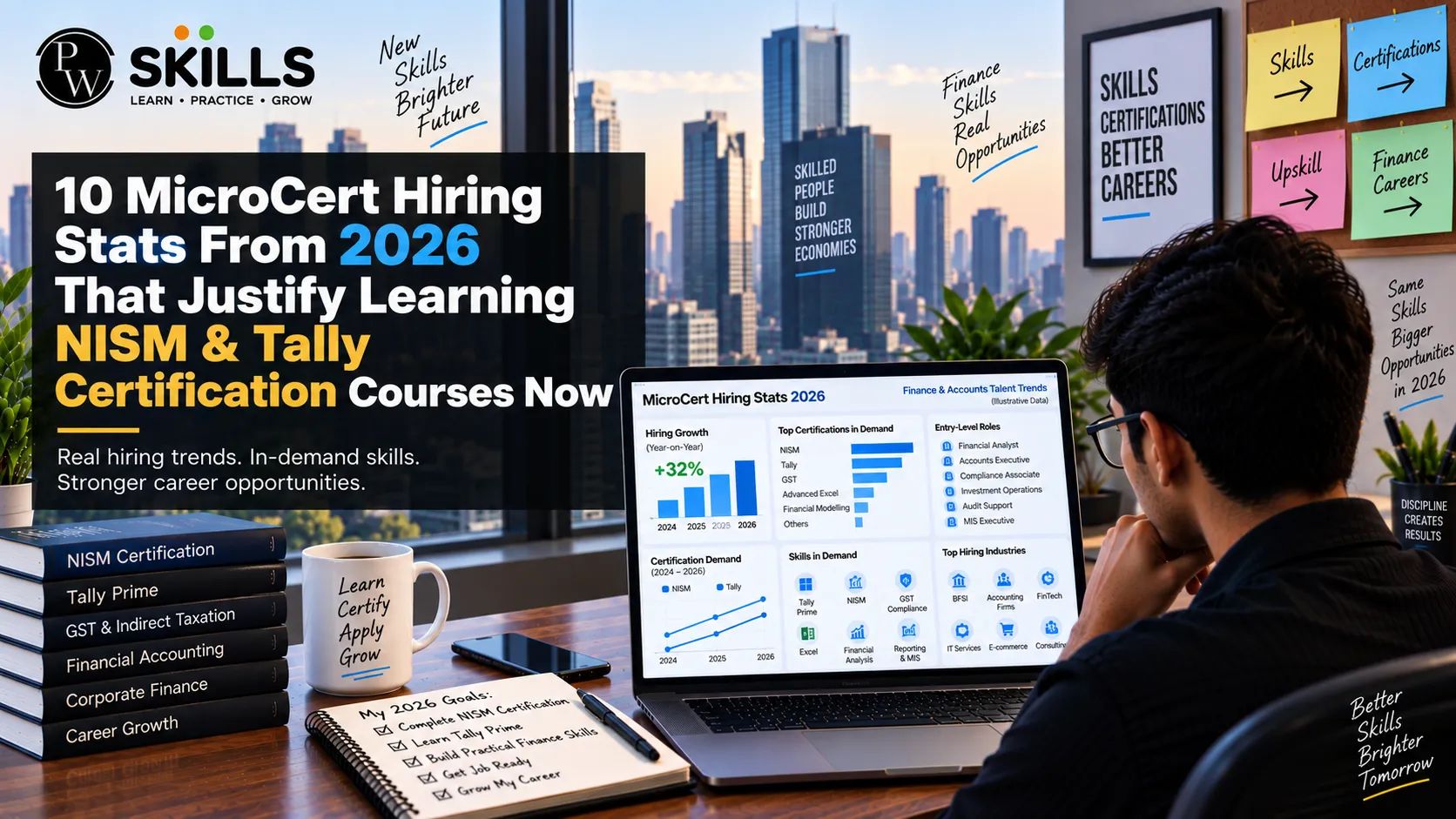
The growth of the mutual fund industry and the continued need for digital accounting skills are creating new opportunities for trained professionals. AMFI Mutual Fund Industry Data also shows the growing size and participation of the mutual fund market, which supports the need for trained professionals across distribution and operations.
This article looks at 10 important hiring and industry signals that explain why learning NISM & Tally Certification Courses can be a useful career step in 2026.
What Are NISM & Tally Certification Courses?
NISM & Tally Certification Courses help learners build practical skills in financial markets, mutual funds, accounting, taxation, and business finance. NISM certifications focus on areas such as securities markets and investment products, while Tally training helps learners work with accounting records, GST, TDS, and financial reports. These courses can help students and freshers prepare for entry-level roles in accounting, taxation, financial services, investment operations, and mutual fund distribution.
Why NISM & Tally Certification Courses Are Useful for Finance Careers
The finance and accounting sector is creating new opportunities for candidates with practical knowledge of financial markets, accounting software, taxation, and compliance. Below listed are some significant factors that explain the usefulness of these courses in today’s world:
1. Growing Financial Services Market
India's financial services sector continues to expand across banking, mutual funds, insurance, wealth management, accounting, and investment services. As businesses grow, they need employees who can manage financial records, customer information, transactions, and compliance work.
This creates opportunities for candidates with practical finance skills. Certifications can help freshers show that they have studied job-related topics instead of depending only on their degree.
NISM & Tally Certification Courses combine two useful areas. NISM-based learning supports knowledge of financial markets and investment products, while Tally-based learning supports accounting and business records.
This combination can give candidates more flexibility when applying for entry-level finance jobs.
2. Mutual Fund Participation Is Creating New Opportunities
The mutual fund industry has seen strong growth in investor participation, assets, and folios. This expansion increases the need for professionals who can support distributors, investors, operations teams, and financial service companies.
AMFI Mutual Fund Industry Data is an important source for understanding this market movement. As more people invest through mutual funds and related products, financial firms need trained employees to manage transactions and customer processes.
This is one reason NISM & Tally Certification Courses + Mutual Fund Distributor Jobs News is becoming relevant for graduates looking for careers in financial services.
Candidates who understand mutual fund products, investor processes, documentation, and basic compliance can be better prepared for these roles.
3. Regulatory Knowledge Is Becoming More Important
Financial services are highly regulated. Professionals who deal with investment products need to understand the rules that apply to their work.
NISM certifications can help candidates build knowledge of areas such as mutual funds, securities markets, research, derivatives, and investment-related activities, depending on the certification chosen.
This knowledge is valuable because employers do not only need employees who can complete transactions. They also need people who understand why a process must be followed and how compliance affects financial operations.
For freshers, having a relevant certification can therefore make their resume more focused for finance-related positions.
4. Accounting Jobs Need Practical Software Skills
Accounting work has moved beyond handwritten records and basic spreadsheets. Businesses now use accounting software to manage sales, purchases, payments, expenses, taxes, inventory, and financial reports.
Tally skills can help candidates understand how these daily accounting activities are handled through software.
A candidate with practical Tally knowledge may apply for roles such as:
-
Accounts Executive
-
Junior Accountant
-
Accounts Assistant
-
Taxation Executive
-
Audit Assistant
This makes the accounting side of NISM & Tally Certification Courses useful for candidates who want practical skills before entering the workplace.
5. GST and TDS Skills Improve Job Readiness
Companies must manage taxes and maintain proper financial records. GST, TDS, invoices, payments, and business expenses are common parts of accounting work.
Candidates who understand these areas can be better prepared for entry-level accounting tasks. Tally-based training can also help students understand how accounting records connect with tax-related processes.
Employers may prefer candidates who need less basic training after joining. This does not mean certification guarantees a job, but it can show that the candidate has already worked with important tools and concepts.
For students, this practical knowledge can help bridge the gap between classroom learning and actual office work.
6. Micro-Credentials Can Strengthen Freshers' Resumes
Fresh graduates often face one major problem: they have a degree but limited practical experience.
A micro-certification can help add specific skills to their resume. Instead of simply writing a finance degree, a candidate can show knowledge of investment markets, mutual funds, accounting software, taxation, or other job-related areas.
This can make the resume more relevant to a particular job opening.
The stat-roundup-hook in this case is simple: employers are increasingly looking for proof of practical skills, and short certifications can provide an additional way for candidates to show focused learning.
However, candidates should also build practical knowledge and not depend on certificates alone.
7. Mutual Fund Distributor Jobs News Shows the Value of Certification
Recent mutual fund distributor jobs news continues to highlight opportunities linked to investor services, distribution, operations, and financial products.
Professionals working in these areas need to understand investment products and follow regulatory requirements. Relevant NISM certification can support this knowledge, especially for roles where certification is required or preferred.
For fresh graduates, this can create a clearer path into the financial services sector.
Candidates should always check the specific certification and regulatory requirement for the role they want because different financial activities can have different eligibility and certification rules.
8. Employers Want Multi-Skilled Finance Candidates
The traditional finance job often focused on one specific activity. Today, many entry-level roles require employees to handle several related tasks.
An employee may need to maintain records, prepare reports, work with accounting software, support tax activities, communicate with clients, or assist with financial operations.
This is where a combined learning path can be useful.
NISM & Tally Certification Courses can help candidates develop skills across financial markets and accounting. A student can therefore explore different entry-level career options instead of focusing on only one type of job.
This broader skill set can be especially useful for freshers who are still deciding whether they want to work in accounting, taxation, investment operations, or financial services.
9. Digital Accounting Is Changing Entry-Level Finance Jobs
Technology is changing how accounting departments work. Businesses are using accounting software, cloud tools, digital payment systems, automated reports, and online tax platforms.
Because of this change, accounting employees need more than basic knowledge of debit and credit. They also need to understand how financial information is entered, checked, stored, and reported using digital systems.
Tally training can help students become familiar with software-based accounting workflows.
Candidates who combine accounting knowledge with digital skills can be better prepared for modern finance teams. This is particularly useful for students who want to enter accounting roles soon after graduation.
10. Combined Skills Can Create More Career Options
One of the strongest reasons to consider NISM & Tally Certification Courses is the range of career options they can support.
A candidate with accounting-focused skills can explore:
-
Junior Accountant
-
Taxation Executive
-
Tally Operator
-
Audit Assistant
A candidate with relevant NISM knowledge can explore areas such as:
-
Mutual Fund Distributor
-
Investment Operations
-
Securities Operations
-
Financial Services Support
-
Wealth Management Support
The exact role depends on the certification, eligibility, employer, and regulatory requirements.
Having skills across both areas can also help candidates understand how different parts of the financial sector work together.
How Can NISM and Tally Certifications Improve Career Readiness?
Certifications work best when they are combined with practical learning. Students should not only prepare for an exam but also understand how the knowledge is used at work.
For accounting, learners should practise creating ledgers, recording transactions, preparing reports, and working with GST and TDS-related processes.
For financial markets, learners should understand mutual funds, investment products, market basics, customer processes, and compliance requirements relevant to their target role.
This approach makes the learning more useful during interviews and early job responsibilities.
Who Should Consider NISM & Tally Certification Courses?
These certifications can be useful for different types of learners.
Commerce students: Students from B.Com, M.Com, and related backgrounds can add practical skills to their academic knowledge.
Fresh graduates: Candidates without work experience can use certifications to demonstrate focused learning.
Accounting beginners: Learners who want to start with accounting software can build practical Tally skills.
Finance aspirants: Candidates interested in mutual funds, securities, and financial services can explore relevant NISM certifications.
Working professionals: Employees can use short certifications to add new skills and move toward related finance roles.



FAQs
What role do NISM & Tally Certification Courses play in current hiring?
How does AMFI Mutual Fund Industry Data impact job availability?
Are mutual fund distributor jobs news relevant for fresh graduates?
What is the purpose of a stat-roundup-hook in career planning?
Why combine NISM and Tally into a single learning path?





Get Free Counselling Today
and Clear up all your Doubts
 Live & recorded classes available at easeDashboard for progress trackingLakhs of practice questions

