
What Every Investor Should Know About Market Regulations
You can lose a lot of money if you invest without knowing the rules of the market. Know the key legal frameworks, regulators, and safety features that work to protect your wealth and ensure transparent trading across financial networks.
 Abhishek Kumar1 Jul, 2026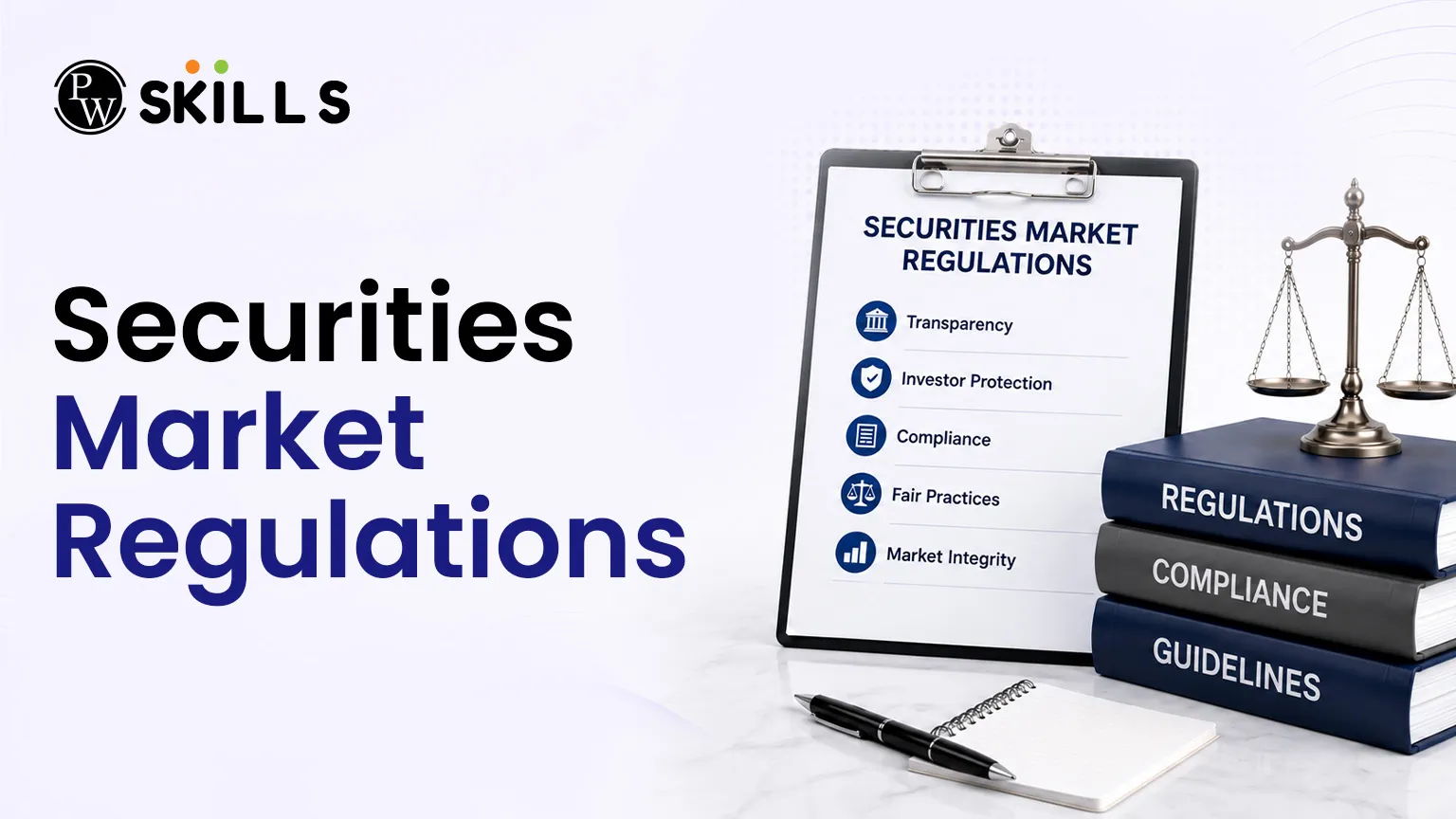
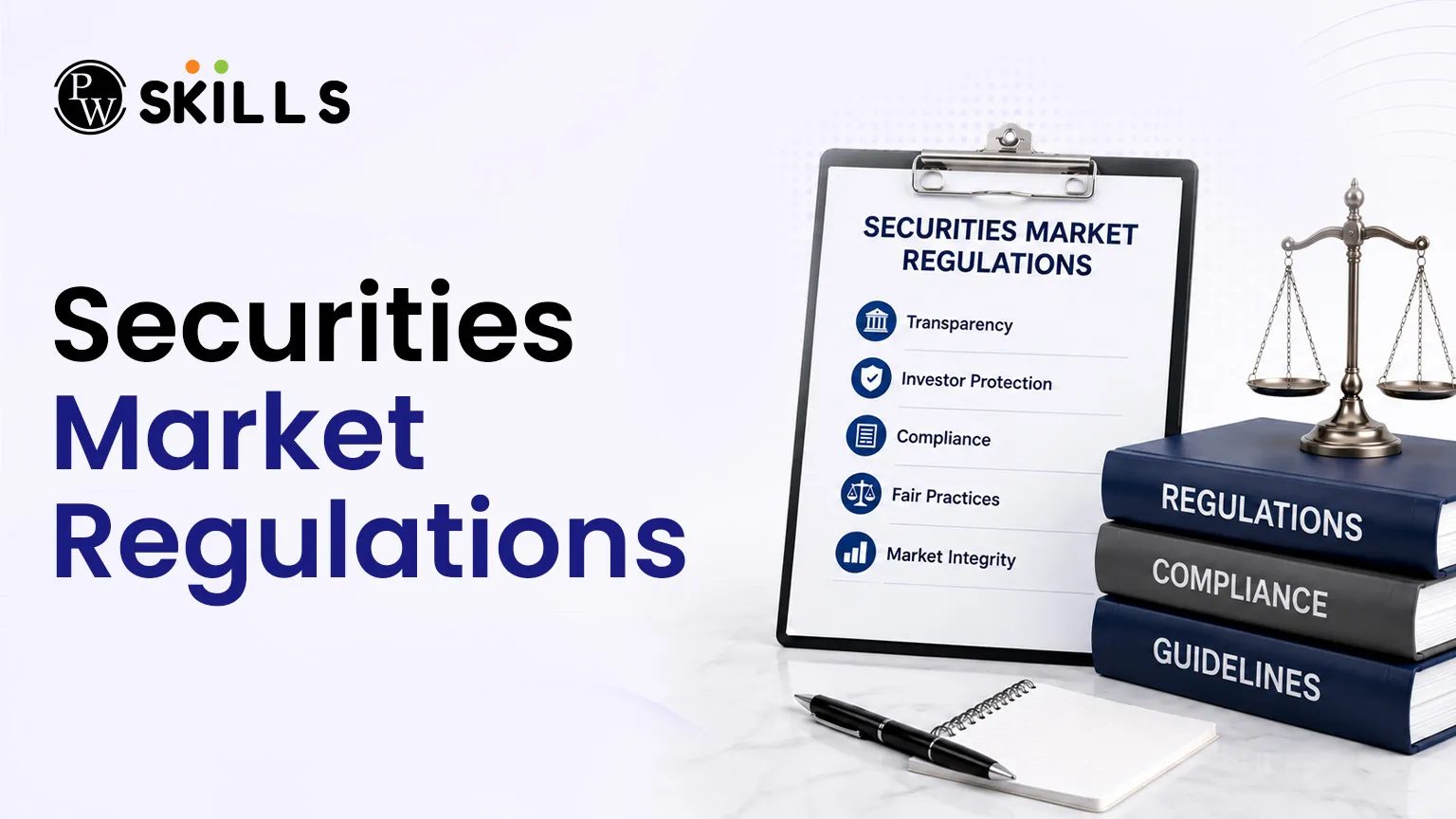
Navigating trading platforms without knowing how rules protect your capital often leads to costly mistakes and preventable losses. To trade with confidence, you should know the Securities Market Regulations that protect you.
Why Do We Need Securities Market Regulations?
Financial markets involve massive amounts of capital moving globally every second. Without standard rules, smaller market participants would face constant disadvantages against larger institutions. Regulatory bodies establish structured codes to ensure transparency, accountability, and systemic stability across all financial networks.
The main purpose of these frameworks is to establish total trust. When you buy a share in a corporation or a unit in a mutual fund, you want to be sure that the asset is real and that the pricing information is right. Clear rules require disclosure of true material facts about profits and operations of public companies.
The following are the main reasons why regulation is still necessary for capital networks:
-
Market Integrity: Prevents unfair pricing, illegal insider activity, and artificial market manipulation.
-
Systemic Stability: Reduces the risk of sudden clearing defaults or widespread financial network collapses.
-
Asymmetry Reduction: Ensures individual traders gain access to corporate announcements at the same time as institutional funds.
How Securities Market Regulations Protect Investor Capital?
A main pillar of any financial framework is ensuring that everyday individuals do not lose their capital to unfair operations. Strong investor protection rules mandate that intermediaries like stockbrokers, clearing houses, and portfolio managers maintain high operational standards and transparent fee structures.
For your money, they put some limits on how they operate. For example, brokers are prohibited from commingling customer funds with their own corporate capital. This separation means that your assets are safe and untouchable even if the broking firm goes bankrupt.
The table below describes how normal rules protect against common trading dangers:
| Trading Hazard | Regulatory Corrective Action |
| Broker Default | Absolute separation of customer funds from corporate assets |
| Hidden Brokerage Fees | Mandatory upfront fee disclosures on every contract note |
| Unfair Asset Pricing | Automated electronic order matching based purely on price-time priority |
| Delayed Asset Deliveries | Strict T+1 settlement cycles managed by regulated clearing houses |
What Role Do Regulatory Bodies Play in Securities Market Regulations?
Every financial system requires a central supervisor to monitor day-to-day operations and penalize bad actors. In the Indian context, the Securities and Exchange Board of India ensures that all public listings, market intermediaries, and trading exchanges follow established legal boundaries.
The supervisor holds the power to audit public companies, suspend non-compliant brokers, and freeze accounts involved in suspicious activities. By creating a predictable legal environment, the authority helps standardize how assets are issued, stored, and transferred between accounts.
The framework divides oversight responsibilities into three distinct operational areas:
-
Primary Market Oversight: Enforcing rules for Initial Public Offerings to ensure accurate prospectus data.
-
Secondary Market Supervision: Monitoring real-time trading systems to detect anomalous volume spikes or price manipulation.
-
Intermediary Auditing: Checking the net-worth requirements and structural systems of registered brokerage houses regularly.
How Securities Market Regulations Ensure Fair Trading?
To maintain an orderly marketplace, stock exchanges deploy highly automated matching engines that follow strict stock market rules. These operational protocols govern everything from maximum daily price movements to the exact sequence of executing client orders.
There is one important rule regarding circuit breakers. If a stock price jumps or tumbles too quickly in a single trading day, the exchange will halt trading of that particular security for a short period of time. This short break prevents panic-driven decisions and allows market participants to process corporate developments calmly.
The following is a list of the main trading rules to ensure an orderly operation:
-
Price Band Limits: Restricting daily price movements within pre-set percentages to curb extreme volatility.
-
Price-Time Priority: Executing orders purely based on the best available price and the exact millisecond of arrival.
-
Mandatory Margins: Requiring upfront collateral from leverage traders to prevent default cascades during sudden crashes.
Who Are the Key Intermediaries Under Securities Market Regulations?
Behind the scenes, a cast of specialised intermediaries is at work in the investment journey. Active registration certifications are required for regulated entities that operate, such as stockbrokers, depository participants, asset management companies, and registrars.
Each is subject to rigorous compliance mandates. For example, depositories are a digital vault for your shares. They ensure the physical ownership matches your electronic records . This interconnected network ensures that your trades flow seamlessly from entry right through to final asset settlement.
The following introduces the main intermediaries with whom individual traders regularly deal:
-
Stockbrokers: Registered agents who provide direct access portals to trade on national exchanges.
-
Depository Entities: Institutional vaults holding shares and bonds in secure dematerialised formats.
-
Clearing Corporations: Independent institutions that guarantee the financial fulfillment of every single matching trade.
How Corporate Disclosures Support Securities Market Regulations?
If significant developments are kept from the general public by corporate entities, a financial marketplace cannot operate efficiently. Under current corporate compliance rules, listed companies are required to immediately report verified balance sheets, profit updates, and major structural changes to the exchanges.
These regular disclosures allow people to compute the intrinsic value of an asset based on real numbers, not speculative rumours. When a company releases its quarterly financial statements, it must follow strict accounting principles to avoid the pitfalls of misleading profit inflation.
Here are the key milestones in the typical corporate reporting calendar:
-
Quarterly Earnings: Detailed reviews of revenue, operational expenses, and net profit margins.
-
Annual Reports: Comprehensive documents covering audited balance sheets, corporate governance records, and future projections.
-
Event-Driven Disclosures: Instant notifications regarding corporate mergers, structural acquisitions, or sudden leadership changes.
Compliance Requirements Under Securities Market Regulations
Different financial products have varying degrees of risk and structural complexity. Regulatory codes do exist to protect capital, laying out structural guidelines for mutual funds, alternative assets, and direct equity instruments.
For example, mutual fund structures are mandated to clearly disclose their investment objectives and expense ratios. Fund managers cannot make material changes to asset allocations without giving unit-holders a clear window to exit. This rule prevents a conservative debt scheme from suddenly switching to high-risk equities without any warning.
The main regulatory requirements for a number of popular financial products are summarised below:
| Investment Product | Key Regulatory Requirement | Target Safety Metric |
| Mutual Funds | Daily Net Asset Value updates | Absolute portfolio valuation transparency |
| Public Equities | Minimum public shareholding limits | Prevention of single-owner price control |
| Corporate Bonds | Mandatory credit rating evaluations | Clear identification of default risks |
| Derivatives | High initial margin requirements | Restriction of excessive retail speculation |
The Role of Grievance Redressal Systems in Securities Market Regulations
Even with comprehensive rules in place, disputes between individual traders and financial intermediaries can still happen. To address this, supervisors maintain dedicated online dispute resolution portals to resolve consumer complaints without costly court battles.
If a broker charges incorrect fees or delays the transfer of your shares, you can file an official complaint through these unified platforms. The automated tracking system ensures that the intermediary must provide a formal response within a fixed number of working days or face monetary fines.
The standard resolution ladder follows these structured steps:
-
Direct Approach: Submitting the initial complaint to the internal compliance officer of the respective broker.
-
Exchange Escalation: Moving the dispute to the investor grievance cell of the stock exchange if the broker fails to resolve it.
-
Regulator Intervention: Filing an official digital case via the central supervisor's portal for binding arbitration.



FAQs
How can I verify if a stockbroker is officially registered with the regulator?
What should I do if my broker processes an unauthorized transaction from my account?
Why do stock exchanges apply daily circuit limits to asset price movements?
Can an investment platform legally guarantee fixed returns on equity portfolios?
What happens to my shares if my depository participant goes out of business?





Get Free Counselling Today
and Clear up all your Doubts
 Live & recorded classes available at easeDashboard for progress trackingLakhs of practice questions

