
2026 Salary Trend Watch: Mutual Fund Distributor Pay Movement and What It Signals
 Hardik Gupta21 Sept, 2026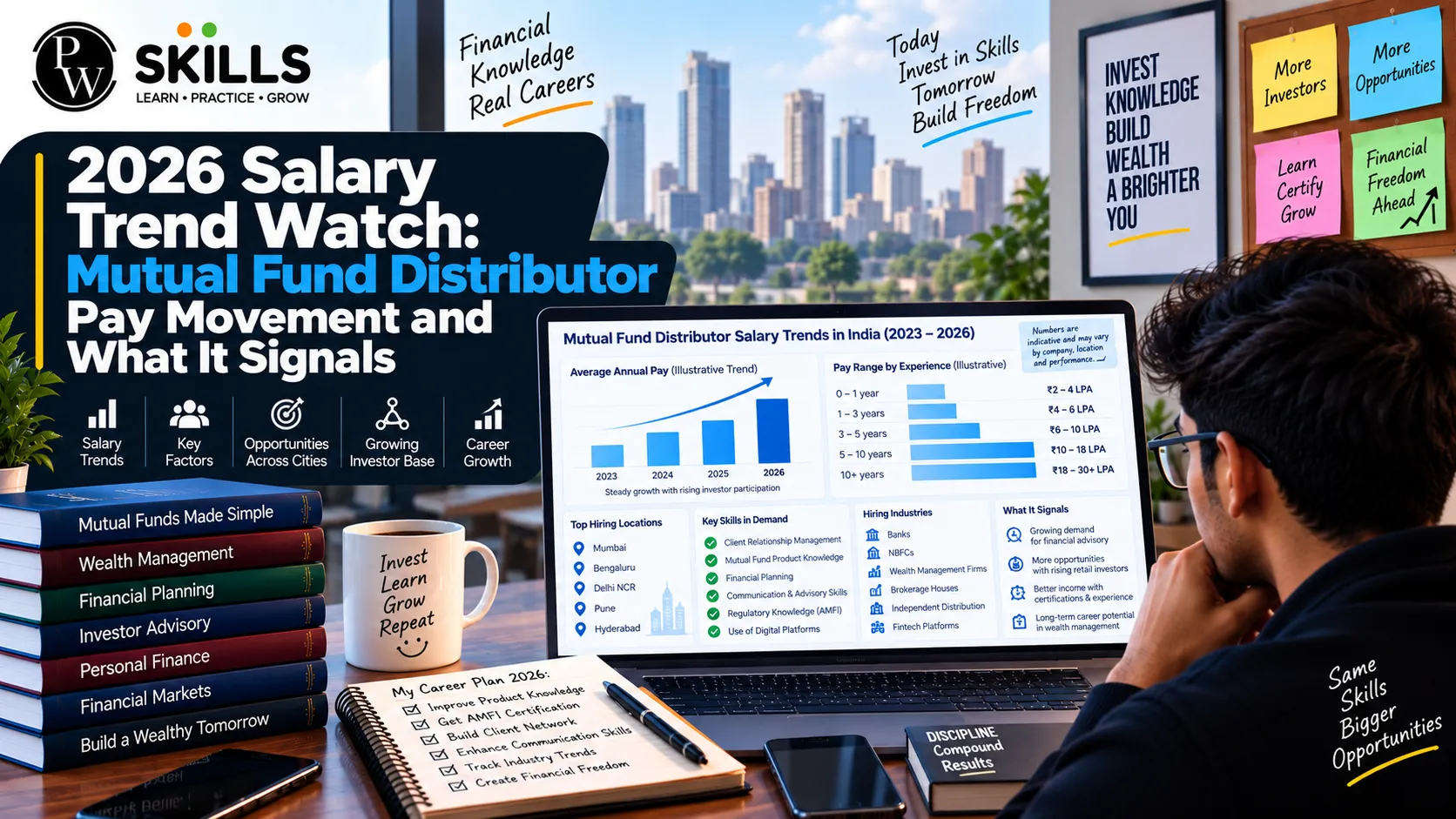
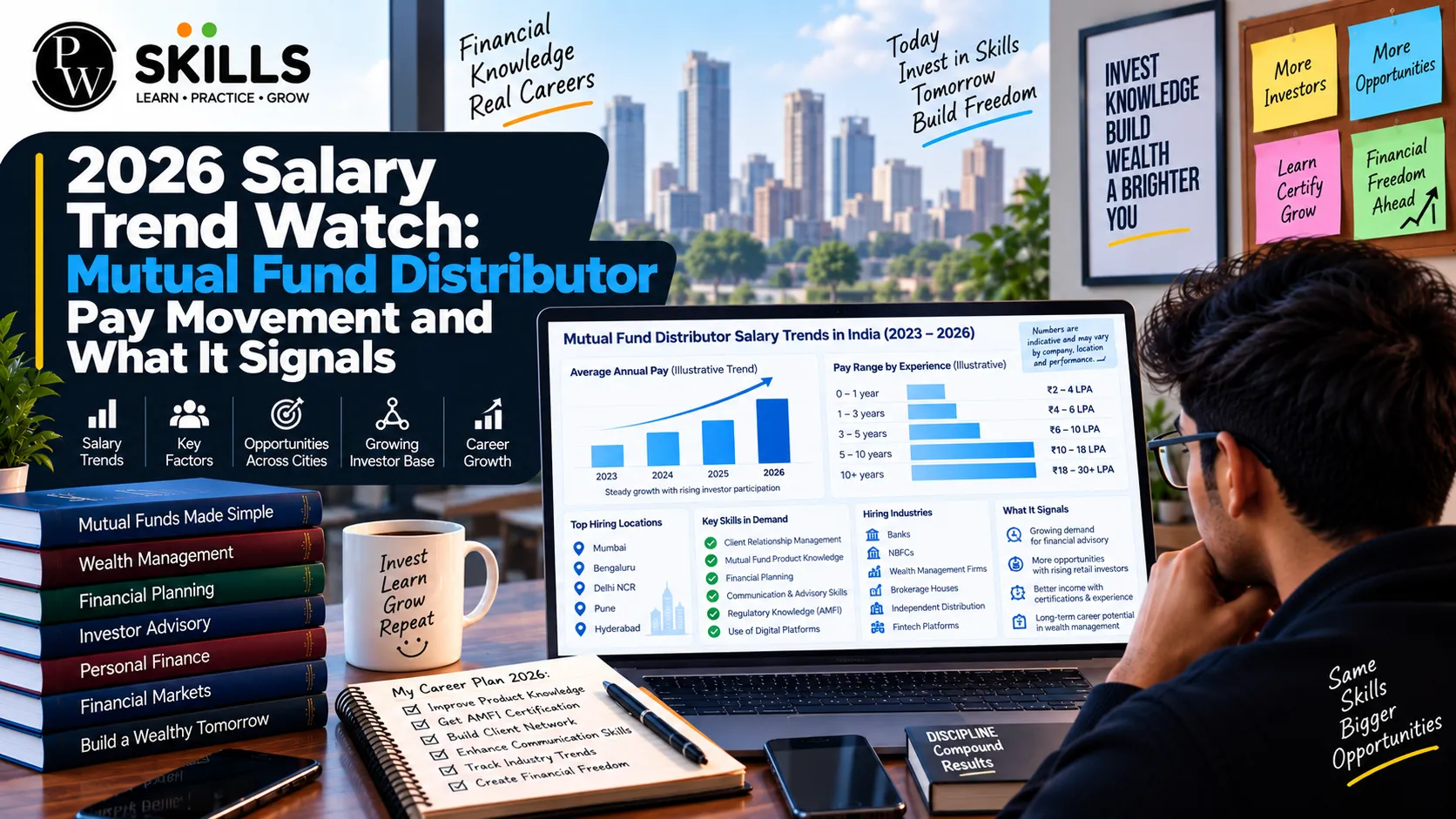
Understanding pay movement requires looking beyond a single salary figure. Income can vary based on experience, employer, location, client base, assets handled, sales performance, and the structure of fixed and variable compensation. NISM & Tally Certification Courses can provide a useful foundation for candidates who want to build financial market and accounting skills before entering or progressing in the sector.
Why Is NISM & Tally Certification Courses Important?
NISM & Tally Certification Courses are important because they help learners develop skills that can be useful across different finance roles. NISM learning builds knowledge of financial markets, mutual funds, and related regulations, while Tally training provides practical accounting and record-management skills. This combination can help freshers and working professionals understand both financial concepts and everyday business processes. Along with communication, Excel, and practical experience, these skills can improve job readiness and support long-term career growth.
NISM & Tally Certification Courses' Impact on Pay
Industry remuneration can change as financial markets grow and employers update their skill requirements. Professionals with relevant NISM & Tally Courses can demonstrate structured learning in areas connected with financial markets and accounting operations.
-
Regulatory Knowledge: Relevant NISM learning can help candidates understand mutual funds and applicable market regulations.
-
Accounting Skills: Tally training can provide practical exposure to ledgers, transactions, and financial records.
-
Better Job Readiness: Combining market knowledge with software skills can create a broader professional profile.
-
Career Development: Additional skills can support movement toward more specialized finance responsibilities.
Certification itself does not guarantee a salary increase. However, when combined with practical experience and strong performance, relevant credentials can strengthen a candidate's profile.
NISM & Tally Certification Courses and Industry Data
AMFI Mutual Fund Industry Data provides useful information about mutual fund assets, investor participation, and industry activity. Studying such data can help professionals understand the direction of the market and the wider opportunities available in mutual fund distribution.
-
Monthly and periodic industry data can show changes in assets and investor participation.
-
Distributors can use market information to improve their understanding of industry trends.
-
Growing participation can increase the need for professionals supporting investors and distribution activities.
-
Financial professionals need both product knowledge and responsible communication when using market information.
For candidates pursuing NISM & Tally Courses, industry data can provide practical context for the concepts they learn.
NISM & Tally Certification Courses and Employment Growth
Growth in financial services can create opportunities across distribution, operations, customer support, accounting, and compliance-related functions. However, not every role has the same eligibility requirements.
GST Executive Jobs News also highlights the wider demand for professionals who understand accounting, taxation, and digital financial processes. Although GST skills are not a standard requirement for every mutual fund distributor, awareness of broader finance-sector hiring trends can help candidates identify useful additional skills.
-
Financial firms may seek candidates with relevant market knowledge.
-
Support roles can require accounting and software skills.
-
Customer-facing roles may place greater focus on communication and sales ability.
-
Compliance-related positions can require specific qualifications and regulatory knowledge.
This makes skill development important for candidates who want to remain competitive across changing finance roles.
NISM & Tally Certification Courses and Compensation Trends
Mutual fund distributor compensation can work differently from a standard fixed-salary job. Depending on the role and business model, professionals may receive a combination of salary, incentives, commissions, or other performance-linked compensation.
Several factors can influence earnings:
-
Experience: Experienced professionals may manage larger responsibilities or client relationships.
-
Client Base: A strong and well-served client base can affect business performance for distributors.
-
Performance: Sales and client retention can influence variable compensation in applicable roles.
-
Location: Compensation can differ across cities and financial markets.
-
Employer Type: Banks, asset management companies, distribution firms, and independent businesses can have different pay structures.
Therefore, candidates should assess the complete compensation structure rather than focusing only on the advertised salary.
NISM & Tally Certification Courses Skill Requirements
Technical knowledge is only one part of success in mutual fund distribution. Professionals also need strong communication and customer-handling skills.
Important areas include:
-
Understanding mutual fund products
-
Knowledge of applicable regulations
-
Client communication
-
Documentation and KYC processes
-
Basic financial calculations
-
Accounting and record management
-
Tally and other relevant software
-
Excel and digital tools
-
Portfolio and transaction support
NISM & Tally Courses can help build some of these technical foundations. Candidates should also gain practical exposure and understand the specific requirements of the roles they plan to pursue.
NISM & Tally Certification Courses and Client-Facing Skills
Mutual fund distribution is strongly connected with customer relationships. Investors may have different financial goals, risk preferences, and levels of market knowledge. Professionals need to explain products clearly without using confusing financial terms.
Good communication can help distributors:
-
Explain investment products clearly.
-
Maintain professional client relationships.
-
Handle basic customer questions.
-
Support documentation and transaction processes.
-
Build trust through accurate information.
This shows why certification should be combined with communication practice. A candidate may have strong technical knowledge but still need to develop the ability to communicate that knowledge effectively.
NISM & Tally Certification Courses Career Opportunities
The skills developed through financial market and accounting training can support different career paths. Candidates may explore opportunities based on their qualifications, experience, and applicable regulatory requirements.
Potential areas include:
-
Mutual fund distribution
-
Wealth management support
-
Financial operations
-
Accounts and finance
-
Compliance support
-
Customer relationship roles
-
Investment operations
Professionals can gradually specialize as they gain experience. Some may move toward relationship management, while others may prefer operations, accounting, compliance, or broader financial services roles.
Also Explore : TallyPrime Advance with GST Accounting
NISM & Tally Certification Courses Future Outlook
The future of financial services will continue to be shaped by digital platforms, automation, investor participation, and changing compliance requirements. Professionals who regularly update their skills can adapt more easily to these changes.
-
Continuous Learning: Regular skill development helps professionals stay current.
-
Digital Skills: Financial software and online platforms are becoming important in daily operations.
-
Regulatory Awareness: Understanding applicable rules supports responsible financial work.
-
Client Service: Strong communication remains important even as more processes become digital.
Professionals who combine relevant certification with practical experience can build a stronger foundation for long-term career growth.
How NISM & Tally Certification Courses Can Help Freshers
Fresh graduates often compete with candidates who already have work experience. Relevant training can help freshers demonstrate that they have developed skills beyond their academic degree.
They can strengthen their profile by:
-
Learning mutual fund and financial market basics.
-
Building Tally and Excel skills.
-
Understanding basic accounting processes.
-
Completing relevant certifications.
-
Improving communication skills.
-
Gaining internship or project experience.
-
Following current financial industry trends.
NISM & Tally Courses can form part of this preparation, but candidates should also focus on practical knowledge and role-specific requirements.



Stock Price Prediction FAQs
What role do NISM & Tally Certification Courses play in salary growth?
How does AMFI Mutual Fund Industry Data influence distributor pay?
Why are GST Executive Jobs News relevant to financial professionals?
Who is eligible to pursue NISM & Tally Certification Courses?
How do certification courses impact job placement security?





Get Free Counselling Today
and Clear up all your Doubts
 Live & recorded classes available at easeDashboard for progress trackingLakhs of practice questions

