
Equity vs Debt Mutual Funds: What's the Difference?
 Hardik Gupta15 Jul, 2026
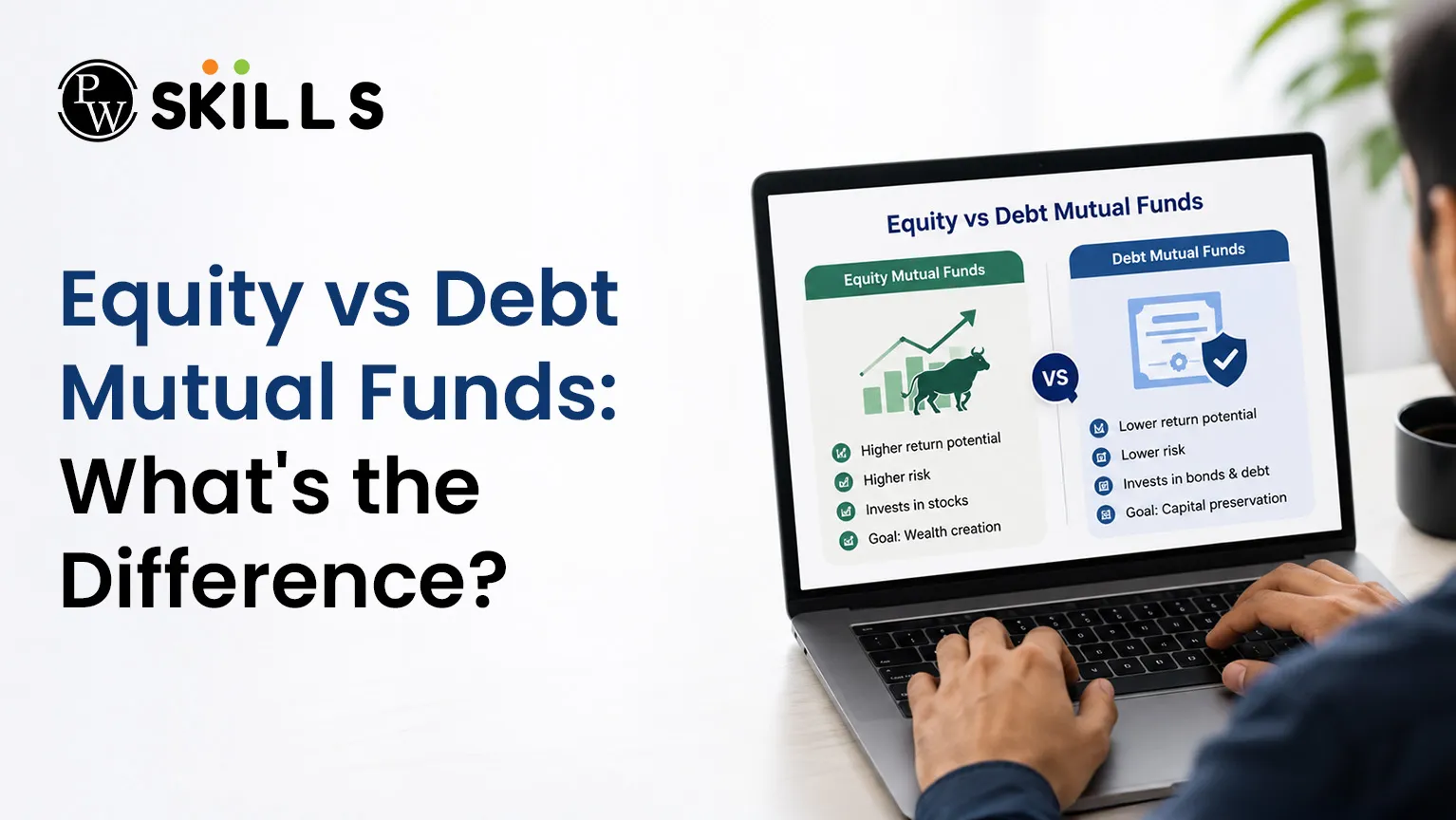
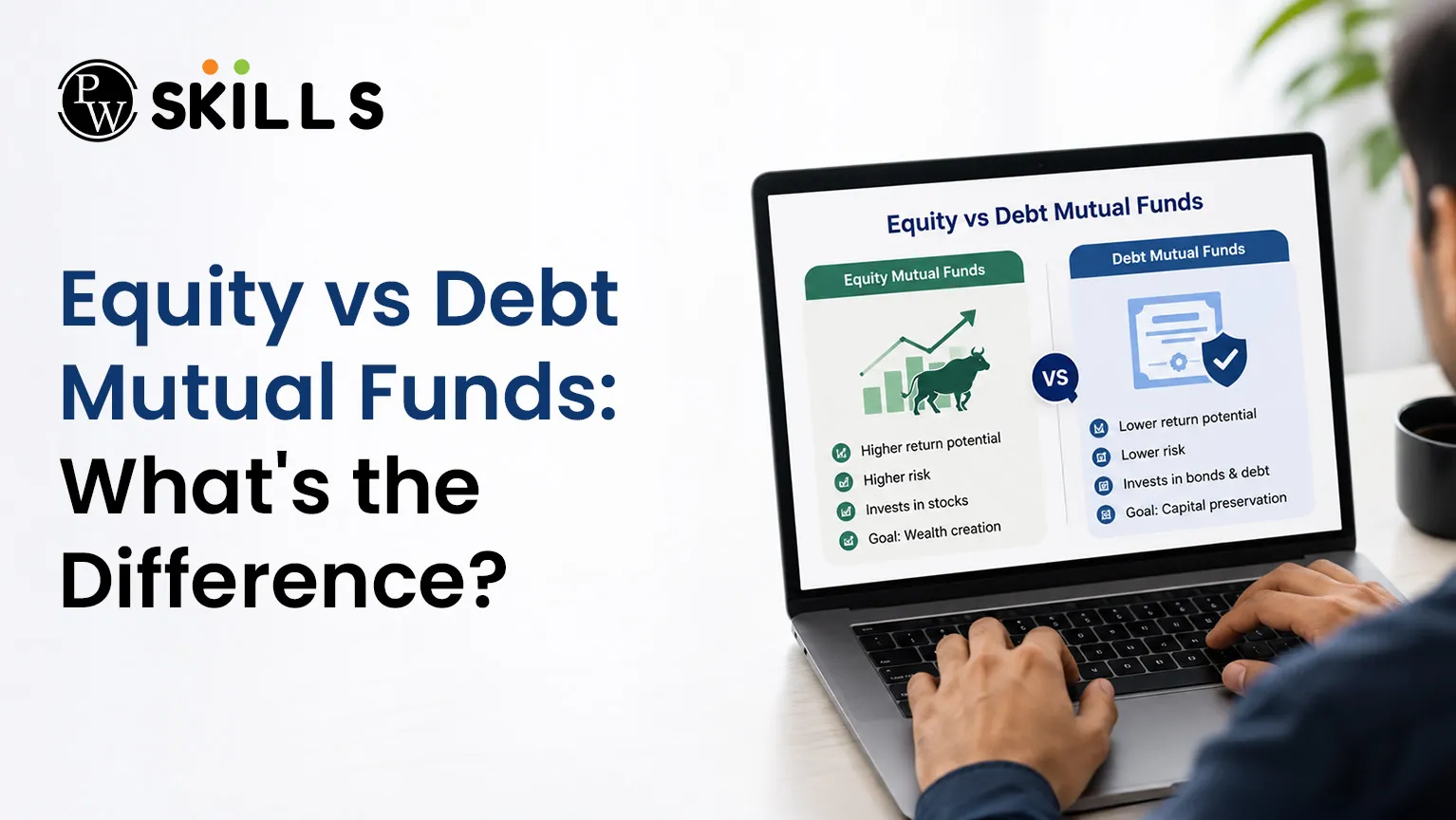
When there are many investment avenues to choose from, it can feel overwhelming to start your investment journey. Understanding the primary differences between equity vs debt mutual funds can help you invest your money wisely and build a well-rounded portfolio that meets your financial objectives.
What is an Equity Mutual Fund?
Equity funds are schemes that primarily invest their pooled capital into the shares of listed companies. The fund manager buys stocks across various sectors and market capitalisations, depending on the specific mandate of the fund.
The main objective of these funds is long-term capital appreciation. These investments are riskier but provide higher potential returns. The price of stocks varies every day depending on market conditions, company performance, and economic factors.
Explore our Course: Stock Market For Beginners
Types of Equity Schemes
Investors can choose from various sub-categories within this space to suit their specific investment needs:
-
Large-cap funds: Invest in well-established companies with large market valuations, offering relatively stable growth.
-
Mid-cap funds: Target mid-sized companies that have high growth potential but come with moderate volatility.
-
Small-cap funds: Focus on young or smaller companies, offering the highest return potential alongside significant risk.
-
Sectoral funds: Focus entirely on a specific industry, such as technology or healthcare.
What is a Debt Mutual Fund?
Debt funds are investment schemes that hold fixed-income securities. The fund manager lends the pooled money to corporate entities and government bodies in exchange for a predetermined rate of interest.
Such funds are invested in instruments like treasury bills, government bonds, corporate commercial papers, and certificates of deposit. The primary aim is to preserve capital and generate a regular income. They are far less volatile than stock-oriented investments.
Main Categories of Fixed-Income Funds
The debt market offers different options based on maturity periods and credit profiles:
-
Liquid funds: Invest in short-term instruments maturing within ninety-one days, providing high liquidity.
-
Corporate bond funds: Allocate capital to high-rated corporate debt papers to earn stable interest income.
-
Gilt funds: Invest exclusively in government securities, eliminating credit risk entirely.
Equity vs Debt Mutual Funds Comparison
The choice between the two options depends on a clear understanding of their performance in terms of various financial metrics. The crucial difference is the location of the invested money and the method of generating returns.
The table below provides a more specific breakdown of the structural differences between these two main options.
|
Feature |
Equity Funds |
Debt Funds |
|
Primary Investments |
Company shares and equities |
Government bonds, corporate debt papers |
|
Primary Objective |
Long-term capital growth |
Capital preservation and regular income |
|
Risk Level |
High market risk and volatility |
Low to moderate credit and interest risk |
|
Return Potential |
High potential returns over the long term |
Predictable, stable, but moderate returns |
|
Investment Horizon |
Recommended for 5 or more years |
Suitable for short to medium term |
|
Market Linkage |
Directly tied to stock market movements |
Tied to interest rate cycles and credit ratings |
How Does Volatility Affect Equity vs Debt Mutual Funds?
The fundamental makeup of the two asset classes means that market volatility impacts them in very different ways. Understanding these differences helps investors choose the right fund based on their risk tolerance and investment horizon.
Equity funds are directly affected by corporate earnings, economic policies, global market trends, and investor sentiment, making their prices fluctuate significantly in the short term.
Debt funds are mostly immune to stock market crashes, but they are not risk-free. They are exposed to interest rate risk—when interest rates rise, bond prices fall—and credit risk, which is the possibility that an issuer may default on interest or principal payments. These factors can affect the returns of debt funds, although they generally experience lower volatility than equity funds.
How to Choose Between Equity vs Debt Mutual Funds?
Your investment choice should depend entirely on what you want to achieve with your money and when you need it. High-priority, short-term goals require capital safety, while distant goals need growth that outpaces inflation.
Review these general guidelines to align your choices with your personal financial timeline:
-
Short-term goals (under 3 years): Debt instruments are ideal for goals like emergency funds, wedding expenses, or a down payment for a house.
-
Long-term goals (above 5 years): Equity instruments are better suited for retirement planning, a child's higher education, or long-term wealth creation.
How to Balance Your Investment Portfolio between Equity vs Debt Mutual Funds?
A successful investment strategy rarely relies on just one type of asset. Combining different mutual fund types allows you to build a resilient portfolio that can withstand shifting market cycles.
Younger investors with a longer time horizon can generally afford to allocate a larger percentage to stocks. As you approach your financial goals or retirement age, gradually shifting capital into fixed-income instruments protects your accumulated wealth from sudden market downturns.
Tips for Choosing Between Equity vs Debt Mutual Funds
Before committing your hard-earned capital, consider the following key points to ensure your investment choice matches your expectations:
-
Assess your personal risk tolerance honestly before picking high-exposure equity options.
-
Check the expense ratio of the fund, as lower management fees can improve your net returns over time.
-
Examine the historical performance of the fund manager across different market cycles rather than just looking at recent returns.
-
Avoid pulling money out of stock investments during short-term market dips, as equity requires time to recover and grow.




FAQs
Can I lose money in a debt mutual fund?
Is it possible to invest in both equity and debt through a single fund?
How often do equity funds pay out returns to investors?
What is the minimum recommended investment period for equity funds?
Do interest rate changes affect equity funds?





Get Free Counselling Today
and Clear up all your Doubts
 Live & recorded classes available at easeDashboard for progress trackingLakhs of practice questions


