
2026 Hiring Outlook for Mutual Fund Distributors: Reading Between the Job-Portal Numbers
 Hardik Gupta19 Sept, 2026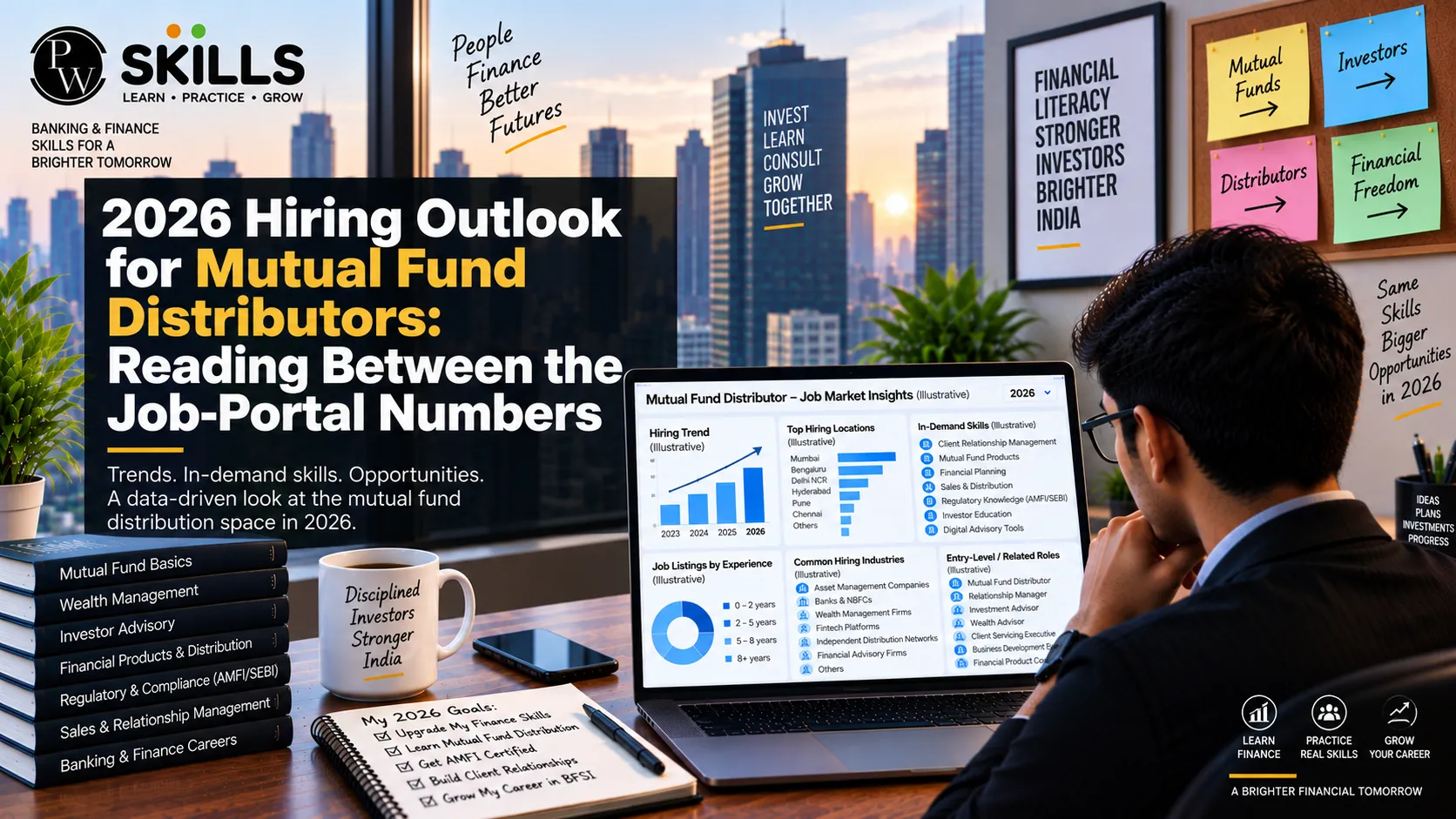
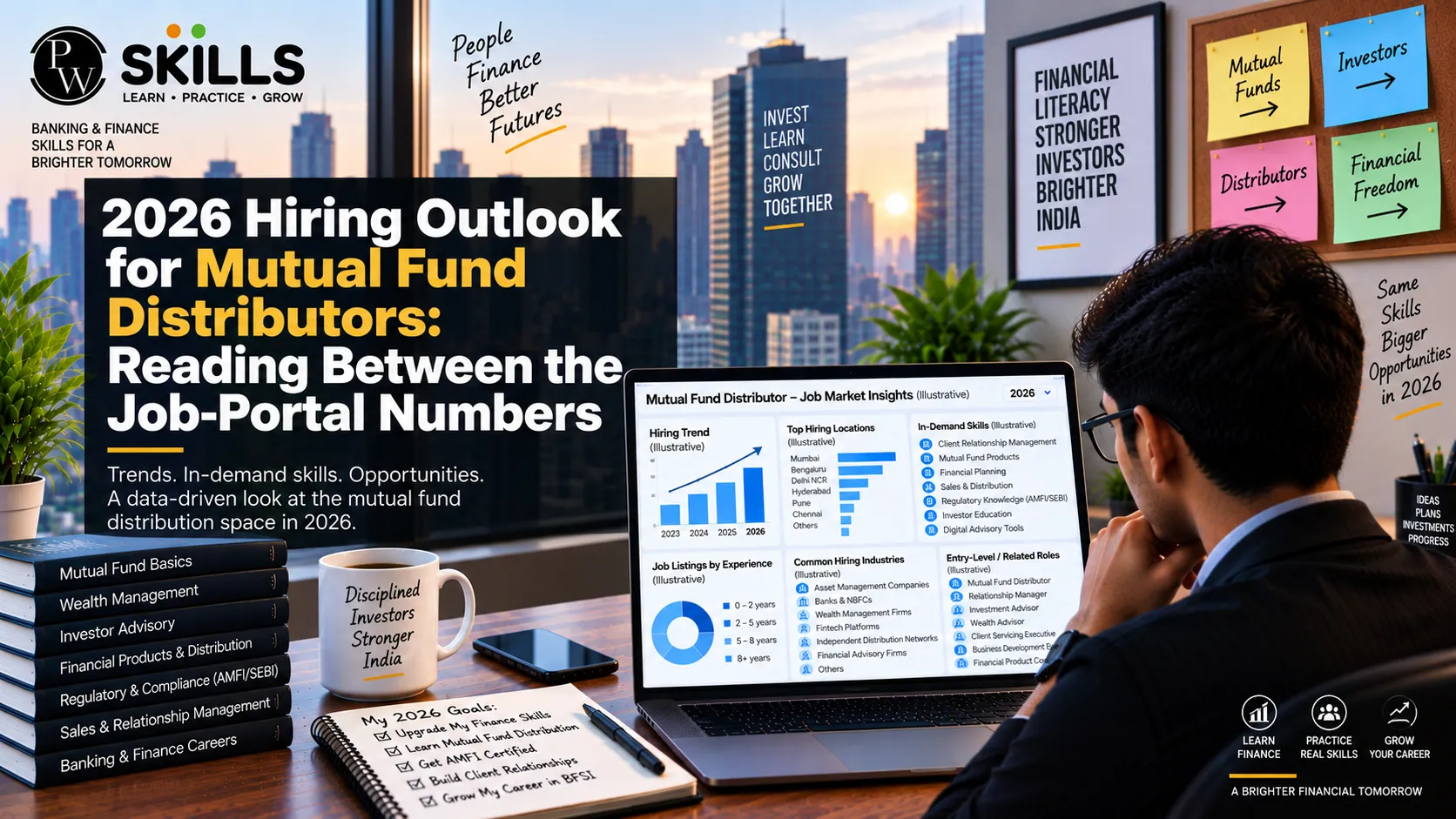
For people planning a career in mutual fund distribution, it is important to look beyond the number of job listings. The real opportunity comes from understanding why companies are hiring and which skills can help a candidate perform the job well. NISM & Tally Certification Courses can support this preparation by combining financial market knowledge with useful accounting and business software skills.
Why NISM & Tally Certification Courses Matter in Mutual Fund Distributor Hiring?
Mutual fund distributors work in a field where financial knowledge and customer trust are important. Their work can include explaining investment products, helping with applications, maintaining client records, supporting transactions, and following applicable rules.
Relevant NISM certifications can help candidates build knowledge of mutual funds, financial markets, and regulatory requirements. Tally, on the other hand, can provide useful exposure to accounting records and financial operations.
This combination can be helpful for candidates who want to show employers that they understand both the financial side and the basic operational side of the business.
The main value comes from building practical skills rather than simply collecting certificates. Candidates should be able to explain what they learned and how those skills can be used in a real work setting.
How Job Portals Read NISM & Tally Certification Course Skills?
A job portal may show hundreds of openings, but every vacancy has different requirements. Some employers may focus on customer acquisition and relationship management, while others may give more importance to documentation, transaction support, or financial product knowledge.
Candidates can therefore use job portals as a source of information instead of only using them to apply for jobs.
Look at repeated requirements across different listings, such as:
-
Mutual fund and investment product knowledge
-
Client communication
-
KYC and documentation awareness
-
Basic financial calculations
-
Sales and relationship management
-
Portfolio and transaction support
-
Knowledge of financial regulations
-
Excel or accounting software skills
NISM & Tally Courses can help cover parts of this wider skill set. NISM-related learning supports market and product knowledge, while Tally can strengthen basic accounting and record-handling skills.
The goal is to match learning with the skills that employers repeatedly mention.
What the NSDC-FICCI Skill Gap Report Means for NISM & Tally Certification Courses?
The NSDC-FICCI Skill Gap Report is useful for understanding how industry needs can change over time. Skill-gap studies focus on the difference between the abilities employers need and the skills available in the workforce.
For finance candidates, this is an important point. A basic degree may provide a strong academic foundation, but employers can also look for job-ready skills that help a person handle daily tasks.
This creates a need for targeted learning. Instead of studying every finance topic, candidates can focus on areas that connect directly with the role they want.
For a future mutual fund distributor, this may include:
-
Understanding mutual fund products
-
Learning basic investment processes
-
Improving customer communication
-
Understanding compliance-related processes
-
Building digital work skills
-
Learning how financial records are maintained
NISM & Tally Courses can fit into this approach because they combine learning in financial markets with practical business operations. However, candidates should still check the exact requirements of the role and the applicable NISM certification before applying.
How NISM & Tally Certification Courses Can Help Freshers Enter Mutual Fund Jobs?
Fresh graduates often face a common problem: they have a degree but limited practical experience. Job portals may list entry-level roles, but employers can still prefer candidates who understand basic industry processes.
This is where additional skill training can make a difference.
A fresher can use certification and practical learning to show that they have taken steps beyond classroom education. For example, a candidate can learn how mutual funds work, understand basic client processes, practice financial record handling, and become comfortable with common business tools.
This does not guarantee a job. However, it can give the candidate stronger points to discuss during an interview.
Freshers should also build a simple resume that clearly shows:
-
Relevant certifications
-
Finance-related skills
-
Software knowledge
-
Internship or project experience
-
Communication skills
-
Knowledge of mutual fund products
A clear resume makes it easier for recruiters to understand the candidate's profile.
Where NISM & Tally Certification Courses Fit in the Mutual Fund Career Path?
A mutual fund career does not always follow one fixed path. Candidates may begin in support or customer-facing roles and later move into sales, relationship management, investment operations, or other financial services positions.
An early-career role may involve customer communication, documentation, transaction support, or assisting senior professionals. With experience, professionals can take on larger client portfolios and more responsibility.
This means candidates should think beyond their first job title.
The useful question is not only, “How many jobs are available?” It is also, “What skills will help me move to the next level?”
NISM & Tally Courses can support this long-term approach by helping candidates build a broader base. Financial market knowledge can support investment-related work, while accounting and software knowledge can be useful in operational environments.
Also Explore our Course : Stock Market For Beginners
What GST Executive Jobs News Can Tell Mutual Fund Candidates?
At first glance, NISM & Tally Certification Courses + GST Executive Jobs News may seem unrelated to mutual fund distribution. However, it can provide a wider view of how finance and compliance roles are changing.
Businesses are becoming more dependent on digital records, tax systems, online reporting, and accurate financial information. This shows a wider trend: finance professionals are increasingly expected to work comfortably with digital processes and compliance-based tasks.
Mutual fund distributors should not assume that GST expertise is required for every distribution role. Instead, they can use this trend to understand the value of broader financial awareness.
Knowledge of taxation can also be useful when discussing financial planning with clients, but distributors must stay within their professional scope and avoid giving advice that requires a separate regulated qualification.
For candidates taking NISM & Tally Courses, this broader understanding can help them see how different finance functions connect in the modern workplace.
How NISM & Tally Certification Courses Improve Job-Portal Applications?
A good qualification only helps when recruiters can see its relevance. Candidates should avoid filling their resumes with certificates without explaining the skills behind them.
For example, instead of only listing a certification, candidates can highlight relevant knowledge such as mutual fund concepts, financial operations, accounting software, documentation, and client support.
Job descriptions should also be read carefully before applying.
If a vacancy focuses heavily on sales, the candidate should highlight communication and customer-handling abilities. If it focuses on operations, financial records, documentation, and software skills may deserve more attention.
This targeted approach makes an application more useful than sending the same resume to every company.
NISM & Tally Courses can therefore become part of a wider job-search strategy rather than being treated as a standalone solution.
What Employers May Look for Beyond NISM & Tally Certification Courses?
Certifications are useful, but they are only one part of a candidate's profile. Mutual fund distribution is also a people-focused career, so communication and relationship-building skills matter.
Employers may also look for candidates who can:
-
Explain financial products in simple language
-
Communicate clearly with customers
-
Maintain accurate records
-
Follow company processes
-
Handle digital platforms
-
Work with sales targets when required
-
Respond professionally to customer questions
-
Learn new financial products and rules
This is why candidates should combine certification with practical preparation.
A person who understands a certificate's concepts but cannot explain them to a customer may still struggle in the workplace. Practical communication is especially important in roles where clients depend on professionals to understand financial products.
How to Use the Hiring-Outlook-Hook With NISM & Tally Certification Courses?
The Hiring-Outlook-Hook should not be viewed only as a count of vacancies. Job numbers can change based on hiring cycles, company expansion, location, experience requirements, and many other factors.
Candidates should instead look for patterns.
If many job descriptions repeatedly mention customer handling, mutual fund knowledge, digital systems, compliance awareness, and financial operations, those repeated requirements are more useful than one large vacancy number.
Candidates can then build their learning plan around these signals.
With NISM & Tally Courses, the focus should be on understanding how each skill connects to actual work. This can help candidates create a more focused resume, prepare better interview answers, and identify suitable entry-level opportunities.
How NISM & Tally Certification Courses Support Long-Term Career Growth?
The mutual fund industry can offer different career directions as professionals gain experience. Someone who begins with customer support or distribution may later move toward relationship management, sales leadership, wealth-related roles, or other areas of financial services, depending on qualifications and experience.
Continuous learning becomes important as responsibilities increase.
Professionals can gradually add skills in areas such as financial analysis, taxation awareness, Excel, customer relationship management, digital finance platforms, and data handling.
The main idea is simple: do not treat the first certification as the final step.
NISM & Tally Courses can provide an initial skills base, but career growth depends on how well professionals apply their knowledge, communicate with customers, follow regulations, and continue learning.



Stock Price Prediction FAQs
What makes NISM & Tally Certification Courses useful for mutual fund distributor careers?
How does the NSDC-FICCI Skill Gap Report help finance job seekers?
Why should candidates follow GST Executive Jobs News?
How can the Hiring-Outlook-Hook help candidates?
Are freshers eligible for NISM & Tally Certification Courses?





Get Free Counselling Today
and Clear up all your Doubts
 Live & recorded classes available at easeDashboard for progress trackingLakhs of practice questions

