

AI Video Creation for Students: Research, Learning and Creative Content Skills
 Mishika Gupta17 Sept, 2026
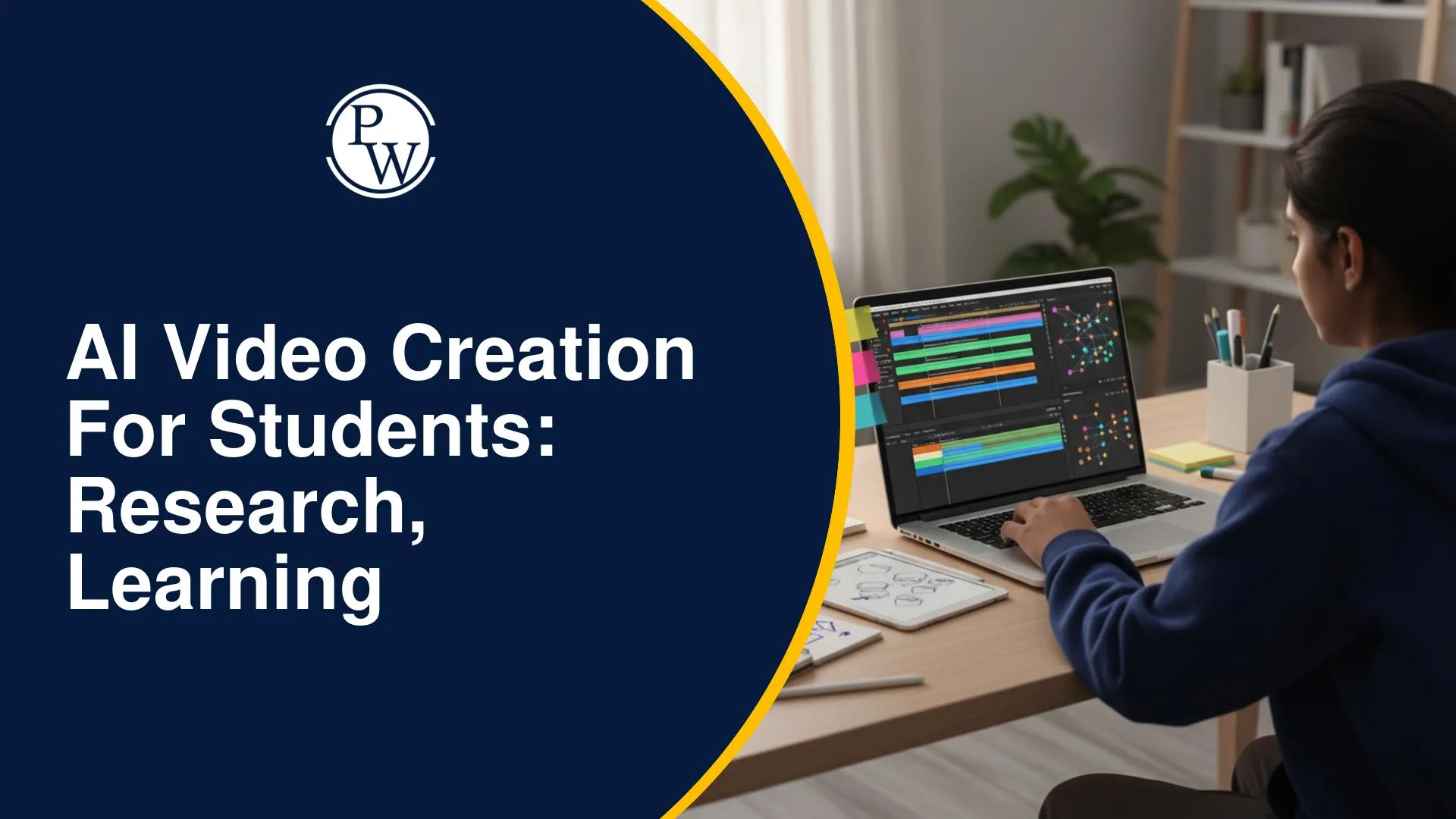
Creating videos for research projects, presentations, assignments, or creative work can involve several skills at once. You may need to understand the topic, write a script, create visuals, record narration, arrange clips, and edit the final output. Learning each of these processes can take time, particularly when the focus is on communicating an idea rather than becoming a full-time video editor.
Generative AI can support many of these tasks and give you new ways to create digital content. AI video tools can help with research-based scripts, visuals, short video clips, narration, sound, and editing, allowing you to explore video creation for learning, academic presentations, research communication, and creative projects.
What Is AI Video Creation and How Does It Work?
AI video creation refers to using artificial intelligence to generate or assist with different elements of video production. Instead of creating every element manually, you can use AI to develop content from text, images, research material, or prompts.
The process can involve:
-
Script generation: Turning an idea or source material into a script or content outline.
-
Image generation: Creating visuals from written prompts.
-
Video generation: Producing short clips from text or images.
-
Voice generation: Creating narration or voiceovers.
-
Sound generation: Producing music and other audio elements.
-
Editing: Combining clips, narration, visuals, transitions, titles, and sound.
AI video creation can therefore be viewed as a combination of generative AI and traditional video production skills. The ResearchGate workshop on AI video for research, learning, and creativity describes workflows involving research, scripting, image generation, video generation, sound, and editing.
How Can Students Use AI Video for Research and Learning?
AI video can be useful when you need to explain information that may be difficult to communicate through text or static slides alone.
|
Area |
Possible Use |
|
Research |
Explain research findings, papers, abstracts, or technical concepts |
|
Academic presentations |
Add narration, visuals, and video clips to presentations |
|
Learning |
Create concept explanations, tutorials, and revision videos |
|
Assignments |
Present information through visual and narrated content |
|
Projects |
Demonstrate processes, findings, or project outcomes |
|
Creative work |
Develop stories, short films, and visual concepts |
Research-based applications can include explaining complex papers, conference notes, abstracts, technical concepts, and AI model architectures. The ResearchGate workshop also highlights NotebookLM for transforming dense academic material into accessible video and audio formats.
What Types of AI-Generated Videos Can Students Create?
The format of an AI-generated video can vary according to its purpose and audience.
-
Research explainer videos: Present the key ideas or findings from research material.
-
Concept videos: Explain academic or technical concepts through visuals and narration.
-
Educational tutorials: Demonstrate a process or explain a topic step by step.
-
Presentation videos: Convert presentation points into narrated visual content.
-
Revision videos: Summarise important concepts for quick review.
-
Project videos: Present project findings, demonstrations, or outcomes.
-
Documentary-style videos: Combine research, narration, visuals, and generated clips.
-
Creative videos: Develop stories, short films, trailers, or visual experiments.
For knowledge-based content, research and scripting can form the foundation before generating individual scenes.
Which AI Video Tools Can Students Use?
Different AI tools can support different stages of video creation. Rather than treating AI video creation as a single-tool process, you can combine tools according to the requirements of your project.
|
Purpose |
Examples |
Use |
|
Research and learning |
NotebookLM |
Work with research material and create accessible summaries or overviews |
|
Image generation |
DALL-E, Gemini, Midjourney |
Generate visuals from text prompts |
|
Video generation |
Sora, Veo, Runway, Pika, Kling |
Create short video clips from text or images |
|
Voice and sound |
ElevenLabs, Suno, Qwen |
Create narration, voice, music, or other audio |
|
Editing |
Adobe Express, Runway, Adobe Premiere |
Combine clips, audio, titles, transitions, and other elements |
These tools are among those discussed in the 2026 ResearchGate workshop covering AI video for research, learning, and creative production.
Also Explore our Course : AI Video Creator
How Can These Tools Work Together?
A single project can involve several stages:
-
Research: Collect and analyse the source material.
-
Scripting: Develop the narration and sequence of ideas.
-
Visual creation: Generate images or other supporting visuals.
-
Video generation: Create clips for individual scenes.
-
Audio: Add narration, music, or sound.
-
Editing: Arrange the clips and synchronise the different elements.
-
Review: Check the final output against the original material.
AI-generated clips may be short, so editing plays an important role in combining individual clips into a complete presentation, explainer, or story.
What Skills Do Students Need for AI Video Creation?
Using AI video tools effectively requires more than knowing which button to press. You also need skills that help you plan content, communicate ideas, work with AI outputs, and improve the final video.
-
Research skills: Find reliable information and identify the key points that need to be communicated.
-
Scriptwriting: Organise information into a logical narration or storyline.
-
Prompt writing: Give clear instructions for generating relevant visuals, scenes, or other content.
-
Visual storytelling: Match visuals with the idea or message being communicated.
-
Video editing: Arrange clips, narration, music, transitions, and titles.
-
Audio skills: Understand voiceovers, music, sound effects, and basic audio quality.
-
Fact-checking: Verify AI-generated information against reliable sources.
-
Creative thinking: Decide the video's concept, visual direction, tone, and presentation style.
-
AI tool handling: Understand the capabilities and limitations of different AI video tools.
These skills can help you move from simply generating AI content to planning, evaluating, and refining complete video projects.
How Can PW Skills Help Students Build AI Video Creation Skills?
PW Skills combines practical learning with digital and technology-focused skills through courses, mentors, projects, and interactive learning.
-
20+ Courses: Explore courses covering different technology and digital skill areas.
-
20+ Industry Mentors: Learn with guidance from mentors with industry experience.
-
Hands-on Projects: Apply concepts through practical project work.
-
Personalised Learning: Follow learning support suited to your requirements.
-
Interactive Sessions: Strengthen understanding through interactive learning.
-
Career Assistance: Get support related to career development.
-
600+ Students Placed Successfully: PW Skills reports more than 600 successful placements.
-
55% Average Salary Hike: PW Skills reports an average salary hike of 55%.
-
AI Content Creation Skills: Practise working with generative AI, digital tools, content development, and project-based applications.
AI video creation can help you explore research communication, learning content, academic presentations, and creative projects through a combination of generative AI and video production skills. While AI can assist with several production tasks, your research, creative direction, editing, and evaluation remain important for producing useful and reliable content.
AI Video Creation for Students FAQs
How can students use AI video tools?
Can AI create videos from research papers?
Which AI video tools can students use?
What skills are needed for AI video creation?





Get Free Counselling Today
and Clear up all your Doubts
 Live & recorded classes available at easeDashboard for progress trackingLakhs of practice questions

