

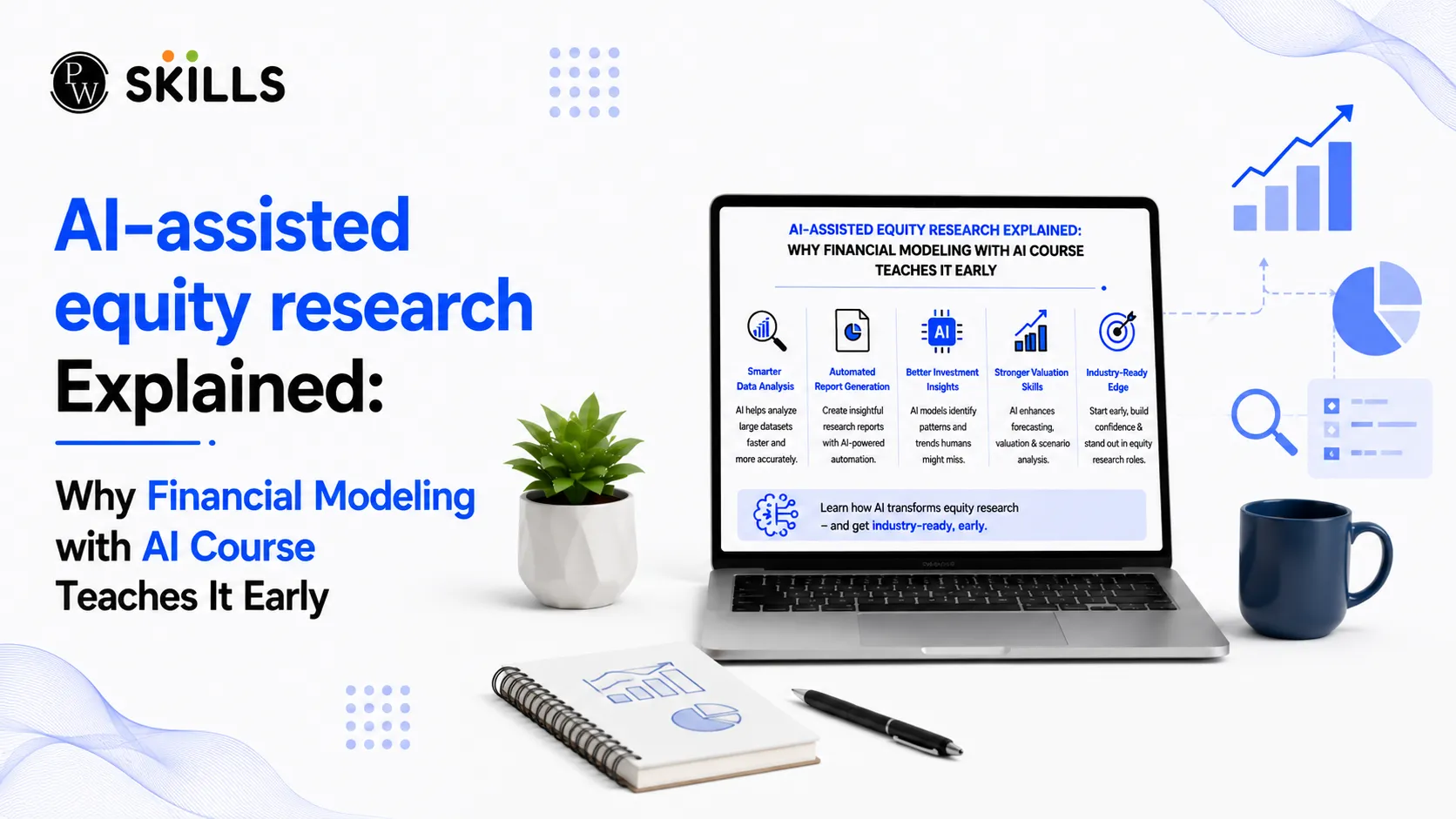
AI-assisted equity research Explained: Why Financial Modeling with AI Course Teaches It Early
 Hardik Gupta21 Jul, 2026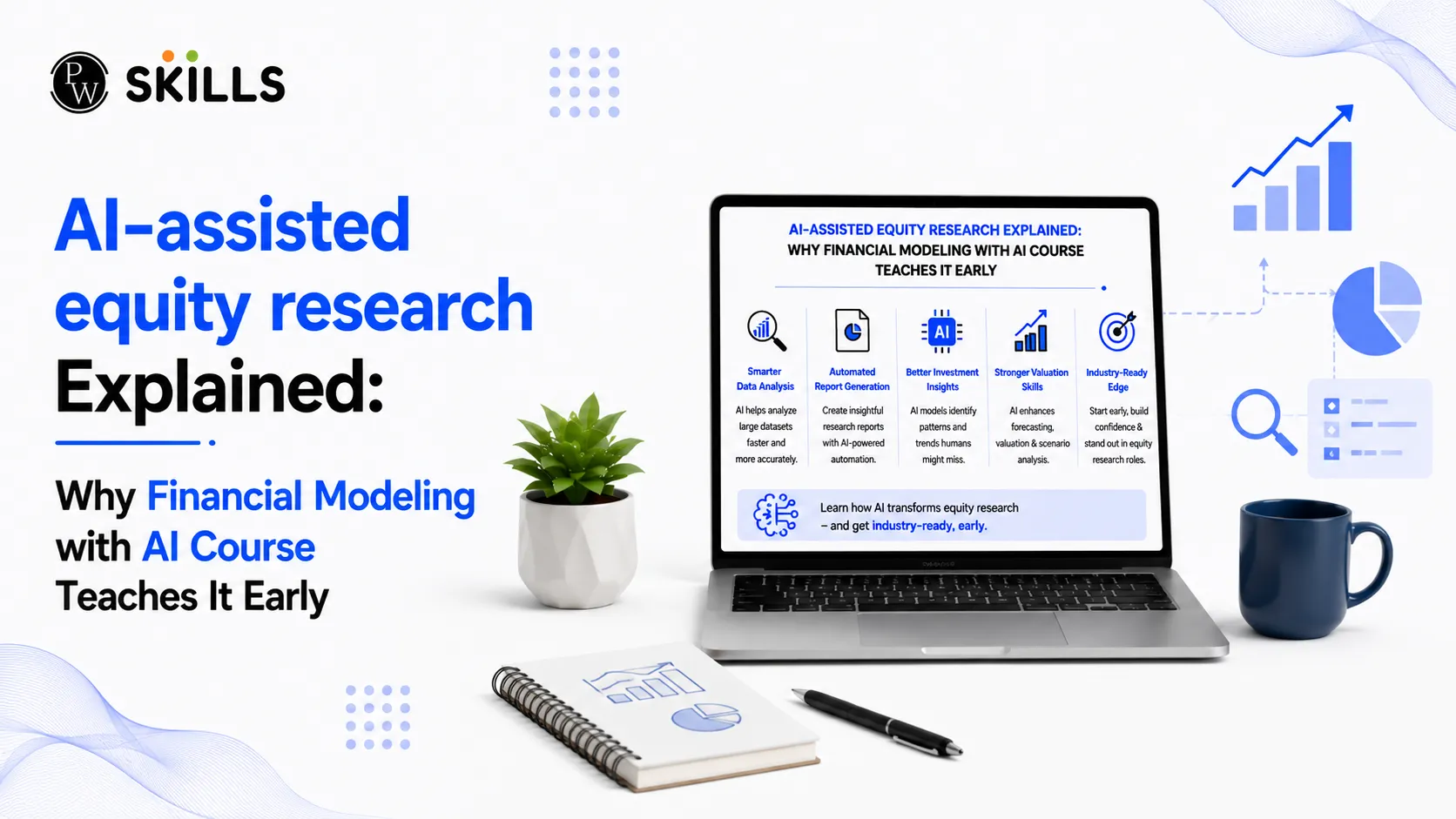
Investment analysts often spend hours digging through financial statements, copying numbers into spreadsheets, and fixing broken formulas. This manual process leaves little time for actual market analysis. Enrolling in a Financial Modeling with AI Course teaches professionals how to build these automated systems early in their careers. Learning these skills transforms how analysts evaluate companies and predict stock performance.
What is Financial Modeling with AI Course?
AI financial modeling course is a career-focused training program that teaches learners how to build financial models, analyze company performance, and make data-driven investment decisions using modern AI tools. The course covers key topics such as financial statement analysis, forecasting, valuation methods, equity research, and scenario analysis while introducing automation techniques that reduce manual work and improve accuracy.
By combining traditional finance concepts with AI-powered workflows, the program prepares learners for careers in investment banking, equity research, corporate finance, financial planning, and financial analyst roles in today's technology-driven financial industry.
Financial Modeling Course for Modern Equity Research
Traditional stock analysis requires reviewing balance sheets, income statements, and regulatory filings manually. Analysts spend the majority of their time structuring data rather than interpreting market trends. When algorithms enter this workflow, the entire research process becomes automated. AI can scan thousands of pages of financial text in seconds, pulling out key figures and identifying anomalies that a human might miss.
This shift allows investment teams to scale their coverage. Instead of tracking five or six companies deeply, an analyst using smart tools can monitor an entire industry sector. The algorithms do not replace human judgment; instead, they handle the repetitive data gathering. This ensures that the base numbers used for valuation are accurate and up to date.
Manual Workflow: Gathering Data ➔ Structuring Sheets ➔ Minimal Analysis ➔ Report
AI-Led Workflow: Automated Gathering ➔ Dynamic Modeling ➔ Deep Human Analysis ➔ Report
AI financial modeling course teaches students how to set up these automated data pipelines right from the start. Understanding how to connect live market feeds to your analytical models prevents errors and saves hours of manual data entry every single week.
Financial Modeling with AI Course for Equity Research Skills
Curriculum designers place equity research at the beginning of the training path for a specific reason. It serves as the foundation for all corporate finance activities. If you cannot analyze a public company with clear financial data, you cannot value a private business or structure a complex merger.
By focusing on public markets first, learners work with clean, standardized data. The table below illustrates how the learning curve is structured within a comprehensive training program.
|
Training Phase |
Core Focus |
AI Tool Integration |
|
Phase 1 |
Equity Research Basics |
Automated parsing of annual corporate filings |
|
Phase 2 |
Advanced Forecasting |
Predictive algorithms for revenue lines |
|
Phase 3 |
Corporate Valuation |
Automated discounted cash flow calculations |
Starting with public company analysis ensures that students learn fundamental valuation concepts before moving on to complex corporate transactions. This structured approach builds confidence as learners see how machine learning improves traditional financial theories.
Financial Modeling Course for Valuation Techniques
Classical valuation models like Discounted Cash Flow (DCF) analysis and Leveraged Buyout (LBO) models rely heavily on historical data inputs. Machine learning algorithms update these methods by introducing predictive capabilities. Instead of guessing a flat five percent revenue growth, an AI model analyzes macroeconomic trends, historical patterns, and competitor data to generate a dynamic growth curve.
Analysts must learn to control these inputs to keep models realistic. A valuation techniques specialization provides the exact skills needed to merge traditional finance theory with modern data science.
-
Dynamic DCF Models: Algorithms update cash flow projections automatically as new quarterly numbers release.
-
Automated Peer Groups: Software identifies comparable companies based on business descriptions rather than simple industry codes.
-
Sentiment Analysis: Models scan earnings call transcripts to adjust risk parameters based on management tone.
Why Financial Modeling with AI Course Skills Secure Analyst Roles
The job market for corporate finance professionals is shifting rapidly. Employers no longer want analysts who only know how to input numbers into an Excel spreadsheet. They look for professionals who can build scalable analytical tools. Securing a Financial Analyst job alignment means demonstrating that you can deliver deep insights faster than traditional peers.
Investment banks and research firms look for candidates who understand data automation. Showing that you can write a script to scrape financial data or use machine learning to predict customer churn makes your application stand out.
Professional Insight: Firms are actively replacing manual data entry roles with positions that require data interpretation and algorithmic modeling skills.
Learning these automated workflows early prepares you for the demanding environment of modern investment firms, where speed and accuracy determine success.
Financial Modeling with AI Course for Automated Financial Models
The volume of financial information generated daily is too large for human teams to process alone. Alternative data, such as credit card transaction trends, satellite imagery of retail parking lots, and shipping manifests, must be integrated into modern stock analysis. Traditional spreadsheets cannot handle these massive, unstructured datasets.
This reality explains why there is an inquiry from industry newcomers. Firms demand automated models because they need to process alternative data streams ahead of the competition. If an algorithm flags a drop in retail traffic two weeks before the quarterly report, the firm gains a significant market advantage.
Learning to build these data connections ensures your financial models reflect real-time economic shifts, making your investment theses much more robust.
Financial Modeling Course for Forecasting Models
Building an automated model requires connecting your financial spreadsheet to an external data source via an API (Application Programming Interface). This setup allows your model to refresh its inputs automatically whenever the source data updates.
-
Establish Data Connections: Link your model directly to financial databases to pull historical balance sheets without manual downloading.
-
Set Predictive Rules: Program your model to calculate future revenue based on historical growth rates adjusted by current industry trends.
-
Run Stress Testing: Use automated simulations to test how your target company performs under different inflation or interest rate scenarios.
Learning these steps ensures that your valuation sheets remain relevant long after you build them, saving massive amounts of time during busy earnings seasons.





FAQs
What is the main benefit of AI financial modeling course for new analysts?
How does a Financial Modeling with AI Course + Financial Analyst Jobs focus help in interviews?
Why explore a Financial Modeling with AI Course + Why choose automation now?
What specific skills are gained from a Financial Modeling with AI Course + Valuation techniques module?
Can machine learning completely replace human equity research analysts?







Get Free Counselling Today
and Clear up all your Doubts
 Live & recorded classes available at easeDashboard for progress trackingLakhs of practice questions

