

Switch Careers to Financial Analyst via Financial Modeling with AI Course
 Hardik Gupta20 Jul, 2026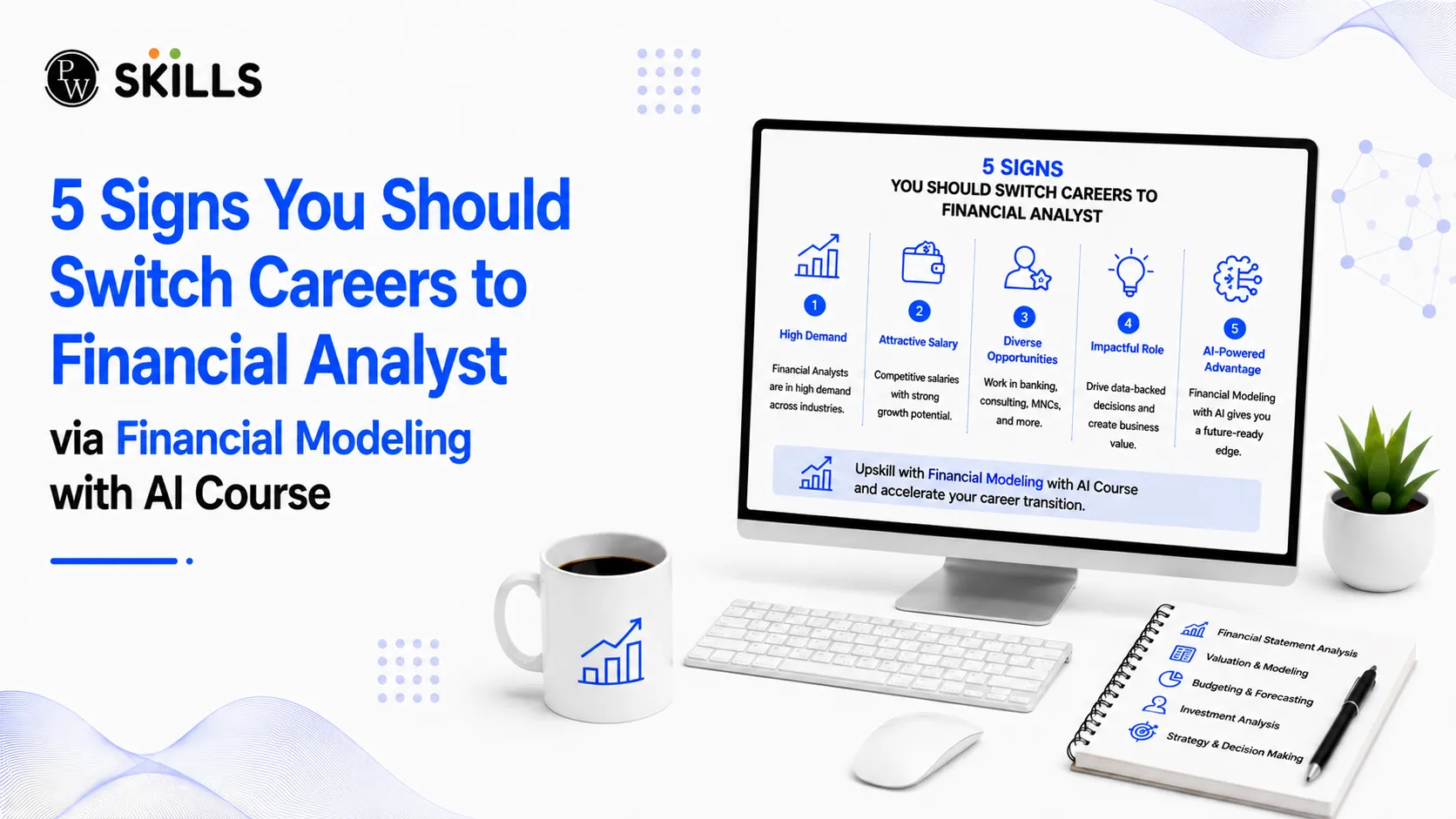
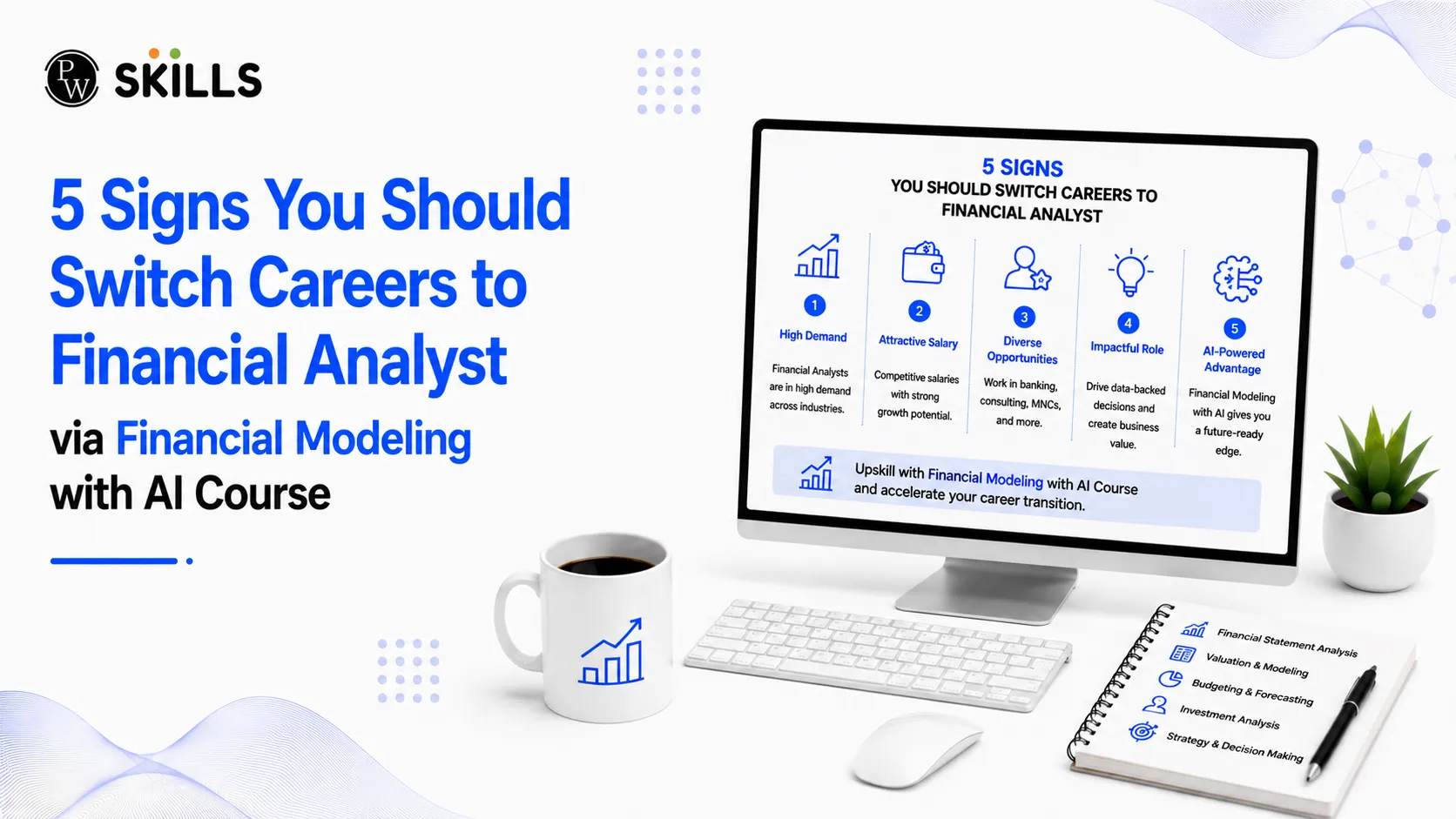
If your current role no longer feels engaging or offers little room to progress, exploring a more analytical and business-focused path may be the right decision. Organizations today actively seek professionals who can combine financial understanding with technology-driven insights. A Financial Modeling with AI Course helps you develop these capabilities, preparing you for high-impact positions within corporate finance and business strategy teams.
Financial Modeling with AI Course Overview
This is a professional training program designed to help learners build practical skills in financial analysis, forecasting, valuation, and business decision-making using modern AI tools. The course covers essential topics such as financial statement analysis, three-statement modeling, discounted cash flow (DCF) valuation, budgeting, scenario analysis, and financial forecasting.
Along with traditional finance concepts, learners also explore how artificial intelligence can automate data processing, improve forecasting accuracy, and speed up model building. The program prepares candidates for careers in corporate finance, investment banking, financial planning and analysis (FP&A), equity research, and financial analyst roles by combining industry-standard financial skills with the latest technology-driven practices.
Signs You are Ready to Become an Investment Banking Analyst with a Financial Modeling AI Course
Many professionals feel stuck in jobs that offer little growth, limited learning, and repetitive work. If you want a fast-moving career with better opportunities and higher earning potential, becoming an Investment Banking Analyst could be the right choice. Here are five clear signs that show you may be ready to make the switch and how a this course can help you get there.
Sign 1: You Want to Apply for Investment Banking Analyst (Entry-Level) Jobs
If you find yourself constantly browsing corporate job boards looking for fast-paced roles, it is a clear sign you need a change. Many ambitious professionals specifically aim for Investment Banking Analyst (Entry-Level) Jobs because they offer unparalleled growth, massive networking opportunities, and excellent compensation packages.
However, getting your foot in the door requires more than a generic business background. Modern finance teams look for candidates who can build dynamic models and automate repetitive tasks using artificial intelligence.
A specialized course bridges this knowledge gap perfectly. It teaches you how to forecast revenue, value companies, and present data in a way that senior leaders understand. If you want to confidently apply for these premium roles, learning AI-driven financial models is your best starting point.
Sign 2: Your Current Role Lacks Predictive Data Analysis
Many traditional jobs focus heavily on reporting past data rather than predicting future trends. If your daily routine involves simply cleaning old spreadsheets or writing retrospective reports, your professional growth might hit a wall very soon.
Modern corporate finance relies entirely on predicting market movements, evaluating risks, and projecting future profits. By learning how to build automated valuation models, you move from a basic reporter to a strategic asset.
A Financial Modeling with AI Course + Why behind financial numbers. Instead of just entering data, you learn to spot trends, build complex forecasting frameworks, and guide leadership teams toward highly profitable business choices.
Sign 3: You Look for a Career Path With High Market Demand
Global economic shifts require businesses across all sectors to manage their capital with extreme precision. Because of this constant pressure, corporate finance departments face a massive shortage of skilled professionals who understand both finance and technology.
Traditional financial analysis methods are quickly becoming obsolete. Companies now prefer hiring professionals who know how to use AI tools to speed up data processing and eliminate manual forecasting errors.
Investing your time in this course ensures you remain highly employable for the next decade. This specialized training proves to recruiters that you possess modern analytical capabilities, making you a top choice for forward-thinking global corporations.
Sign 4: You Want to Understand Complex Corporate Finance Scenarios
A major sign of career stagnation is when your daily work stops challenging your brain. If you want to solve complex business puzzles, moving into a financial analyst role will give you the intellectual satisfaction you desire.
Financial analysts spend their time breaking down corporate mergers, evaluating capital investments, and preparing firms for unpredictable market fluctuations. This requires a deep understanding of advanced forecasting techniques.
Through this course, you learn how to execute advanced Scenario & sensitivity analysis. This specific skill allows you to show how changes in interest rates, inflation, or raw material costs will impact a company's bottom line.
The table below outlines how traditional financial methods compare against modern AI-driven practices across core corporate finance tasks:
|
Financial Task |
Traditional Approach |
AI-Driven Finance Approach |
|
Data Gathering |
Manual entry from invoices and PDF reports |
Automated data extraction via AI scraping tools |
|
Valuation Modeling |
Static spreadsheets prone to formula errors |
Dynamic, self-updating models with error checks |
|
Risk Assessment |
Basic formulas with limited variables |
Advanced Scenario & sensitivity analysis models |
|
Reporting Speed |
Takes days or weeks to compile final numbers |
Real-time dashboards generated instantly |
Sign 5: You Crave Direct Strategic Involvement in Business Growth
Working in a role where you cannot see the direct impact of your efforts can be deeply frustrating. If you want your insights to shape the actual direction of a business, switching to finance is the right move.
Financial analysts work very closely with executives, directors, and department heads. Their data-backed models determine whether a company launches a new product line, acquires a competitor, or expands into an international market.
Enrolling in a comprehensive course teaches you how to translate raw numbers into clear strategic narratives. You will gain the technical confidence needed to present your findings directly to stakeholders and drive real business growth.
What You Learn in a Financial Modeling with AI Course
Transitioning into a corporate finance role requires a solid grasp of several technical frameworks. Upskilling programs focus heavily on these core areas to make you job-ready quickly.
The bullet points below highlight the primary technical skills you will develop during your learning journey:
-
Three-Statement Modeling: Learning how to seamlessly link the Income Statement, Balance Sheet, and Cash Flow Statement together.
-
Discounted Cash Flow (DCF): Determining the current objective value of a business based on its projected future cash flows.
-
AI Prompt Engineering for Finance: Utilizing specialized artificial intelligence prompts to clean financial messy data and write complex formulas instantly.
-
Visualizing Financial Dashboards: Designing clean, interactive charts that help corporate stakeholders understand complex financial trends at a single glance.
Career Transition to Financial Analyst with a Financial Modeling with AI Course
Switching careers requires a structured approach to ensure you do not waste time on irrelevant topics. You need to focus on building a strong practical portfolio that proves your capabilities to hiring managers.
First, dedicate time to learning core accounting principles so you understand how business transactions move through financial books. Next, practice building valuation models from scratch using real, publicly available corporate data.
Finally, join a structured course to gain hands-on experience with modern automation tools. Having guided mentorship and practical case studies will significantly accelerate your job search and give you an edge over other applicants.





FAQs
What is the primary benefit of enrolling in a Financial Modeling with AI Course?
Can I apply for Investment Banking Analyst (Entry-Level) Jobs if my previous background is completely non-financial?
Why are global companies prioritizing AI skills during the financial hiring process?
How does scenario & sensitivity analysis help a corporate financial analyst make better decisions?
How long does it typically take to transition into finance after completing a course?







Get Free Counselling Today
and Clear up all your Doubts
 Live & recorded classes available at easeDashboard for progress trackingLakhs of practice questions

