

Switch Careers to Business Analyst (Finance) via Financial Modeling with AI Course
 Hardik Gupta20 Jul, 2026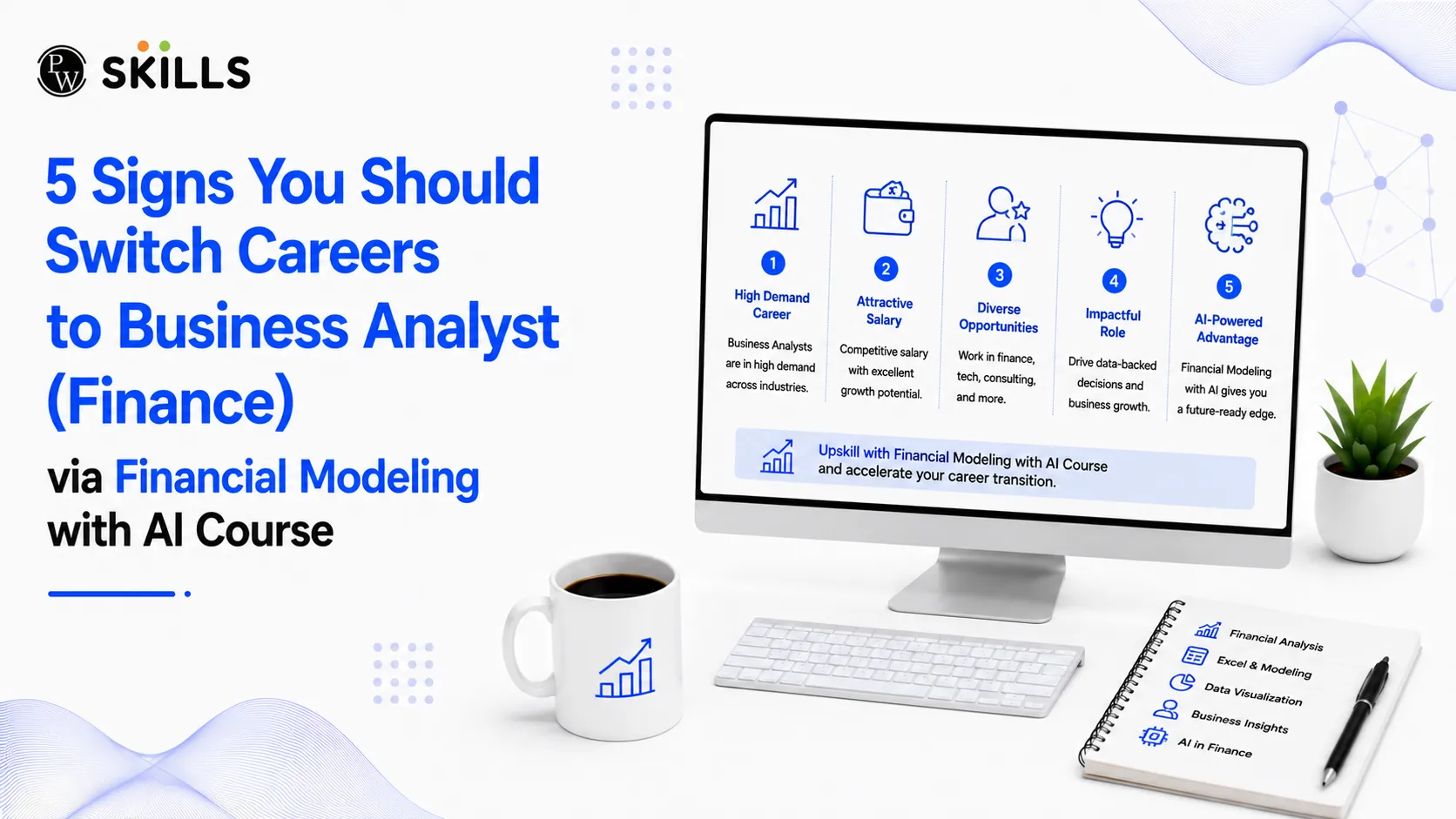
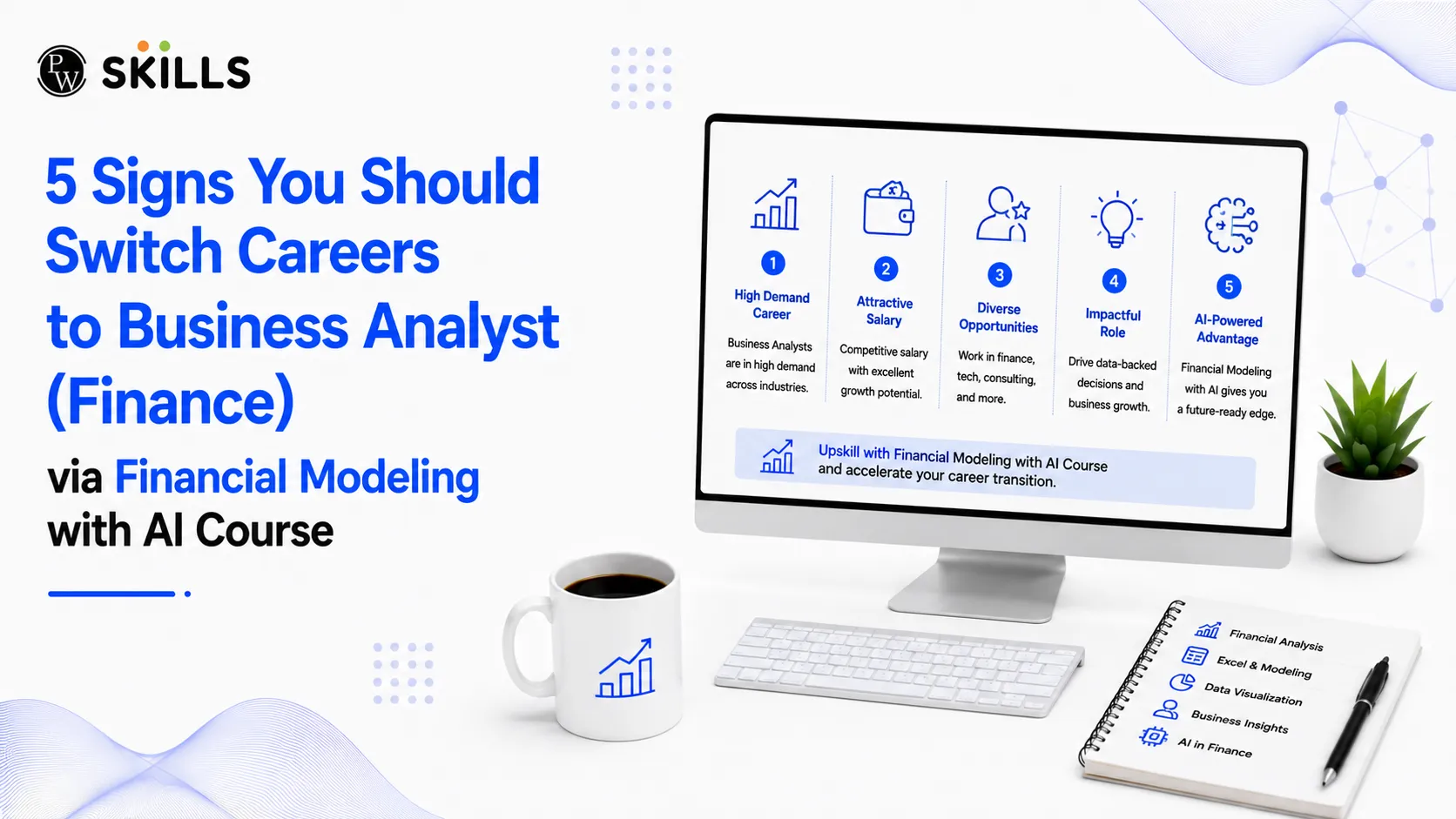
Making a career shift can feel overwhelming, especially when you want to move into a highly specialized field like corporate finance. Many professionals feel stuck in routine roles, micro-managing endless spreadsheets without driving actual strategic decisions. If you want to elevate your career and influence high-level company choices, a Financial Modeling with AI Course provides the exact technical roadmap you need to transition into a business analyst role successfully.
What is Financial Modeling with AI Course?
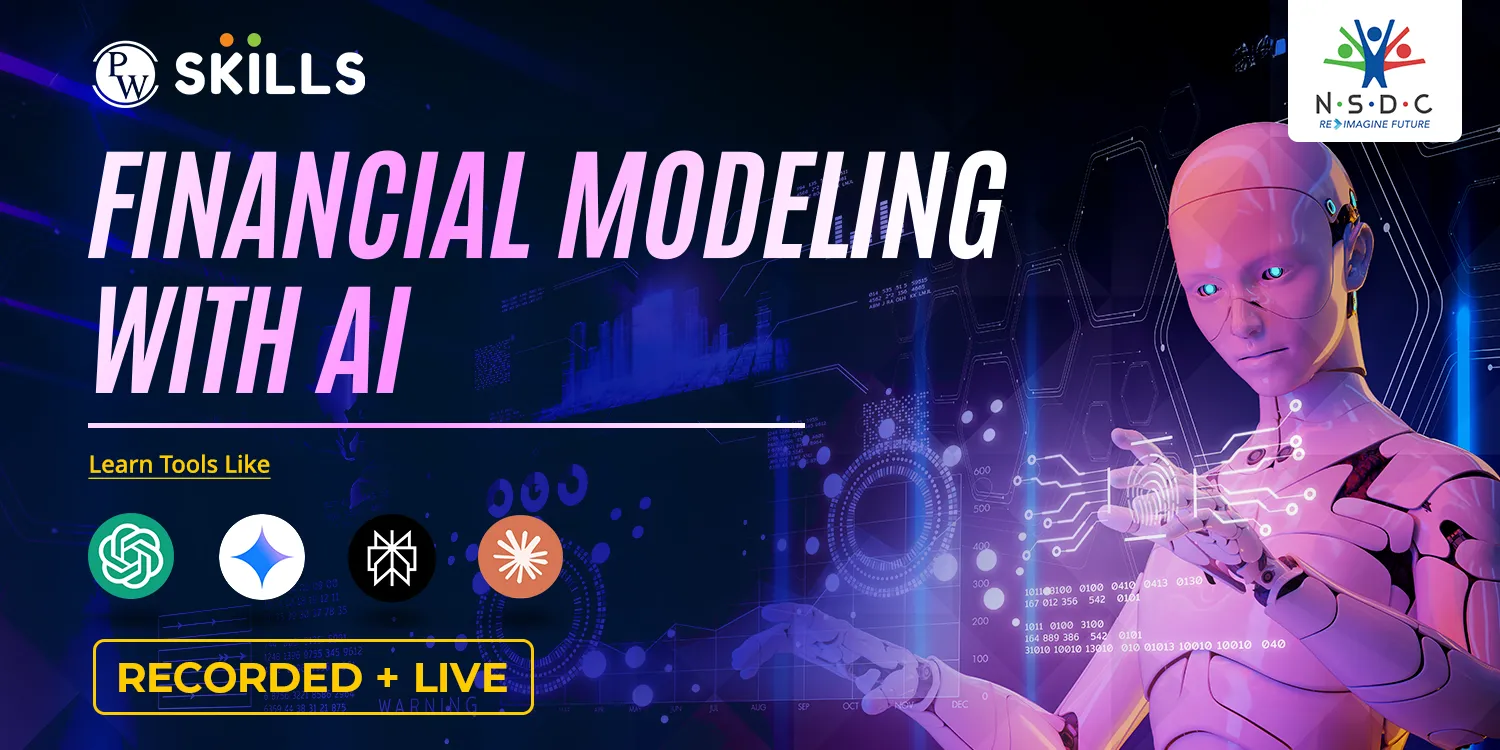
A Financial Modeling with AI Course is a professional training program that teaches learners how to build financial models, analyze business performance, and make data-driven investment and corporate decisions using modern AI-powered tools. The course covers important concepts such as financial statement analysis, forecasting, budgeting, valuation methods, scenario analysis, and automation techniques.
By combining traditional financial modeling skills with artificial intelligence, the program helps learners improve accuracy, reduce manual work, and analyze large datasets more efficiently. It prepares students for careers such as Business Analyst (Finance), Financial Analyst, Investment Analyst, Equity Research Analyst, and Corporate Finance Professional.
Career Signs You Need a Financial Modeling with AI Course
Businesses today need professionals who can turn financial data into smarter business decisions. If you enjoy understanding numbers, identifying opportunities, and thinking about future growth instead of only tracking past performance, a Finance Business Analyst career could be the right next step. A structured Financial Modeling with AI Course helps you develop the forecasting, valuation, and analytical skills required for modern finance roles.
1. Are You Frustrated by Routine Data Entry Tasks?
The first sign that you need a career pivot is a growing dissatisfaction with basic administrative tasks. Many professionals spend hours typing data into historical ledgers without ever understanding the bigger strategic picture. A finance business analyst does not just record what happened in the past; they project what will happen in the future.
If you want to move away from basic data entry, shifting your focus toward advanced forecasting is essential. Learning how to build dynamic projection tools allows you to help companies plan for growth, manage risks, and allocate resources efficiently. This shift from reactive tracking to proactive planning is exactly why professionals look for a Financial Modeling with AI Course + Why it matters for long-term career progression.
2. Do You Have a Natural Interest in Strategic Corporate Decisions?
You might find yourself constantly questioning the operational choices made by your current management team. When you naturally look at a business and think about how to optimize its profits or cut unnecessary costs, you are already thinking like an analyst.
Corporate strategy relies heavily on understanding how different departments impact the bottom line. Business analysts look at operational data, connect it to financial outcomes, and present these findings to executives. Transitioning into this space allows you to use your natural curiosity to solve real-world corporate puzzles.
3. Are You Ready to Understand Advanced Valuation Techniques?
If you want to move into high-level advisory or corporate strategy roles, you must understand how businesses are valued. Relying only on basic accounting principles limits your ability to guide major corporate transitions, mergers, or investment strategies.
Modern business analysts must know how to calculate the intrinsic value of a company or project. This involves understanding discounted cash flows, comparable company analysis, and risk assessment models. Enrolling in a comprehensive Financial Modeling with AI Course + Valuation techniques ensures you gain hands-on experience with these critical industry methods, making you an asset to any corporate finance team.
To understand the core differences between standard data tasks and advanced strategic analysis, consider the practical breakdown below:
|
Traditional Data Roles |
Finance Business Analyst Roles |
|
Focuses heavily on historical data tracking |
Focuses on future forecasting and growth projections |
|
Relies on manual spreadsheet inputs |
Uses automated tools and predictive intelligence |
|
Summarizes past performance metrics |
Evaluates complex corporate investment decisions |
|
Reports data to immediate supervisors |
Presents strategic insights directly to executives |
4. Do You Want Access to Better Financial Analyst Jobs?
A stagnant career trajectory with limited financial upside is a clear indicator that you need to upgrade your skillset. Staying in a generalized role often leads to slower salary growth and fewer promotion opportunities over time.
The corporate demand for professionals who understand both financial theory and modern technology is rising rapidly. By learning to combine traditional corporate analysis with predictive tools, you instantly make your resume stand out. Completing a specialized Financial Modeling with AI Course + Financial Analyst Jobs readiness plan gives you the precise credentials needed to apply for competitive roles in investment firms, banks, and multinational corporations.
5. Are You Eager to Combine Finance with Modern Automation?
The financial sector is evolving quickly, and relying solely on traditional legacy software is no longer enough to stay competitive. If you want to work faster, eliminate human error, and analyze massive datasets effortlessly, you need to adopt automation.
Modern business analysis leverages smart tools to handle repetitive data tasks, allowing professionals to focus entirely on strategy. Learning to integrate automated intelligence into your workflows helps you build scalable corporate models in a fraction of the traditional time.





FAQs
What is the primary role of a business analyst in corporate finance?
How does integrating modern automation benefit traditional corporate analysis?
Can professionals from non-finance backgrounds transition into these roles?
What specific analytical methods are most important for new analysts to learn?
Why is strategic forecasting more valuable than historical data reporting?






Get Free Counselling Today
and Clear up all your Doubts
 Live & recorded classes available at easeDashboard for progress trackingLakhs of practice questions

