

2026 Hiring Outlook for Corporate Finance Analysts: Reading Between the Job-Portal Numbers
 Hardik Gupta18 Sept, 2026
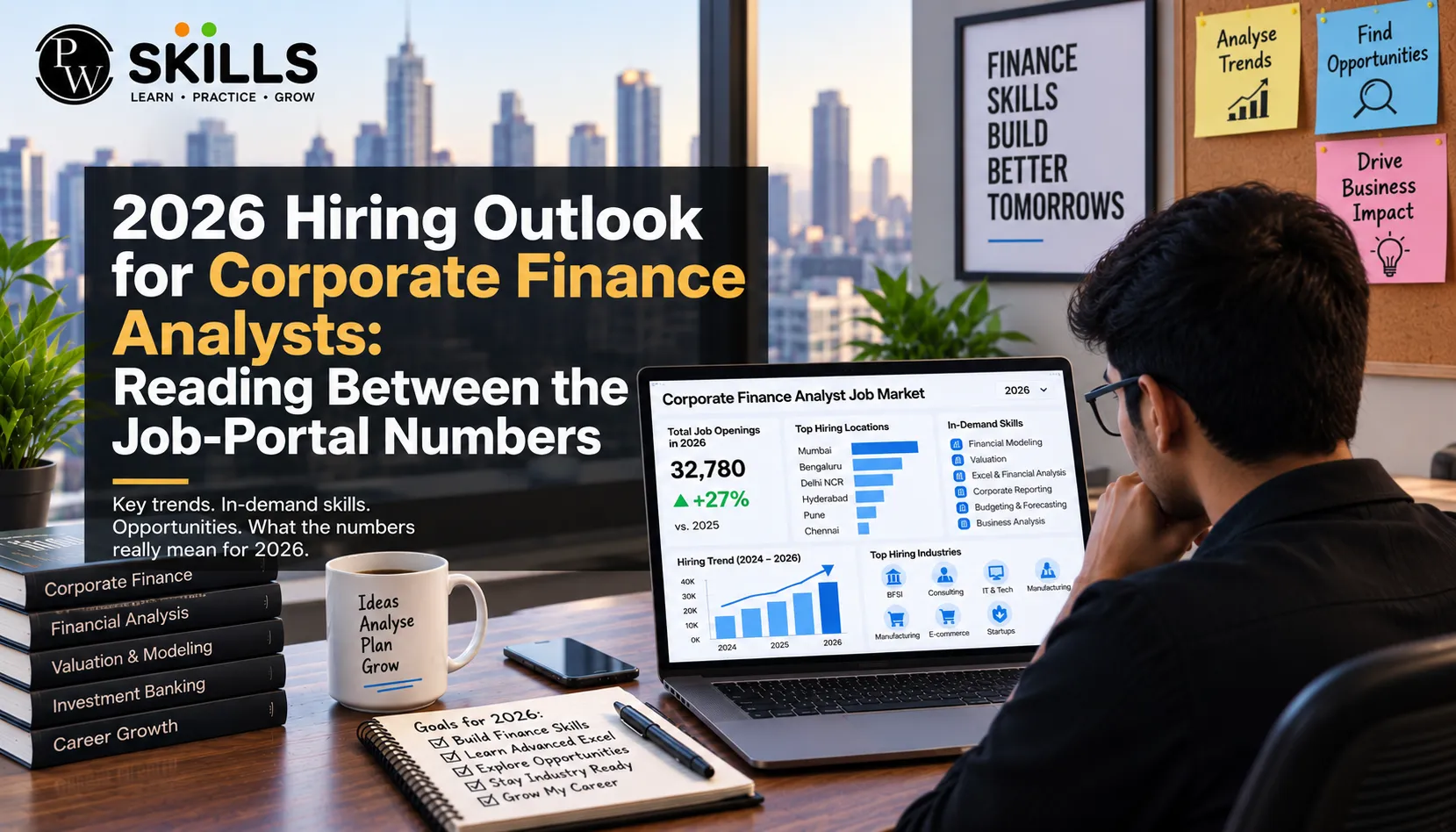
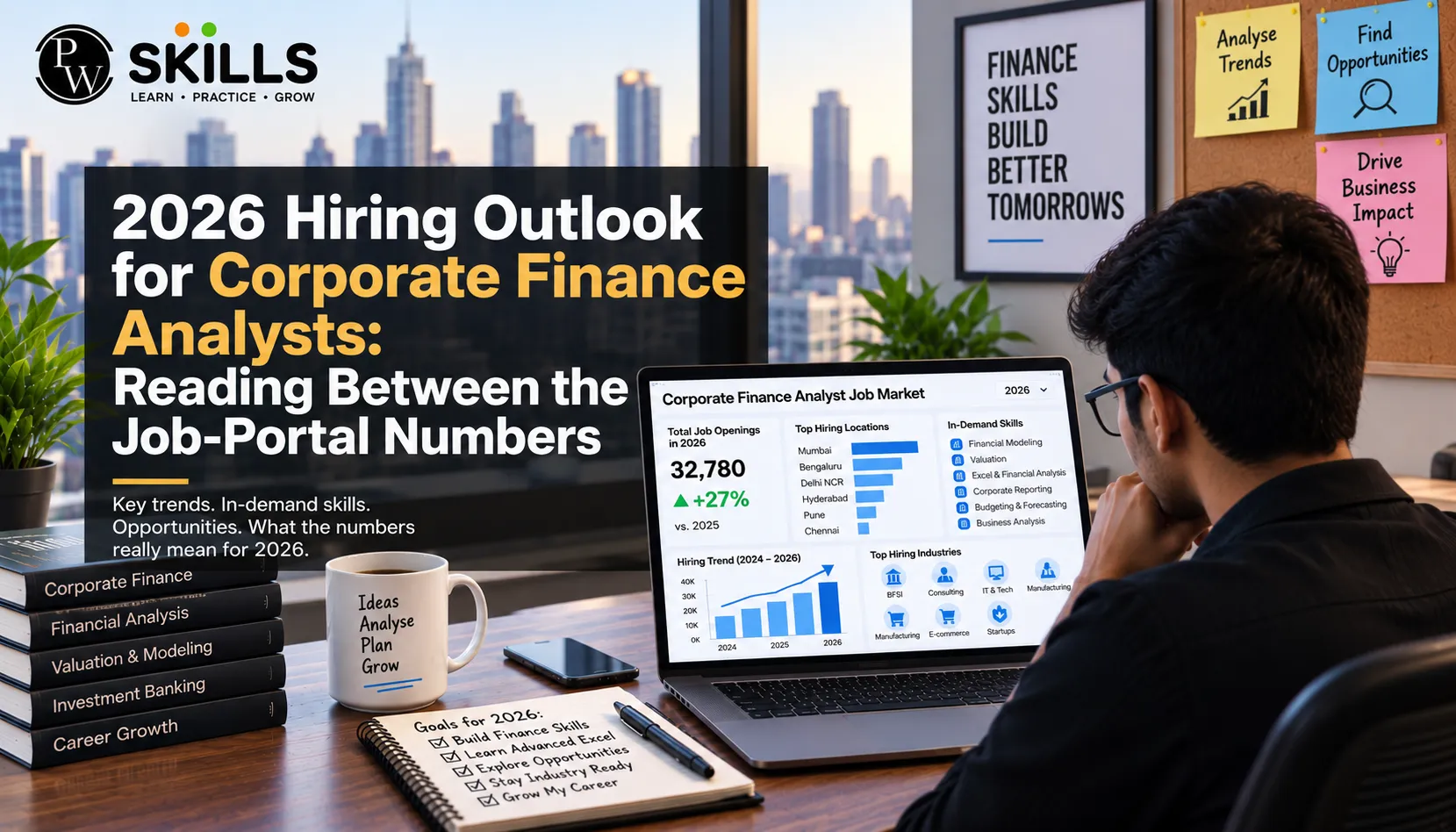
Entry-level finance job postings often paint a confusing picture. Heading into 2026, raw posting numbers suggest stable demand, yet candidates face intensive interviews and higher skill requirements. Organizations now expect strong finance skills along with advanced technical abilities.
A Financial Modeling with AI Course helps aspiring corporate finance analysts build skills in financial modeling, AI-based forecasting, automation, and data analysis. Understanding these hiring trends and core competencies can help candidates build a strong career in modern corporate finance.
What Is a Financial Modeling with AI Course?
Financial Modeling Course teaches learners how to use financial modeling methods along with AI and automation tools. It covers areas such as financial statements, DCF and LBO valuation, forecasting, data analysis, Python, and AI-based financial workflows. The course helps students and finance professionals build faster models, automate routine tasks, improve forecasting, and prepare for modern corporate finance and investment banking roles.
How Does a Financial Modeling with AI Course Prepare You for 2026 Finance Jobs?
Job portal volume alone can be misleading. While total listings for junior financial analysts appear steady, job descriptions reflect a structural change in role requirements. Employers have moved away from manual spreadsheet maintenance toward automated analysis, real-time forecast tracking, and strategic advisory tasks.
Evolution of the Finance Analyst Role
|
Traditional Role |
Modern Role |
|
Manual Data Entry |
Automated Pipelines |
|
Static Excel Spreadsheets |
Dynamic AI Dashboards |
|
Historical Reporting |
Predictive Analytics |
|
Basic Scenario Analysis |
Strategic Partnering |
Recent reports, including insights from the Deloitte India BFSI Outlook, indicate that financial institutions are prioritizing operational efficiency and technology-driven productivity. This shift alters how companies recruit and evaluate entry-level talent.
Core Shifts in Recruitment Expectations
-
Data Automation Capabilities: Hiring managers expect entry-level analysts to handle unstructured data and automate routine reporting workflows.
-
Broader Business Context: Companies want analysts who can explain market dynamics rather than just calculate ratios.
-
Higher Technical Standards: Basic familiarity with traditional software is now an entry baseline rather than a competitive differentiator.
Why Choose a Financial Modeling with AI Course?
As automation reshapes standard analytical tasks, taking a specialized Financial Modeling Course helps bridge the gap between traditional finance theory and practical tech application. Modern financial modeling requires building dynamic forecast engines that process large datasets efficiently.
Core Curriculum Integration Matrix
|
Financial Foundations |
AI & Automation Tools |
|
Integrated 3-Statement |
Machine Learning Scripts |
|
DCF & LBO Valuations |
Natural Language Prompts |
|
Capital Structure Design |
Automated Stress Testing |
Key Technical Competencies Developed
-
Automated Data Ingestion: Extracting unstructured data from public filings and earnings transcripts using intelligent scripts.
-
Predictive Revenue Modeling: Applying machine learning algorithms to historical sales data for more accurate forecast scenarios.
-
Dynamic Sensitivity Analysis: Running thousands of Monte Carlo simulations instantly using code-assisted modeling frameworks.
-
Enhanced Error Checking: Using generative intelligence models to audit complex formulas and catch logical anomalies before presentation.
Enrolling in a Financial Modeling Course helps professionals master these updated workflows, turning basic financial modeling into an interactive decision-support system.
How Does a Financial Modeling with AI Course Prepare You for Investment Banking Jobs?
Industry hiring updates regarding Financial Modeling with AI Course + Investment Banking Analyst (Entry-Level) Jobs News show that bulge-bracket investment banks and middle-market boutique firms are refining their junior hiring criteria. Deal teams need analysts who can perform under tight deadlines without spending hours on manual formatting or preliminary valuation checks.
What Deal Teams Require from New Hires
-
Rapid Pitch Deck Preparation: Translating financial insights into board-ready presentation decks quickly.
-
Advanced Valuation Capabilities: Building DCF, precedent transaction, and leveraged buyout (LBO) models with dynamic scenario switches.
-
Prompt Engineering for Research: Using targeted AI prompts to summarize industry trends and competitor profiles during initial deal origination.
Investment Banking Workflow Comparison
|
Task |
Traditional Method |
AI-Enhanced Method |
|
Comps Analysis |
4-6 Hours Manual |
30 Mins Automated |
|
Financial Spreading |
Manual Data Entry |
OCR & Script Parsing |
|
Scenario Testing |
2-3 Static Cases |
Dynamic Simulations |
Candidates who demonstrate strong core financial principles along with computational capabilities remain top contenders during campus recruitment and lateral hiring drives.
How Does a Financial Modeling with AI Course Match Finance Hiring Trends?
Understanding market context is crucial when navigating job portals and recruiter interviews. The Hiring-outlook-hook for current applicants is straightforward: hiring volume is becoming more specialized rather than simply expanding or contracting.
According to data points reflected in the Deloitte India BFSI Outlook, financial institutions continue to invest in digital infrastructure. This structural investment creates demand for analysts who act as a bridge between pure finance teams and quantitative technology groups.
Essential Skills for Modern Financial Analysts
|
Capability Area |
Traditional Expectation |
2026 Market Standard |
|
Financial Analysis |
Manual 3-statement modeling |
AI-assisted dynamic multi-scenario modeling |
|
Data Processing |
Standard Excel formulas |
Python/SQL + AI data cleaning pipelines |
|
Market Research |
Manual document review |
Automated semantic research and extraction |
|
Reporting |
Static PowerPoint decks |
Interactive dashboards with predictive feeds |
Adding structured practical training, such as a Financial Modeling Course, provides candidates with tangible project portfolios that prove their skills directly to recruiters.
How Does a Financial Modeling with AI Course Help You Get Corporate Finance Jobs?
To stand out in a selective hiring market, prospective analysts need a structured strategy focused on practical output and skill validation.
1. Master Core Financial Foundations: Build a solid baseline in accounting principles and valuation theory.
Ensure absolute clarity on 3-statement financial models, discounted cash flow (DCF) mechanics, working capital adjustments, and capital structure dynamics.
2. Integrate AI and Automation Tools: Apply technology directly to financial workflows.
Complete a dedicated Financial Modeling Course to learn how to incorporate automated scripts, language models, and predictive algorithms into standard financial analysis.
3. Build a Public Portfolio of Models: Demonstrate practical capability to hiring managers.
Construct complex valuation models for real-world companies. Upload your code scripts, dynamic spreadsheets, and executive summaries to GitHub or a personal portfolio site.
4. Track Sector Trends and Job Market News: Align your preparation with active hiring demands.
Follow Investment Banking Analyst (Entry-Level) Jobs News and sector reports like the Deloitte India BFSI Outlook to speak knowledgeably during technical and commercial interview rounds.





FAQs
What is the primary focus of a Financial Modeling with AI Course?
How are entry-level investment banking hiring standards changing in 2026?
What is the key takeaway from the latest Deloitte India BFSI Outlook regarding finance talent?
Can beginners enroll in a Financial Modeling with AI Course without prior coding experience?
How does understanding the hiring-outlook-hook help job seekers?





Get Free Counselling Today
and Clear up all your Doubts
 Live & recorded classes available at easeDashboard for progress trackingLakhs of practice questions


