

How Monitoring & incident response From DevOps and Cloud Computing Course Applies on the Job
 Hardik Gupta22 Aug, 2026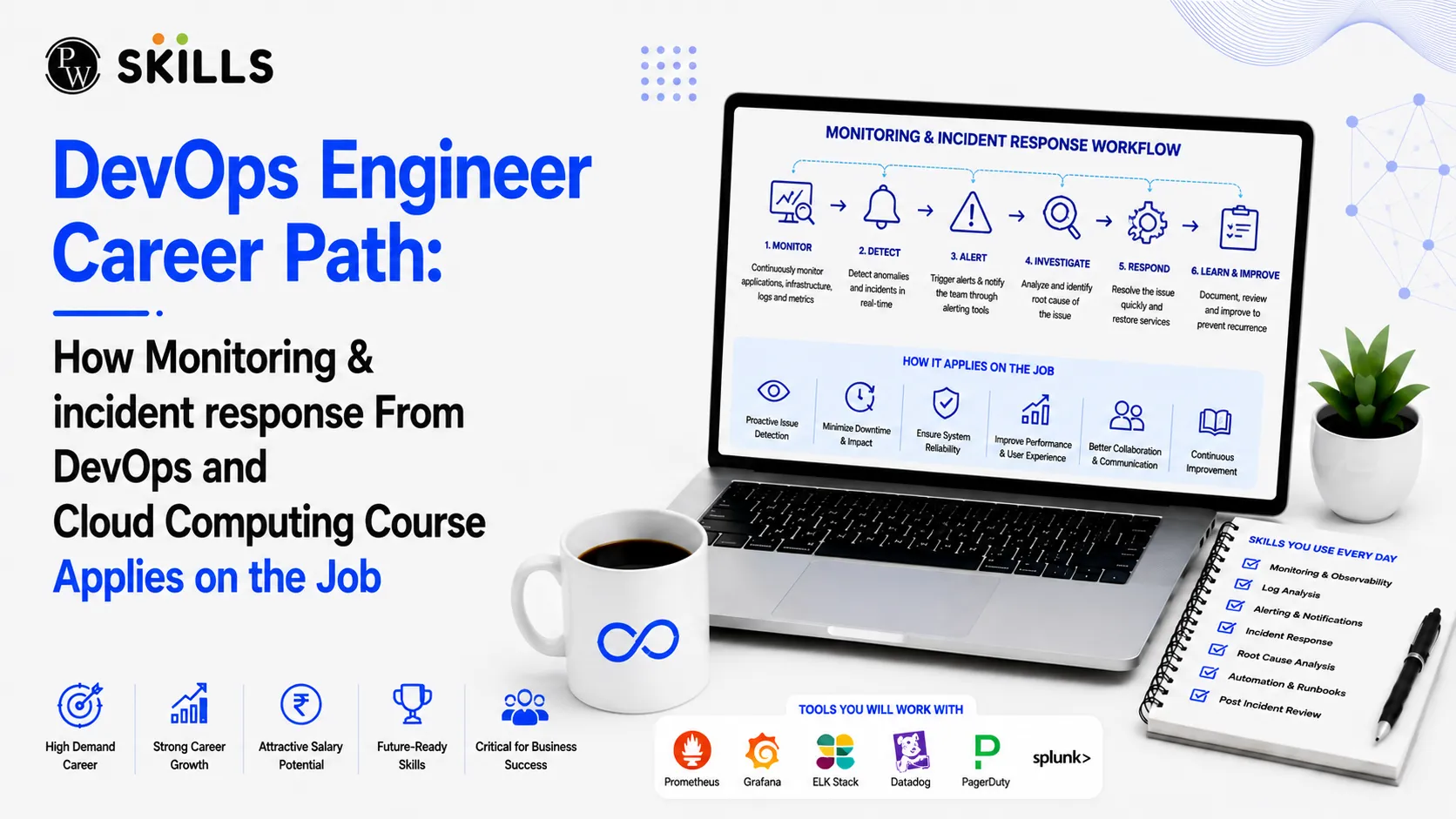
Monitoring and incident response are important skills for managing modern cloud systems. They help DevOps professionals track server performance, find issues, and restore services when problems occur. A DevOps and Cloud Computing Course gives learners practical knowledge of tools such as Linux, AWS, Docker, monitoring platforms, and CI/CD pipelines.
This training helps students understand how to check CPU and memory usage, read system logs, identify network problems, and respond to live incidents. With hands-on practice, learners can build the confidence needed to manage cloud environments, support smooth application deployment, reduce downtime, and prepare for roles such as DevOps and Cloud Engineer.
What is a DevOps and Cloud Computing Course?
A Cloud Computing and DevOps Course is an intensive, industry-aligned training program built to bridging software development with cloud operations. It equips learners with automated workflow practices, system monitoring capabilities, and infrastructure control tools. By mastering essential tools like Linux, Docker, AWS, and Nagios, candidates learn to maintain continuous integration and software reliability.
Engineering teams rely heavily on active logging and metric collection to keep production environments running without unexpected downtime. Software platforms require constant tracking of memory usage, network throughput, and load balances. Enrolling in a comprehensive Cloud Computing and DevOps Course provides students with hands-on practice in tracking server health, identifying security issues, and handling system bottlenecks effectively.
How DevOps and Cloud Computing Course Teaches Real Time Monitoring?
Production systems produce massive amounts of logs, metrics, and trace data every second. On the job, DevOps engineers use monitoring frameworks to track CPU usage, disk space, and network latency. Understanding system load and resource allocation ensures applications respond quickly during high-traffic events.
When you take a Cloud Computing and DevOps Course, you practice using monitoring tools to detect system anomalies before they impact end-users. Learning How to configure dashboards, monitor network traffic, and set threshold alerts helps engineers take proactive control of cloud health.
|
Monitoring Dimension |
System Metrics Tracked |
Engineering Objective |
|
Compute Health |
CPU usage, thread count, RAM consumption |
Prevent server overload and application crashes |
|
Network Performance |
Traffic flow, packet latency, firewall rules |
Maintain secure, low-latency connectivity |
|
Storage & I/O |
Disk read/write speeds, memory capacity |
Optimize database queries and asset loading |
|
System Load |
Active process count, execution bottlenecks |
Ensure ideal resource allocation across instances |
How DevOps and Cloud Computing Course Teaches Incident Response?
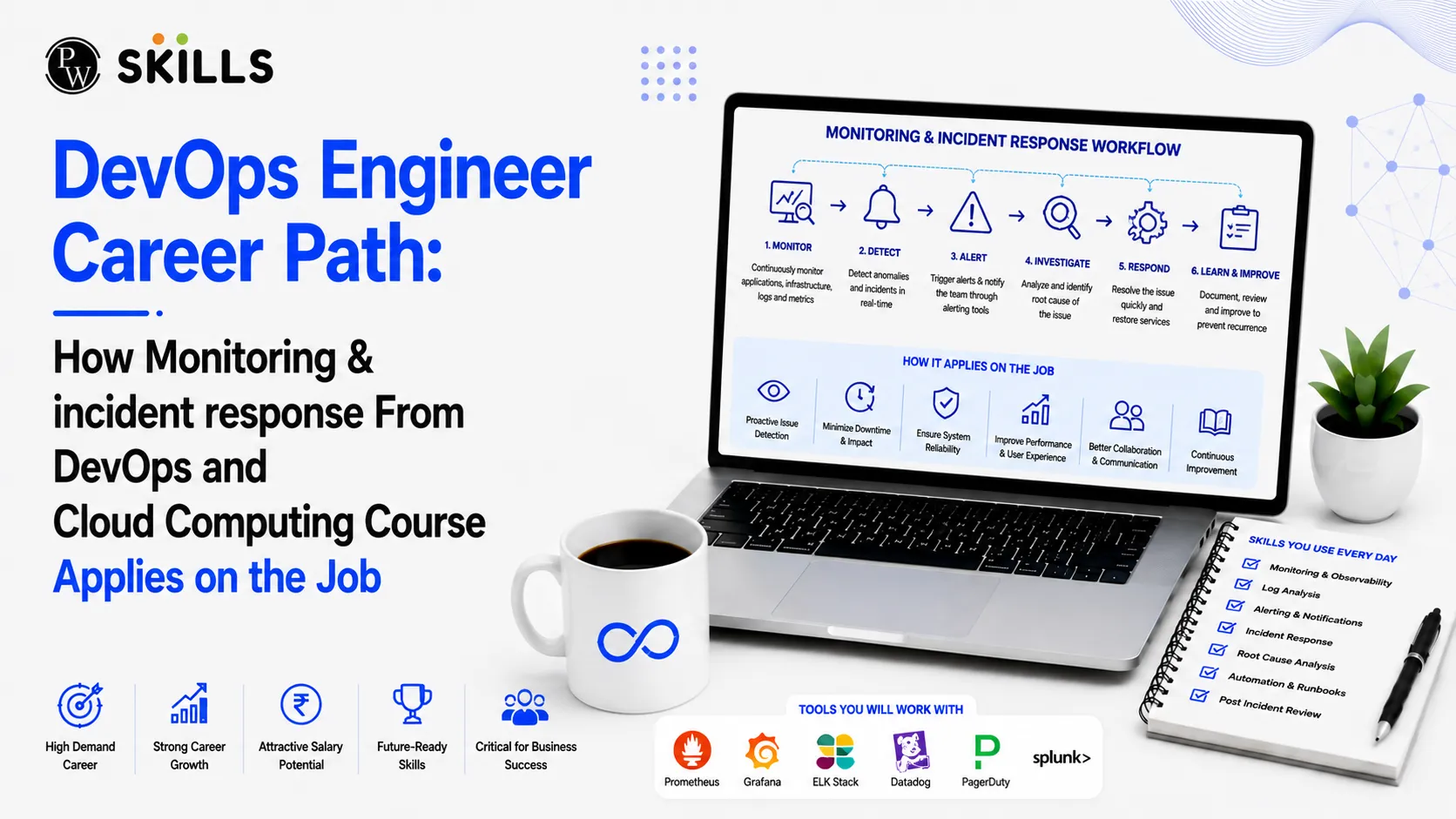
In active software management, system outages, application errors, and performance issues can happen at any time. Incident response is the structured process engineers use to detect, investigate, isolate, and fix these problems as quickly as possible. Professionals working in Cloud Engineer Jobs rely on clear incident response workflows to maintain system availability, meet service level agreements (SLAs), and reduce the impact of technical problems on users.
A dedicated Cloud Computing and DevOps Course prepares learners for real-world incidents through practical exercises and scenario-based labs. Students learn how to read system logs, monitor cloud resources, identify unusual network activity, and understand the possible causes of application failures. This practical experience helps them respond to incidents in a more organised way instead of trying random solutions during a system outage.
The incident response workflow generally follows four important steps:
-
Alert Generation: Automated monitoring tools detect problems such as a memory leak, sudden CPU increase, network failure, unusual traffic spike, or application error. The monitoring system then sends an alert to the responsible engineering team so the issue can be investigated quickly.
-
Issue Isolation: Engineers inspect server logs, application metrics, running processes, and network connections using Linux commands and cloud monitoring tools. They compare recent system changes with current performance data to identify the possible root cause of the incident.
-
Remediation & Patching: After identifying the problem, teams apply a suitable fix. This may include restarting a failed service, changing a configuration, increasing resources, applying a hotfix, or using automated rollback scripts through CI/CD pipelines to return the application to a stable version.
-
Post-Mortem Analysis: Once the service is restored, the team reviews what caused the incident and how it was handled. Engineers document the failure, identify areas for improvement, update monitoring rules, and adjust cloud infrastructure settings to reduce the chance of the same problem happening again.
How DevOps and Cloud Computing Course Teaches Cloud Deployment Monitoring?
Modern enterprise applications rely on automated pipelines for continuous code delivery. Every time a new feature goes live, automated tracking must verify that the environment remains stable. Mastering smooth Cloud deployment requires integrating monitoring frameworks directly into the deployment process.
Through a Cloud Computing and DevOps Course, students explore how automated testing and system metric tracking work together during a release. Integrating real-time logs with release automation ensures every Cloud deployment carries minimal risk.
Key Operational Integrations During Deployment
-
Automated Health Probes: Validating application responsiveness immediately following code releases.
-
Log Aggregation: Centralising system outputs to review warning signs during active updates.
-
Auto-Scaling Rules: Triggering additional cloud instances on AWS when traffic thresholds exceed standard levels.
-
Rollback Triggers: Instantly reverting problematic updates if system performance drops past safety metrics.
How DevOps and Cloud Computing Course Helps With Career Growth?
As cloud adoption increases globally, tech enterprises demand engineers who understand automation, system architecture, and operational monitoring. Completing a structured Cloud Computing and DevOps Course provides practical skill building through industry-aligned projects, system administration modules, and capstone labs.
Candidates who master monitoring techniques, Linux firewalls, memory management, and AWS services gain a clear advantage in the hiring market. Understanding system resilience opens pathways toward roles such as DevOps Engineer, Site Reliability Engineer (SRE), and Infrastructure Specialist across top technology firms.




FAQs
How does a DevOps and Cloud Computing Course prepare learners for Cloud Engineer Jobs?
How does a DevOps and Cloud Computing Course teach monitoring?
How does a DevOps and Cloud Computing Course teach Cloud deployment monitoring?
Why is incident response important for cloud engineers?
What monitoring tools can DevOps professionals learn?





Get Free Counselling Today
and Clear up all your Doubts
 Live & recorded classes available at easeDashboard for progress trackingLakhs of practice questions

