

Kanban Framework: Streamlining Workflow for Maximum Efficiency
Kanban Framework is based on Agile methodologies used in managing workflow, continuous improvement, collaboration and load balancing. Kanban is used to implement devOps and software development processes. Learn the difference between Scrum and Kanban and know which framework is best in agile practices in this article.
 Varun Saharawat30 Oct, 2025
Kanban Framework is a project management tool used to manage a software development project. As the software development processes are shifting to new methodologies of faster and more productive development the need for advanced tools and frameworks is higher than ever.
Kanban Framework can be used to manage the workflow in a project development environment due to its highly user-friendly interface and easy to understand functionalities. In this article, let us understand the role and impact of Kanban systems on project development and how Kanban is related to agile methodologies.
What is the Kanban System?
Kanban is an agile metric used to efficiently manage the processes and teams together starting from scratch. Tasks can be prioritized and classified using the Kanban system precisely. The Kanban System can streamline the workflow and increase the efficiency of important elements in business.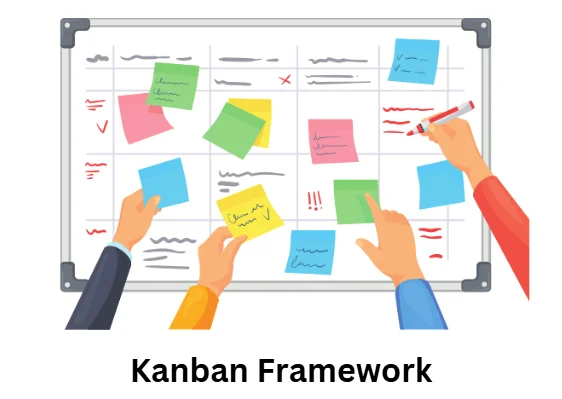 Kanban is a visual workflow management method that increases the productivity and efficiency of processes in an agile environment. This article, let us understand the working and uses of Kanban systems in agile methodologies.
Kanban Framework: Key Takeaways
- Kanban offers a complete framework for implementing devOps and agile development processes.
- Kanban framework focuses on real time collaboration, communication, teamwork, feedback loops, and continuous progress.
- A kanban board is used to visualize the workflow based on roles and teams.
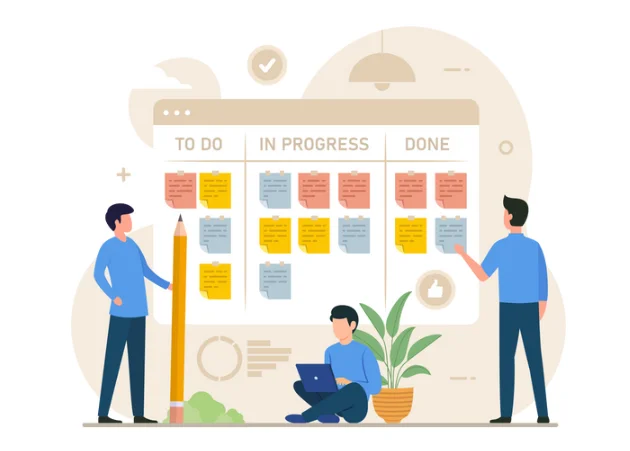
- The three steps used in the Kanban board are To do, In Progress, and Done.
- Kanban Cards represent an individual task entity with all descriptions of tasks such as time of completion, details, and more.
Key Working Principles Of the Kanban Framework
Kanban framework is based on agile practices and follows the principles used in agile development to implement effective and productive software development processes.-
- Workflow Management: The Kanban System is focused on managing the flow of work and process through the system making sure that all processes are completed before moving to the next stage.
- Visualization: Kanban lays more emphasis on visualization with the help of the Kanban board offering visualization through digital or physical methods.
- Implement Continuous Feedback: Kanban implements continuous feedback loops to make improvements in the software development process.
- Implement Collaboration: Kanban works on the agile principles and hence integrating collaboration on its working environment and making iterative progress in the processes.
- Explicit Policies: Kanban defines policies explicitly making everyone well aware of their roles, features available, and everything to handle all tasks of development without any conflict or bottlenecks.
How Are Kanban And Agile Methodologies Related?
Kanban and Agile methodologies are closely related despite one being a tool and the other being a process, they both focus on improving efficiency, workflow, collaboration, and adaptability in project management. Kanban is considered to be one of the subsets or part of the agile principles. Let us understand the relations between Agile and Kanban systems.| Agile Methodologies | Kanban Method |
| Agile is a broad project management that focuses on iterative development, collaboration, and improvement through continuous feedback. | Kanban is a tool that improves workflow visualization methods focusing on continuous improvement and flow management. |
| Both Agile and Kanban share common principles such as giving priority to customers, iterative and continuous improvements, transparency, and effective collaboration. | Kanban is a part of the agile principles. |
| Agile emphasizes more on sprints and iteration for progress. | Kanban is an extension of agile principles. |
| Agile methods are flexible and can improve through collaboration. | Kanban offers adaptability and can adjust to changing requirements like Agile methods. |
| Agile is a method of continuous improvement through teamwork and collaboration. | Kanban is a framework used to implement DevOps and Agile practices in software development. |
Benefits of Kanban Framework In Project Management
 There are many features that make the Kanban framework one of the best substitutes for agile methodologies. Let us know about some of the major benefits of kanban below.
-
- Workflow Visualization: Kanban uses a visual board to represent tasks and their progress through various workflow stages, such as To Do, In progress, and Done. The visualization in workflow helps identify bottlenecks, monitor task progress, and improve transparency in development across teams.
- Flexibility: Tasks in Kanban can be reprioritized or added to the workflow dynamically without disrupting the overall system. It ensures adaptability to the changing requirements of organizations.
- Work In Progress (WIP) Limits: The work in Progress limits in Kanban are used to restrict the limits that can be in progress at each stage of the workflow.
- Continuous Delivery: Unlike fixed methods like Scrum, Kanban supports continuous task delivery as soon as they are completed. It ensures eliminating any delays and ensures faster deployment of the applications and end product.
- Enhanced Productivity: Limiting work-in-progress (WIP) ensures that team members focus on a manageable number of tasks. It reduces multitasking, minimizes context switching, and increases overall productivity.
- Improved Collaboration: Team members can see all tasks on the board, fostering better communication and shared ownership of the work.
- Scalability: Kanban is scalable and works well for small teams as well as large, complex projects. This framework can easily be customized based on the project size and requirements.
- Continuous Improvement: Kanban regularly reviews processes through retrospective meetings which leads to incremental improvements in the processes and enhances team efficiency and effectiveness over time.
- Load Balance: Kanban does not require strict roles, ceremonies, or time-boxed events like Scrum. It allows teams to focus on work rather than rigid processes, reducing administrative overhead.
Differences Between Kanban Vs Scrum Framework
| Kanban Framework | Scrum Framework |
| Kanban is a workflow management method focused on continuous delivery and flow. | Scrum is an Agile framework with time-boxed iterations (sprints) for iterative development. |
| There are no fixed iterations and work is continuously delivered. | Work is divided into fixed-length iterations called sprints. |
| There are no predefined roles and team members collaborate as needed. | Some of the predefined roles are Scrum Master, Product Owner, and Development Team. |
| Workflow stages are visualized using a Kanban board with columns representing stages. | It uses a Sprint Backlog, a Product Backlog, and a Sprint Board to manage workflow. |
| Limits are explicitly defined to restrict the amount of WIP at each stage. | No explicit WIP limits is present in scrum and work is managed through the sprint backlog. |
| It provides continuous flow with tasks pulled dynamically based on capacity. | Time-boxed sprints with a set start and end date. |
| Allows changes to the scope at any time as tasks are continuously added and completed. | The scope is locked during the sprint, and changes are not allowed until the next sprint. |
| Kanban focuses on managing the flow and reducing bottlenecks. | Focuses on delivering a shippable product increment at the end of each sprint. |
| Kanban measures performance using cycle time, lead time, and WIP limits. | Scrum measures performance using velocity and burndown charts. |
| Highly flexible and adaptable to changing priorities. | It follows a structured approach with predefined events (e.g., sprint planning, review, retrospectives). |
| Kanban is suitable for ongoing processes or maintenance tasks with variable priorities. | Scrum is suitable for projects with clearly defined goals and deliverables in iterations. |
Three Stages of Kanban Workflow Visualization
The three important phases of Kanban Workflow visualization methods are given below.
1. To Do Stage
This stage contains tasks or work items that have been identified but not yet started. The tasks are completely defined and prioritise and work items are actionable and ready to be picked up at any moment. Teams conduct reviews and refine tasks to different processes clearly.2. Progress Stage
Tasks in this stage are actively being worked on by team members and used to represent ongoing work and highlights tasks currently consuming team resources. Work in Progress (WIP) limits are applied to prevent overloading in this stage. Priority is given to identify bottlenecks and delays in the processes if existing.3. Done Stage
This stage marks the completion and notifies the tasks have been completed. It serves as the final destination for all tasks and provide a clear measurable output. The tasks in this stage are considered complete and ready for delivery. The team ensures tasks meet the agreed-upon acceptance criteria before moving them here.Learn DevOps and Cloud Computing With PW Skills
Become a DevOps pro engineer with PW Skills DevOps and Cloud Computing Course. Learn advanced devOps tools like Ansible, Kubernetes, Jenkins, Terraform, Dockers, etc. Work on real world projects and get in-depth tutorials, practice exercises, assignments, and more under the supervision of expert mentors. Know more about our DevOps course only at pwskills.com.



🔥 Trending Blogs
Kanban Framework FAQs
Q1. What is the Kanban System?
Ans: Kanban is a tool which improves workflow visualization methods focusing on continuous improvement and flow management. Kanban offers adaptability and can adjust to changing requirements like Agile methods.
Q2. Are Agile and Kanban related?
Ans: Kanban is a part of Agile methodologies which offers continuous improvement, collaboration, teamwork and progress through frequent feedback loops. Both Agile and Kanban share common principles such as giving priority to customers, iterative and continuous improvements, transparency, and effective collaboration.
Q3. What are the backlog features in Kanban?
Ans: Kanban backlog features help to keep track of the processes and activities in making plans for the software project development.
Q4. How do Kanban roles differ from Scrum?
Ans: Kanban provides no predefined roles and team members collaborate as needed. While scrum offers predefined roles, such as Scrum Master, Product Owner, and Development Team.


Talk to a counsellorHave doubts? Our support team will be happy to assist you!



Get Free Counselling Today
and Clear up all your Doubts
Talk to Our Counsellor just by filling out the form.
Join 15 Million students on the app today!
 Live & recorded classes available at easeDashboard for progress trackingLakhs of practice questions

