

DevOps and Cloud Computing Course — Explainer Guide: Is This Career Path Right for You in 2026?
 Shivam Singh28 Oct, 2026
Modern software delivery is all about continuous deployment pipelines and cloud infrastructure rather than manual server provisioning. A DevOps and Cloud Computing Course is the perfect way for IT professionals and engineering graduates to learn how to build, scale and secure modern digital applications. Knowing what the key tools are, what the career paths are and what the day to day job actually involves will go a long way to helping you work out whether this is the right technical track for you.
DevOps and Cloud Computing Career Paths and Salary in 2026
Career opportunities in DevOps and cloud operations are all about infrastructure design, continuous deployment pipelines and system uptime. You can absolutely get a job in this space in a large enterprise software company, a fintech company or an e-commerce company by combining your cloud platform knowledge with your automation skills.
Candidates with hands on experience of deployment scripts, container registries and server config commands are in a strong position to command the full salary packages in the major metro areas.
|
Job Role & Experience Level |
Primary Focus & Operational Area |
Standard Salary Range (P.A.) |
|
Associate DevOps Engineer (Entry Level) |
CI/CD pipeline maintenance, basic script automation, and build monitoring |
₹5.0 Lakhs - ₹7.5 Lakhs |
|
Cloud Infrastructure Engineer |
Virtual network design, server auto-scaling, and cloud resource management |
₹7.0 Lakhs - ₹11.0 Lakhs |
|
Site Reliability Engineer (Mid Level) |
System uptime monitoring, incident response, and performance tuning |
₹10.0 Lakhs - ₹16.0 Lakhs |
|
Senior DevOps & Cloud Architect |
Multi-cloud architecture, security governance, and enterprise infrastructure automation |
₹18.0 Lakhs - ₹28.0 Lakhs |
Having the hands on technical certifications alongside real world project experience will go a long way to helping someone progress into senior architectural roles and into leadership positions.
DevOps and Cloud Computing Course Skills for Site Reliability Engineer Jobs
Bridging software engineering with cloud operations opens direct pathways to high-demand technical roles. Pursuing a DevOps and Cloud Computing Course + Site Reliability Engineer Jobs curriculum equips professionals with the systems engineering skills needed to keep large-scale cloud applications running smoothly without unexpected downtime.
Site reliability engineers (SREs) take a software development approach to operational problems, replacing the old model of manual system management with scripts and a suite of monitoring tools.
-
Establishing Service Level Objectives (SLOs) and Service Level Indicators (SLIs) to monitor system health and performance against defined thresholds.
-
Build automated recovery workflows to deal with server outages without any human involvement during off-peak hours.
-
Carry out post-moratem reviews to identify system weaknesses and prevent outages in production environments from recurring.
-
Managing multi-region database replication to ensure business continuity and data integrity in the event of a platform failure.
Building a solid understanding of system telemetry and error budgeting is the key to being able to effectively manage the enterprise applications that we're all responsible for.
Who Should Enroll in a DevOps and Cloud Computing Course?
Understanding DevOps and Cloud Computing Course + Who benefits most helps aspiring specialists choose the right training path based on their current background and technical experience.
While some prior coding or system administration experience would be an advantage, the structured learning modules are sufficient to enable people from a wide range of technical backgrounds to move into cloud engineering.
-
Software Developers: Engineers who want to automate application deployment pipelines and have a good understanding of production hosting environments.
-
System Administrators: IT staff looking to upgrade traditional physical server management skills to cloud-native platforms and containerized architectures.
-
Recent Engineering Graduates: Computer science and IT graduates aiming to build specialized skills in modern infrastructure tools before entering the job market.
-
QA & Automation Testers: Quality assurance engineers wanting to integrate automated testing scripts directly into continuous deployment pipelines.
Matching the structured training with hands-on lab exercises enables the candidate to build up the technical portfolio that will allow them to demonstrate job readiness to the technical recruiters.
DevOps and Cloud Computing Course and Infrastructure Automation
Modern cloud environments require dynamic resource allocation rather than static server setups. Learnt through a DevOps and Cloud Computing Course + Infrastructure Automation training track, Infrastructure as Code (IaC) enables engineers to define servers, networks, and databases using declarative code files.
Using config management tools enables the ops team to deploy consistent application environments across dev, test and production without the risk of manual configuration errors.
-
Writing reusable templates using tools such as Terraform or CloudFormation to automate the provisioning of cloud infrastructure.
-
Managing containerised microservices using Docker and Kubernetes to achieve consistent deployment across all environments.
-
Standardising security configurations across our server fleets via configuration management tools (Ansible, Chef etc).
-
Eliminate manual config drift between staging and production in the cloud to ensure predictable deployments.
Automating the deployment infrastructure reduces release errors, speeds up deployment and reduces the operational overhead for the enterprise tech teams.
Tools to Learn in a DevOps and Cloud Computing Course
Modern DevOps roles require a combination of cloud platform knowledge, automation, and monitoring skills. The AWS/Microsoft/Google Cloud Skills Report can provide broader context on evolving technology skills and help learners understand why continuous upskilling matters as cloud environments develop.
You need to be hands on with the modern toolchain in order to learn it. That means you need to be familiar with version control, container engines, orchestration platforms and monitoring. A good technical programme will cover the tools that enable the Dev and Ops teams to work together effectively.
Candidates should be focusing on practical proficiency in the various aspects of version control, automated build servers and infrastructure monitoring dashboards.
-
Version Control & Collaboration: Using Git and GitHub or GitLab for source code management and collaborative pull request workflows.
-
Continuous Integration Servers: Configuring Jenkins, GitHub Actions, or GitLab CI to automate code compilation and test execution.
-
Containerization & Orchestration: Utilizing Docker for packaging applications and Kubernetes for managing container clusters at scale.
-
Monitoring & Observability: Implementing Prometheus, Grafana, and ELK stack solutions to track application performance metrics in real time.
The constant, hands-on exposure to tools that are widely used in the industry means that the candidates can build strong pipelines that can handle workloads at the enterprise level.
Building a Job-Ready Portfolio with this Course
To make the transition to a DevOps or cloud engineering role, you need more than just theory. Recruiters want to see that you have hands-on experience. Having a good portfolio of real-world projects helps bridge the gap between what you learn in the classroom and what you do when you get a job.
Candidates should document their deployment projects, infrastructure scripts, and architecture diagrams to showcase their technical capabilities during interviews.
-
Deploying a Three-Tier Application: Host a sample web application on AWS or Azure using containerized services and managed databases.
-
Automating Infrastructure Setup: Write Terraform scripts to provision a complete virtual private cloud (VPC) with public and private subnets.
-
Building a Full CI/CD Pipeline: Set up automated testing and deployment workflows that trigger whenever code is pushed to a repository.
-
Setting Up System Alerts: Configure monitoring dashboards and automated email alerts for high CPU usage or application error spikes.
Presenting these completed projects through a professional GitHub repository gives hiring managers tangible evidence of your hands-on problem-solving skills.




FAQs
Do candidates need extensive coding experience to start a DevOps career?
What is the difference between Cloud Computing and DevOps?
Which cloud platforms are most valuable for entry-level candidates to learn?
How long does it typically take to transition into an entry-level DevOps role?




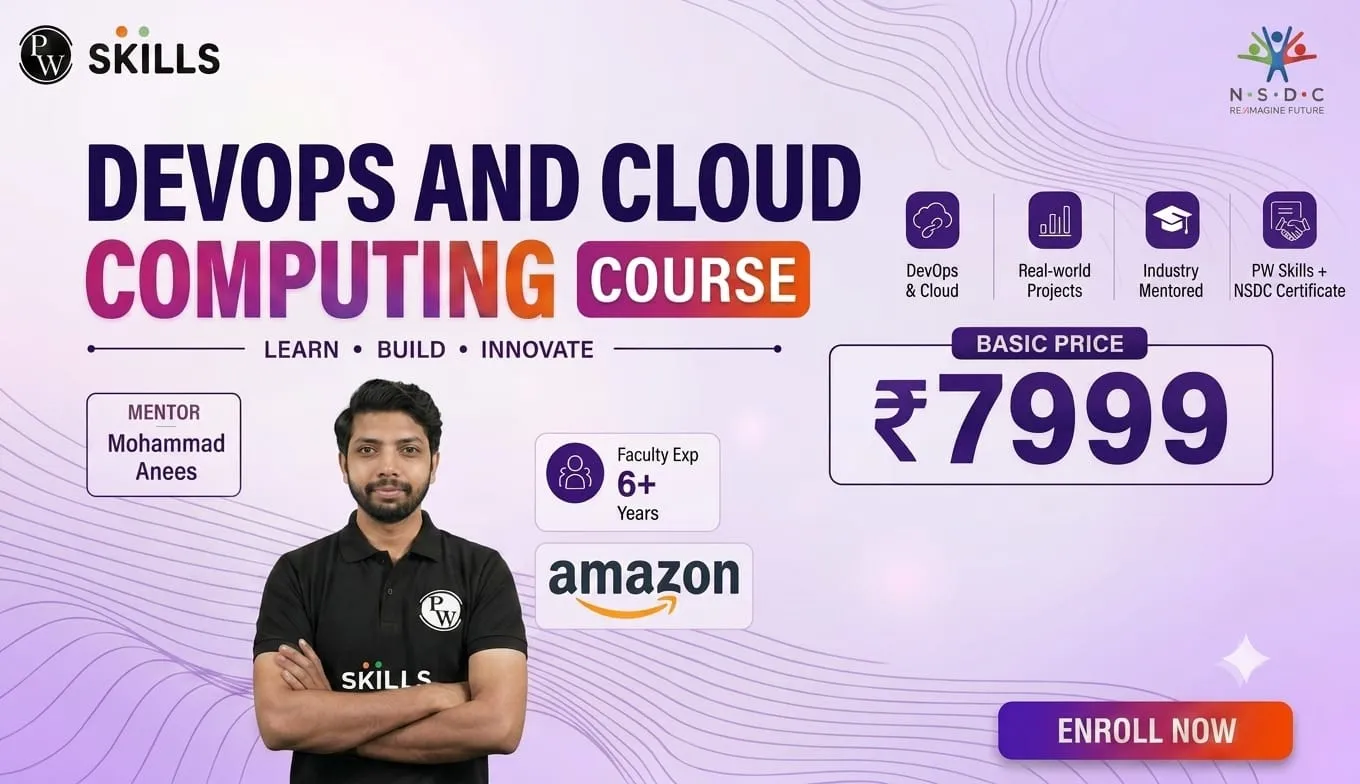

Get Free Counselling Today
and Clear up all your Doubts
 Live & recorded classes available at easeDashboard for progress trackingLakhs of practice questions


