

How Generative AI Is Changing Predictive Analytics Projects
 Hardik Gupta10 Jul, 2026
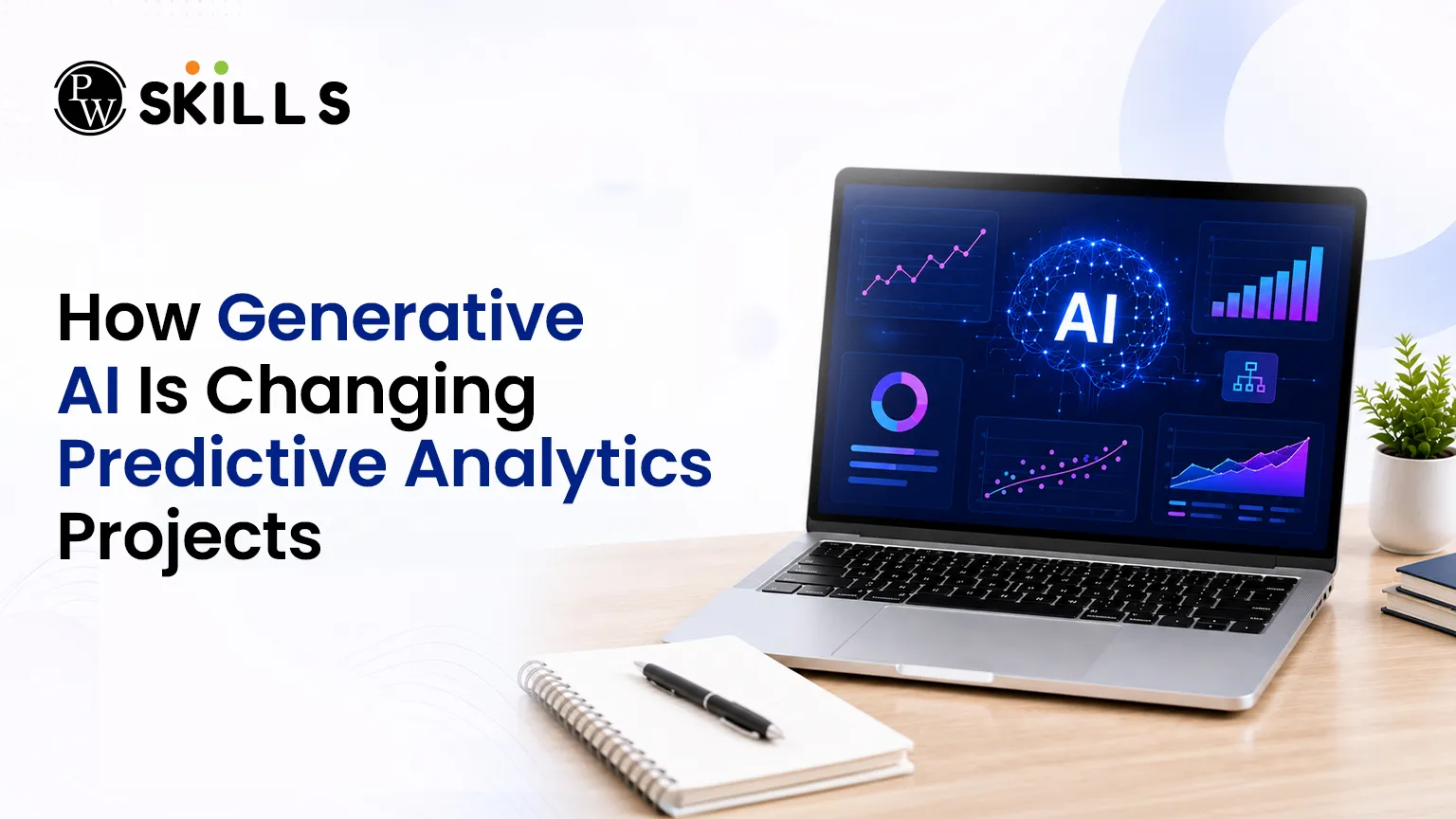
Traditional predictive models often struggle with incomplete data, manual workflows, and limited forecasting accuracy. Generative AI in Predictive Analytics addresses these challenges by using advanced AI models to generate insights, improve data quality, and simulate future business scenarios. This article explores how generative AI is transforming predictive analytics into a faster, more accurate, and intelligent decision-making process.
How Generative AI in Predictive Analytics is Changing
The integration of Generative AI in predictive analytics bridges the gap between structured historical evidence and adaptive contextual intelligence. Standard analytical procedures rely heavily on historical metrics to project a single-point estimate. While effective for stable conditions, this approach struggles when dealing with unprecedented market shifts, global supply blockages, or newly established business departments.
These tools don’t merely process historic trends, they actively contextualise data patterns. They are valuable in that they take unstructured inputs such as client chat transcripts, compliance documents and support issues and convert those text characteristics into quantitative measurements for predictive analytics.
|
Analytical Attribute |
Traditional Predictive Modeling |
Generative AI-Enhanced Analytics |
|
Data Inputs |
Structured numerical databases |
Multimodal inputs (text, audio, code, numbers) |
|
Output Type |
Single-point metric forecasts |
Probabilistic scenario variations |
|
Query Interface |
Specialized SQL or BI tools |
Conversational natural language |
|
Handling Data Gaps |
Basic mean or median replacement |
High-fidelity synthetic data generation |
How Generative AI Improves Data Preparation
One of the largest roadblocks in traditional AI analytics projects is the time consumed during data preparation. Analysts frequently spend hours cleaning incomplete records or adjusting imbalanced datasets before any actual forecasting can happen.
[Raw/Imbalanced Datasets]
│
▼
[Generative AI Synthesis Layer] ────► (Contextual Inference & Synthetic Generation)
│
▼
[Balanced, High-Fidelity Data] ────► [Predictive Analytics Training Engine]
Synthetic Data Generation for Rare Anomaly Trapping
A major limitation in predictive modeling is the lack of real-world training instances for rare events, such as digital fraud or component failures. Generative models construct completely new synthetic datasets that mimic the statistical qualities of live operational records without exposing real sensitive information. This ensures compliance with privacy mandates while offering balanced training environments.
Contextual Data Cleansing and Imputation
Traditional data workflows handle missing cells via basic mathematical averaging, which often dilutes variance and distorts final outcomes. Advanced generative layers read the contextual patterns within neighboring entries to fill missing values accurately, preserving structural trends across complex datasets.
Also Check: AI and Predictive Analytics: Definition, Examples, Tools, Function, and More
Scenario Simulation with Generative AI
Traditional forecasting workflows often rely on standard statistical simulations, which struggle to account for multi-variable real-world disruptions. Generative AI alters this process by simulating vast, intricate operational futures based on varying structural parameters.
-
Supply Chain Optimization: Simulating geopolitical bottlenecks or shipping lane stalls, allowing models to calculate the downstream impacts on local inventory timelines.
-
Financial Strategy Planning: Creating synthetic economic downturns to see how macroeconomic swings might alter corporate cash flows.
-
Operational Risk Management: Testing security frameworks against simulated digital attacks to isolate system vulnerabilities before they are exploited.
This combined operational approach allows predictive algorithms to process extreme edge cases, lowering the likelihood of model failure during real-world crises.
Making Predictive Analytics Easier to Understand
A long-standing criticism of advanced machine learning applications is their "black box" architecture. Complex neural layers frequently provide highly accurate predictions without explaining the underlying reasoning, making executive sign-off difficult.
Generative tools fix this by translating raw feature weights and numerical correlations into natural language summaries. Business users can ask questions directly through conversational text interfaces, receiving immediate answers regarding why a specific forecast was generated.
[Complex Predictive Outputs] ──► [Generative LLM Translation] ──► [Clear Narrative Reports]
This democratization of analytical systems ensures that non-technical leaders across human resources, marketing, and operations can verify strategic outcomes without writing SQL queries.
Generative AI in Predictive Analytics Use Cases
The adoption of Generative AI in Predictive Analytics is expanding across industries as organizations seek faster, more accurate forecasting and data-driven decision-making. Rather than relying solely on historical datasets, businesses are combining predictive models with generative AI to simulate future scenarios, identify hidden patterns, and respond proactively to changing market conditions.
In healthcare, predictive analytics powered by generative AI helps forecast patient admissions, optimize hospital staffing, and identify individuals at risk of developing chronic diseases. Financial institutions use these models to strengthen fraud detection, estimate credit risk, and simulate economic fluctuations before making investment decisions. Retailers leverage predictive analytics to forecast customer demand, optimize inventory levels, and deliver personalized product recommendations based on changing consumer behavior.
Manufacturing businesses are adopting generative AI to enhance predictive maintenance by seeing equipment issues before they happen. Organisations can plan maintenance in advance rather than waiting for unexpected problems, thus minimising downtime and operational expenses. Logistics companies also employ predictive analytics and AI-generated simulations to determine the best delivery routes, predict supply chain bottlenecks and increase warehouse productivity during times of seasonal demand.
Marketing teams are using these technologies as well. Generative AI can analyse customer interactions across channels to forecast campaign performance, identify high-value customer segments and offer personalised content strategies. This data allows companies to more efficiently spend marketing dollars and improve client engagement and conversion rates.
Enterprises are increasing their spend in AI-driven analytics. The combination of predictive analytics and generative AI is becoming a strategic advantage. Organisations that can predict future outcomes, test multiple business scenarios and act on information created by AI are better positioned to increase operational efficiency, minimise risk and make faster and more informed decisions.




FAQs
How does generative AI in predictive analytics improve data forecasting?
What are the main machine learning applications used for synthetic data creation?
Can business users manage predictive analytics pipelines without technical code skills?
How does generative AI mitigate risks within enterprise forecasting projects?
Does the use of synthetic data compromise data compliance or consumer privacy?






Get Free Counselling Today
and Clear up all your Doubts
 Live & recorded classes available at easeDashboard for progress trackingLakhs of practice questions

