

The 7 Data Science Skills Recruiters Check Before Hiring
 Shivam Singh10 Jul, 2026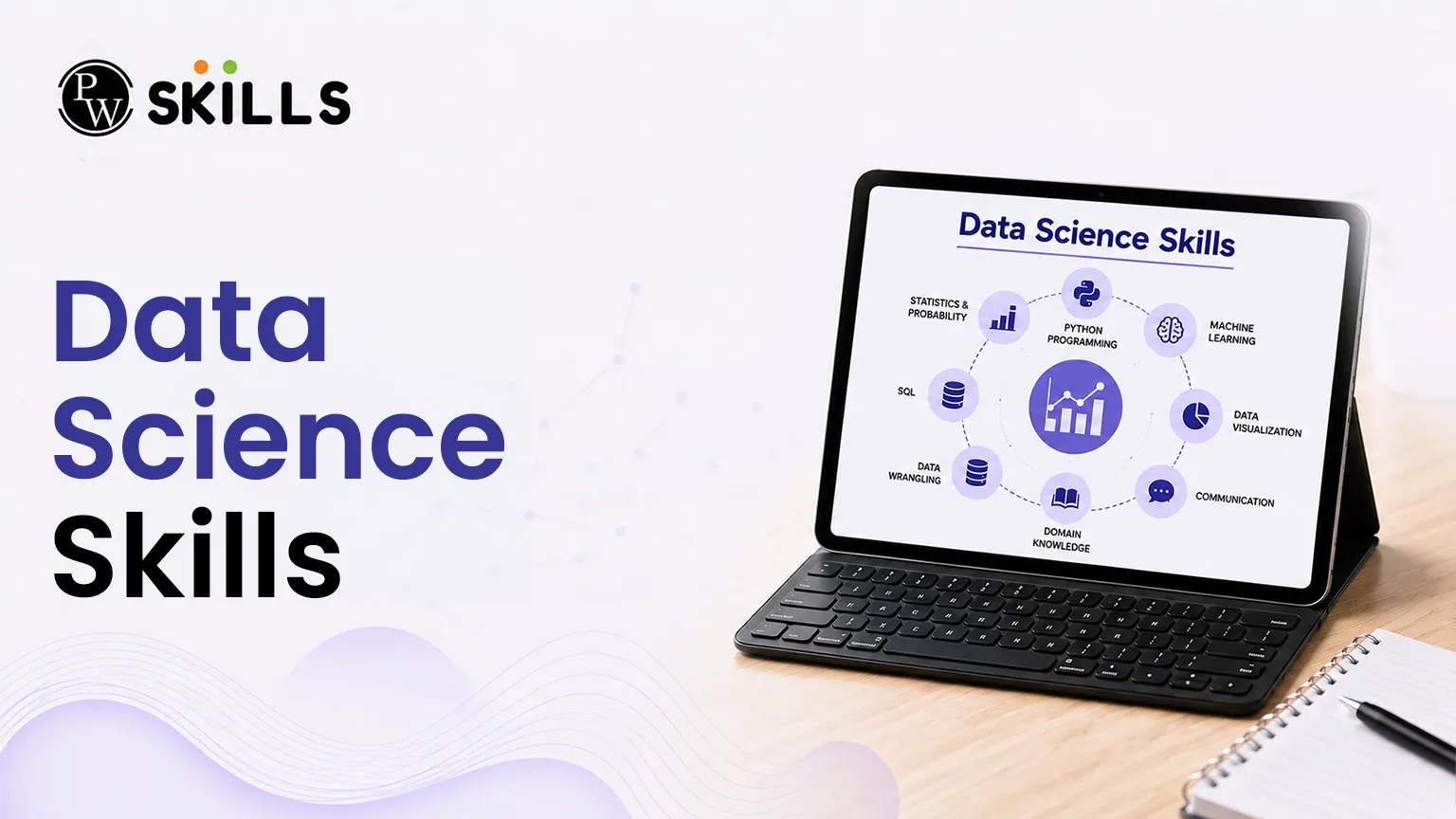
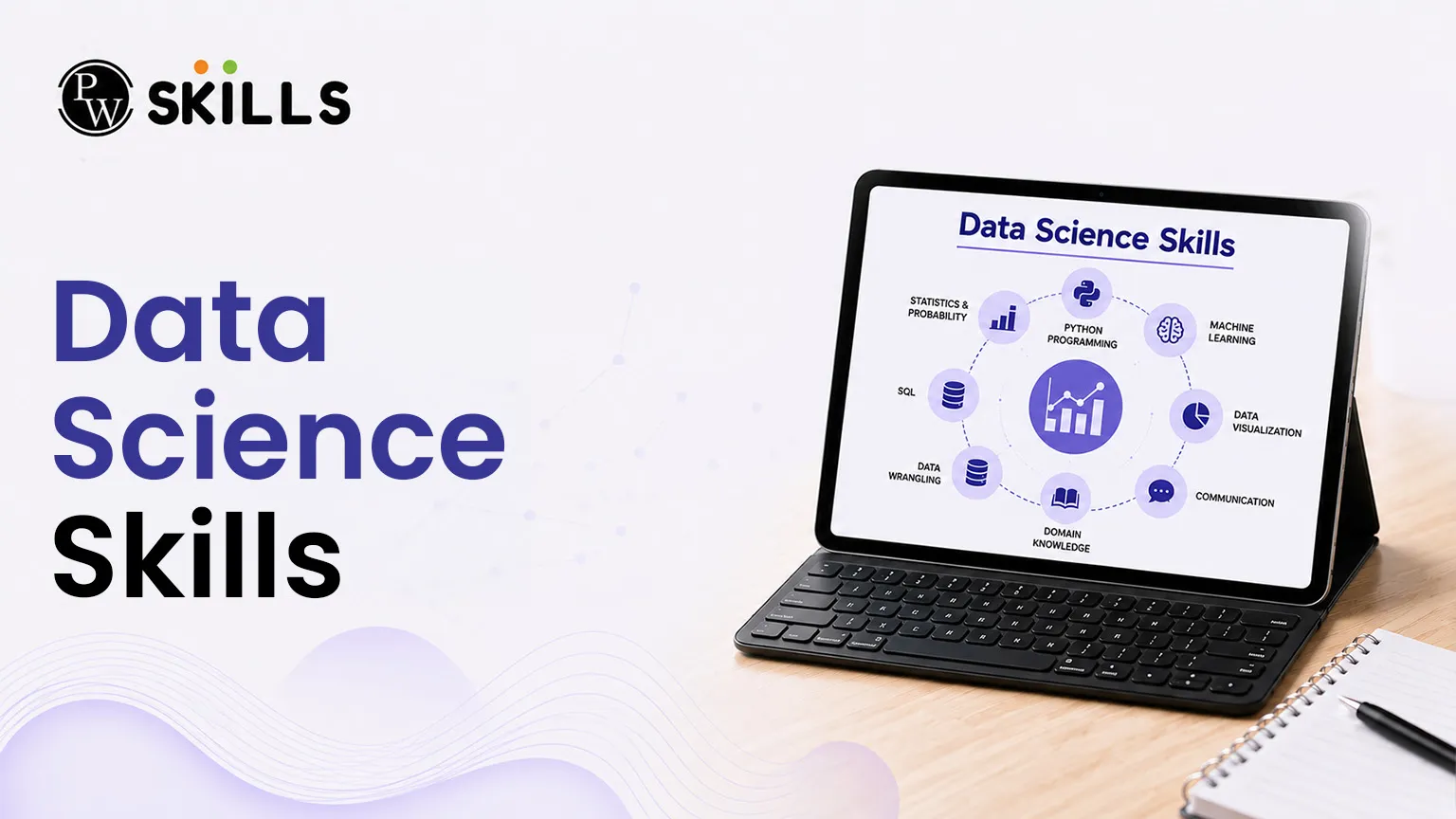
The growing volume of corporate information has transformed the global corporate market into a data-driven ecosystem. Unpacking specific Data Science Skills helps you apply theoretical knowledge in industry settings
This comprehensive article covers the core technical competencies, business frameworks, and practical methods required to satisfy shifting recruiter expectations and stand out in a competitive marketplace.
What are Data Science Skills?
The modern employment landscape views data professionals as versatile assets capable of extracting tangible value from chaotic information sources. As big data expands globally, organizations find themselves facing a paradox: an overwhelming amount of raw data alongside a severe shortage of qualified technical specialists. Candidates must present a cohesive blend of technical proficiency and business acumen to bridge this gap.
Developing well-rounded Data Science Skills directly addresses this shortage by matching technical capabilities with strategic corporate goals. Recruiters do not look for individuals who simply write isolated scripts. They search for candidates who combine structural programming with real-world problem-solving. Balancing these exact capabilities helps applicants navigate tough hiring pipelines and align with modern expectations.
Main Data Science Skills You Need to Know
The technical evaluation forms the bedrock of any technical interview process. Hiring managers look closely at specific operational abilities to confirm that a candidate can handle real-world deployment challenges immediately upon joining a team.
1. Advanced Programming Proficiency
Writing clean, production-ready code remains a fundamental element of everyday analytics workflows. Recruiters do not require fluency in every existing programming language, but they expect complete mastery of one central environment.
-
Python Integration: Python stands as a major tool in corporate stacks because of its clean syntax and versatile environment. Key libraries like NumPy and Pandas handle data cleaning and structural manipulation, while Matplotlib and Seaborn power clear visual outputs.
-
The R Ecosystem: Widely utilized in research circles and financial institutions, R offers deep statistical environments. The Tidyverse collection—including packages like ggplot2 and tidyr—remains highly valued for scientific calculations.
-
Workflow Coordination: True mastery involves professional code management. Familiarity with Git version control and GitHub repositories allows multiple developers to build features without disrupting production environments.
2. Relational and Non-Relational Database Architecture
Data rarely sits inside clean text files. Organizations store information across vast distributed networks, making database communication a critical skill for daily workflows.
-
Structured Query Language (SQL): SQL serves as the foundational standard for communicating with relational databases. Professionals use specific commands to filter, join, and organize complex relational tables.
-
NoSQL Environments: Unstructured data streams—such as live social feeds or log files—defy standard row-and-column formats. Knowing how to navigate NoSQL options like MongoDB, Cassandra, or Neo4j helps developers store and extract unstructured formats cleanly.
Relational Data (SQL) ---> Structured tables with fixed rows and columns
Unstructured Data (NoSQL) ---> Flexible document stores, graphs, and live streams
3. Applied Mathematics and Statistical Modelling
Running algorithms without understanding their mathematical foundations often leads to skewed models and false business metrics. A solid foundation in core math ensures long-term analytical accuracy.
-
Core Mathematical Concepts: Daily model tuning relies heavily on linear algebra, calculus, and probability frameworks.
-
Statistical Operations: Applying regression techniques and Bayesian theory correctly allows teams to validate experimental results and build predictive systems that match actual business conditions.
4. Advanced Machine Learning and Generative AI Implementation
The rise of automated computing has changed traditional corporate operations. Engineering pipelines now require advanced algorithmic applications alongside classic statistics.
-
Traditional Learning Models: Teams expect deep familiarity with core algorithms, including linear regressions, Naive Bayes, classification trees (CART), and random forests.
-
Modern Generative Frameworks: Modern development includes building production systems with Large Language Models (LLMs), LangChain, and vector databases to create automated workflows like Retrieval-Augmented Generation (RAG).
5. Practical Data Visualization
Complex datasets must be translated into clear visual formats to guide executive decisions.
-
Interactive Visual Design: Using Python or R plotting libraries helps transform complex findings into clear, interpretable visual representations.
-
Business Intelligence Software: Working with enterprise platforms like Tableau and Power BI enables analytics teams to deliver self-service tracking tools directly to operational departments.
|
Category |
Primary Tools |
Core Utility |
|
Languages |
Python, R |
Structural scripting and mathematical model development |
|
Databases |
SQL, MongoDB |
Information extraction, storage, and architecture |
|
AI Systems |
TensorFlow, LangChain |
Advanced automation, neural networks, and LLM orchestration |
|
Visuals |
Power BI, Tableau |
Converting raw analytical outputs into business insights |
Read In Detail - Data Science Introduction, Future, Scope, and Career
Essential Data Science Skills for Career Growth
Excellent coding skills lose their value if an engineer cannot align their technical outputs with the overall commercial direction of their company. Leading organizations prioritize soft skills to ensure engineering teams communicate effectively with executive leadership.
1. Commercial Acumen and Domain Context
True business acumen means looking past the code to understand the underlying financial factors of your industry.
-
Contextual Interpretation: Data points only reveal their true value when analyzed through a specific industry lens, whether in finance, logistics, or healthcare.
-
Strategic Alignment: Experienced professionals craft data experiments that target specific business outcomes, such as lowering customer churn or identifying supply chain bottlenecks.
2. High-Impact Communication and Data Storytelling
Technical teams must communicate easily with non-technical stakeholders to drive organizational change.
-
Translating Complexity: Data storytelling involves translating complex metrics into actionable insights that corporate leaders can easily implement.
-
Stakeholder Interaction: Presenting clean summaries rather than raw code builds trust across separate corporate departments.
3. Structural Data Ethics and Awareness
Modern data collection requires strict compliance with international security standards and consumer privacy laws.
-
Ethical Frameworks: Teams must actively audit historical datasets to find and remove algorithmic bias, ensuring fair automated decisions.
-
Privacy Compliance: Respecting user data boundaries and compliance standards protects brands from legal risks and maintains consumer trust.
How to Build Data Science Skills Through Real Projects?
The core rule of any successful job search is providing undeniable proof of your technical abilities. Building a comprehensive project portfolio remains the most effective way for candidates to demonstrate their skills to potential employers.
Raw Data Collection -> Structural Data Cleaning -> Algorithmic Processing -> Clear Insights
Building an Authentic Portfolio Pipeline
A portfolio should focus on solving practical problems rather than repeating basic online tutorials.
-
Handling Unstructured Inputs: Collect raw data via public web APIs, clean it using regular expressions, and store it inside a structured SQL database.
-
Real-World Modeling: Build an end-to-end machine learning system that cleans dirty text inputs, evaluates performance metrics, and deploys via a lightweight web framework like Flask or FastAPI.
-
Open Collaboration: Hosting clean, well-documented code on GitHub allows hiring managers to quickly assess your technical development habits.
Strategic Educational Programs
Self-directed study provides an excellent foundation, but a structured curriculum can accelerate your transition into a professional role. The Data Science With Generative AI Course by PW Skills provides an 8-month training pathway designed to bridge the gap between foundational data analytics and advanced automated engineering.
The curriculum covers essential tools like Excel, SQL, and Python before advancing to complex subjects such as MLOps, deep learning, and Large Language Model evaluation. By working through production-level case studies, students build a job-ready portfolio that aligns with modern hiring requirements.




Data Science Skills FAQs
What are the fundamental data science skills needed to secure entry-level data science jobs?
How do recruiter expectations vary between data analysts and data scientists?
Which programming languages are most valuable for building core skills for data scientist roles?
How can candidates demonstrate practical data science skills without prior corporate experience?
Why are machine learning and generative AI becoming standard skills for data scientist applicants?





Get Free Counselling Today
and Clear up all your Doubts
 Live & recorded classes available at easeDashboard for progress trackingLakhs of practice questions

