

What Is a Data Warehouse? A Major Shift With Cloud Data Warehouse
Data Warehouse is a data management system which is used to fetch and store data from various sources in an easy readable format for better insights, analysis and reporting. Read this blog to know more about Data Warehouse
 Varun Saharawat30 Oct, 2025
Are you familiar with the Data warehouse and its importance? Well. does it sound like something where data is stored. Organisations fetch data from these warehouses for different purposes. Data Warehouse typically performs queries and analysis dealing with large amounts of data at a time.
In this blog, let us learn more about Data Warehouse and its importance in fields like Business Intelligence activities especially analytics.
What Is a Data Warehouse?
Data Warehouse is a data management system used to store data from various sources in an easy to understand format so that businesses can easily interpret it for insights and reporting. Data from various sources is aggregated into a single optimised data store. It generally holds data for data mining, machine learning, business intelligence (BI). artificial intelligence (AI) and more.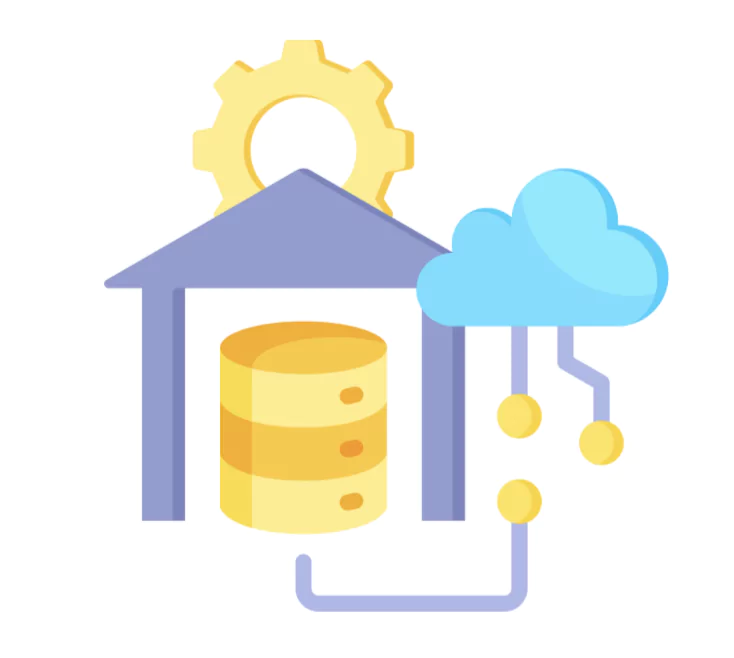 An enterprise level data warehouse enables organisations to get large amounts of data and run powerful analytics successfully. These data stored at a data warehouse can be in structured, semi-structured or unstructured format. They are also known as Enterprise Data Warehouse (EDW) as they support business intelligence tasks.
Data Warehouse: Key Takeaways
- Data Warehouse is used to maintain historical as well as current data in a business friendly manner.
- It is also known as Enterprise Data Warehouse (EDW) supporting business intelligence activities.
- Their main role is to perform queries and analysis on complex and large amounts of data.
Why Is a Data Warehouse Important?
A data warehouse is important because it provides a consistent and reliable platform for analysing large volumes of data from multiple data sources. This repository enables organisations to take important data driven decisions crucial for its growth. A data warehouse is completely optimised for analytical queries rather than everyday transaction processing. This makes it much faster and more efficient for running complex reports, dashboards, and business intelligence tools without slowing down operational systems. It also supports several features including data governance, security, and compliance by ensuring that only authorized users can access sensitive data in a controlled environment.Elements In Data Warehouse
Some of the key elements used in Data Warehouse are mentioned below.1. Data Sources
The data in the data warehouse comes from various sources which include transactional databases, files, APIs, third party systems and more.2. Extract, Transform and Load (ETL)
ETL component is used to handle the movement and transformation of the data from source into the data warehouse. It extracts the structured or semistructured data and then transforms i,e. Cleaning and restructuring for optimisation and accuracy. Load means processing data into a warehouse.3. Staging Area
This is a temporary location where raw data is held during the ETL process. It acts as a buffer zone where data is validated, cleansed, or restructured before moving into the main data warehouse. This minimizes error and allows passage of data transformations without affecting the system.4. Data Warehouse Database
This is the repository where data is integrated, processed data is stored. It is optimised for query performance, processing and follows a dimensional model.5. OLAP (Online Analytical Processing) Tools
These OLAP Tools tools are used to perform multidimensional analysis on the data such as slicing, drilling down into datasets. These tools support trend analysis, gain insights, and help in complex calculations involving large datasets. Join Our Data Analytics Telegram Channel
 Join Our Data Analytics WhatsApp Channel
Benefits of Data Warehouse
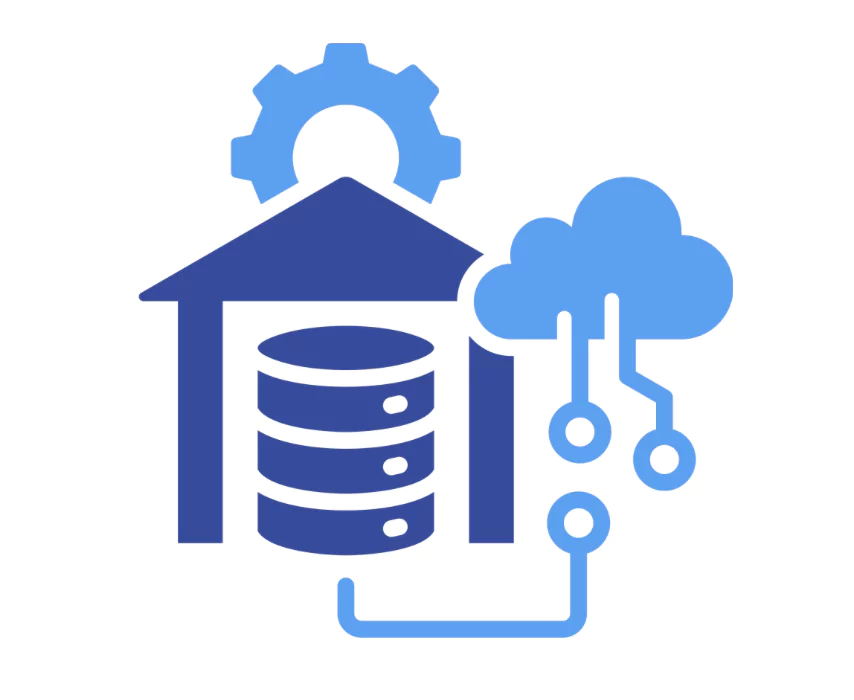 Some of the key benefits of using data warehouses in business processes are mentioned below.
1. Improved Decision Making
Data warehouse provides data from a large variety of sources into a single platform. It also arranges data in consistent format suitable for analysis. This complex dataset is analysed to help in better analysis and companies taking informed decisions based on accurate historical trends, patterns, and KPIs rather than relying on intuition or fragmented reports.2. High-Quality, Consistent Data
Data Warehouse ensures that the complete data is cleaned, validated and standardised through the efficient ETL processes. It ensures that data is consistent and ensures accuracy across the organisation.3. Faster Query Performance
With data warehouses fast retrieval of dataset is possible such as transactional systems. Their schema and indexing allow users to run complex analytical queries and generate effective reports easily.4. Historical Intelligence
Data stored in large volumes at data warehouses include historical data which enables organisations into tracking long term performance. It can easily interpret past behaviors, track long term performance, and perform trend analysis. This is highly used for forecasting, budgeting, and identifying patterns for enhanced business strategies.5. Enhanced Business Intelligence (BI)
Data warehouse consists of powerful querying and analysis power which can be used in Business Intelligence tools such as Tableau, Power BI, Looker, and more. These tools provide visualisations and dashboards which can be used by stakeholders to quickly understand data and get useful insights for competitive advantage.6. Data Security and Compliance
Data warehouses provide centralised control for better data access policies, auditing, and encryption. It is used to protect sensitive information and also helps in ensuring compliance with regulations like GDPR, HIPAA, or SOX.7. Time and Cost Efficiency
Data Warehouse is used to reduce long term costs by automating reporting, manual data consolidation, and speed up analysis. It saves time for analysts and IT teams giving them more time for other strategic tasks.What is a Cloud Data Warehouse?
Cloud data warehouse is a modern alternative to traditional data warehouse which uses cloud services to take and store data from various sources. The on-premise data warehouse lacked flexibility and includes complex forecasting for scaling applications despite providing security, good governance, and data sovereignty. Cloud data warehouse is elastic, scalable, easy to use and also cost effective flexible pricing in all formats. Cloud data warehouses can be self driving too which ensures that beginners can easily create a data warehouse with a few number of clicks. Some of the popular cloud data warehouses include snowflake, Amazon Redshift, Google BigQuery, and more. They also offer real time data processing, security, automated backups, and more.Read More: 10 Most Popular Big Data Analytics Software
Traditional Vs Cloud Based Data Warehouse
There are many differences between traditional and modern cloud based data warehouses. Let us know about some of them below.| Traditional Data Warehouse | Cloud-Based Data Warehouse |
| Traditional data warehouse offers on-premise hardware and storage managed by internal IT. | Cloud based data warehouses are hosted on cloud servers managed by third-party providers. |
| Their scalability is limited which requires physical upgrades and planning. | It is easily scalable on demand with virtually no downtime. |
| The overall cost is high with upfront investment in various processes. | Cloud data warehouse offers Pay-as-you-go (OpEx) model which is cost-effective for most use cases. |
| It requires a dedicated in-house team for updates, patches, and support. | In cloud data warehouse maintenance and updates are handled by the cloud provider. |
| They are comparatively slow and can take weeks or months to implement. | They are comparatively fast and can be set up in hours or days. |
| It requires manual tuning is often required for optimal performance. | It offers auto-scaling and intelligent optimization features included. |
| It is limited to local networks or VPN. | It can be accessed from anywhere with internet access. |
| It is fully controlled in-house and requires strong IT governance. | It is managed by providers with advanced built-in security tools. |
| Backups can be manual or semi-automated processes. | Backups can be automated with real-time backups and disaster recovery. |
| Integration is possible in traditional data warehouse but often complex and manual. | It offers native integrations with modern BI and analytics tools. |
| The updates are not frequent and might require downtime. | It passes through continuous improvements with no disruption to operations. |
| It is best for organisations with strict on-premise policies or legacy systems. | It is best for companies focusing on agility, speed, and cost-efficiency. |
Also Read:
- The Ultimate Data Analytics Tutorial: For Beginners & Professionals
- What Is Data Exchange? Complete Explanation For Beginners
- What is Augmented Analytics? Learn How It’s Changing the Data Game in 2025
- Data Exploration 101: The First Step to Smarter Analytics
Learn Data Analytics With PW Skills
Become proficient in data analysis and business analysis with PW Skills Data Analysis Course. Get technical expertise and soft skills with in-depth tutorials, exercises, real world projects and module level assignments. Get dedicated tutorials from dedicated mentors from industry led live sessions and recorded tutorials. Get certification from PW Skills after completing the course.




🔥 Trending Blogs


Talk to a counsellorHave doubts? Our support team will be happy to assist you!



Get Free Counselling Today
and Clear up all your Doubts
Talk to Our Counsellor just by filling out the form.
Join 15 Million students on the app today!
 Live & recorded classes available at easeDashboard for progress trackingLakhs of practice questions

