

The Difference Between Dashboard Builders and Business Analysts
 Hardik Gupta10 Jul, 2026
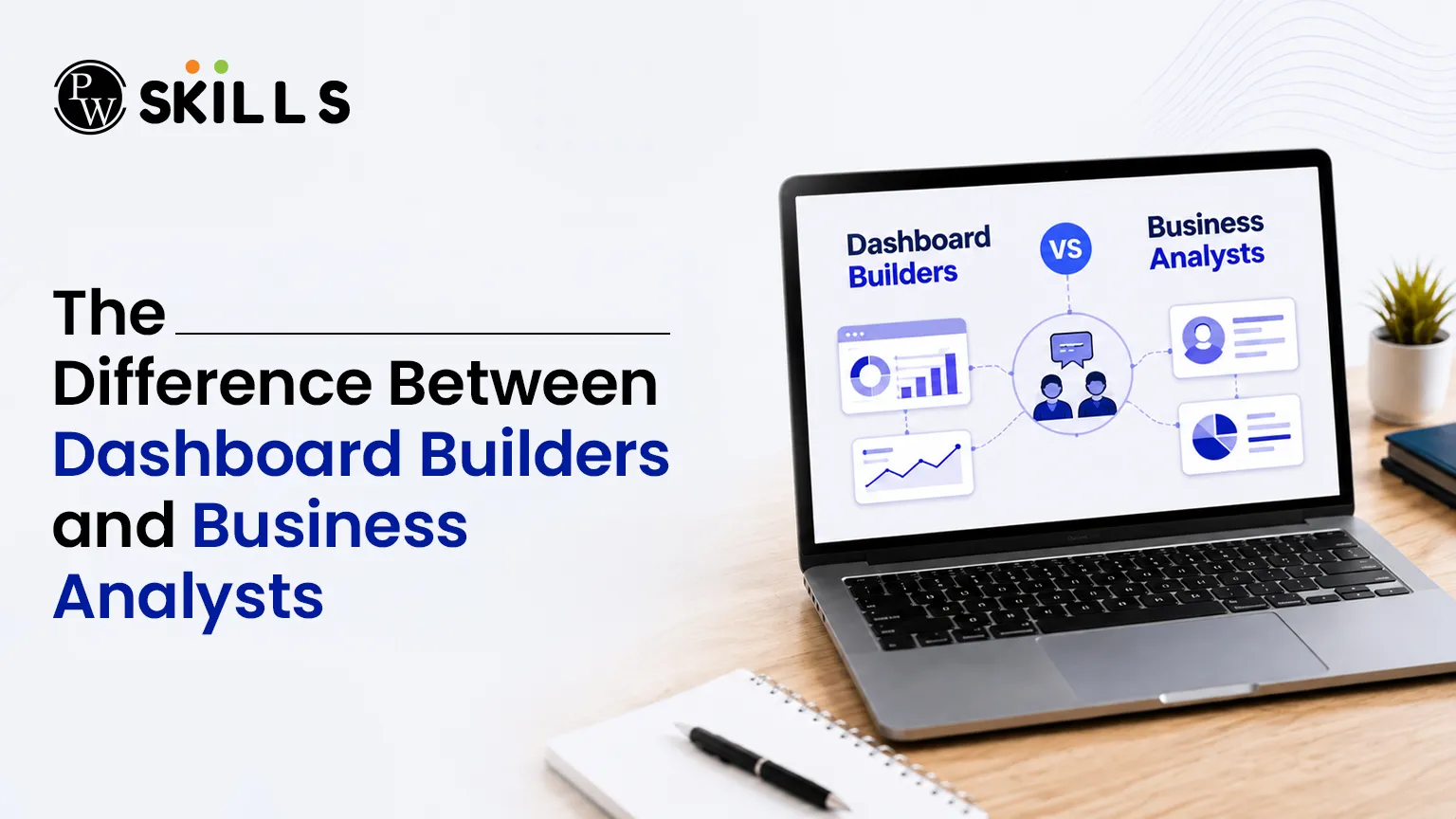
If you stare at the metrics on a screen, you may miss the business insights behind them. Knowing the differences between a dashboard builder vs business analyst role helps you choose the right career path in data analytics.
This article outlines their different roles, skill sets, and career paths to help you identify the right data profession for you.
What are Dashboard Builders and Business Analysts?
To fully grasp these professions, it helps to examine their daily tasks. A dashboard builder spends most of their time cleaning data, writing queries, and designing layouts. They ensure that business intelligence systems run smoothly and refresh automatically.
The list below outlines the typical daily responsibilities of a dashboard professional:
-
Connecting disparate data sources to a centralized visualization tool.
-
Formatting charts, graphs, and heatmaps for optimal user experience.
-
Writing calculations to track key performance indicators.
-
Testing dashboard performance to ensure fast loading times.
A business analyst spends their day interviewing stakeholders, analyzing market trends, and presenting findings. They act as a bridge between the technical data team and corporate executives.
The list below outlines the typical daily responsibilities found in a business analyst role:
-
Interviewing department heads to define project requirements.
-
Examining historical data to find root causes of business losses.
-
Creating detailed business cases for new product launches.
-
Presenting strategic growth opportunities to executive leadership.
What is the Difference Between Dashboard Builder vs Business Analyst?
Data roles often overlap, but their core purposes are quite distinct. A dashboard builder is primarily concerned with dashboard development, data pipelines, and user interface design. They take raw data and turn it into functional, automated visual tools.
On the other hand, a business analyst uses these tools to uncover trends and guide company strategy. They look beyond the charts to explain why numbers are changing. Both roles are essential for modern business intelligence, but they operate at different stages of the data pipeline.
The following table provides a direct comparison of their main operational focus areas:
|
Feature |
Dashboard Builder |
Business Analyst |
|
Primary Goal |
Build and automate visual data interfaces |
Solve business problems using data insights |
|
Core Skill |
BI tool expertise and data modeling |
Domain knowledge and stakeholder communication |
|
Output |
Interactive charts, reports, and filters |
Strategic recommendations and action plans |
|
Data Focus |
Data structure, accuracy, and performance |
Data interpretation and business context |
Also Check: The 20 Best AI Tools to Know
Skills Needed for a Career in Dashboard Development vs Business Analyst
The technical requirements for these two fields show a clear divide between engineering and strategy. A dashboard builder needs deep technical expertise in specific business intelligence applications. They must understand how databases store and transfer information.
Key technical skills for dashboard creation include:
-
Proficiency in visualization software like Tableau, Power BI, or Domo.
-
Strong knowledge of database query languages like SQL.
-
Understanding of data modeling principles and star schemas.
Conversely, analytics careers centered on business analysis require a mix of soft skills and functional business knowledge. While they use data tools, their primary value lies in critical thinking and communication.
Key skills for business analysis include:
-
Excellent public speaking and report writing capabilities.
-
Financial modeling, budgeting, and forecasting expertise.
-
Process mapping and agile project management methodologies.
Why Does Dashboard Building Require Different Skills Than Business Analysis?
A common misconception is that a beautifully designed chart automatically provides analysis. This is rarely the case. A dashboard is a monitoring tool that displays what is happening in real-time, but it cannot explain why it is happening.
The list below highlights why creating a visual layout differs from true strategic analysis:
-
Dashboards are static structures: They track predefined metrics but do not adapt to unexpected external variables.
-
Analysis requires human context: A chart can show a drop in sales, but a human must investigate supply chain delays or competitor price cuts.
-
Builders focus on usability: They ensure the tool is easy to navigate for non-technical corporate employees.
-
Analysts focus on outcomes: They use the tool to make decisions that increase revenue or reduce operational costs.
How to Choose Between Dashboard Development and Business Analysis?
If you enjoy working with technology, writing code, and creating clean visual layouts, the builder path fits you well. This path allows you to specialize in data architecture and front-end design without worrying about corporate politics.
If you prefer storytelling, solving complex puzzles, and influencing business decisions, the analyst route is better. This path keeps you close to business operations and strategy meetings.
Interview Tips for Dashboard Builders vs Business Analysts
Landing a job in either field requires demonstrating specific problem-solving methodologies to hiring managers. For a technical visualization role, expect practical portfolio reviews and coding challenges.
Common assessment areas for visualization specialists include:
-
Rebuilding a poorly designed chart to improve its user experience.
-
Optimizing a slow database query that feeds a live report.
-
Explaining how to handle missing data points in a line graph.
For a business-focused role, interviews will center on case studies and communication skills. Employers want to see how you handle ambiguous corporate problems.
Common assessment areas for business strategy roles include:
-
Walking through a time when you solved a major operational bottleneck.
-
Explaining complex technical data to a completely non-technical manager.
-
Prioritizing conflicting demands from two different department heads.





FAQs
What is the main difference between a dashboard and a business report?
Can a business analyst build their own dashboards?
Which tools are most important for modern dashboard development?
Do I need a computer science degree to start an analytics career?
How do these roles collaborate on a typical corporate project?





Get Free Counselling Today
and Clear up all your Doubts
 Live & recorded classes available at easeDashboard for progress trackingLakhs of practice questions

