
TCS Cyber Security Hiring 2026: Skills Freshers Need to Get Started
 Hardik Gupta30 Aug, 2026

Freshers joining the IT business in 2026 will find themselves in a constantly changing work market with enterprise security being a primary focus for operations. If you are looking for TCS Cyber Security Jobs then you need to know that Tata Consultancy Services (TCS) is constantly growing its global security operations center (SOC) teams with entry-level possibilities. But to land these jobs, you need more than a run-of-the-mill computer science degree. Candidates need real offensive and defensive security abilities to win competitive recruitment campaigns.
TCS Cyber Security Jobs and Hiring Opportunities for Freshers
The corporate demand for skilled security analysts, entry-level penetration testers, and SOC monitoring engineers has risen sharply. Understanding the structural landscape of Cyber Security Jobs allows fresh engineering and science graduates to tailor their academic preparation specifically toward what IT delivery teams expect.
Key Highlights of Security Roles
-
Variety of Roles: Newbies are generally recruited for roles like Associate Security Analyst, Incident Response Trainee, Vulnerability Assessment Specialist, and Junior Network Security Engineer.
-
Work Ecosystem: Entry level applicants will work in an enterprise SOC environment monitoring real-time network traffic, conducting vulnerability assessments and responding to system anomalies.
-
Career Growth: TCS provides entry-level recruits with focused domain training paths to graduate into specialized teams such as penetration testing, cloud security, and digital forensics within two to three years.
Technical Skills Needed for TCS Cyber Security Jobs in 2026
To pass the technical evaluation phases in TCS hiring 2026, freshers must have a good hold of basics across the core domains of IT. TCS recruiters look beyond theoretical definitions and check candidate’s understanding about basic system architecture, administration controls and secure networking principles.
Fundamental Knowledge Areas
-
Networking Concepts : Comprehensive knowledge of IP addressing, DNS protocols, DHCP settings, subnets, OSI model layers and TCP/IP handshake processes.
-
Operating System Administration: Practical knowledge of Linux distribution navigation (Kali Linux / Ubuntu terminal environments) and basic Windows Server administration commands.
-
Information Security Essentials: Thorough understanding of cryptography, public key infrastructure (PKI), firewall policies, identity and access management (IAM), and endpoint security.
|
Knowledge Area |
Core Topics Needed |
Primary Practical Application |
|
Networking |
TCP/IP, OSI Layers, DNS, DHCP, Subnetting |
Packet inspection, traffic analysis, port scanning |
|
Systems |
Kali Linux, Windows Server, VirtualBox, VMware |
Lab creation, shell commands, service management |
|
Core Security |
Cryptography, IAM, Firewalls, Port Security |
Threat detection, security policy enforcement |
Ethical Hacking Skills Needed for TCS Cyber Security Jobs
Prospects with strong capabilities are a differentiator in technical interviews for security opportunities vs typical software engineering prospects. Recruiter evaluations place a premium on the ability to think like an attacker to develop stronger defensive shields.
Critical Practical Skills Required
-
Footprinting and Reconnaissance: Ability to gather target intelligence using public intelligence frameworks, domain lookup systems, and search engine parameters.
-
Network Scanning and Enumeration: Performing port scans to discover open services, operating system fingerprints, and running software versions on target endpoints.
-
Vulnerability Analysis: Identifying known system misconfigurations, unpatched software flaws, and structural security gaps using standardized scanning databases.
-
System and Web Security: Basic execution of web security assessments, including identifying SQL injection flaws, Cross-Site Scripting (XSS), and weak administrative configurations.
Also Check : Can Freshers Get a Cyber Security Job After an Ethical Hacking Course?
Industry Tools to Learn for TCS Cyber Security Jobs
If you are going for entry-level cybersecurity jobs for freshers, then it is a non-negotiable thing to command industry-standard technologies. In technical interviews, interviewers often question candidates to describe tool syntax, command line parameters and sample scenario outcomes.
Essential Security Tools Breakdown
-
Kali Linux: The primary operating system environment containing pre-installed penetration testing utilities. Freshers should know standard terminal commands and
-
Nmap: It is used to discover the network and scan vulnerabilities. Candidates should be able to run basic host discovery, service detection (-sV) and OS detection (-O) commands.
-
Metasploit Framework: Used to understand exploitation operations and security validation in controlled testing facilities.
-
Burp Suite : Essential for web app security testing, proxying http traffic, intercepting requests and testing parameter inputs.
-
Wireshark: For deep packet inspection, traffic analysis and protocol behavior analysis over network interfaces.
-
Specialized Utilities: Familiarity with auxiliary tools like SQLMap for automated database testing, Aircrack-ng for wireless analysis, and ProxyChains for routing traffic.
How to Build Skills for TCS Cyber Security Jobs
Competencies aligned to industry need a structured learning roadmap. Freshers looking for TCS Cyber Security Jobs can choose for Hands-on practice in labs with validated domain training.
Certified Ethical Hacking Course Overview
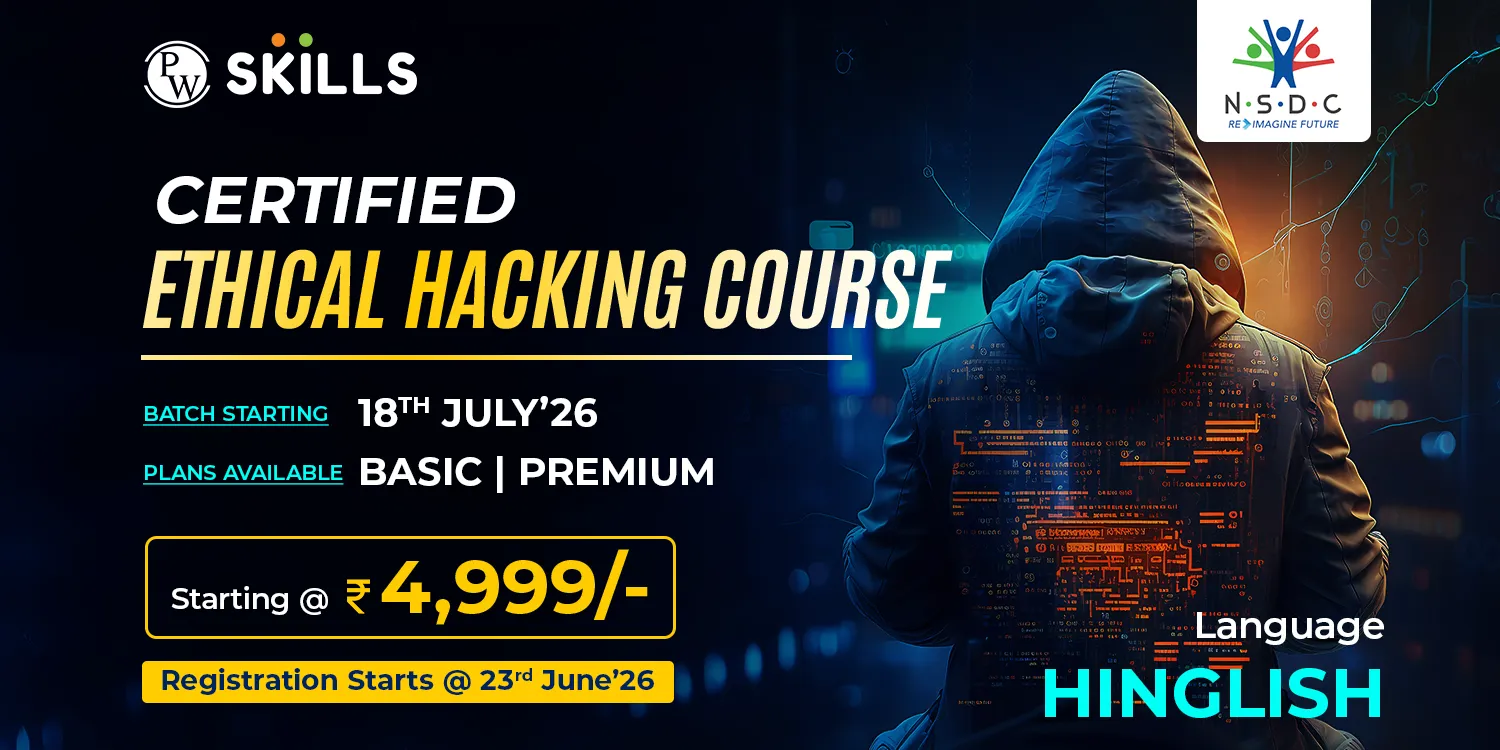
A practical, direct path to building candidate readiness is the Certified Ethical Hacking Course. Designed for absolute beginners, college students, and recent graduates, the curriculum aligns directly with official industry standards (CEH v13) to deliver job-ready technical training.
|
Feature |
Basic Track |
Premium Track |
|
Duration & Hours |
3 Months (60 Hours) |
4 Months (85 Hours) |
|
Delivery Mode |
Live Weekend Classes |
Live Weekend Classes |
|
Lab Exposure |
Guided Lab Activities |
Challenge-Based Labs & CEH Exam Simulator |
|
Key Projects |
Capstone Penetration Testing Project |
Capstone Project + Real-Life Case Scenarios |
|
Career Readiness |
Community & Email Support |
AI Mock Interviews (2) & Soft Skills Training |
Key Benefits of Practical Learning
-
Hands-on Virtual Labs: Build attacker and target virtual machines from scratch using VirtualBox or VMware, Kali Linux, and Windows Server environments.
-
Real-World Capstone Project: Execute a full penetration test, analyze security vulnerabilities, and draft a professional security assessment report.
-
Verifiable Credential: Earn a joint certification that can be verified by enterprise recruiters on resumes and LinkedIn.
-
Flexible Learning Tracks: Choose between a 3-month foundational program or a 4-month advanced program featuring CEH v13 exam preparation content.
How an Ethical Hacking Course Helps with TCS Cyber Security Jobs
Cracking the interview process for cybersecurity jobs at large enterprise organizations demands a balance between core technical understanding and professional communication.
Step-by-Step Technical Interview Checklist
-
Learn the Basics: Be ready to explain the OSI model, TCP vs UDP differences, three-way handshake mechanisms, and standard network ports (e.g., SSH 22, HTTP 80, HTTPS 443, DNS 53).
-
Explain Project Methodologies: When detailing lab exercises or capstone projects, clearly explain the objective, tools used, vulnerabilities found, and remediation steps recommended.
-
Demonstrate Practical Logic: Expect scenario-based questions such as "How would you identify an unauthorized device on an enterprise subnet?" or "What steps do you take when an endpoint triggers a malware alert?"
-
Highlight Problem-Solving Skills: Emphasize systematic analytical thinking over memorized solutions. Show how you research, isolate, and remediate technical challenges.



FAQs
What educational background is required for TCS Cyber Security Jobs?
Can absolute beginners apply for TCS hiring 2026 security roles?
Which tools are most important for cybersecurity jobs for freshers?
What is the role of ethical hacking techniques in entry-level enterprise positions?
How does certification help freshers applying for TCS security roles?





Get Free Counselling Today
and Clear up all your Doubts
 Live & recorded classes available at easeDashboard for progress trackingLakhs of practice questions

