
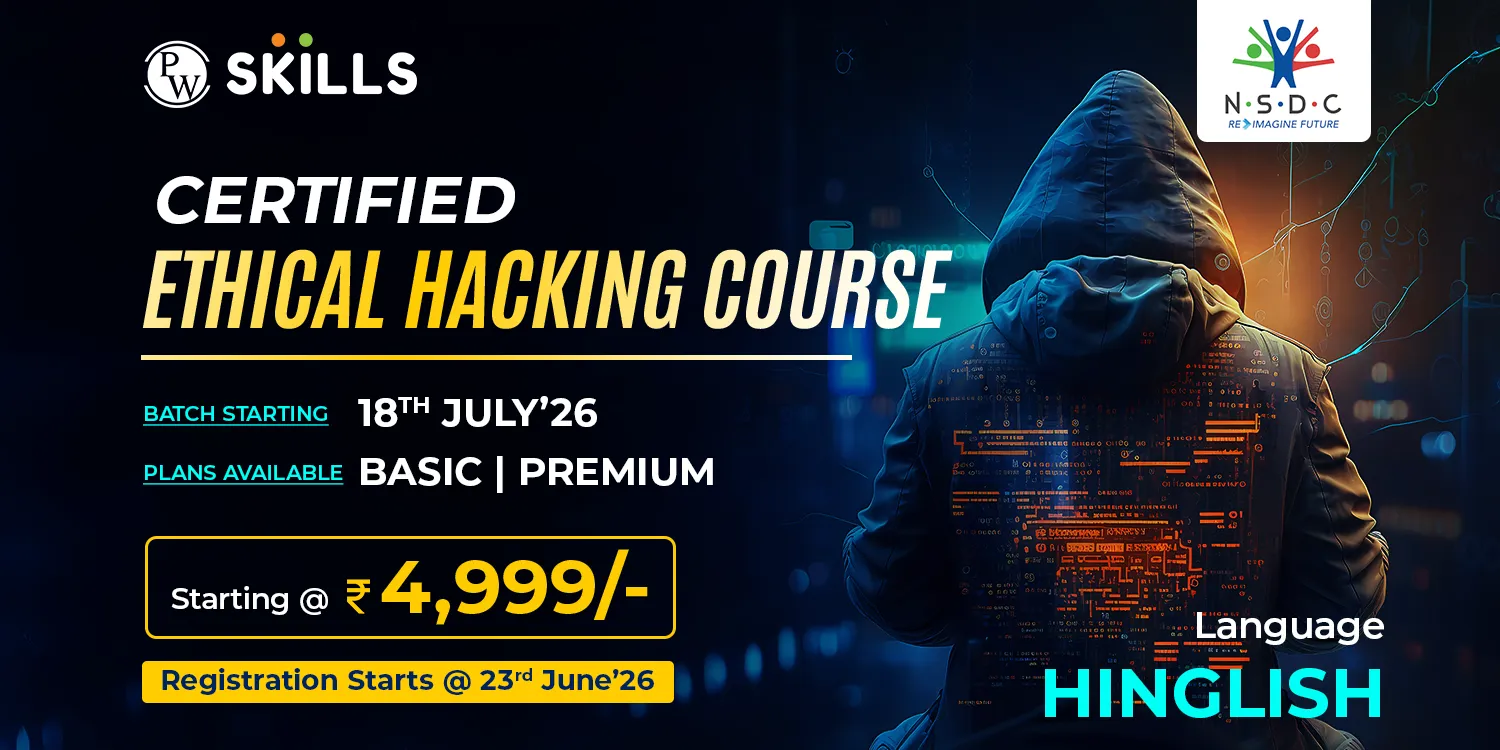
PW Skills Launches Certified Ethical Hacking Course: Learn Cybersecurity from Industry Experts
 Varun Saharawat4 Jul, 2026

Digital attacks are a constant threat to today’s organizations, but millions of security jobs go unfilled because applicants don’t have hands-on experience. The newly launched Certified Ethical Hacking Course is a hands-on solution to this growing problem.
Industry veterans built this 360-degree program to give learners hands-on labs and core methodologies for protecting digital infrastructure.
Why You Need a Certified Ethical Hacking Course?
Digital infrastructure is highly vulnerable to sophisticated threats. Companies lose millions annually due to data breaches and unpatched vulnerabilities. This rising threat level creates a massive demand for skilled defenders who understand the mindset of malicious attackers.
An educational program offers the perfect entry point. This specialised training teaches individuals how to identify weaknesses and implement strong defences before criminals exploit them. Understanding these principles helps you build a secure digital environment.
Most students have a hard time finding good educational material covering both offensive and defensive tactics. A structured learning path guides you to build relevant skills aligned with the current needs of the technology industry.
Here is a list outlining the primary reasons why professionals choose to build expertise in this field:
-
Protecting sensitive corporate data from unauthorised exploitation.
-
Mitigating financial risks associated with severe infrastructure breaches.
-
Ensuring compliance with global digital safety guidelines and regulations.
-
Developing a robust understanding of corporate network configurations.
-
Enhancing professional credibility in the competitive information technology market.
-
Creating safer digital ecosystems for global user communities.
Key Features of the Certified Ethical Hacking Course
This training curriculum is specifically designed to address the challenges that today's digital security professionals face. It's an immersive educational journey that takes novices and makes them competent defenders.
The PW Skills Ethical Hacking Course stands out because it combines deep theoretical knowledge with extensive practical laboratory sessions. Students get to work on simulated corporate environments to test their skills.
It is very valuable to get direct insight from people who are working in the industry. These mentors provide practical insights, real-life case studies, and proven strategies that normal textbooks completely leave out.
Flexible learning schedules make it easier for university students and working professionals to upgrade their skills without disrupting their existing routines. The self-paced modules allow thorough absorption of complex technical concepts.
Understanding the administrative and practical setup of a learning program helps students manage their time better. Comparing these key elements ensures you know exactly what resources are available throughout your journey.
The following table summarizes the essential components included in this learning program:
|
Component |
Description |
|
Live Lab Access |
Immersive environments to simulate real network attacks safely. |
|
Expert Mentorship |
Regular guidance from experienced cybersecurity professionals. |
|
Industry Curriculum |
Up-to-date topics aligned with contemporary threat landscapes. |
|
Career Support |
Resume building assistance and mock interview sessions. |
|
Practice Assessments |
Simulated exams to evaluate technical proficiency periodically. |
What are the Main Topics Covered in a Certified Ethical Hacking Course?
Understanding the full scope of a training program helps learners set clear educational milestones. This curriculum is systematically divided into progressive phases to ensure a smooth learning experience.
Enrolling in a high-quality cybersecurity course online allows you to master foundational concepts before moving to complex exploitation techniques. The structured framework builds confidence at every stage.
Initial modules focus heavily on network fundamentals, operating system architectures, and basic security principles. These core concepts form the bedrock of all advanced defensive strategies.
Subsequent sections introduce advanced reconnaissance methodologies, vulnerability assessment protocols, and system penetration tactics. Learners study how information gathering helps identify potential entry points within a target system.
Gaining a broad overview of the subject areas helps students prepare mentally for the upcoming coursework. Each module addresses a specific layer of the modern digital architecture.
The program covers several critical areas of modern digital security:
-
Footprinting and social engineering analysis techniques.
-
Network scanning methodologies and packet inspection.
-
Web application security testing and database protection.
-
Wireless network defence and cryptographic standards.
-
Cloud computing vulnerabilities and containment strategies.
-
Incident response frameworks and forensic investigation basics.
How does an Online Ethical Hacking Course Built for beginners work?
Starting a fresh career path can feel intimidating without proper guidance. This educational framework is crafted to support individuals who have no prior experience in programming or networking.
Participating in comprehensive CEH certification training requires dedication and regular practice. The course layout breaks down complicated technical jargon into digestible, simple English lessons.
Students begin by interacting with virtual laboratory setups that mimic real-world corporate servers. This hands-on practice ensures that theoretical guidelines turn into functional, practical abilities.
Interactive quizzes and weekly assignments help measure progress effectively. Mentors review these submissions to provide detailed feedback, ensuring no student lags behind in their understanding.
Following a systematic progression ensures that foundational concepts are fully mastered before tackling advanced penetration testing scenarios. This structured approach builds strong technical confidence.
Here is the step-by-step methodology followed during the training process:
-
Mastering basic system command lines and networking protocols.
-
Executing vulnerability assessments under controlled environments.
-
Analysing security logs to identify potential threat indicators.
-
Implementing strategic remediation plans to secure networks.
-
Reviewing real-world case studies under professional guidance.
-
Participating in capstone projects to demonstrate technical proficiency.
Career Opportunities After Pursuing a Certified Ethical Hacking Course
Finishing a professional program opens doors to various lucrative career paths across the technology sector. Organisations need diverse talents to handle different aspects of digital preservation.
Choosing a premium ethical hacker course ensures that you qualify for multiple specialised roles in the corporate hierarchy. Industry demand remains high for certified individuals.
Penetration testing is one of the most popular avenues for graduates. These professionals systematically attack corporate systems with permission to find vulnerabilities before malicious actors can find them.
Security operations centre analysts represent another vital career path. These individuals monitor network traffic continuously to detect and neutralize ongoing cyber threats in real time.
Reviewing specific job functions helps candidates focus on developing the exact skills needed for their preferred corporate paths. Different positions require distinct operational mindsets.
The table below highlights the prominent job roles available to successful graduates along with their primary responsibilities:
|
Job Role |
Core Responsibility |
|
Penetration Tester |
Simulates cyberattacks to identify systemic network weaknesses. |
|
Security Analyst |
Monitors digital infrastructure for suspicious activity and threats. |
|
Vulnerability Manager |
Identifies, assesses, and prioritizes software security updates. |
|
Cloud Security Specialist |
Secures enterprise applications hosted on cloud environments. |
|
Security Consultant |
Advises corporate clients on building robust protective frameworks. |



FAQs
What is the primary focus of this new training program?
Are there practical sessions included in this curriculum?
Can beginners join this educational course?
How do industry experts assist learners during the program?
What career roles can graduates pursue after finishing?





Get Free Counselling Today
and Clear up all your Doubts
 Live & recorded classes available at easeDashboard for progress trackingLakhs of practice questions

