
Can Freshers Build a Career in Cyber Security Without a Computer Science Degree?
 Varun Saharawat29 Aug, 2026

Many candidates assume a computer science degree is essential for Cyber Security Careers for Freshers, but practical skills can also open doors. The growing demand for cybersecurity professionals creates opportunities for beginners from diverse academic backgrounds. By learning networking, operating systems, security fundamentals, and industry tools through practical training and labs, non-technical graduates can build job-ready cybersecurity skills.
Why Cyber Security Careers for Freshers Can Start Without a Degree
The demand for qualified security professionals has changed traditional hiring requirements across the technology sector. Companies increasingly focus on practical skills and proof of capability rather than formal academic credentials when evaluating candidates for entry-level roles, making cybersecurity without degree a possible career path for skilled and motivated beginners.
The Shift Toward Skill-Based Hiring
Organizations recognize that theoretical academic curriculum are typically behind the curve of rapidly changing online dangers. So hiring managers want to see you have the functional skills and can use the standard tools of the trade from day one.
- Real world issue solving: Employers want people that know real world assault vectors and defense tactics.
- Tool skills: Knowing real security tools is more important than generic academic theory.
- Continuous learning: Security risks are ever-evolving, therefore an adaptive attitude will be more beneficial than a static degree.
Key Skills Valued over Formal Education
To pursue cyber security careers candidates should be able to show fundamental technological competencies that have direct application to security operations:
- Computer Networking: TCP/IP, DNS, DHCP, and OSI Model Layers
- Operating systems: Windows Server administration, Kali Linux and other Linux environments.
- Vulnerability assessment: Scanning networks, identifying security vulnerabilities and reporting hazards.
- Basic scripting: Able to work with command-line interfaces and simple automation scripts.
Cyber Security Careers for Freshers Learning Path for Beginners
If you want to break into security without a formal technical degree, you’ll need to approach learning in an organized way. If you focus on the basics you prepare yourself for an easy move to more technical subjects.
|
Learning Stage |
Focus Area |
Key Learning Outcomes |
|
Stage 1: Foundations |
Networking & Systems |
Understand IP addressing, routing, ports, and operating system architectures. |
|
Stage 2: Tool Mastery |
Security Testing Tools |
Learn to operate Kali Linux, Nmap, Metasploit, Burp Suite, and Wireshark. |
|
Stage 3: Hands-On Labs |
Virtual Lab Setup |
Build isolated target and attacker virtual machines to practice exploitation methods safely. |
|
Stage 4: Practical Projects |
Security Assessments |
Execute complete penetration tests and write professional assessment reports. |
Building Essential Networking Foundations
Before jumping into more complex security approaches, the beginners need to know the basic networking ideas. All security principles are based on an understanding of the flow of data through networks and devices.
- Analysis of protocols: Learn how HTTP , HTTPS , SSH , FTP and other protocols work .
- Network mapping: Know how network devices talk to each other and route traffic.
- System Administration: Learn common administrative commands for Linux and Windows operating systems.
Hands-On Tool Exposure for Technical Proficiency
Practical mastery of security software forms the core of ethical hacking for beginners. Acquiring practical lab experience builds the confidence needed to solve real-world security challenges.
Cyber Security Careers for Freshers Entry Level Jobs for Non CS Graduates
Non-computer science graduates can target several specialized entry-level roles upon acquiring practical skills and foundational certifications.
Security Analyst (SOC Tier 1)
SOC Analysts monitor organizational networks for security incidents, analyze alerts, and escalate potential breaches to senior team members.
- Primary responsibilities: Triage security logs, investigate basic alerts, and maintain incident documentation.
- Key skills required: Knowledge of SIEM concepts, log analysis, and network monitoring tools.
Junior Penetration Tester
Junior Penetration Testers help identify security vulnerabilities in systems, applications, and networks before malicious actors exploit them.
- Primary responsibilities: Conduct authorized security scans, execute basic vulnerability assessments, and assist in reporting findings.
- Key skills required: Proficiency with Kali Linux, Nmap, Metasploit, and basic web application attack vectors.
Vulnerability Assessment Analyst
This role focuses specifically on scanning organizational assets to pinpoint outdated software, misconfigurations, and unpatched security flaws.
- Primary responsibilities: Run automated vulnerability scans, verify findings, and recommend corrective patches.
- Key skills required: Familiarity with scanning tools, system configuration basics, and risk scoring systems.
Roadmap for Building Cyber Security Careers for Freshers
A clear execution plan helps non-CS graduates transition into technical roles within a realistic timeline.
Phase 1: Establish Foundational Knowledge
Begin by learning how computer networks operate and how systems communicate.
- Study basic networking concepts including subnetting, routing, and common port numbers.
- Install virtualization software like VirtualBox or VMware on a personal computer.
- Deploy Linux distributions and Windows Server environments to learn basic system administration.
Phase 2: Gain Hands-On Security Training
Transition from general computer knowledge to specific security concepts and tools.
- Learn reconnaissance techniques to collect information about target systems.
- Practice vulnerability scanning to detect unpatched software and configuration issues.
- Understand common attack mechanisms such as SQL injection, cross-site scripting (XSS), and network sniffing.
Phase 3: Build a Verifiable Portfolio
Demonstrate practical capabilities to potential employers through documented project work.
- Complete a comprehensive capstone penetration testing project on simulated networks.
- Draft professional security assessment reports detailing identified vulnerabilities and remediation steps.
- Maintain an updated portfolio showcasing lab setups, bug hunting achievements, or project documentation.
Training Options for Cyber Security Careers for Freshers
Structured educational courses bridge the gap between self-study and industry requirements, helping non-technical graduates acquire practical skills systematically.
Structured Learning Options
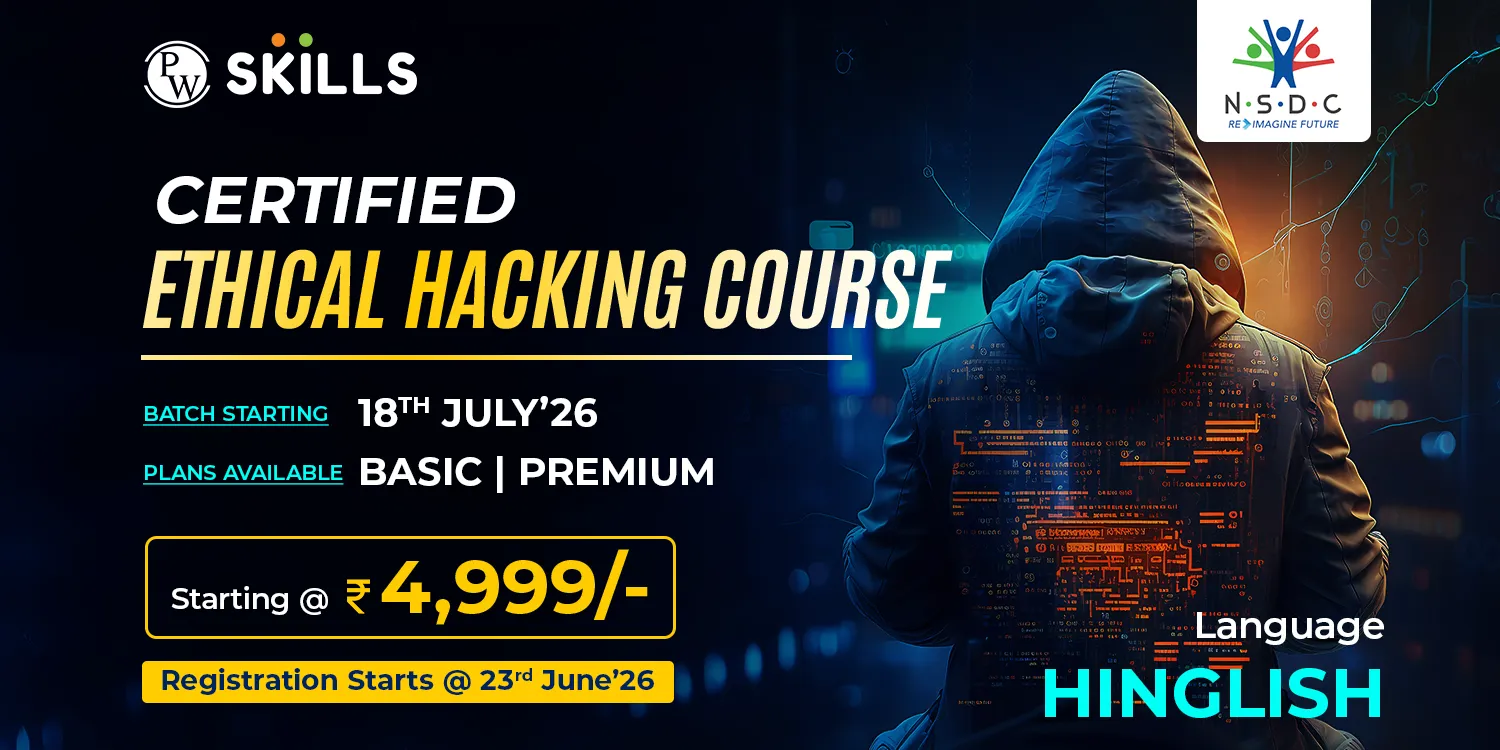
Programs like the Certified Ethical Hacking Course by PW Skills provide beginner-friendly pathways designed for candidates without prior experience. Learners can choose between structured options based on their career goals:
- Basic Program Track: Provides 60 hours of live weekend training over 3 months. It covers networking foundations, system security basics, capstone penetration testing projects, module-wise assignments, and community support, leading to a PW Skills + NSDC certificate.
- Premium Program Track: Delivers 85 hours of live weekend training over 4 months. It includes advanced CEH v13-aligned exam preparation, challenge-based labs, a CEH exam simulator, real-life case scenarios, soft skills training, and 2 AI mock interviews for career readiness.
Value of NSDC Recognised Certifications
Earning a joint certification from PW Skills and NSDC validates technical proficiency to potential recruiters. Employers verify these credentials via unique verification links, helping non-CS graduates demonstrate their competence during job applications.



FAQs
Can I learn ethical hacking without prior coding knowledge?
How long does it take for a fresher to get job-ready in cybersecurity?
Which entry-level cybersecurity jobs are easiest to target without a degree?
Is the CEH v13 curriculum suitable for absolute beginners?
Do certifications carry weight when applying for cyber security careers for freshers?





Get Free Counselling Today
and Clear up all your Doubts
 Live & recorded classes available at easeDashboard for progress trackingLakhs of practice questions

