

BFSI Certification Course vs Micro-Certifications (NISM/Tally): Which Should You Choose in 2026?
 Hardik Gupta20 Jul, 2026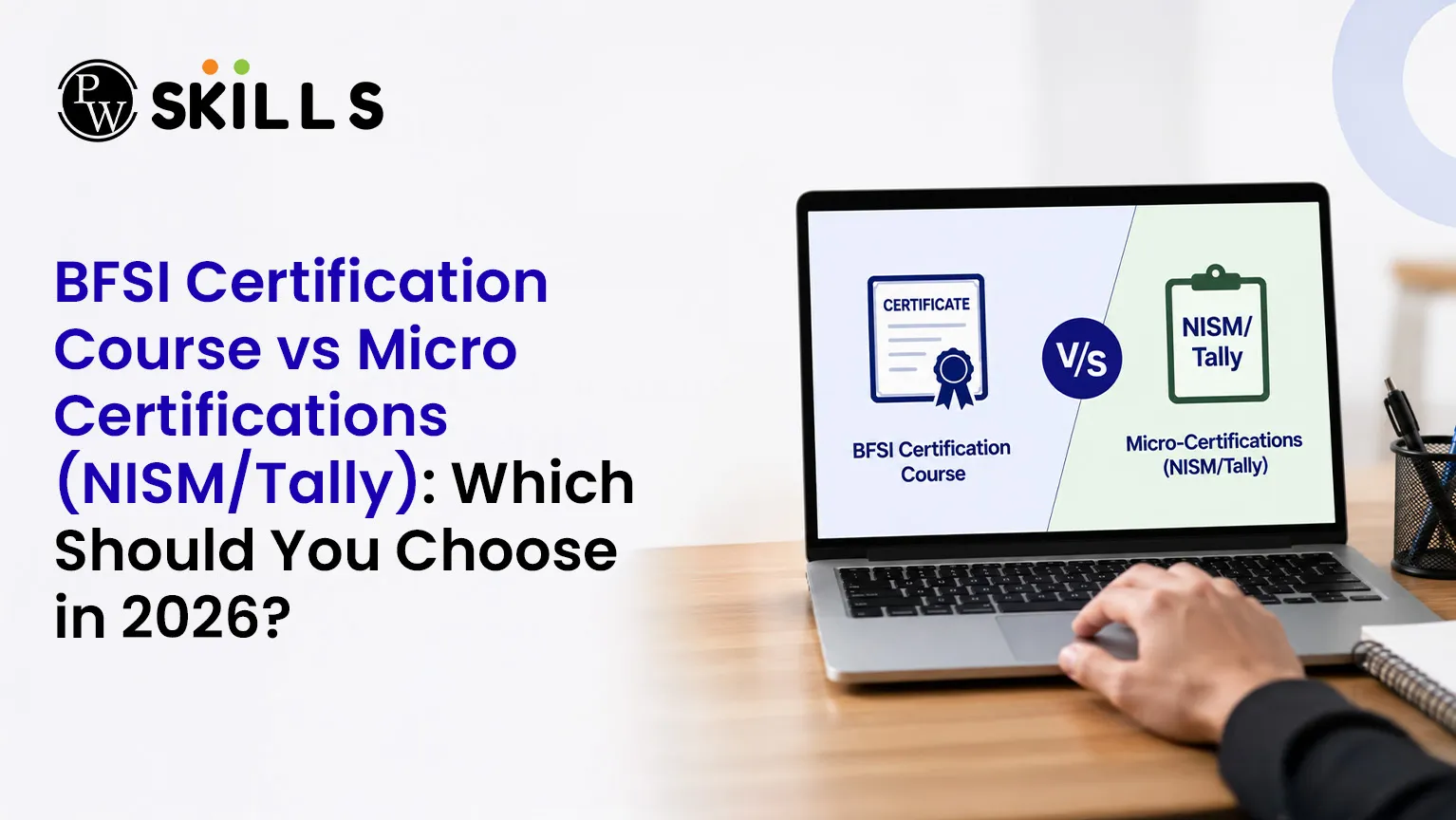
Starting a career in banking, financial services, and insurance can feel confusing for many students and fresh graduates. Many people do not know if they should choose a full learning program or a small certificate course to get a good job. If you want a long-term career with better growth opportunities, choosing a structured BFSI Certification Course may be the right choice for you.
Overview of BFSI Certification Course
A Course for BFSI Certification is a complete learning program that teaches students about banking, financial services, and insurance. It gives a wide understanding of the financial industry instead of teaching only one software or one topic. A good program covers banking operations, finance basics, investment products, risk management, insurance concepts, and modern fintech tools in one course.
These programs also help students build management skills along with technical financial knowledge. This makes students ready for large companies where teams work across different departments and functions. A structured learning system helps students understand how the complete financial industry works instead of focusing on only one small area.
What is the Difference Between the BFSI Certification Course and NISM and Tally?
Micro-certifications focus on one specific topic or one software tool in the financial industry. They do not teach business strategy, communication skills, or how different parts of the industry work together. Their main purpose is to show employers that you can perform one specific job task from the first day of work.
The National Institute of Securities Markets (NISM) offers certificates that are needed to work in areas like mutual funds, stock markets, and trading businesses. In the same way, Tally is an accounting software that is widely used by small and medium businesses to manage accounts, inventory, taxes, and daily financial records.
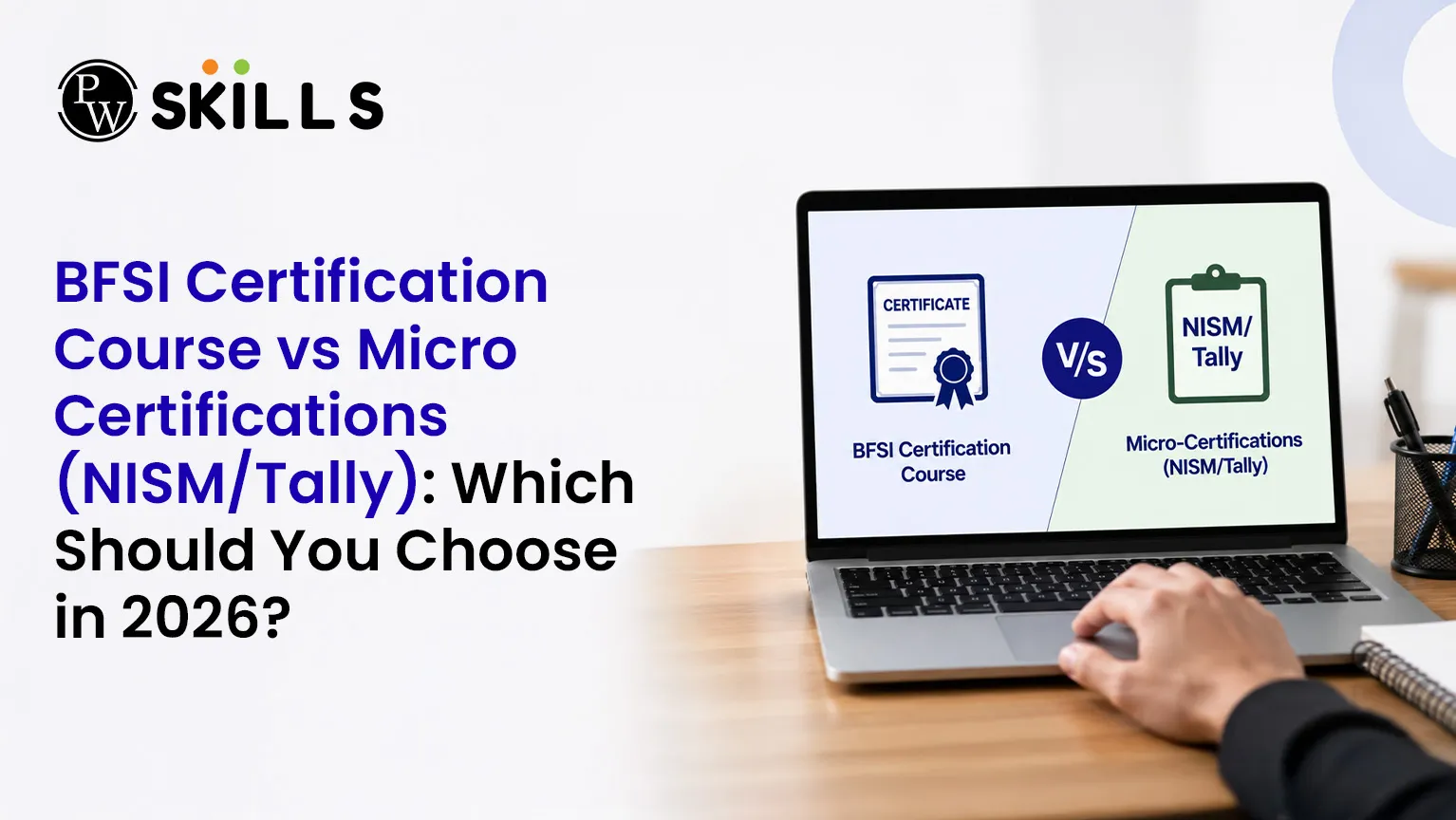
BFSI Certification Course vs Micro-Certification Features
Both learning paths offer unique advantages, but they differ significantly in terms of curriculum depth, career outcomes, and industry exposure. Understanding these key features can help you choose the option that best aligns with your long-term career goals.
Short Duration
Most micro-certifications can be completed within a few weeks or within two months.
Practical Learning
These certifications focus mainly on software use, company processes, rules, and practical work.
Required for Some Jobs
Some jobs legally require certifications before you can start working. For example, mutual fund sales jobs often need NISM certification.
Separate Learning Modules
Students can choose only the certificates they need based on their current job or career goals.
BFSI Certification Course vs Micro-Certifications: Complete Comparison
Before choosing any course, it is important to understand what each option offers and how they are different.
Curriculum Coverage
A Course for BFSI Certification covers banking, insurance, finance, compliance, and investment topics together.
Micro-certifications focus only on one software, one rule, or one financial product.
Time Required
A Course for BFSI Certification usually takes between six and twelve months to complete.
Micro-certifications normally take between two weeks and two months.
Main Goal
The main goal of a Course for BFSI Certification is long-term career growth, leadership skills, and career flexibility.
Micro-certifications mainly prepare students for specific entry-level jobs.
Industry Value
A Course for BFSI Certification is highly valued for management roles and future leadership positions.
Micro-certifications are mainly useful for specific job roles that require them.
Networking Opportunities
A Course for BFSI Certification often provides student groups, alumni support, and placement help. Micro-certifications usually do not offer networking opportunities or placement support.
What Subjects Are Covered in a BFSI Certification Course?
The value of a Course for BFSI Certification depends greatly on the subjects included in the program. A good course balances basic banking knowledge with advanced financial learning.
Banking Operations
Students learn about deposits, loans, credit systems, lending methods, banking risks, and central bank regulations.
Investment and Wealth Management
Students learn about stock markets, bonds, mutual funds, and wealth creation methods.
Corporate Accounting
Students understand balance sheets, cash flow statements, profit and loss accounts, and financial reports.
Digital Financial Services
Students learn about fintech companies, online payments, digital banking, and automated financial services.
How Does a BFSI Certification Course Help in Insurance Advisor Jobs?
The connection between professional training and insurance careers is very strong. A combination of Course for BFSI Certification + Insurance Advisor Jobs preparation can give candidates a major advantage during hiring.
Many new insurance advisors only know basic selling techniques. However, students who complete professional training understand investment planning, financial risks, and wealth management concepts.
This allows them to suggest insurance solutions that match the customer's complete financial plan instead of selling products separately.
Because of this knowledge, trained professionals often build stronger customer relationships and gain more trust from clients.
Benefits of a BFSI Certification Course for Insurance Advisor Jobs
A BFSI Certification Course equips aspiring insurance advisors with practical knowledge of financial products, customer advisory, and regulatory compliance. It also helps build the confidence and industry expertise needed to offer personalized insurance solutions and advance in client-focused financial roles.
Better Client Discussions
Professionals can help wealthy clients with long-term financial planning instead of discussing only premium payments.
Corporate Client Opportunities
Students gain the knowledge needed to offer employee insurance plans and business protection products to companies.
Faster Career Growth
Professionals can move faster from sales positions to team leader and manager roles.
How Does a BFSI Certification Course Help You Understand Insurance Products?
Many beginners find it difficult to understand how different financial products work together. A structured program helps students learn BFSI Certification Course + Insurance products in detail.
Students understand how insurance plans work together with investments, savings plans, and wealth-building strategies.
Instead of seeing insurance as a separate product, students learn how it protects families and investments during difficult situations.
This complete understanding is highly valued by private banks, wealth management firms, and financial institutions.
Topics Covered in a BFSI Certification Course for Insurance Products
A BFSI Certification Course provides a comprehensive understanding of insurance products, their features, and their role in financial planning. It also covers key concepts such as underwriting, claims processing, risk assessment, and regulatory guidelines to prepare learners for real-world insurance roles.
Underwriting Basics
Students learn how companies measure risk before approving insurance policies.
Actuarial Concepts
Students understand how companies use numbers and statistics to decide insurance pricing.
Claim Settlement Process
Students learn about claim documents, legal requirements, and payment procedures.
Reinsurance Basics
Students understand how insurance companies share large risks with other companies around the world.
Which BFSI Certification Course Should You Choose?
Choosing a BFSI Certification Course + Which learning path is right for you depends on your education, work experience, and career goals. Your financial situation and career timeline should also be considered before making a decision.
BFSI Certification Course for Fresh Graduates
Students who have recently completed college and want a long-term career should choose a complete Course for BFSI Certification.
These programs help build a strong resume, improve industry knowledge, and increase placement opportunities across many financial sectors. Graduates also gain flexibility to move between banking, insurance, finance, and investment roles in the future.
BFSI Certification Course for Working Professionals
People who already work in accounting, finance, or stock market support roles may benefit more from NISM or Tally certifications.
These certifications improve job skills quickly and do not require students to leave their current jobs. This option is useful for professionals who want immediate skill improvement while continuing to earn their salary.
What Jobs Can You Get After a BFSI Certification Course?
Students who complete full programs often get opportunities in:
-
Relationship Manager roles
-
Banking Operations Executive positions
-
Financial Analyst trainee roles
-
Wealth Management trainee positions
-
Credit Analyst positions
-
Operations Management trainee roles
The wide curriculum allows professionals to move between different departments as the industry changes.




FAQs
What jobs can I get after completing a BFSI Certification Course?
Can I study NISM with a BFSI Certification Course?
How do Insurance products help in banking jobs?
Do I need strong mathematics skills for a BFSI Certification Course?
Which option gives better salary growth in the future?





Get Free Counselling Today
and Clear up all your Doubts
 Live & recorded classes available at easeDashboard for progress trackingLakhs of practice questions

