

Banking Programs in 2026: Skills, Training and Career Paths for Freshers
 Hardik Gupta22 Sept, 2026
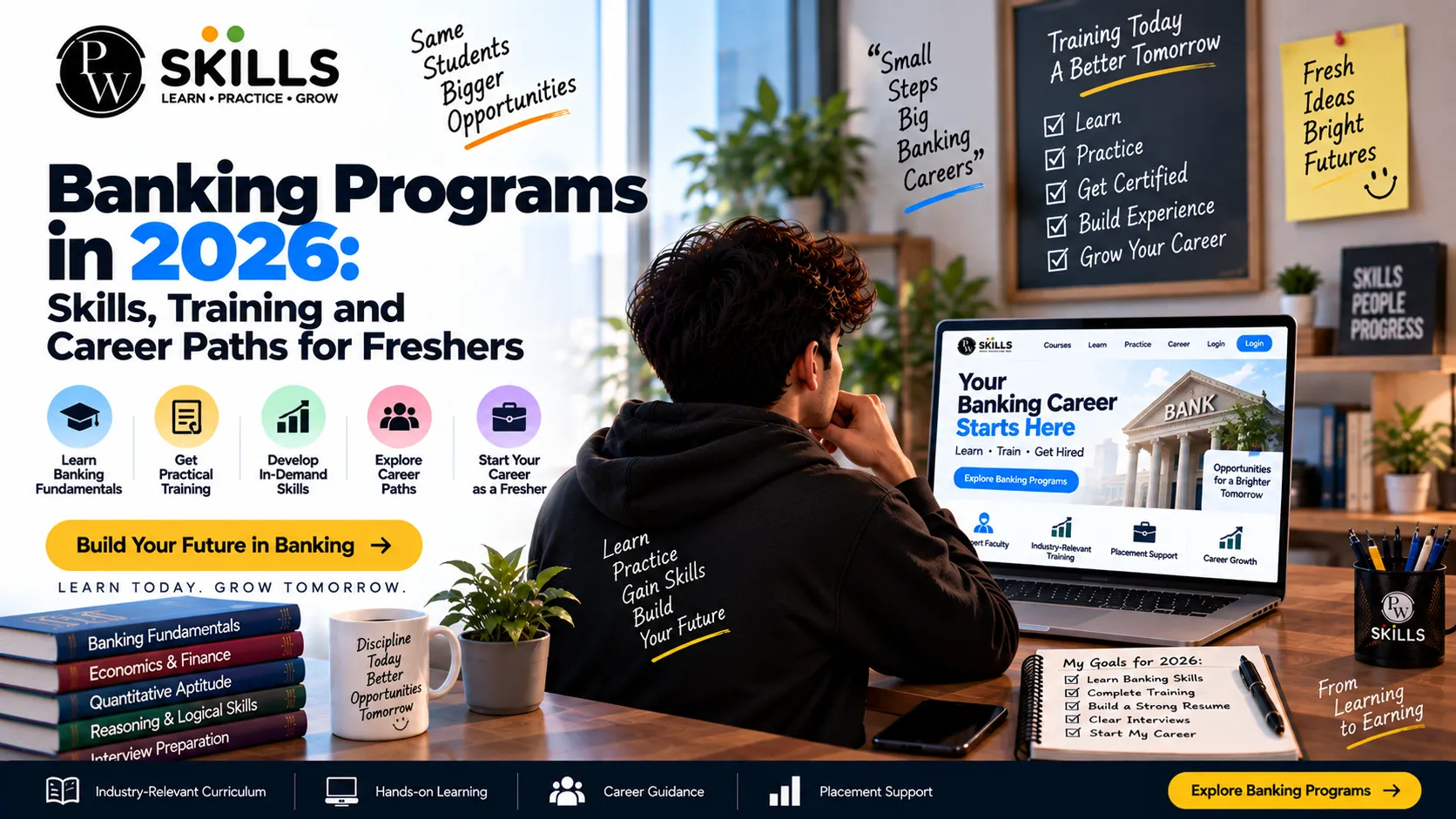
Many graduates possess strong theoretical knowledge but lack the practical, job-ready skills that financial institutions look for today. Rapid digital transformation, expanding fintech solutions, and changing regulatory environments have created a high demand for skilled entry-level candidates.
Specialized banking programs solve this mismatch by providing targeted learning modules, practical case studies, and corporate etiquette training.
This guide outlines how enrolling in a structured pathway helps freshers gain technical expertise, develop professional communication, and start a successful career in the modern banking and financial services domain.
What Are Banking Programs?
Modern training pathways designed for the financial sector focus on developing job-ready candidate profiles. A comprehensive banking program bridges the transition from general education to specialized corporate environments.
Rather than focusing purely on textbook definitions, these structured banking training programs blend core technical financial knowledge with essential soft skills. They cover the operational and legal aspects of the Banking, Financial Services, and Insurance sector while building interpersonal skills needed for customer interactions, sales, and analytical support roles.
Key features include:
-
Dual-track Learning Structure: Combines fundamental subject knowledge with corporate communication and soft skills training.
-
Flexible Learning Formats: Options ranging from self-paced recorded learning to live interactive cohorts and complete career development tracks.
-
Practical Learning Applications: Inclusion of real-world financial case studies, capstone projects, and industry scenario analyses.
-
Career Readiness Support: Resume building, profile optimization, and simulated corporate interview practice.
Also Explore : BFSI Course
Banking Skills Freshers Can Build Through Banking Programs
To secure competitive entry-level positions, freshers need a balanced combination of technical capabilities and professional behavioral traits. Financial institutions require candidates who understand product details while effectively engaging with clients.
Technical and Industry Domain Skills
Building domain knowledge is essential for handling day-to-day operations and understanding regulatory environments. Freshers learn:
-
Regulatory Frameworks: Understanding key regulators, non-banking financial companies, and standard banking structures.
-
Product Knowledge: Mastering deposit and lending products, insurance options, and mutual funds.
-
Digital Banking and Payments: Handling modern digital payment frameworks, payment systems, digital transaction channels, and cybersecurity practices.
-
Financial Analysis: Evaluating customer financial profiles and managing basic risk management processes.
Professional Soft Skills
Technical skills must be complemented by strong communication capabilities to succeed in client-facing or advisory roles:
-
Banking Communication: Professional email writing, business etiquette, and effective presentation skills.
-
Client Handling: Developing emotional intelligence, active listening, and conflict resolution techniques.
-
Personal Branding: Building professional profiles on corporate platforms and expanding professional networks.
-
Critical Decision-Making: Applying critical thinking during real-world sales and customer advisory interactions.
Types of Banking Programs Available for Different Career Goals
Educational pathways in the financial domain cater to different learning styles, time availability, and career objectives. Candidates can select a structure based on whether they need basic knowledge or end-to-end career assistance.
|
Program Type |
Target Audience |
Key Components |
Learning Format |
|
Self-Paced Foundational |
Beginners looking for an affordable introduction to financial basics. |
Recorded lectures, 5 core modules, basic case studies, biweekly live doubt sessions. |
Self-paced online learning. |
|
Interactive Practical |
Students aiming for hands-on learning, practical projects, and career preparation. |
Live weekday classes, 112+ training hours, 18+ case studies, capstone projects, platform branding support. |
Live interactive cohorts. |
|
Complete Career Launchpad |
Learners seeking comprehensive training with direct interview opportunities and job placement assistance. |
Live weekday classes, 125+ training hours, 21 core modules, 2 capstone projects, AI-driven mock interviews, full placement support. |
Live interactive learning with interview support. |
What Training Do Banking Programs Provide in 2026?
Modern banking courses are designed around structured, multi-module curricula that mirror current industry practices. Training ensures that fresh graduates are thoroughly prepared for modern digital-first financial environments.
-
Industry Regulators: Overview of financial governing bodies, non-banking financial companies, and legal operational boundaries.
-
Banking Products: Deep dives into retail deposits, consumer loans, commercial lending, and credit mechanisms.
-
Digital Systems: Understanding digital platforms, payment systems like unified payment interfaces, and transaction security.
-
Financial Markets: Fundamental concepts covering foreign exchange, mutual fund structures, and risk mitigation strategies.
Behavioral and Interview Prep Modules
-
Workplace Communication: Training in corporate terminology, formal correspondence, and team collaboration.
-
Simulated Practice: Peer-to-peer roleplay exercises, confidence-building tasks, and live mentor feedback.
-
Interview Training: AI-driven mock interviews and targeted practice sessions using real-world recruitment questions.
How Banking Programs Help Freshers Prepare for Banking Roles
Graduating with a degree is rarely enough on its own; practical training helps bridge the gap between classroom theory and real corporate environments. Structured bank career programs simplify this transition through practical training methods.
-
Case-Study Methodology: Candidates analyze real-world financial scenarios, studying client financial profiles and assessing credit risk parameters.
-
Capstone Projects: Hands-on projects allow freshers to solve complex financial challenges, building confidence for daily job tasks.
-
Recognized Certifications: Completing certified courses with strict attendance (such as 60%) and assessment standards (achieving a minimum 60% passing score) provides recognized credentials for resume building.
-
Placement Assistance: Training includes optimizing online professional profiles, connecting with hiring managers, and attending structured recruitment drives for banking jobs for freshers.
Career Paths You Can Explore After Banking Programs
Completing structured BFSI training opens doors to diverse career paths across retail banks, private financial institutions, insurance companies, and fintech firms.
-
Relationship Manager: Responsible for managing client portfolios, understanding individual financial goals, and recommending suitable banking products.
-
Bank Officer: Oversees routine branch operations, ensures compliance with documentation, handles customer deposits, and processes customer requests.
-
Insurance Advisor: Evaluates client risk profiles, explains coverage choices, and guides clients toward suitable insurance policies.
-
BFSI Sales Executive: Identifies new business opportunities, presents financial solutions, and grows customer bases for retail banking products.
-
Customer Service Associate: Acts as the primary point of contact for customer queries, resolving account issues and offering basic account management guidance.
Tips to Choose Banking Programs as a Fresher
With numerous learning avenues available, selecting the right course requires careful consideration of personal learning preferences, time commitments, and long-term career goals.
-
Assess the Curriculum Structure: Ensure the program covers both core subject concepts and soft skills development rather than focusing exclusively on theory.
-
Check the Learning Format: Choose live interactive cohorts if you learn best with real-time feedback and direct interaction with mentors. Select self-paced tracks if you require flexible scheduling.
-
Evaluate Practical Components: Confirm that the course includes real case studies, capstone projects, and practical scenario analysis to gain real-world context.
-
Verify Career Support Services: Look for pathways offering mock interview practice, platform profile building, resume guidance, and dedicated placement assistance.
Common Mistakes to Avoid When Choosing Banking Programs
Making an uninformed choice can lead to lost time and effort without improving job prospects. Freshers should watch out for several common pitfalls when choosing a program.
-
Ignoring Soft Skill Training: Focusing entirely on technical financial terms while neglecting communication skills often leads to poor performance during candidate interviews.
-
Overlooking Practical Learning: Enrolling in courses that only offer lectures without case studies or practical assignments leaves freshers unprepared for actual workplace responsibilities.
-
Failing to Verify Passing Criteria: Not reviewing certification requirements, such as mandatory attendance thresholds or assessment scoring benchmarks, can result in failing to earn credentials.
-
Relying Solely on Placements: Expecting placement support to secure a job without actively participating in mock interviews, profile optimization, and skill-building exercises.



FAQ
1. What are the basic eligibility criteria for joining banking programs?
2. Can non-commerce students enroll in banking training programs?
3. How long do standard banking courses take to complete?
4. What primary skills do bank career programs focus on?
5. Do BFSI training courses guarantee placement for freshers?





Get Free Counselling Today
and Clear up all your Doubts
 Live & recorded classes available at easeDashboard for progress trackingLakhs of practice questions

